
How to create a schedule (5 ways to make restaurant management easier)

Navigating the schedules of staff can be a difficult task - especially for restaurant and hospitality businesses. Whether it’s annual leave, sickness, or simply ensuring everyone has the chance to enjoy a weekend off here and there, it’s important to create a fair schedule that avoids disputes and maintains employee morale.
What are the benefits of using a schedule in a restaurant?
Creating a schedule can provide your restaurant business with plenty of benefits, including:
Consistent cover - even during peak seasons
In hospitality, popularity is based on season. Periods like Christmas, summer holidays, and other local events like festivals bring in footfall and increase busyness. With a consistent schedule, you can be sure that there’s always enough staff to cover a shift - so customer service standards are never in jeopardy.
Control of labor costs & compliance
You can better track and manage labor costs with a consistent schedule, which can avoid overstaffing during quieter periods and understaffing during peak time. As a result, your restaurant will be more efficient and profitable.
Fairness & morale
By using a schedule, staff can clearly see their shifts and hours. That way, they can see the transparency of shift allocation, so employees can see how fairly evening and weekend shifts are assigned. Ultimately, it can reduce potential conflicts and boost morale.
Read more: What is the role of change management in future-proofing your restaurant?
Why is it important to use a schedule?
Fewer disputes
Everyone has a personal life outside of work - and in hospitality, the hours can be all over the place, making it difficult for employees to maintain this balance. If evening and weekend shifts are repeatedly given to the same people, this might cause conflict and disputes to occur. With a schedule, you can ensure these shifts are assigned so everyone works the same amount of evening and weekend shifts.
Provides a stronger customer experience
Not having enough staff in your restaurant can be detrimental to your employees - but also sour the experience of your customers. They might not be tended to as quickly as other people, which can make them feel frustrated and discourage them from returning to your restaurant. With a schedule, you can be sure that you have enough staff on hand and that every customer is looked after.
Compliance & trust
Schedules help managers to comply with Working Time Regulations, such as the minimum weekly hours, minimum rest periods, and PTO entitlements. By using a schedule, you can ensure you meet your legal compliance and employees are given the correct rest periods and annual leave.
Read more: When your team hates change: An operators guide to tech buy-in
5 ways to create a smart schedule
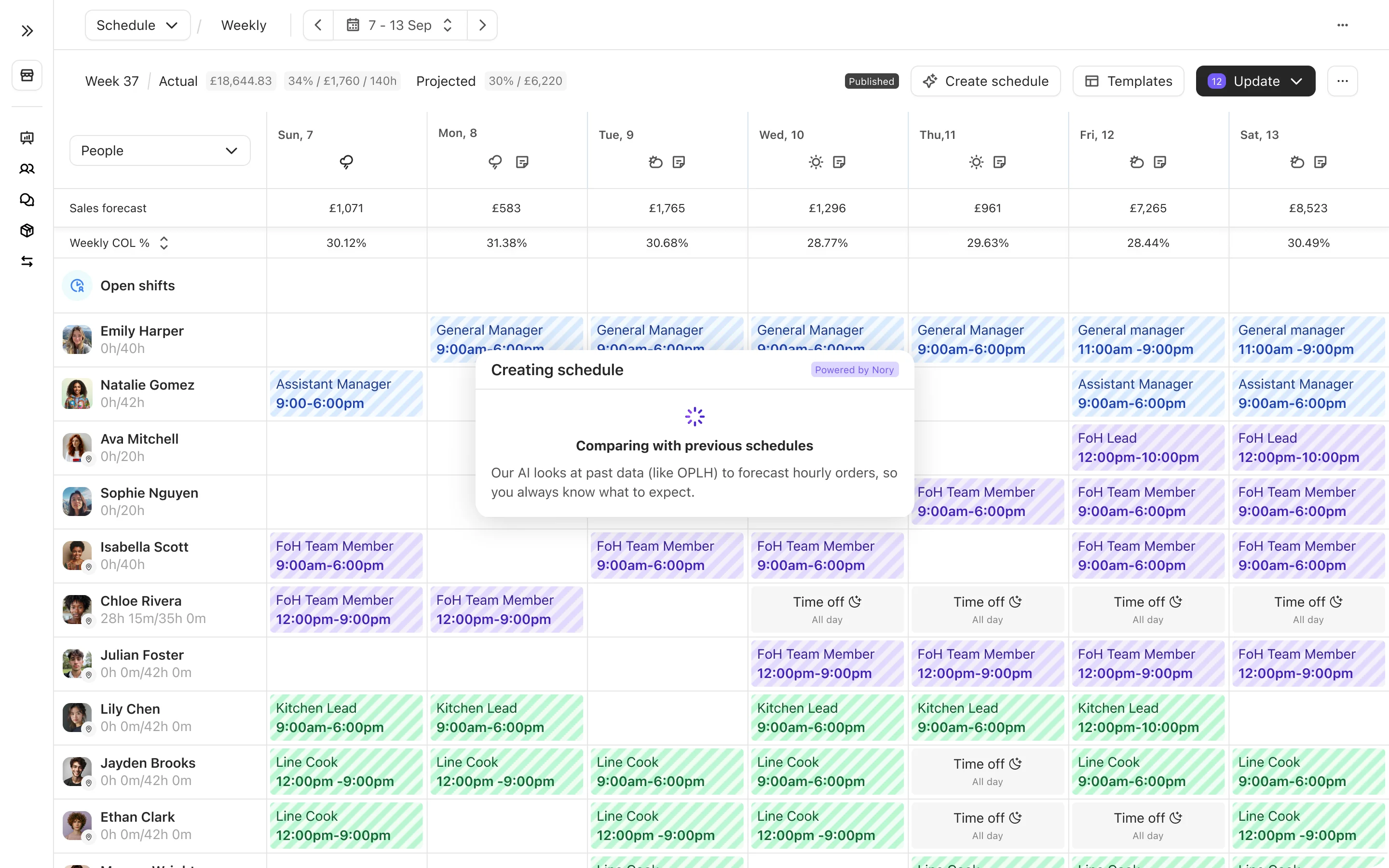
When creating a fairer, smart schedule, you need to remember that it’s not just about filling shifts, but also about balancing customer demand, staff wellbeing, and compliance. By using the below five ways, you make your schedule work better for you and your staff:
- Forecast demand
First things first, you need to forecast demand and understand how many people need to be on shift at certain times and days. Look at historical sales data, reservations, and seasonal trends to predict when you need more hands on deck.
- Guarantee the right skills
It’s important that your shifts are covered with a mix of roles, that way, every bit of service can be managed. Remember to be aware of how many senior members are on shift with junior members, as this can make service smoother and provide opportunities for on-the-job training.
- Prioritize fairness
Fairness is key to high staff morale and retention. Ensure popular and unpopular shifts - such as weekends and evenings are shared evenly between staff. Working in hospitality means working undesirable hours - but that doesn’t mean your staff have to do so consistently.
- Ensure compliance
Make sure your schedule is compliant with the Working Time Regulations legislation. This means complying with the maximum weekly hours an employee should work, providing the rest breaks they are entitled to, as well as any annual leave. This way, you can avoid employment tribunal claims.
- Make it collaborative
Don’t make your schedule something that is exclusively dictated by managers, invite your staff to submit their availability, swap shifts, or request PTO through workforce management software. With more collaboration, you can reduce the chance of last-minute changes occurring and give staff more control of their own schedule.
Lead smarter. Deliver more.
Explore how Nory equips restaurant teams to optimize operations with its restaurant management software - get in contact to book your free demo today.
How to create a schedule: FAQs
How can I effectively manage shifts and responsibilities in a schedule?
Allocate responsibilities based on skills and experience, encourage cross-training, and allow staff to swap shifts (with approval, of course).
What role does communication play in creating a successful schedule?
Transparent communication is vital for sharing the schedule, encouraging feedback, and implementing necessary changes. It helps you create a schedule that suits everyone’s needs, and makes sure that your entire team knows when their shifts take place.
Why is it essential to monitor and evaluate the schedule regularly?
Regular evaluation helps identify areas of improvement, ensuring your scheduling approach remains successful and adapts to any changes in demand.
How can I ensure that my restaurant schedule balances work-life for my staff?
Consider employees’ availability, preferences, and personal commitments when creating the schedule. Encourage downtime, schedule breaks, and make sure to provide enough days off between consecutive shifts.