Unleash your secret weapon: Labor cost optimization

Let’s talk labor cost optimization.
You’d be forgiven for thinking labor cost optimization is simply cutting hours to save money. Instead, it’s a much more complex and nuanced concept that can boost your profits, protect service quality, and give you that competitive edge – if it’s done right.
Here’s the lowdown.
How to think about labor costs
Everyone knows the restaurant industry is harder than ever, right? Whether you want to focus on minimum wage rises and labor shortages, or customer expectations and inflation, it’s tough out there.
Which is why most restaurant owners, at some point, sit down and face the reality that labor is their single biggest controllable expense. We’re talking 25-35% of revenue.
And that can make them see it as waste, something to feel resentful about. Something to cut.
But it’s entirely possible to take a step back and see labor costs as a strategic lever to pull, rather than a problem. To see that you can use data and streamlined business operations to take control of your labor costs. To see that mastering labor costs could be your ticket to healthier, more profitable business.
But let’s take a step back
What do we mean by labor cost optimization? It’s a strategic process that aligns your staffing levels and scheduling with your operational needs to maximize productivity and profitability. Or in other words, having the right people, at the right time, for the right cost.
So, not cutting. Just being smarter. Labor cost optimization is about using data to forecast demand, then using that information to develop smarter schedules, cutting wasted hours, rather than people. It means every hour of labor counts.
Because when your staff’s time is more efficient, you can start to see real benefits: revenue freed up, lower labor costs, money you can put into fun things like guest experiences, renovations, talent, or growth. You’re a streamlined labor machine that’s better equipped to handle market swings. Your agility means you can flex to demand. You’re more resilient. The long-term outlook looks better.
So, what makes for great labor cost optimization?

- Accurate sales forecasting: Using historical and real-time data to build an accurate picture of demand on specific days and times, so you can match your staffing to it.
- Smart tools (not spreadsheets!): Using tools that track staff in real-time to show how labor costs match sales. This can be used for in-the-moment calls, but can also feed into long-term data to give you intelligent, action-based insights you can use to plan more efficiently.
- Clear KPIs: Setting – and having visibility of – key performance indicators like labor cost percentages (ideally as low as possible), sales per labor hour, and customer satisfaction. They can all help you understand and grapple with labor cost optimization more effectively – even in real-time. Keeping an eye on them means you can make the proactive adjustments that make the most sense.
And what doesn’t?

- Overstaffing and understaffing: Getting staff wrong may be one of the most common mistakes in the industry, but it is avoidable. Overstaffing means your labor costs shoot up, even when your profits aren’t. And understaffing can hit the customer experience when it comes to wait times, food quality, and employee happiness. Guesswork just doesn’t cut it.
- Being unaware of demand patterns: Holiday? Football team playing down the road? Pouring with rain? There are so many factors that can affect demand; if you’re not across them, you’re doomed to get staffing wrong – and miss out on chances to capitalize on the rush.
- Static schedules: By now you might be seeing a theme. Relying on static, finger-in-the sky guesswork doesn’t make for good labor optimization. Using a dynamic, real-time platform that can react to changes fast is very much a great start.
Where Nory comes in
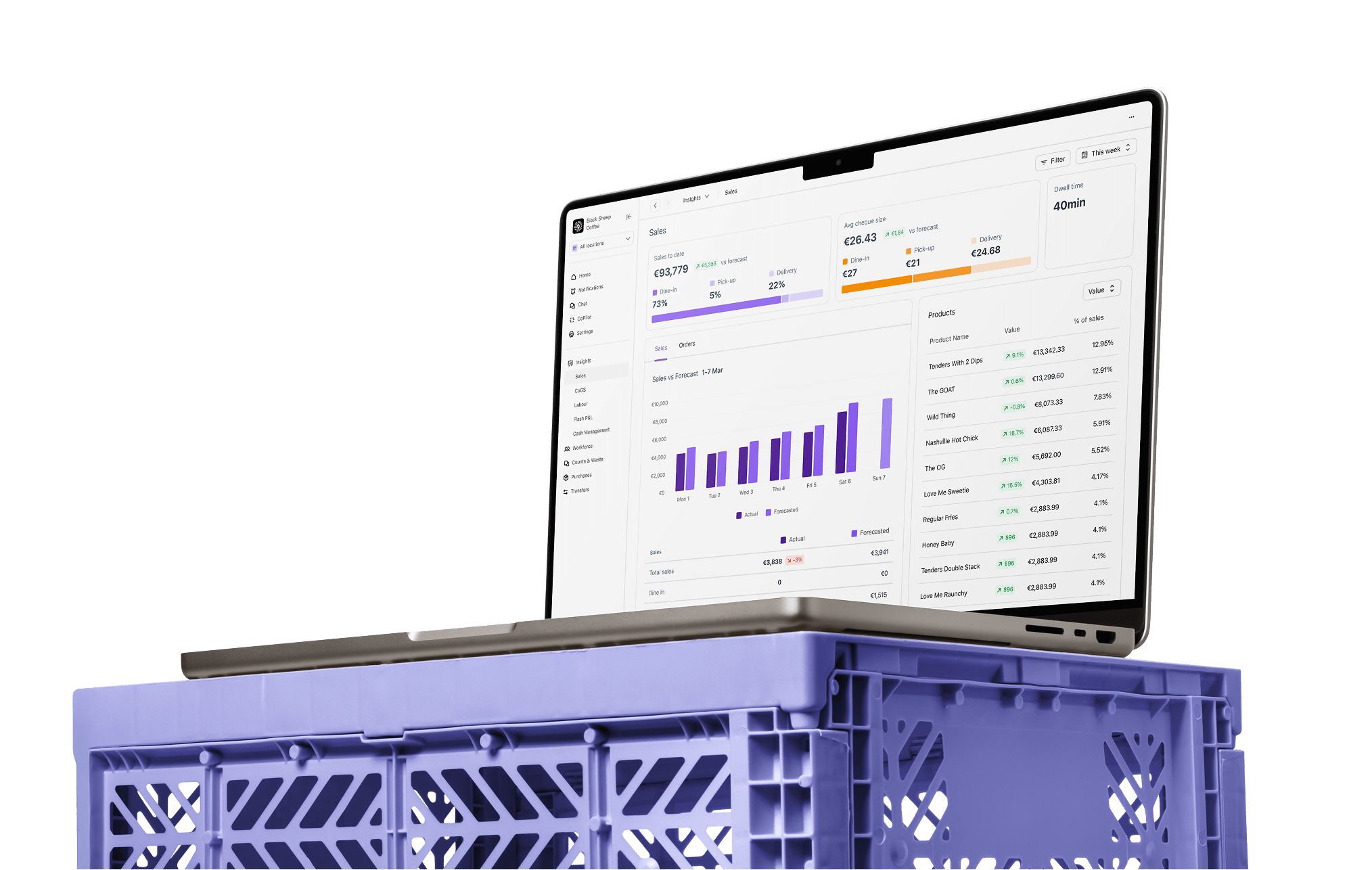
Nory’s all-in-one, AI-powered restaurant management platform has helped businesses around the country cut their labor costs, improve profitability, and streamline their operations.
Take Rocksalt, the award-winning cafe and restaurant. With multiple sites and no real-time labor management system, they found it hard to track schedules and optimize shifts to meet demand. Our real-time insights helped them accurately predict demand across venues to maintain optimal staffing levels at each location, cutting labor costs by 7% and forecasting sales to within 97.5% accuracy.
Barge East cut labor costs by 10% by using our platform to put everything – shift scheduling, stock counts, labor tracking, and real-time sales forecasting - all in one place.

We’ve also just rebuilt and supercharged our Labor Insights feature to be faster, smarter, and more intuitive. That means it’s now easier than ever to spot trends in cost and productivity at every level, make more informed decisions, and boost profitability.
So, ready to start getting to grips with labor costs optimization? We make it easy. Book a chat today to learn more.
FAQs
What is a good labor cost percentage for restaurants?
A good labor cost percentage in hospitality is typically between 25–35% of total revenue, though this can of course vary depending on a number of factors. The main thing is to maintain service quality while controlling costs through accurate forecasting and efficient scheduling – all of which Nory can help with.
How can restaurants reduce labor costs without cutting service?
Focus on better forecasting, dynamic scheduling, and cross-training staff so they can cover multiple roles. This ensures the right coverage during busy periods while avoiding overstaffing in quieter times. Nory’s Labor Insights can manage forecasting and scheduling all in one place.
What tools help with labor cost optimization?
Modern restaurant management systems, like Nory, use AI to forecast sales, recommend optimal schedules, and track labor performance in real time — helping operators make data-driven decisions.
How often should labor costs be reviewed?
Weekly reviews are best for keeping costs in check. Tracking labor as a percentage of sales in real time allows operators to adjust shifts on the fly and prevent costly overages. Instead of using static methods of tracking, tools like Nory can help you analyze data, spot trends, and act more effectively.