How the UK Budget will impact your restaurant’s P&L in 2026

The 2025 UK Budget has delivered another difficult set of numbers for hospitality. While there were no new shocks to VAT, NI or CoGS support, operators will still face a meaningful profitability squeeze from April 2026 when statutory wages rise again.
Labour is the only line of the P&L that moves next year — but it moves enough to matter.
As Kate Nicholls OBE told Conor on What’s Cooking?:
A third of businesses have already cut operating hours. A quarter have no cash reserves. Operators are still absorbing last year’s NI changes — and now they’re being hit again.
For a typical restaurant turning over £700,000 annually, the new wage bands will increase labour cost and reduce EBITDA unless operators make proactive changes to deployment, labour mix and cost control.
This article breaks down the impact and shows how operators can protect margin ahead of April 2026.
What changes in 2026
New statutory wage rates from April 2026
- Age 21 plus: £12.21 → £12.71
- Age 18–20: £10.00 → £10.85
- Age 16–17 and apprentices: £7.55 → £8.00
In hospitality, most paid hours sit within these bands, so even small headline increases become substantial cost movements once applied across an entire workforce.
What does not change
- VAT remains at 20%
- NI contribution rates remain unchanged
- No support for energy or food inflation
- Business rates reform will not deliver meaningful benefit until late 2026
- Transitional relief for rates is still unclear
Gary Digby summarised the issue well:
“This Budget gives clarity, not relief. Labour gets more expensive — and nothing offsets it.”
Breaking down the P&L impact
To illustrate the effect, let’s begin with a typical restaurant generating £700,000 in annual revenue.
A strong operator typically runs at:
- Labour: 32%
- CoGS: 30%
- EBITDA: 15% (£105,000)
Using hospitality workforce averages and the new wage bands, labour cost increases by around 4.3% next year.
That shift alone erodes margin, even before other pressures show up.
Updated 2026 P&L without mitigation
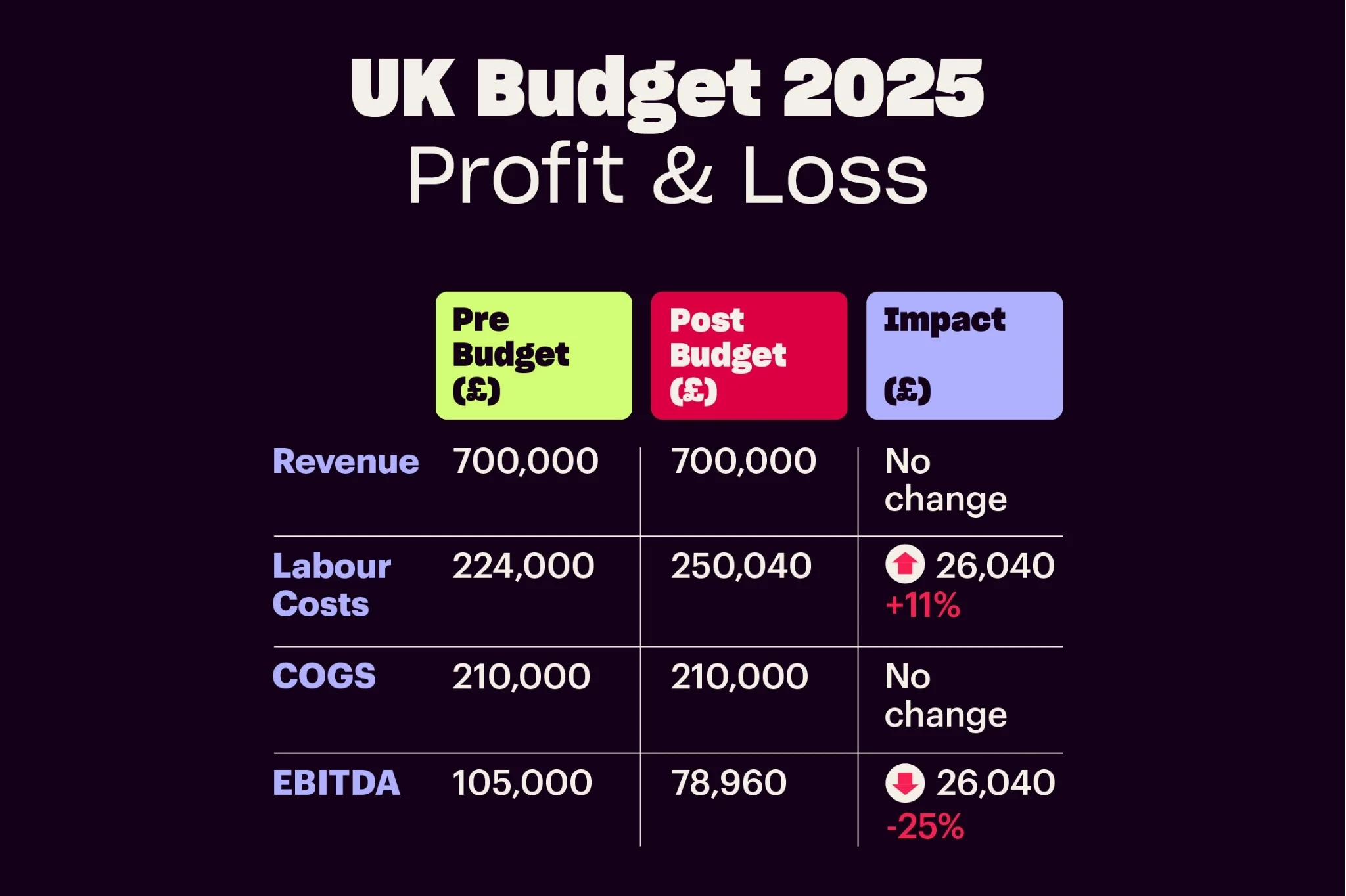
A venue that would normally land at 15% EBITDA loses approximately 140bps from wage increases alone.
Gary explains why this bite is so dangerous:
There’s no 15–20 percent buffer in hospitality. A 4–5 percent increase in labour goes straight to the bottom line.
See this impact for your own sites
Use our calculator to model the April 2026 wage changes →
Why this matters
The Budget did not introduce any new supports to offset wage inflation, energy volatility or food cost pressures. Instead, it places a heavier burden on labour while revenue growth remains uncertain.
As Kate described bluntly:
“It is tax on tax and death by a thousand cuts for some operators.”
Operators are already responding in tough ways:
- Cutting trading hours
- Reducing staff levels
- Delaying openings or refurbishments
- Rethinking youth hiring due to steep percentage increases
- Implementing selective price rises that risk dampening demand
The operators who will stay strong in 2026 are the ones who tighten forecasting, labour deployment and GP control — now, not later.
Taking back your margin with Nory
Wage increases cannot be avoided, but operators can control how efficiently labour is used and how much waste sits inside the operation.
This is where Nory partners typically protect — and often expand — margin.
1. Smarter labour deployment
Nory predicts demand hour by hour and recommends staffing levels that match expected guest volume, not habit or guesswork.
Operators can:
- Reduce unnecessary quiet-period staffing
- Increase throughput during peak hours
- Improve shift productivity across sites
- Reduce overall labour cost while maintaining service
Many partners achieve 10–15% reductions in labour spend through better deployment and scheduling discipline.
Kate emphasised this shift:
“Technology will be essential to ensure operators are smarter at scheduling and stock control. It’s about matching costs to demand as tightly as possible.”
2. Stronger GP control and lower waste
Forecasting impacts more than labour — it drives better ordering and prep.
With Nory, operators:
- Stop over-ordering
- Reduce prep-driven waste
- Improve GP consistency daily
- See P&L issues live rather than weeks later
Customers regularly report GP improvements of up to 2% of revenue.
What the numbers look like after optimisation
Here’s how the same £700,000 venue performs once Nory's improvements are applied:
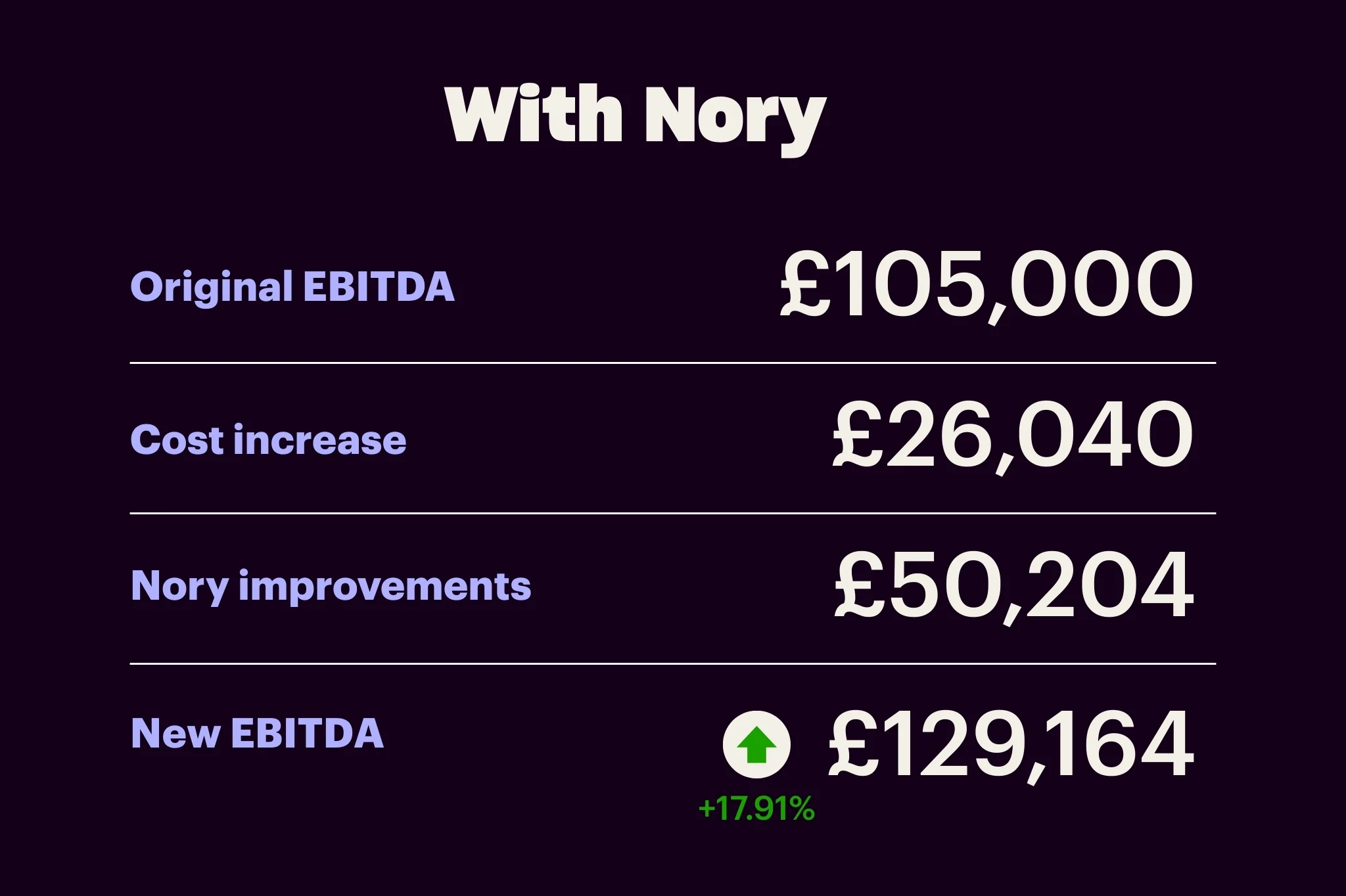
Despite rising wages, the operator becomes more profitable than before, driven by efficiency gains that compound daily.
As Kate reminded operators:
You can’t absorb these increases without creating efficiencies. You need to future-proof the business now.
Model the impact for your own sites
Every restaurant is different — labour mix, trading patterns, demand shape, productivity levels.
Use our tool to get a tailored view:
Measure the impact of the Budget on your labour costs in 2026 →
Hear directly from industry experts
Hear Kate Nicholls OBE break down the Budget’s real-world impact on operators:
Read finance expert Gary Digby’s perspective:
Taking action now
The Budget adds pressure — but it also creates a clear moment for operators to build tighter, more resilient operations before costs rise.
Operators with strong forecasting, smart deployment and tighter GP control will protect their margins. Many will improve them.
If you want help modelling the impact or exploring ways to offset rising costs: speak with our team.