What does operational excellence really mean in restaurants

“Operational excellence” is thrown around constantly in hospitality, showing up in strategy decks, leadership conversations, and job descriptions. Everyone wants it, and everyone claims to be working towards it.
But when you actually ask operators what it means in practice, the answers vary.
To some, it’s running a smooth, predictable service where nothing falls behind and guests never feel the pressure behind the scenes. To others, it’s hitting labour and food cost targets week after week without compromising quality.
If you strip it back, though, operational excellence is at the core of something much more practical: how to improve restaurant operations in a way that actually scales.
So what does this look like in practice?
Let’s find out. In this article, we break down what operational excellence actually entails, the common challenges operators face, and key advice from industry leaders.
What does operational excellence look like in restaurants?
Wondering how to spot operational excellence?
Spoiler alert: You can’t.
Why? Because operational excellence is invisible.
Operational excellence is providing fantastic service and a fantastic product… it’s when the customer doesn’t notice what is going on.
William Connors, International Retail Systems Manager at Starbucks
It’s a simple idea, but one that’s often overlooked. When operations are working properly, they fade into the background.
Customers don't think about staffing levels, prep processes, or inventory planning. They don’t notice whether a shift was understaffed or whether deliveries arrived late. They simply experience a smooth, seamless visit where everything happens as it should.
That’s the paradox. The better your operations are, the less visible they become.
If the customer doesn’t notice when things are going on, that’s when excellence is happening.
Clive Watkins, Regional Managing Partner at Pizza Pilgrims
Most operators don’t recognise operational excellence when they have it. They only notice when something breaks, like when service slows down or when orders are delayed.
Excellence, by definition, is what happens when none of those things occur.
How to improve restaurant operations: What the experts say
Improving restaurant operations is about building a business that runs with clarity, consistency, and less dependency on constant intervention.
The sections below break down how to build that in practice (with some valuable insights from industry leaders thrown into the mix – no need to thank us, you’re welcome).
1. Start with consistency
At the heart of operational excellence is consistency. Not occasional brilliance, not standout shifts, but repeatable performance.
The only way that you can get consistency is if you know what you're trying to achieve.
Fran Astbury, Operations Director at Bone Daddies
When operators define clear standards (and apply them consistently across every shift, team, and location), they remove ambiguity from the operation. Everyone knows what “good” looks like.
.webp)
Service steps are followed the same way, prep is completed to the same level, and targets are understood before shifts even begin.
That clarity has a direct impact on performance. Teams move faster because they’re not second-guessing decisions and managers spend less time correcting mistakes because expectations are already understood.
Consistency also creates control at scale. When standards are the same across locations, performance becomes measurable. Operators can compare multi-site performance, spot gaps, and improve systems rather than chasing individual issues.
Without that baseline, it’s difficult to know whether a problem is operational, behavioural, or just inconsistency in execution.
But this clarity is where many businesses fall short.
Without clearly defined standards, teams are left to interpret what “good” looks like on their own. Over time, that leads to variation between shifts, managers, and eventually locations.
Consistency isn’t accidental. It’s built through clear expectations, training, and ongoing visibility into performance. When people understand exactly what is expected (and have the right tools to deliver), consistency becomes achievable.
2. Make sure everything works seamlessly together
One of the biggest misconceptions about operational excellence is that it’s tied to a single area of the business. In reality, it’s the result of alignment across all of them.
Ops excellence is basically all the departments… pulling in the same direction for the guest.
Jonny Bramwell, Regional Head of Ops at Rosa’s Thai
That alignment spans every part of the operation. Kitchen execution, front-of-house service, supply chains, scheduling, and staff training all play a role.
.webp)
When these elements are connected, the operation runs with far less friction. Forecasted demand informs staffing levels, the kitchen is prepped accordingly, and front-of-house teams are set up to deliver the right level of service.
Nothing is left to chance, and nothing operates in isolation.
The result is a smoother service, better guest experience, and tighter control over restaurant costs. You aren’t making last-minute adjustments to compensate for gaps elsewhere. Instead, each part of the operation supports the next.
But when one of those elements is out of sync, it creates friction. And when multiple elements are misaligned? That friction compounds.
This is why many operators struggle to “fix” their operations by addressing one issue at a time. The problem is rarely isolated. More often, it’s systemic.
Disconnected tools, inconsistent processes, and limited visibility make it difficult to see how decisions in one area affect performance in another. Operational excellence is what happens when those silos are removed, and the business operates as a single, connected system.
And the best way to remove those silos? Use a single platform to manage your restaurant operations, like Nory.
Nory brings key parts of restaurant operations (like sales data, labour scheduling, and demand forecasting) into one place. As a result, you can make informed decisions that impact efficiency and profitability across all sites.
Look at Roasting Plant Coffee as an example. Using Nory, the coffee shop aligned staffing with customer demand to reduce labour costs by 18% in just two months.
The business also improved forecast accuracy, giving managers clearer visibility and more control over day-to-day operations.
3. Set clear standards and relieve the pressure of “perfection”
Operational excellence isn’t about perfection – it’s about standards
There’s a tendency to associate operational excellence with rigidity: tightly controlled processes, strict rules, and robotic execution. In reality, the goal is much more human.
Operational excellence doesn’t mean eliminating personality or flexibility. It’s about creating a reliable foundation that allows teams to perform at their best. When standards are clear and systems are supportive, teams can focus less on firefighting and more on delivering a great experience.
It’s not about making everyone robotic… it’s about when you walk into a restaurant, does it feel great?
Jonny Bramwell, Regional Head of Ops at Rosa’s Thai
If customers start to notice inconsistencies (like long waits, missing items, disengaged service, or a shift in quality from one visit to the next), that’s when operational issues become visible.
From here, the guest experience starts to break down, and trust in the brand begins to erode. Often quietly at first, then reflected in lower repeat visits, weaker reviews, and declining loyalty over time.
From a diner’s perspective, their experience should feel effortless. That feeling is the outcome of well-run operations, even if the customer doesn't consciously recognise it.
.webp)
4. Use restaurant technology to standardise processes and make accurate predictions
In many restaurants, planning still relies on a mix of spreadsheets, experience, and last-minute adjustments. That might work at a small scale, but it quickly breaks down as complexity increases with more sites, shifts, and variability in demand.
This is where restaurant technology like Nory plays a critical role.
By digitising core processes (like scheduling, forecasting, labour management, and performance tracking), operators create a consistent operational framework across every location. Everyone is working from the same data, the same assumptions, and the same targets.
.webp)
Standardised systems also ensure that processes are followed consistently across every site, from how you build rotas to how you track labour costs. It reduces variation between locations and makes it easier to understand what “good” actually looks like.
This is what actually drives operational excellence. Once processes are standardised and forecasting becomes more accurate, operators move away from guesswork and inconsistency.
Decisions are no longer dependent on individual managers, local habits, or different interpretations of how things should be done. Every site operates from the same playbook, with the same expectations and the same benchmarks.
That consistency creates control. Performance becomes measurable in a meaningful way, so it’s easier to spot what’s working, what isn’t, and where small issues emerge before they turn into bigger problems.
Over time, that’s what operational excellence looks like in practice: a business that performs reliably across every location.
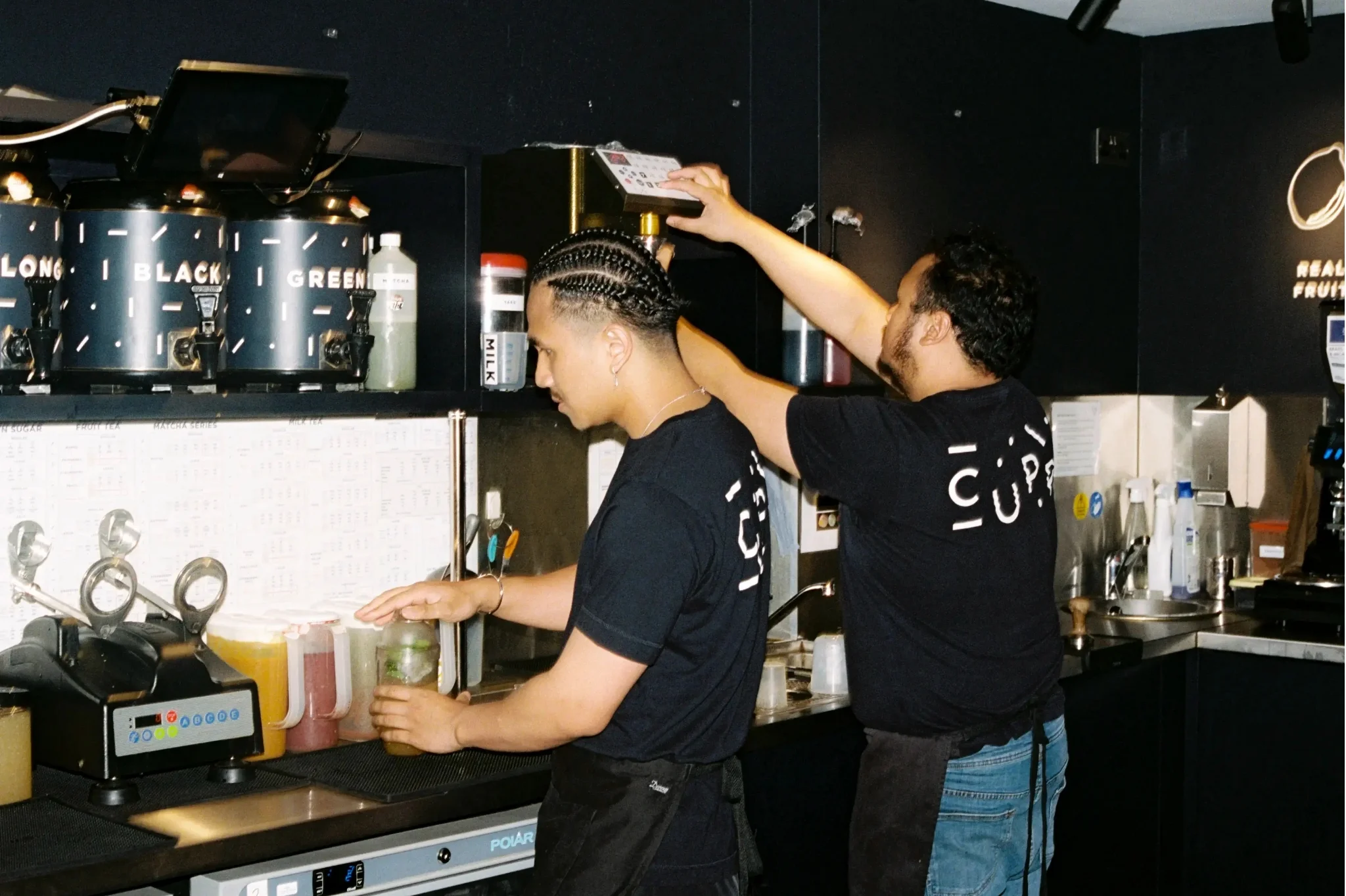
Nory in action: Bubble CiTea, a multi-site bubble tea brand, used Nory to improve forecasting and standardise labour planning across its locations. As a result, the business achieved a 44% reduction in food waste, alongside more consistent scheduling and better visibility of performance across all locations.
Where most operators get stuck with operational excellence
Understanding operational excellence is one thing. Delivering it consistently is another.
The gap usually comes down to execution. Achieving this level of consistency requires visibility – not just into what happened last week, but into what’s happening right now and what’s likely to happen next.
But many operators are still relying on fragmented tools, manual processes, and instinct. While those approaches can work in the early stages, they become limiting as the business grows.
The solution?
Using a restaurant management system like Nory.
With Nory, operators aren’t jumping between systems or stitching together spreadsheets to understand what’s going on, and can make fast and informed decisions to streamline operations and improve the bottom line.
For example, an operator can adjust staffing levels in real time based on live demand, rather than discovering they were over or understaffed after the shift has already impacted costs or service.
%20(1).webp)
Why most restaurant operations break at scale
For single-site operators, inefficiencies can often be absorbed. Teams compensate, managers step in, and problems are solved in the moment. But as a business grows, those same inefficiencies become harder to manage.
If I don’t have all those foundational points tightened up, we won’t be able to hit the extra sites… it’s a copy and paste model.
Vimal Arumugm, Co-Founder at Baked Bird
Scaling a restaurant business requires repeatability. Each new location needs to deliver the same level of quality, the same guest experience, and the same financial performance. Without consistent systems and processes in place, that becomes almost impossible.
This is where operational excellence shifts from being a “nice to have” to a necessity. It’s what allows operators to replicate what works, avoid repeating mistakes, and maintain control as complexity increases.
Growth doesn’t fix operational issues. It exposes them.
The only way to stay in control at scale is to remove ambiguity from decision-making. That means shifting from reactive problem-solving to structured, repeatable execution across every site.
Platforms like Nory support this shift by giving you a single operational view of the business.
Instead of chasing problems after the fact, you identify patterns early, enforce consistency in how decisions are made, and tighten performance before small issues become systemic ones.
Turn operational excellence into profitability with Nory
Operational excellence isn’t a one-off initiative or a short-term project. It’s the result of building a system where you align every part of the business around the same goals, standards, and expectations.
When it’s working as it should, it doesn’t stand out. It doesn’t draw attention to itself. It simply creates an experience that feels smooth, reliable, and effortless. Which is exactly the point.
But achieving that level of consistency at scale requires more than intent. You need connected systems, shared visibility, and the ability to act on live operational data.
That’s where Nory comes in. Our software helps you move from reactive decision-making to proactive control so every site runs to the same operational standard.
Book a demo and start building more profitable, consistent operations today.