.webp)
Your team cannot run a modern hospitality business on spreadsheets

Spreadsheets were never designed to run hospitality operations at scale
Spreadsheets have been part of hospitality for decades. Most operators have inherited them, built them, rebuilt them or tried to maintain them through growth. They are familiar, flexible and inexpensive, which is why many teams rely on them far longer than they should. But familiarity does not equal suitability.
Modern hospitality moves faster than a spreadsheet can track. Venues today manage higher guest volumes, more complex service styles, tighter margins and larger teams than ever before. Businesses run pop ups, multi vendor markets, seasonal events, rotating menus and multi venue portfolios, often all at the same time. This level of operational complexity cannot be sustained on tools that were created for static, linear workflows.
Spreadsheets may work for recording information, but they cannot support the decision making that operators need in real time. That gap has real financial consequences.
The operational risks hidden inside spreadsheet based systems
.webp)
Human error is unavoidable and often invisible
Even the most meticulous operators cannot prevent occasional formula errors, accidental deletions or broken links within a spreadsheet. These issues are common, but what makes them dangerous is how quietly they occur. A single broken cell in a payroll sheet or a misapplied formula in a stock tracker can take hours, sometimes days, to identify and correct.
These errors slow down managers, delay reporting and create inconsistencies between venues. They also make the data less trustworthy, which undermines decision making at every level.
Spreadsheets cannot reflect real time behaviour
Hospitality teams make hundreds of decisions each day. A spreadsheet that is updated weekly or even daily cannot reflect the nuance of those decisions or the impact they have on labour, stock and guest experience. This delay creates a reactive operating model where issues are discovered only after the financial impact has already occurred.
Operators need visibility into what is happening as it happens. Spreadsheets cannot provide that kind of insight.
Fragmented information leads to fragmented teams
When labour lives in one document, stock lives in another, waste lives somewhere else and scheduling lives on a separate platform entirely, teams are forced to operate from disconnected sources of truth. This results in inconsistent reporting, misaligned expectations and unnecessary duplication of work.
This fragmentation is more than an inconvenience. It is a structural barrier to scale.
The real cost of spreadsheet dependency
Operators often underestimate the financial weight of spreadsheet driven processes because the cost does not appear as a line on a P and L. Instead, it appears as:
- Time spent fixing errors rather than coaching teams
- Misjudged labour that creeps above target
- Stock variance that goes unresolved because the data is unclear
- Managers who spend their days copying and pasting rather than focusing on guests
- Training time lost due to lack of standardisation
- Higher turnover caused by unnecessary administrative burden
None of these issues appear in a spreadsheet. All of them reduce profitability.
Why modern hospitality requires connected systems
Real time data creates real time decision making
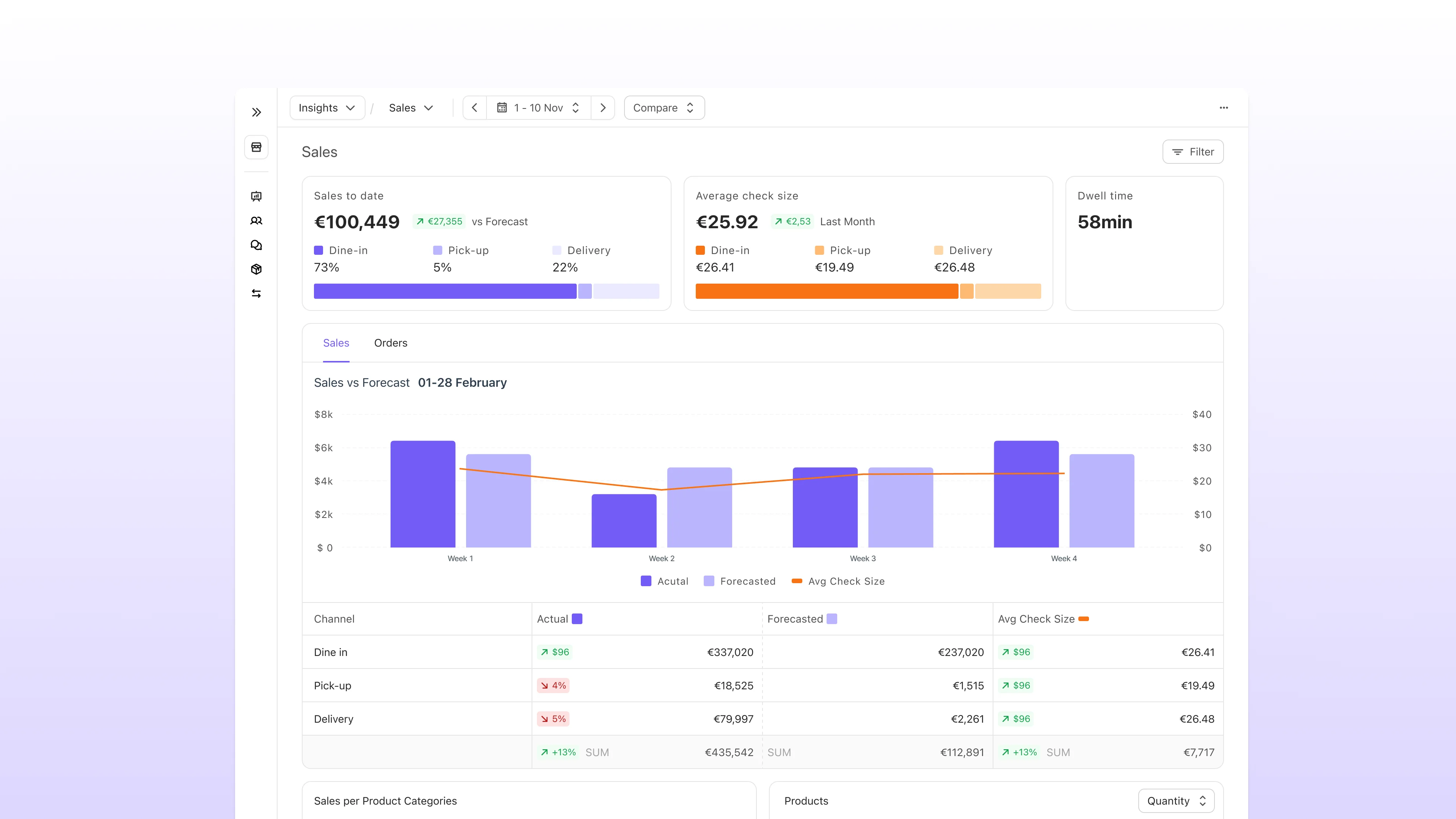
A connected system allows teams to understand demand, labour, stock and wastage as they unfold throughout the day. Managers can make informed decisions about staffing levels, prep needs and ordering accuracy without relying on historic patterns or guesswork.
This clarity is not a luxury. It is the foundation of operational control.
Consistency becomes easier to maintain
When all venues operate from the same platform, daily habits align. Waste is logged consistently. Labour rules are followed consistently. Stock is interpreted consistently. Reporting becomes a shared language rather than a series of individual interpretations.
This level of consistency reduces risk and strengthens the business as it grows.
Managers get to focus on managing again
The best managers do not spend their days maintaining spreadsheets. They spend their time supporting teams, managing service flow, connecting with guests and solving operational challenges. When systems take care of the administrative work, managers gain back the time and capacity to actually lead.
This improves performance, culture and the overall health of the operation.
The shift from manual control to intelligent visibility
.webp)
Many operators hold on to spreadsheets because they associate them with control. They want to see where every number comes from. They want to feel close to the detail. But control does not come from manual input. Control comes from accuracy, consistency and clarity.
A connected operating system provides all three.
It gives operators total visibility without the risk of human error. It centralises information so that teams can work from the same reality. It replaces assumptions with data and replaces reactivity with proactive management.
When businesses make this shift, they often realise how much capacity they were losing each week simply by maintaining outdated processes.
The bottom line
A modern hospitality business cannot operate effectively on spreadsheets. The pace, complexity and financial pressure of the industry demand systems that reflect what is happening in real time, not systems that attempt to recreate that reality after the fact.
Spreadsheets may feel comfortable, but they are holding teams back from the performance, efficiency and consistency they are capable of achieving.
The operators who move beyond them are the ones who build businesses that can grow.
To see how one multi venue business made this shift and the operational impact it created, you can read Digbeth Dining Club’s full success story here: Inside Digbeth Dining Club’s system for 0.38 percent labour accuracy and consistently strong GP.