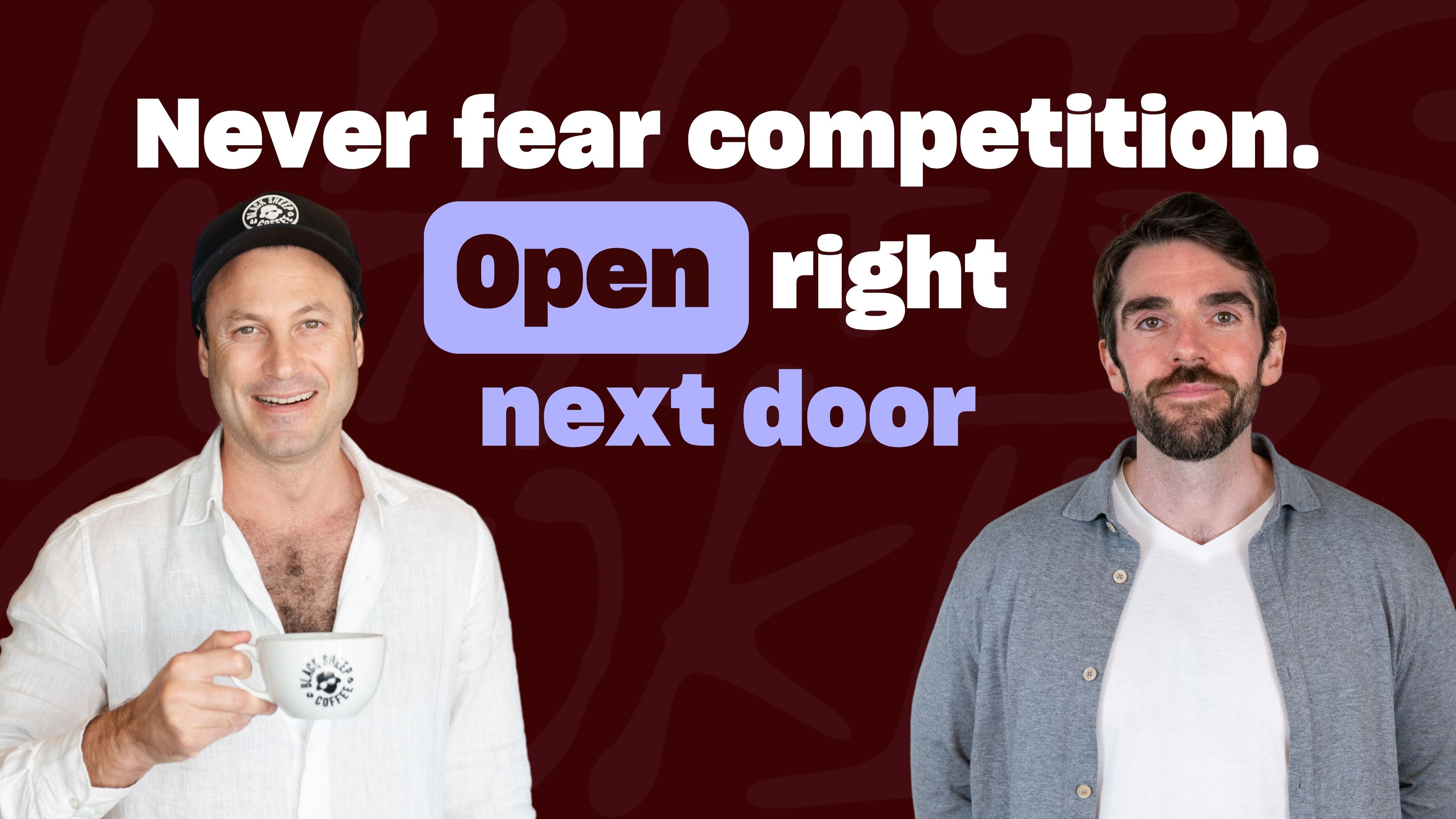
00:00:00
Andrew Maxwell
We created a culture where we promote it within and that sends a really positive signal to your team that look, you know, their support, you're creating opportunity for them. How can we leverage technology to give us that competitive advantage? So first thing we did was thinking about look, how do we make the lives of our team easier? How do we make the lives of our customers easier? And that's a starting point.
00:00:17
Conor Sheridan
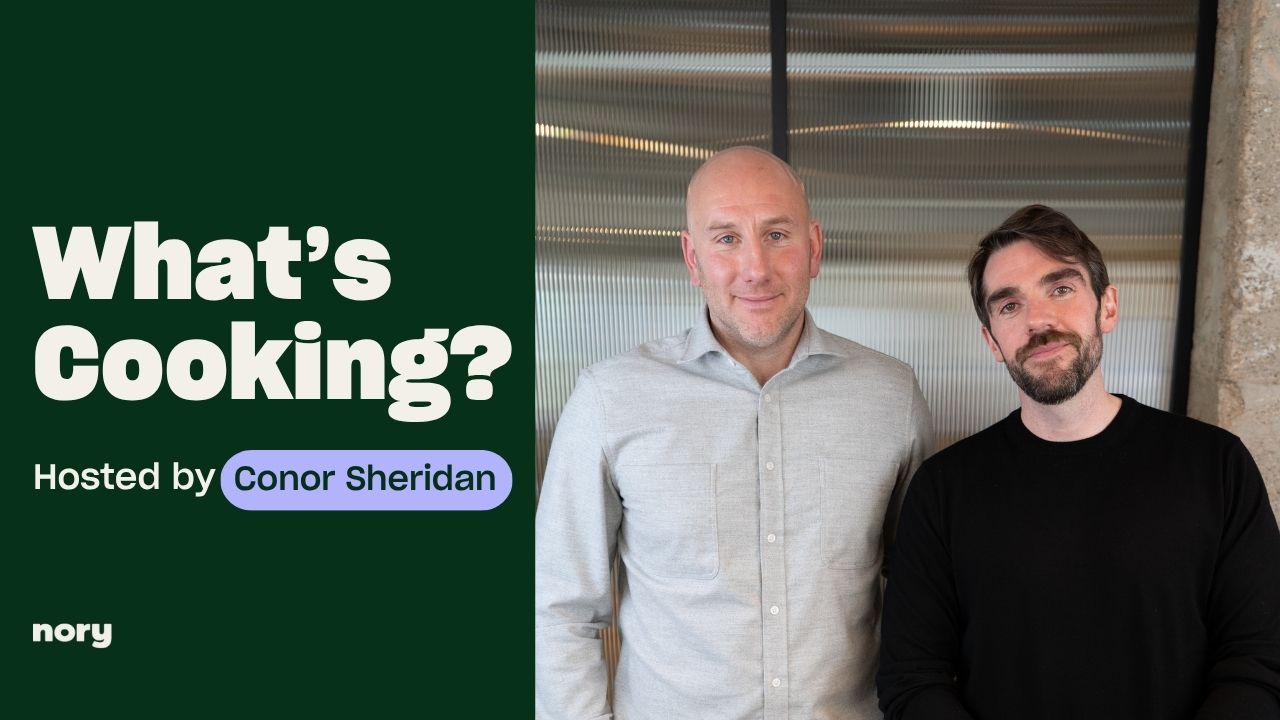
I'm Conor Sheridan, founder and CEO of Nory and welcome to What's Cooking. My guest today is someone who's seen scale from both sides of the table. Andrew Maxwell had built Bujum into Ireland's largest QSR Mexican chain before completely shifting gears into the investment space. Now as an operating partner at Inbiba, who backed brands such as
Farmer Jay, House of Gods and Opener. He's guiding ambitious founders through the realities of growth from operational chaos to capital efficiency and strategy. This episode will dig into the inflection points that can stall a scale up. The biggest red flags that tell Andrew that a business is not ready for investment and why technology if used well or badly is often the deciding factor. We also talk about the messy middle when founders tried to balance brand identity and top line growth, but operational and capital efficiency.
and investor involvement shifts as a business moves from 5 to 10 to 50 sites. So let's get into it.
00:01:17
Conor Sheridan
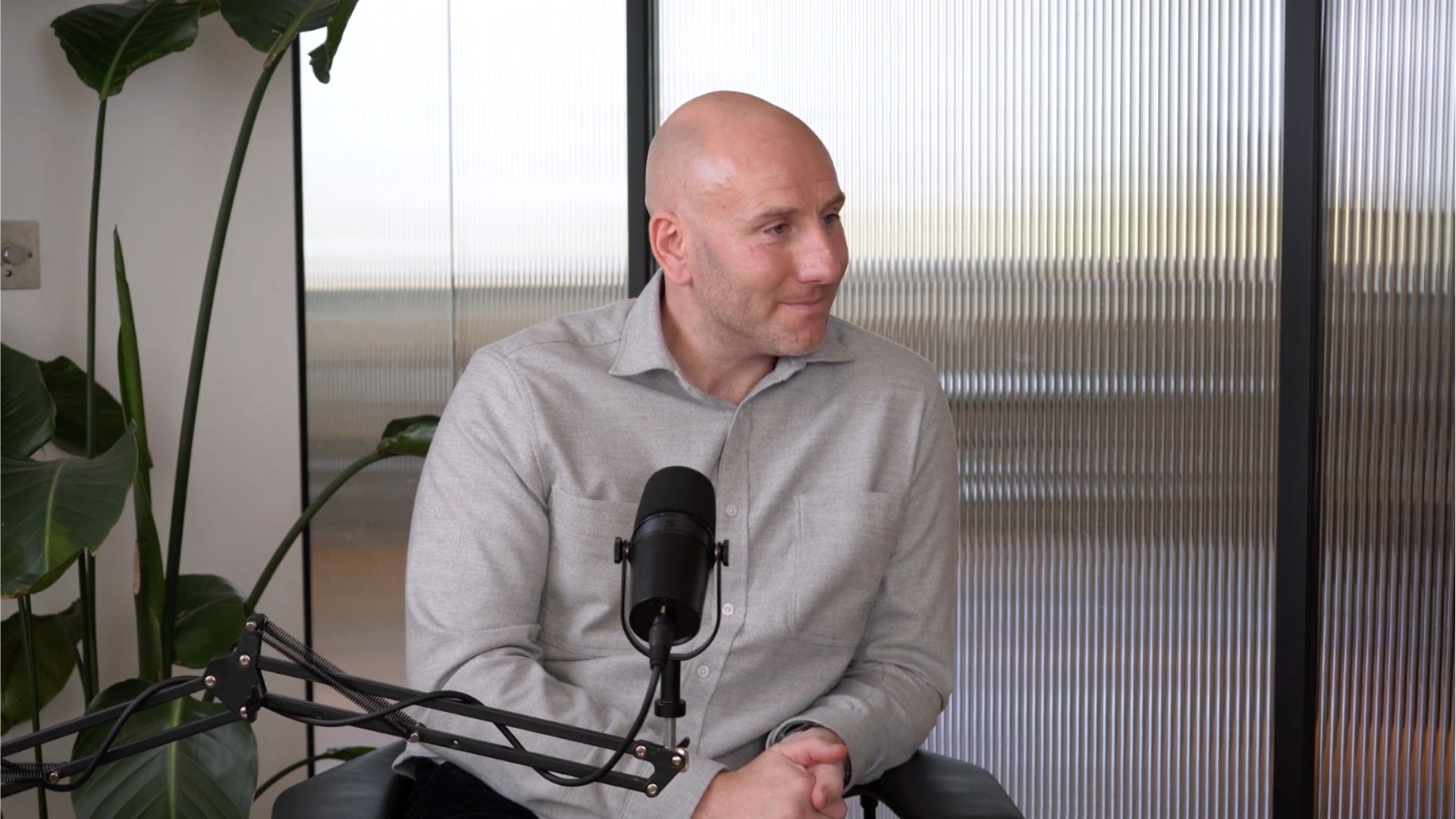
Andrew, welcome to What's Cooking. Great to have you here. We've had a lot of different operators on the podcast, ranging from CFO, CTO, CEOs. We've had people on the flip side who've looked at investments. We've not had anybody who's seen both sides of the spectre. So has run a business, scaled it, exited it successfully, and is now an investor into hospitality amongst other industries. If we start with your background as an operator first, took on Bujum on the early days and scale that to
00:01:20
Andrew Maxwell
Thank you, Connor. Great to be here.
00:01:47
Conor Sheridan
largest Mexican QSR, a Mexican concept in Ireland and then subsequently exited. It was an incredible success story for Irish hospitality that's now launched in the UK. Could you talk us a bit about what that experience was like to build up that business and then subsequently exited and what were the key inflection points to be able to get that outcome?
00:02:07
Andrew Maxwell
Yeah, I suppose maybe take a take a step back and see how we ended up at Bozum. I mean, I started my hospitality career out in the States, pretty much like every Irish person in the Irish pub business. We had some pubs in Florida and then Arizona. And while I was there, I pretty much lived on Chipotle, which I'm sure we're all familiar with, which is a similar Mexican-style concept. We sold that business in 2014 and moved back home. And coming out of full service restaurants and three o'clock in the morning finishes and nine o'clock starts. I thought to myself there must be an easier way to do this.
And when I came back home, my friend at the time, he had just taken a job with a corporate finance company. And he filmed me up one day and he's like, This guy has you know, he I had him on the lookout for different opportunities. He There's this guy started this small brand, you know, he's he's thinking about moving back to the United States. Would you be interested in having a look at it? So of course went and looked at it, and it was exactly like you know, a carbon effectively a carbon copy of what you put in a style of service. So we managed to do a deal with him. And that was really the start of the whole boosing journey. I suppose like any sort of business and
In the early days, it was it was quite scrappy. So I think when we took over the business, it was about thinking about look how do we set this business up for scale. And it wasn't just about the next two to three units, it was about thinking about look looking at the Ireland as a whole and thinking about the size of the opportunity. So first thing we really did was really get into the business and understand, you know, supply chain and obviously the control quality, we decided to shift to a production kitchen model, which was a probably the first sort of inflection point to us.
was really thinking about how can we execute consistently at scale, not just within Belfast or Dublin. We had to think about how can we reach Cork, how can we reach Galway. So I would say that was really the first sort of inflection point is really nailing down the supply chain and consistency and quality. And then really thinking about our technology stack, really what what what systems do we need to really let us, you know, work at the pace we needed to and obviously also get access to the right amount of data.
00:03:53
Conor Sheridan
Super interesting. Not many operators that I know who go in at two or three venues think about what does 20 look like in terms of like system design. Usually you're trying to figure out how to get to the next few doors. What gave you the confidence to think that like that far ahead or to be able to think that macro straight at the gate?
00:04:10
Andrew Maxwell
I mean, I think it was driven by the fact that we were backed by private equity as well, Bernadette and a and and the private equity model works on a on a growth story. So we have to hit a certain level. But I I think we were ultimately focused on was we we were quite, you know, forward thinking in terms of operators in the states already. We always thought about look, how can we leverage technology to give us that competitive advantage? So first thing we did was thinking about look, how do we make, you know, the lives of our team easier? How do we make the lives of our customers easier? And that's a starting point. So look, you know, we we just backed ourselves and we saw that like, you know
the success of the business in Belfast and how that city could take maybe two to three sites and then you're just making, you know, broad assumptions around Dublin, Cork, Limerick and you land on a you know, a twenty store plan and at that point it's about trying to build infrastructure to to support that.
00:04:53
Conor Sheridan
Sounds easy when you say it, right? Yeah, for sure. I know as an operator who set up a restaurant a little bit after you guys used to look up at Boojum as like, how do you emulate what you've done? But like from a growth point of view, a brand point of view, it became a cult, had a cult following in Ireland and execution wise. Anytime you go into the stores, you can see the speed of service, the sequence of service, the logistics are set up for like a great experience, consistent experience.
00:04:55
Andrew Maxwell
It does sound easy but to have any other.
00:05:23
Conor Sheridan
I think looking in on our research, we saw that 70 % of all the GMs in the business came from the floor up or from different parts of the business. you thought around supply chain system design, was that really a real intentional decision to go, okay, if we're going to scale to 20 stores, we need to have a leadership team that can just come up straight into to run new venues. And how did you manage to execute against that? Because some people say they want to do it, but this just doesn't happen.
00:05:52
Andrew Maxwell
think look any growing business is gonna have problems with food quality consistent systems right I mean you're you're gonna have to solve those and I think that's a continual problem you have to solve and stay ahead of and innovate. For us we worked out really early on that that what was really driving the business was people and and culture. And for us if we there was a clear differential between you know how the the the culture in say for Belfast where the business started
And maybe like the first cork store because you know, when you're the when you're a founder or you're you know, you're in the stores every day, you're effectively setting new standards, you're driving that culture and it it's really easy. So but once you start to put those layers of management in, it sort of dilutes that culture a bit. So we had to really pause and we think about like how do we systemise culture and not just think about the operational side of the business. I mean, it was as simple as it sounds simple, but getting the right you know, head of people, a person you know, getting the right person in the stores, being able to touch the stores every day.
And then, you know, you you did speak about the sort of the GM piece. You know, we we we created a culture where we promoted within and that sends a really positive signal to your team that look, you know, their support, you're creating opportunity for them. And you know, they can see that in front of them. The minute that, you know, you stop creating opportunity for your team, you know, they're they're just gonna look elsewhere, particularly in hospitality where there's a you know, it maybe has a bad rep for high turnover and yeah.
00:07:09
Conor Sheridan
And obviously it works incredibly well, right? And at the outcome for the business. So you've since moved. You're in a new, a new career, a new chapter, a new pasture, as they say. You're now working with Imbiba as a partner there and you're investing out of one of their funds. You invest in hospitality, but you invest in other verticals, which we'll get to. I suppose sticking with hospitality first, you had a really successful career as an operator and an entrepreneur. Anything that you believed really, really intentionally as an operator.
And that was super important to be successful that now on the other side of the table as an investor, you have a different point of view. How's your POV and what it takes to be successful changed now that you flipped over to the other side?
00:07:49
Andrew Maxwell
I think if we discuss like you know, private equity in general, I think most businesses now that are scaling either has an investor or has a a private equity firm in behind them. I had this perception of private equity that it was, you know, it was they were unapproachable, that every decision was made on a spreadsheet. you know, when when the business wobbled, the answer was always cut, cut, cut. You know, speaking f now sitting on both sides of the fence and maybe I'm just speaking on behalf of Mbibi which which are an operating led led fund where half our team are investors, half of our team
or operators like like myself, you know, it it's it's it's not like that. You know, and if if I hadn't have been supported by private equity, I wouldn't be where I am now. I'd say the f the one thing that I I understand now that emotion doesn't scale. A lot of founders are very emotional about what they do, very passionate and they'll they'll tell you they'll run run through brick walls to effectively get what they want to be. What I understand is now what scales is systems, culture, the capital discipline.
And for us even going through this journey, I mean, we were ultra focused on unit economics where sometimes that can get lost and it's just growth at all costs.
00:08:53
Conor Sheridan
I'll fast forward to something I was thinking about asking later, but you just touched on it, right? And I think I know from my own experience as well, early on growth, growth, approve the brand identity concepts like the market fit unit economics or like financial rigor, operational rigor can come later. You as an investor, how do you manage that dynamic with your your investments to try and maintain that focus on growth and scaling a brand with having the right amount of capital efficiency or unit economic?
focus in the business.
00:09:24
Andrew Maxwell
It ultimately starts with having the right data and being able to build a proper budget and having real real tight controls around your around your cash flow. Of course, look, everyone wants to scale and everyone wants to scale quickly and and everybody wants to be the biggest player in their space. But ultimately, look, if you know the unit economics aren't stacking up, you have to really take a step back and and really rethink about the whole strategy around around growth and particularly the w you know, what we're facing at the minute. I mean, I mean there's so much the potential disruption around.
I mean the cost of construction is going up and that all ties into like, you know, going back to that whole, you know, economics piece and returning capital. So it's so, so important that you've got sight on all of your costs and stuff that are running through the business.
00:10:02
Conor Sheridan
Nice. So if you look at your journey to Imbiba today, looking back then, how did you make that transition from an operator who's leading Bujum to now an investor working with Imbiba?
00:10:13
Andrew Maxwell
Yeah, look, it was it was probably off the back of the you know, the Azuri exit. a couple of years ago I got a call from Mbebe, their managing partner, Daryl, co co-managing partners Daryl and Lizzie, and and I went and and met them. They said they could be interested in having a chat. We're considering raising a new fund in Ireland and replicating a similar structure, but obviously just focused solely on the island of Ireland. So I came across to London about two and a half years ago and I had lunch with them.
And you know, while the Irish opportunity was interesting, they asked me would it be interesting in working with one of the portfolio companies on a short term basis. So they set me up to Scotland on a bit of a hotel project and two and a half years later now I'm one of the partners in the in Fund Two, which is a which is an amazing journey and love and life.
00:10:56
Conor Sheridan
Really nice. What makes a good investment for Imbiba? Not just in hospitality, you work across leisure, you work across the hotels, as you mentioned, and a few other verticals, but how do you identify what makes a good investment?
00:11:08
Andrew Maxwell
Yeah, yeah, so look we are a specialist investor and invest in sort of leisure, education, healthcare businesses. What for us is, you know, we really focused on like who is who is best in class and some of the brands that you may be familiar with. We spoke about them prior to our jumping on here with you know One Rebel, Farmer J, we've got Ho House of Gods Hotel. So we've had some really good success. Pizza Pilgrims, which we just exited recently. I think, you know, going back to really what makes a good investment is thinking about, you know, the the the subsector that's in.
Is it in structural growth or or decline? You know, it's very hard to back a even a best in class business whenever the the you know the subsector's in decline. So for us it's really, you know, targeting like who does it best. And then, you know, at that point then you're into thinking about looking at, you know, the the the model, looking at the opportunity, looking at, you know, can they scale regionally? There's so many different factors that go into that. But ultimately what it generally falls back to is is the quality of the of the founder. Is the founder backable?
I think, you know, as you as you as you're well aware, there's some amazing business out there, but unfortunately some people just aren't as baggable or for us, you know, that we feel that we could support in the way we need to.
00:12:14
Conor Sheridan
Okay, cool. So which verticals are you looking at today as a, as a investment business?
00:12:19
Andrew Maxwell
Well, I mean, leisure. You know, w we we could look at everything within, you know, we talk talked about hospitality. We've we have looked at some experiential concepts within our portfolio. We've got F1 Arcade, which is a partnership with Liberty Media, which is an amazing business. they've now just opened up, I think, the third or fourth location now in in the States. in education, you know, we've made we're probably one of the largest investors in children's daycare nurseries. We've just made two recently.
Two amazing best in class, small, two to three site nurseries where we believe's got massive potential to to scale. And then healthcare again, healthcare, health is a is a very broad spectrum. we we we look at everything from sort of gyms and now we're we were met with a really interesting company last week in in sports technology. So anything that's sort of connected to health and within that vertical, probably what I will say is I mean, what we really target is, you know, sectors that we believe that we can add value. I mean, being an operator led fund.
Like we you this isn't just about deploying capital, it's about being able to support the businesses post investment. And for us, I mean, th that's where we we think we have a point of difference versus other maybe funds who don't operate like
00:13:29
Conor Sheridan
Nice. Yeah, I think like often there is investors can be passive capital, which can be useful. I think one of the hidden value ads that people don't take as much advantage of is the pattern recognition. If you've seen success and what great looks like many times, you've seen what's taken businesses down. Like as a founder, as an operator, it's naive not to lean into that, to really take someone's expertise like yourself or the rest of operating partners. How hands on are you post investment?
00:13:56
Andrew Maxwell
again it really depends. I mean, I think look most investment starts with a hundred hundred day plan. It would be, you know, wrong to basically, you know, hand over a a large sum of money and let the founder go and do his thing. I think the first hundred days is all about really getting inside the business. There's only so much D D will tell you, but when you really get in and start working with the founders and really understand the systems and the teams, really the first hundred days about trying to make sure the foundations, the infrastructure's in place to to allow them to scale.
And again, then we have to think about look, you know, where are the gaps? You know, a lot of the time again, it goes back to what we spoke about. It's about people, right? And it's about putting the right team around people, whether that's somebody who can sit in the advisory board, whether it's a key hire in terms of a CFO, whether it's CO, just whatever we believe this person needs to effectively scale, you know, correctly and and obviously at the at the right speed.
00:14:48
Conor Sheridan
Yeah, that's incredibly valuable. I know myself, like the most value we've gotten from our investors has been that, right? It's like, how do you, moving so quickly and things can feel hectic. It's like having a really solid view on the next inflection point or milestone and what you need to do to get there and where are the gaps in the business? Like if you can find the right role to support somebody who has the, maybe the vision for it, the likelihood of success is so much higher, which is super easy to talk about again, but actually seeing it happen in practice is not that common. You'd be surprised.
00:15:17
Andrew Maxwell
think it goes back to like we've generally made all the mistakes. I mean our role is to stop finders making the same mistakes that we've made or else some of the people that we put around our our portfolio companies that that that they've made as well. Yeah.
00:15:30
Conor Sheridan
Things don't always go right, right in business. It's not a straight line. Linearly, unfortunately, businesses usually can kind of hit an inflection point or a ceiling and you need to break through like that. Has there been any scenarios without naming the businesses where you've seen that happen in your investments and like any examples of how you've worked with them to break through that plateau or a growth ceiling?
00:15:51
Andrew Maxwell
I think it really depends on the stage of investment. I mean, I think, you know, from sort of, you know, three to maybe ten units, I think it's all about improving sort of like individual unit economics and thinking about, you know, operating the operating model at that level. I think as a business scales, it becomes slightly more complex. When you get to ten to twenty, it's thinking about like well, how do you scale reasoning? A bit going back to the whole boosum thing. And if you look at Farmer J, for example, I mean, th they're probably facing a similar problem is how do they execute, continue to execute consistently at scale? And that requires a different mindset and thinking.
round, you know, trying to operate two to three stores which are in a in a cluster because they're trying to reach different areas and it becomes very, very difficult. Boys with Farmer J, they they brought in one of the top guys from PREP very early on. It was very, very successful business, but the guy who's probably, you know, tasks or you could be given the credit for basically getting Pret the where it is today came in and really refined the operating model. And the guy I still believe Farmer J is probably one of the best businesses in
is around. I mean, there's not many businesses that can do what they can do at scale, but also they have the they can trade over three day parts, which is a really a credit to the whole operating model. I mean you think about the number of transitions that they have to make from you know early morning prep into breakfast into lunch and the dinner and then you're trying to lay in the whole dil delivery side of it and cater catering now. So it's a really, really complex model. But and pip maybe people don't realize what goes on in the back of the house. But I would say that was one thing putting the right people in the place who've seen that understand
you know, what needs to happen to the model to allow you to do that is w I'd say where in Biba have had a lot of value.
00:17:21
Conor Sheridan
I can see that right as a guest or as a patron. So I think I mentioned that I'm in there maybe twice a day, some days and every odd day. And it's completely different demo, right? All shapes and sizes of people, Asian backgrounds, eating from, as you mentioned, 9am to 8pm or 7.30pm to when it closes. That's like the Shangri-La of a hospitality business. get all the segments or demos and all the day parts seven days a week. So incredible execution. So shout out to those guys. So you touched on some green flags. So
like founding team, quality of the team, scalability of the concepts, structure of the segment in terms of is it growing or it in decline? What are red flags that you've seen in investment process that would spook you from from backing a team?
00:18:03
Andrew Maxwell
would say you accuracy of numbers. I mean sometimes what you're presented is not what's actually true and a lot of it will wash out in in in D D but we've gone through, you know, a number of processes to find they just fall over at the last hurdle because something is maybe not truth. Now there I think at the stage we invested there's always going to be an element of that because maybe founders have sacrificed, you know, sort of back of house controls for for growth. And and and that's really our job as being an operating ed fund is to come in and really, you know, sort that out and and try and fix that and
and b and and position it. So I say that's one thing that we that we would see quite a lot, but it's not, you know, it's not a it's not a deal breaker. In some cases it could be extreme, but we do expect to see some sort of delta. And then I would say maybe founder dependency is is another one. I mean just some businesses are the the founder has so much control, you know, they they won't let go. I think when we believe the founder, the business is overland the founder for us it's just such a red flag because as you know in in any business at some point you you have to let go. And maybe I
you know, I reached that point w at one point in our business in in Bozum. I can remember going into one of the stores in Cork and th nobody knew who I was. And it was like the worst day of my life because it was like, I've lost control of this business but ultimately at some point you have to, you know, put the trust and faith into your team to to do what you believe they can do. You mean you hired them for one reason and and and you had gotta let them go.
00:19:22
Conor Sheridan
Yeah, it's like this book called Work and Worth and like it talks a bit on that when you your personal identity is wrapped up in the in the business and being like the main person and then it's actually a sign of success that it can run without you. But you feel a bit of a bit lost. Definitely resonate. Two were interesting. Rob's a technology business in Nore and it's broadly a technology podcast somewhat obviously intertwined with hospitality. When you look at investments, how important is like
sophistication of the tech stack or the quality of the systems or technology systems in particular in use? Is that like a key decision criteria or no? Or is that something that you look at maybe later?
00:20:02
Andrew Maxwell
Good technology will give you access to to the right data. And if if operators are thinking it that way, I mean it gen they generally have good controls or good thinking around the controls that need to happen in the background. You know, again, it's not it's not a deal breaker on on day one, but for us, I mean, ultimately, you know, we want these systems in place. For us, it's not about, you know, getting data to control, it's about pattern recognition. I mean, if we have access to some of their systems and maybe we can spot something ahead of time. I mean, hospitality's got a bad rep for
You know, you get your quarterly management accounts and you realize you've had a problem, you know, two months ago, which is just which just doesn't work. I mean, the systems we have today, we have access to real time data, which allows allows you to make, you know, real time decisions, which I think is key. And no matter what subsector we are working in or or targeting, it it it's all the same. So I'm a big believer that look if if the if the business doesn't have the system today, it's about really sitting down and and in that hundred day plan and thinking about like, you know.
How can we create efficiency and efficiency at scale with getting the right systems in place?
00:21:00
Conor Sheridan
Obviously real time data is important. P &L controls, levers like around prime costs, things around guest sentiments, like how you're pacing. Have you ever seen on the flip side brands that over invest spend too much time on the systems and less time on like the op model or the culture or.
00:21:15
Andrew Maxwell
yeah, I mean I suppose I'll give you a a a a you know, a a personal view on that. I mean, going back maybe ten ten, twelve years ago whenever we went into Bozum, I we we took over the business, it was very, very scrappy and this great idea that we were gonna roll out an enterprise system to every store at the same point. I mean this was in the very early days of digitalization and this system was the all singing, all dancing, it was gonna solve every single problem from, you know, labour to the cost of goods, the procurement to or anything to do with HR. It literally
shifted us from a a paperless from a paper-based system Excel spreadsheets to paperless overnight. Probably the biggest mistake, you know, I made in in in my whole journey because you took he took the team out of their comfort zone. You know, I was driving this change and I just didn't really understand the complexity of like, you know, techno tech development. And I spent months and months working with the developers, you know, trying to solve these problems, you know, with them for the industry. And, you know, I just we just had to give up.
Because it was just putting our teams under too much pressure. We lost control. I mean, and you know, we shifted back to a very basic system, but it worked. And then I mean the the key learning there for us was really, you know, go slow focus on what really moves the needle initially. And where you guys are focused on now is is for me, is where everyone should be focused on. I mean, if you think about every pound or dollar or euro of revenue, if sixty potentially seventy percent of revenue is now allocated to cost of goods and labour, I mean, for me
That is one hundred percent where operators need to be focusing right now and not get caught up in the whole the whole shiny world of AI tools and promises that systems can do X, Y, and Z. It's about thinking about the control system you know that work can do, you know, control that sixty to seventy percent.
00:22:54
Conor Sheridan
I just say that wasn't lorry. That's it. That's Absolutely not. I'm only joking. But not for sure. I do see in anything in hospitality. You've such a in any business. It's such a finite amount of capacity and focus to do thing to do anything that's outside of service or from a frontline point of view that if you try to introduce too many projects, it's like that spinning plates analogy. Spin it slowly at the top and then everything spins rapidly at the bottom. Since so many companies start something like that and then just can it right because you can't.
put the risk of the team focus or the guest experience at risk. Honing in on hospitality specifically, what do you bullish about or what segments are you bullish about in the industry? then separately, what's your point of view on the challenges in the industry or any concerns you'd have around looking at it, what your investor had on?
00:23:43
Andrew Maxwell
You know, hospitality gain has had a you know, it's had a bit of a tough time. But I mean, you know, you gotta remember, look at it's short term pain. I mean, hospitality's not going anywhere, it's just going through a massive period of o of change. I think the industry's continuing the segment. I think at the bottom end there's a lot of it's very transactional now. It's effectively food for fuel. I mean, you know, you give over, you know, ten pounds and you you get your food and you've a you've a s you've an expectation and they meet your expectation, you come back tomorrow. I think at the top end, the more experienced led stuff. I mean
Again, I think that will always be there because it's all driven by occasion and and you know, generally what what we see is look, it's it's it's very chef led, probably not scalable because it's very focused on just standards. I think where the industry's really struggling and probably where I would be most would w concerned is really sort of the casual dining, the middle sector. I mean, how are they going to innovate? You know, you think about how that model's really scaled over the last sort of fifteen to twenty years. It's been very cookie cutter. I mean, you think about now, you know, customer be consumer behaviour.
I mean it's all about like I mean if you're I believe now if you're not on my channel, it's very, very hard to to to to to to win. You know, like you've even for myself with a with a you know, a young family. I mean, I'm not going out on a Tuesday night and spending X amount of pounds in in these casual dining places. I'm not, but like so like how do how do they innovate around this? You know, how can they optimize for delivery? How can they get more creative about driving more people into their into their venues? You know, how can they get in on the the catering? There's so there's so many things that they need to rethink to effectively still
Stay relevant in that whole protocol.
00:25:13
Conor Sheridan
Yeah, 100 percent. We can even see in our data points like the share of the wallet from off-premises growing and growing, particularly in casual QSR. And people want it when they want it, where they want it doesn't always mean it's going to be in your building, unfortunately, for the people with big leases and big occupancy costs. So last one before we move to quick term, which is like rapid fire question set would be you've had like an incredible career, obviously as a really successful operator in the US, then probably
most successful indigenous brand outside of supermax in Ireland. have to them a shout out, but definitely for sure. Incredible growth story. And I was an investor in one of the most reputable funds in the UK and the space. And you look back on kind of your operator journey. Is there any advice that you give yourself today for when you're starting out or any mistakes that you tried to shine a light on to make sure you'd avoid them from what you know today?
00:26:05
Andrew Maxwell
From what I know today is, I mean, culture culture drives everything. Greg Creed, who was the former CA CEO of Young Brands, he wrote a a response to a turnaround plan Qantas Airlines. I think he sat on the the board and I'll give you the summary of the story. But he basically the the Qantas CEO at the time wrote this, you know, this this turnaround plan and it was all based on this is what we're gonna do for the customers and to really improve, right? But
Craig wrote this article and it's always stuck with me. He said that they're getting this all wrong, right? They said if their team doesn't love what they do, how do you expect your customers to love love love the business too? And the way he reframed it was he said, Look, your customer experience will never exceed your team experience. So for me that is so relevant and it's always stuck with me. For us, it's about, you know, if you're if you're involved in the business today, my starting point is or any all of our starting points should look, how do you get your team to really love what they do? So I'd say
Focus on culture. If you get the people piece right, you get the the culture piece right, you don't do it.
00:27:07
Conor Sheridan
Yeah, we had Maria who was running the Ops at Black Lock in and said, echoed that to say like, if you focus on people, profit follows, right? The people metrics should be the key ones. So I love that. Well, look, we're going to move to the quick turn, which is a rapid fire set of questions. Rapid fire can mean 10 seconds or 60 seconds. So don't feel beholden to it. What's one investment metric that you obsess over as an investor looking at opportunities?
00:27:34
Andrew Maxwell
cash on cash return right now. I think, you know, if if if you can't get your capital working for you quick enough, then you need to have a real look at the whole operating model and is it working?
00:27:44
Conor Sheridan
Okay. What's the hospitality myth that you wish we'd all stop referencing?
00:27:50
Andrew Maxwell
Revenue fixes problems. Okay. Yeah. I think, you know, at that point everyone's just got this look, we'll just ply more apply more revenue back into the venues. All you're doing at that point is scaling problems. I'm a big believer is you've got to get the foundations right before you think about pushing more people back into your place.
00:27:53
Conor Sheridan
Interesting.
00:28:07
Conor Sheridan
quite contrarian actually, because a lot of people say revenue is the medicine for all, all, all symptoms. So nice. What's the most impressive operational setup that you've seen and why.
00:28:17
Andrew Maxwell
We've touched on it. I think Farmer J. I think just being able to execute consistently at scale across the three day part.
00:28:23
Conor Sheridan
What's one thing that hospitality tech vendors should automate immediately when you look at like operations in a restaurant setting?
00:28:30
Andrew Maxwell
think labour and the whole employee management piece. I mean so much time is wasted on onboarding, training and, you know, writing schedules, sending out schedules. I think there's some amazing technology out there that can do that for you.
00:28:45
Conor Sheridan
Nice. The best advice you've received. Well, you just said as a founder from the example you've used around people, but best advice you've received as an investor.
00:28:55
Andrew Maxwell
think really focus on the qua forget forget numbers. I think focus on the quality of the the founder or the operator. Ultimately, you know, there it's a it's a partnership. And if it doesn't feel right, it generally won't be right.
00:29:08
Conor Sheridan
Nice. So, but they're an operator and investor people.
00:29:11
Andrew Maxwell
All about people. That's the summary of our conversation's color.
00:29:14
Conor Sheridan
Nice. That's a good way to finish. look, Andrew, thanks so much for joining us on What's Cooking. Thanks. What a banger of an episode with Andrew. He has a truly unique perspective on scaling hospitality businesses. Two exits, one huge scaling journey with Bujum that was an incredible success, founding a cult brand that went on to be one of the fastest growing indigenous concepts ever in Ireland. To exit that to the Azuri group.
00:29:20
Andrew Maxwell
Thank you very much.
00:29:40
Conor Sheridan
And then move on to working with Imbiba, one of the premier investors in hospitality. Andrew has seen all shapes and sizes of what success looks like in this industry. But he came back to one core tenet for what makes success. People. No matter what he touched on from his Bujum journey, it was people. People and culture. Look after your people and the profit comes later. When he looks at it from an investment perspective, it's people. The quality of the founding team, the quality of the people.
They're the ones that will deliver the cash on cash return that investors need to deploy into these businesses. Profit is secondary, people first. Really, really great insights from Andrew. And that's it for this week's episode of What's Cooking. If you took something from this story, share it with a fellow operator. And if you're not following us already, now is the time. Until next time.

.png)