Budget 2025 and the youth hospitality hiring crunch: What operators need to prepare for

For years, hospitality has been the starting line for young workers. The first payslip, the first Saturday shift, the first taste of teamwork and responsibility. But the 2025 Budget is about to change hospitality hiring, and fast.
With the new 18–20 wage band jumping 8.5%, many operators are re-evaluating how much youth labour they can afford. It’s a shift that could ripple far beyond this year’s P&L, reshaping how the entire industry develops its future talent.
So how exactly will this impact operators throughout the next year and beyond?
Let’s find out. Keep reading to learn what the wage band increase means for staffing, budgeting, and attracting young talent in a tighter labour market.
Key takeaways for operators
- In April 2026, the National Minimum Wage for 18–20-year-olds rises by 8.5% to £10.85, raising labour costs for operators reliant on younger staff.
- Because hospitality employs a large proportion of 18–24-year-olds, higher wages will force operators to rethink staffing models, shift patterns, and youth hiring practices.
- The biggest challenges are balancing rising wage costs with maintaining service standards and developing the next generation of talent without overloading experienced staff.
- Platforms like Nory provide real-time insights, automated scheduling, and productivity tracking to optimise labour, reduce admin, and make every staff hour more efficient.
The 18–20 wage rise: A small number with big consequences
In the latest UK Budget, the National Minimum Wage for 18–20-year-olds will increase by 8.5% to £10.85.
On paper, it’s a positive step. Better pay for young workers and an incentive to join the workforce.
But in practice, it hits hospitality harder than most.
Why? Because the hospitality sector employs more 18–20-year-olds than any other.
Workers aged 16–24 years make up 10% of the total workforce in the UK. Around half of these work in hospitality roles, including waiters and waitresses (50%), bar staff (48%), and coffee shop workers (48%).
That means higher wages across large portions of the roster – especially in quick-service (QSR), casual dining, and late-night venues where younger teams are the norm.

For many brands already battling inflation, supplier costs, and tight margins, this increase adds another layer of complexity to labour planning.
Hiring hospitality prediction: Operators expected to reduce youth hours
The immediate reaction? Cut hours.
Many operators are booking at their schedules and thinking: how do we maintain profitability without overloading the budget?
The answer for some is to reduce youth hours, moving toward older and more experienced team members who can deliver more output per hour. It’s not about wanting fewer young people – it’s about trying to balance the books.
But this shift towards scheduling more experienced team members brings its own problems.
Knock-on effects of the wage increase across the talent pipeline
Hospitality’s talent engine has always been bottom-up. Entry-level staff grow into shift leaders, assistant managers, and eventually general managers. Reducing youth hours threatens to slow that pipeline or break it completely.

Here’s what we’re likely to see next:
- Fewer entry-level staff: Fewer opportunities for young people to enter the industry at all.
- Pressure on senior teams: Experienced staff taking on more work to cover operational gaps.
- Shortage of future managers: A smaller talent pool rising through the ranks in 3–5 years.
- Higher training burden: Operators having to fast-track less experienced hires later down the line.
- Lower progression rates: Less exposure and on-the-job learning lead to fewer employees who will stick around long enough to lead.
The risk is clear: a short-term fix that undermines long-term stability.
How operators can combat the rising minimum wage
The best brands won’t wait for the labour crisis to unfold; they’ll adapt ahead of it.
Here’s how:
Invest in multi-role training
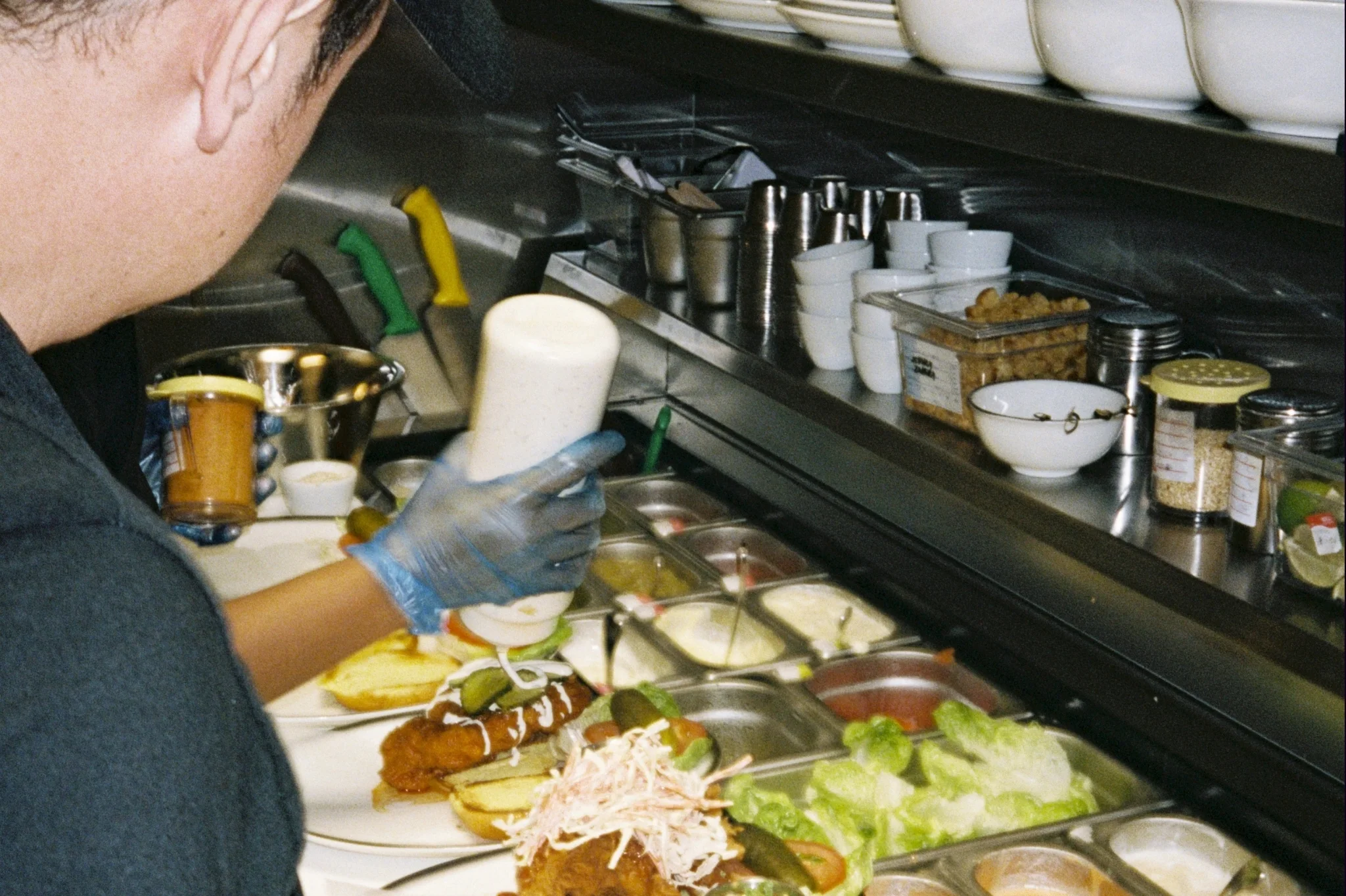
When wages rise, every staff hour becomes more valuable. Multi-role training allows young workers to jump between stations, cover gaps, and deliver more for every hour they’re paid.
For example, if a restaurant trains a junior front-of-house worker to also handle basic food prep tasks, they can cover both stations during a quiet lunch service. As a result, you reduce the need for extra staff and pay less labour costs but still deliver a smooth service.
Tips for effective multi-role training:
- Start small, scale fast. Pair two complementary roles first (like front-of-house and food prep) before expanding to more complex combinations.
- Create competency checklists. Make short, clear modules to ensure staff know exactly what success looks like in each role.
- Use a buddy system. Have experienced staff mentor young hires during peak hours to accelerate learning and build confidence.
- Allocate dedicated coaching time. Schedule regular blocks during shifts for senior staff to mentor juniors without impacting service.
Redesign shifts
Simply cutting youth hours risks understaffing during peak periods. But redesigning shifts? This could be the ideal solution. It involves exploring flexible, shorter, or hybrid shift patterns that make youth employment sustainable even at higher pay.
For instance, if a café splits youth shifts into a three-hour morning block and a four-hour evening block, they can cover peak times efficiently without overstaffing.
Tips for optimal staff planning:
- Run flexible peak shifts. Schedule youth hours where demand is highest, like lunch and dinner peaks.
- Combine hybrid roles. Merge prep and FOH tasks into single shifts to maintain output and flexibility.
- Schedule with data. Align start and finish times with actual demand, not guesswork, to reduce wasted hours.
Nory in action: Rocksalt, a multi‑site café, used Nory to forecast demand and optimise staffing across all their venues. As a result, the company reduced overall labour costs by 7%.
Upskill senior leaders
On top of multi-skilled training, upskilling senior staff should be another priority. Build coaching capacity into your senior structure so progression stays alive even if hiring slows.
Think about it: If senior servers are trained to coach juniors on order accuracy and upselling, the juniors develop faster and service quality remains high without adding extra shifts.

Tips for delivering training:
- Provide leadership workshops. Run short, focused sessions on coaching, conflict resolution, and performance management.
- Teach situational management. Show leaders how to adapt their style to different team members and busy periods.
- Practise real scenarios. Use role-playing exercises to simulate peak service challenges and coaching opportunities.
- Offer feedback and reflection. Give leaders structured feedback on their coaching and decision-making, and encourage self-reflection.
Automate admin
Managers can spend hours on scheduling, reporting, and compliance – time that could be better spent optimising costs and improving the bottom line.
Imagine a general manager spending two hours every Monday building the weekly rota, another hour on holiday tracking, and another on labour reports.
By automating these tasks, the GM could redirect all that time into coaching staff, tightening labour costs, or improving service during peak periods.
Tips for automating admin:
- Adopt the right restaurant tech. Invest in platforms like Nory that centralise scheduling, forecasting, communication, and labour reporting so managers can focus on leadership, not admin.
- Use live dashboards. Replace static reports with real-time labour, sales, and demand insights to make faster, smarter decisions.
- Automate scheduling. Use demand forecasts to build weekly staff rosters automatically and eliminate hours of manual planning.
Nory in action: Barge East switched to Nory to manage labour and freed up 4–5 hours per manager per week, time those managers now spend leading teams and optimising service rather than wrestling spreadsheets.
Track efficiency, not just spend
Labour costs alone don’t show productivity. Tracking efficiency highlights which roles deliver value and where training or deployment can boost output.
Say that a restaurant tracks output per hour and notices that food prep slows in the afternoon. With this insight, the manager can retrain staff to handle food prep as efficiently as possible, keeping service smooth without scheduling more staff.
Tips for tracking efficiency:
- Identify high and low-impact roles. Focus training on positions that deliver the greatest ROI.
- Set efficiency targets. Prioritise improving productivity through coaching and smarter scheduling.
- Use a restaurant management system like Nory. Tools like Nory help operators understand true labour ROI – which roles deliver impact and where training can lift output.

Protect your margins with Nory
The 2025 Budget’s wage reforms are a reminder that operational resilience and people strategy are now one and the same. Rising costs will test short-term agility, but they’ll also reward operators who keep developing their pipeline even when it’s harder to do so.
This is where tools like Nory make the difference, helping operators control labour costs, optimise schedules, and build a stronger pipeline without compromising guest experience.
If you’re preparing for the 2025 Budget, now’s the time to see how Nory can strengthen your operation.