00:00:00
Conor Sheridan
I'm Connor Sheridan, founder and CEO of Nory, and welcome to What's Cooking. As operators, we talk a lot about operational excellence. But what does that really mean in practice? What's the cost of not defining it clearly? There's a myth that improving ops is just about tools or training. But Johnny Bramwell's journey at Roses Ties shows that real transformation is never plug and play. He's leading Roses Done Right, an ongoing transformation project aimed at raising the bar for operational excellence.
crossroads this time. But here's what makes it different. It's not just about systems. It's about culture, clarity, making high standards second nature to everyone on the front line. In this episode, we get into the trade offs, the leadership lessons and the momentum it takes to really drive change at scale. Let's get into it.
00:00:52
Conor Sheridan
Johnny, welcome to What's Cooking. Thanks a million for joining. I look forward to speaking to you. Today we're going to talk a little bit about operational excellence, how you've been navigating it in roses tie, some of the initiatives that you're leading and the outcomes it's had in the business. Before we get started, are you happy to give us a quick intro onto your background and your journey to your current role?
00:01:11
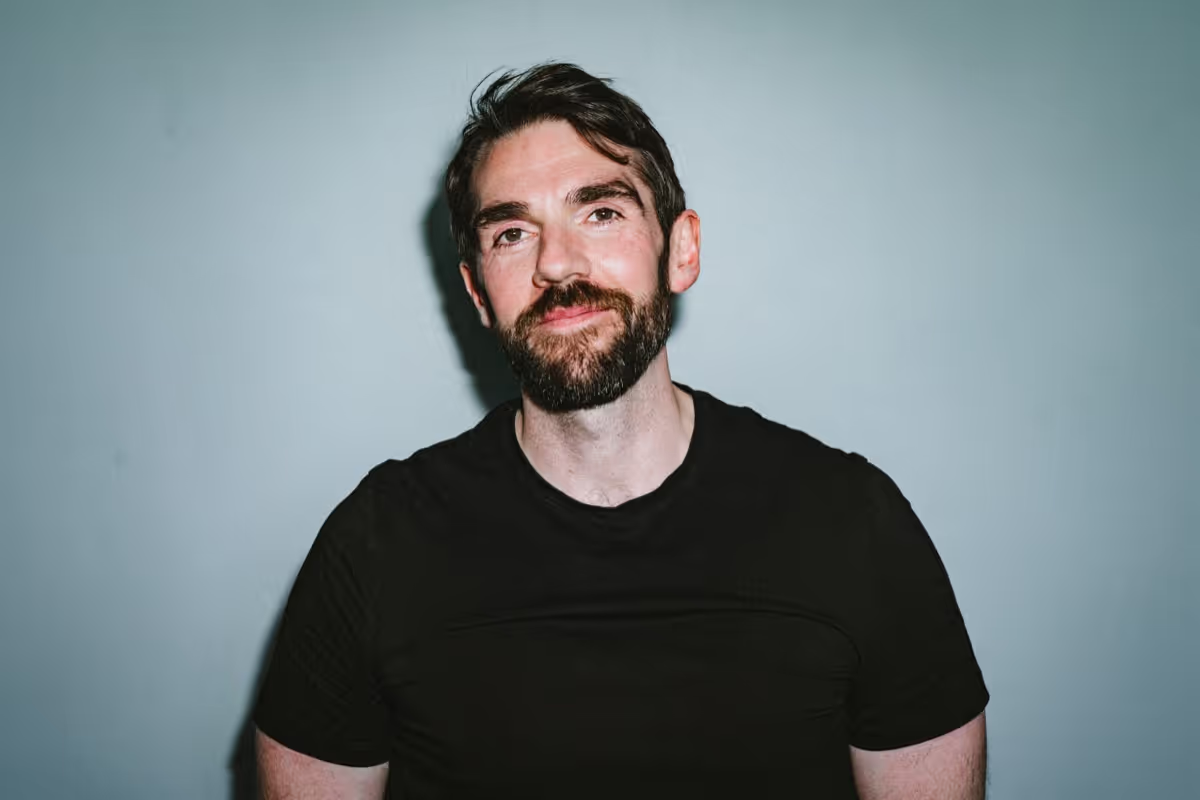
Jonny Bramwell
Absolutely. And pleasure to be here. Thanks for having me. So yeah, I'm Johnny. I've been with Roses Tie just over a year and a half. So I look after operations for the outside of London cohort of Roses Tie. Long story short journey, starting in bars, pubs, straight out of school really. And then, yeah, pub after pub, fast casual dining, gastropub, restaurants, other forms of restaurants, COVID bars, Roses Tie. So...
Yeah, it's an eclectic journey, a big mix, but in terms of where we are now, restaurants, food, it's far more of a passion now than maybe beer was when I was younger. So great place to be.
00:01:51
Conor Sheridan
And I see the role ages as you do, right? It's taste change. Get a bit healthier. Yeah, that's very cool. So you're in a half in and we were chatting outside and you mentioned you're leading Roses Done Right, which is like a big initiative or a big transformation initiative for the business around really driving operational excellence. I know a lot of operators talk about that. That phrase is bandied around everywhere to actually improve the operational efficiency of a business is very difficult.
Super keen to hear about what is that initiative? What was the driving force behind setting it up and how's it going?
00:02:26
Jonny Bramwell
Yeah, I mean, it's good to put a name to it because I particularly my team spoke about operational excellence quite a bit when I first joined ROSES and you can put that title on it, but what does that really mean? It's about making sure everything works together. So all the support office functions, everything that goes to site level, everything that in contact with the guest that is operational excellence, but we had to put a name to it. So actually the ROSES done right projects that that title was.
formed a concede for iJoinRoses in terms of its sort of landing. You know, it's, we came up with a book which was, how do we want everything to look and feel in a restaurant? And the reason why that came about is as Roses has grown, you know, we opened site one 17 years ago now, have grown pretty significantly, know, 46 restaurants now around the UK. And as we have grown, you know, everything that's changed in the world,
The inconsistencies have kind of landed throughout as we've gone through. So, you you would have everything from a guest visiting one restaurant to saying, I had a great experience here, but it wasn't what I had here. Oh, I didn't know you had a roses here. It's not like it is in London or I had a great experience here. It's so different to London. Didn't realize you were part of a brand. So we had to, we were quickly aware that we had to drive that consistency and that wasn't just guest level. know, that is actually team level. know, you'd have a member of team management cover another restaurant and be like, Oh, Waterloo does it this way. You'd be like, okay, interesting.
or, you know, Birmingham do it this way. And so we were aware that the issues we were finding with the guest were right back to the operational function, which is what do our teams do in the day, you know, to make sure our rosers set up right, given the same experience, the guest. And as we started to chew through the project, we realized there was so much being done differently in a beautiful way. You know, we, we, we had this saying within our group called Beautiful Chaos, which is, which is
very much a part of our heritage and origin as a Thai restaurant brand right back to our founder, Ping. having that, you can go and experience a restaurant experience in Thailand, it is chaotic. It's all over the place. And we wanted to capture the best bits of that and try and, which is the ops way of doing things, make that consistent. Easier said than done.
00:04:48
Conor Sheridan
46 sites, complexity, individual nuances for each one, beautiful chaos, make it consistent. Sounds like a big project or a big piece of work. It's a fair play for undertaking it. Oftentimes in transformations, there's a big tension, right? Between where you're at versus where you want to be. From speaking to you, you seem like you're very outcome driven and you're high performance driven and ambitious guy. So like, how did you navigate that even personally to say, here's where the business is, here's where I'd like it to be?
And oftentimes the tension between that gap like and how did you decide where to start? Did you go after every every single issue that you saw or did you go, OK, know, sequentially, maybe these parts of the business should be focused on first.
00:05:33
Jonny Bramwell
Yeah, we were aware it was a pretty significant undertaking because of, you know, not just the geography of where I'm from, we're up in Edinburgh, Glasgow, we're down in Exeter, we're in London. You know, we were aware that in terms of getting everyone on board and making that change within a certain period of time, you know, we wanted to use this year to really land it and embed it. Time was kind of the main limitation, but also, you know, managing the expectation of what our really top performing managers and teams thought.
was right, you know, you'd, I use my team up in Birmingham as a really good example, beautiful restaurant, GM there, very, very proud of his business, really represents itself well, you you walk up to it, it's a beautiful looking business. You'd have a look in the eye and say, oh, you know, you've got flowers on the table, that, Rose has done right? And he'd be like, well, no, but it looks good, but it's not, you know, done right. It's not that consistency we need in all our restaurants because, know, that's, that's not what we're trying to achieve at the moment. We're trying to achieve.
consistency so that the guest walks in, sees and feels the same thing throughout. so you're having conversations with managers and saying, I'm not trying to make it worse for you or, you know, make your business look worse, but we need to be, you need a good starting place that's consistent. So, you know, a few challenging conversations at start, but what we realized as we went through is that to embed this change, I think what you do with any operational change is, it's got to be bottom up. You know, you've got to have your site teams lead and tell you what's achievable.
You know, I get ops, so, know, I've, I've run businesses, the GMs are in it every day with their team, with the guests, they get it, you know? So we kind of, with the limitations of the time we had realized we kind of had two 12 week cycles to get this program launched and landed within the restaurants. So time's kind of the other limitations. It's very tight. Yeah. Very tight. Because now we're in summer, Christmas is on the way. You've got a new menu to roll out. We didn't really want this landing of the program.
to interfere with those pretty key other projects that the teams need to focus on. So we did our first 12-week rollout with Champions, which we had, were restaurants which self-identified as being, I think I run a really good Rose's Tie. I think the standards are great here. We agreed, at our guest sentiment, we looked at the team turnover. Yes, they are running clearly a very good restaurant. And we tested.
00:07:59
Jonny Bramwell
with our little sort of guinea pig cohort of eight restaurants. And that was an incredibly important exercise, in terms of finding out where our team's ability was. We had a lot of restaurants within that cohort that had team members who'd been with Rosas for 10, 15 years, yeah, exactly, who were part of when we were in independent business, have gone through that scale and growth through private equity investment.
and have seen roses grow, but haven't seen, you know, maybe the experience I've had in my career, which is, you know, starting off with a small independent, moving to a family business, joining a behemoth like Green King. You know, I haven't, you know, I've managed to take sort of the independent bits and adapt it to a big brand and then what have you throughout. They've just known roses, you know, so we were making fundamental changes to their way of working, to their knowledge, understanding. Trying to change years of ingrained learning. That was a key learning.
You know, that was a big level of resistance that we found is like, which is the right thing, which is we're not just saying we've got to change things. We've got to retrain. We've got to completely change the mindset. Yeah. In terms of feedback from the GMs, know, plentiful.
00:09:09
Conor Sheridan
I can imagine. Yeah, well, like, effectively, everything lives and dies in the front line. They're the restaurants, they're the P &L, the guests experience. So have that day to day plus trying to maybe think you use the analogy outside of building the plane while you're flying it as challenging when you're a restaurant setting. And that's really interesting with cohort. So he chose eight restaurants who self identified, which is super cool. I'm glad that they made it in after self identifying that maybe an awkward one. And did you see inconsistencies across those restaurants?
or really, yeah.
00:09:41
Jonny Bramwell
Absolutely. Yeah. And then, you know, we had, we had four from London and four from the region. Some were quite well established within the region. Some were sort of newer openings, last year cohort of the year previous. So we had different levels of maturity sort of within the business in terms of what they thought was normal. And yeah, we found quite significant differences between a lot of them. And we, as part of the, exercise went through the program.
you know, we had them go to each other's restaurant and we came up with a sort of, which is, I'm sure we'll talk about later. We kind of gave a grading system on how does the restaurant feel? You know, what does it feel like a good rose? Is this everything that we've spoken about through everything from, you know, steps of service to some of the key principles we've tried to land in terms of shifts set up and check listing and, you know, guest engagement. Are they being done right? And they went to the other restaurants and said, oh, they do that there. And that is exactly what we've been speaking about, but they do it so much better.
And then you see it go to their restaurant and then you see it go to their restaurant. And then you'd suddenly see all those differences start to connect purely just because you've got a team that feels like they are fundamentally changing the business, which they are. They've made it so much better in terms of the guest experience and how the team feels. just a site visit changes that.
00:11:00
Conor Sheridan
Super interesting to get people engaged from the start is gets that momentum behind such a big project. When you went to that cohort, did you have a really well defined view of what done right looked like or great look like and then you iterated or was it like embryonic 12 weeks where you're iterating on the feedback from the core groups and then by the end of that you had a did it look the same I suppose at the end of the 12 weeks as it did at the start of the book?
00:11:24
Jonny Bramwell
Absolutely not. Absolutely not. No, no. know, so the original sort of principle of Roses Done Right was here is a book if, know, and it's not like running a restaurant for dummies, but here's a book, 40 page book, which is if you go into a Roses tie, everything should look kind of like this. So your till station should be tidy. Your briefsheet should look like this. Your uniform should look like this. What it became was far more about real guest engagement experience.
And actually the whole program evolved into getting much deeper into a forecast accuracy and deployment and making sure we had the right team on the right place to set the shifts to succeed and make sure the outside, which we know is a really big draw for passing trade was really well set up. And it became something much, much, much bigger. I suppose what's, what was really good as we came out of that champion program, which was originally 12 weeks, know, we had a pretty frank.
feedback wash up session afterwards and made the wider rollout, the 14 week session, because we realized there's a few more weeks we had to sort of add in to really land some more advanced training that we needed to do. We did a regional retreat and we had the champions come up and speak about their restaurants and the journey and what they did and the results, the performances that's come out of it in terms of everything in terms of our ops metric changed for the positive team turnover, guest sentiment.
uh, audit scores, the lot became positive. There was not one restaurant that didn't say they were in a better position afterwards. know, incredible it is. And you've got eight people in a line and it was, it was beautiful and, and, and almost emotional to sort of hear them talk with such joy about their businesses in front of a room of GMs and support office, because everyone was locked into it. And, know, that's, that's the right way to do any level of ops. You know, it's never a top down.
we need to do this. I very much believe and I think the best successors I've had come from the restaurants. They know their businesses, they say what they need to do. And this is a prime example of that.
00:13:32
Conor Sheridan
I can imagine you can have a huge amount of pride amongst your peers to be able to show everything is moving up to the right after. And then for you as an operator, it's no better scenario than that to try and get engagement for the next cohort. Correct. And he talks a little bit on resistance at the very start. Obviously, teams are busy. They have the full time job. They have no other projects as a core part of the job, too. And what were some of the challenges you experienced early on or some of the resistance that you had to overcome?
00:14:00
Jonny Bramwell
I'm a big believer in giving time back to a restaurant. think if there's anything you can give a GM, their assistant manager, head chef, it's time, you the gift of time. There is so much to in the business. New legislation keeps coming in that adds more hurdles to jump through. The greater the amount of time we can give our restaurant leaders with the guest and their team, that's what we've got to do. So to land something like this, where we're now saying you spend more time doing something.
not ideal, right? So that was a big resistance. we've got a fantastic restaurant up in Edinburgh, which currently going to the Fringe Festival and hitting record sales. Shout out Edinburgh. Go team. We had Danny GM there who very switched on, very engaged, very much as a trainer. He gave back a full list through the sort of champion program of what wasn't working.
You know, and it was very frank, very honest, but incredibly well written, you know, in the case of this isn't working problem solution, you know, and there's real insight that we had like, oh, okay, well, this is that's great. Let's change it. And we just changed our approach. You know, we were just asking teams to do too much and maybe not putting enough trust in them to say, look, we're running our business. We know what you expect of us. Don't force feed it. You know, so we basically put the guard rails down, but, know, we put them on the train rather than them sort of finding their own.
Way to go down it.
00:15:28
Conor Sheridan
Huge impairment in that. It's their business. They're on the outcome then, the results that you mentioned.
00:15:34
Jonny Bramwell
Yeah, massively. you know, we, we had a call, we sort of did weekly interventions with our champions and we said, hi guys, look, we've listened, we've had this feedback, we're going to change it. And all of them just went, yeah, great, cool. You know, so it wasn't like everyone was doing these feedback sessions for nothing to happen. They immediately saw like, they were driving the change. You they were part of saying, we know what you expect us to do, but this is quite restrictive. Let's just, just trust us to do it. And that's the right, that's the right approach.
00:16:01
Conor Sheridan
Yeah, definitely. Never seen a big project land without that. So you went from 8 to 46. Did the initial cohort of eight, were they engaged in helping train the trainer, helping deploy them, roses done right in the next cohort? Or was it what did that look like when you had to go network wide? Was there similar challenges?
00:16:19
Jonny Bramwell
Very much so. we had them visit other, so we had within our sort of regional setup, we have area managers sit within it. So each champion was within each area within our restaurant group. So we had them with the area managers lead the conversation. We had them supporting, doing shadow shifts. So assessing the business, how did it look, feel, was everything being delivered right? I mean, there's way more to it. like a 40 question sort of sheet that gives you a number at the end of it.
But they were actively involved in that. And, you know, the restaurant teams were really happy to see them come in because they weren't just grading a restaurant. weren't sort of some sort of teacher. They were a peer. They were coaching. They were guiding. They were advising. And that was, again, wonderful. And I think it's testament to the culture we got in Roses where everyone is so accepting to feedback, to drive positive change that, you know, it wasn't perceived as we didn't come into business to tell me what to do.
it's, you're coming to our business and that's really insightful. Thank you. Correct. You know, there's not really much room for that within us anyway. know, are, you know, we're still very much, have a founder very actively involved in the business, our culture, our values are very obviously driven from that family food culture of Thailand. And our site teams really exhibit that, you know, and that was a cultural shift and change that the team fed into.
00:17:20
Conor Sheridan
No defensiveness, right?
00:17:45
Jonny Bramwell
four or five years ago coming out of COVID, they created the values, and that's proof alone of that sort of bottom up landing. And the same thing here, they are driving and telling us what a good roses tie is like. And we're taking all the best of it and we've got it in one format and now it's group wide, so beautiful.
00:18:03
Conor Sheridan
How long has it been live across the whole group? Congratulations.
00:18:06
Jonny Bramwell
He completed last week. Thank you. Huge Huge milestone. Yeah. So out of, you know, sort of the book being created, which is about this time last year, I think that was finalized to our, our launch meeting within our ops team. Um, I think that was November, October last year to deciding how we're going to launch it, deciding how we're going to land it. A couple of retreats, the 12 week champion program, the 14 week rollout program and any number of.
crazy weekly dial-in sessions throughout and meetings and training courses. We reached completion last week. Now I wouldn't say we're fully complete. I think in terms of what we now call Rosa's done right, what we've done is we created the language for everything. So you can walk in very easy and go, is that Rosa's done right? And everyone knows what we're talking about now. We're not saying, is that till station set up right? Is that bar set up correctly? Are those products supposed to be there? Why is this not on? We're saying very simply, is this Rosa's done right?
prompting people to question their businesses. And we've just got words for everything. We have a superb GM in Ealing, Daniela, and she said like, the most amazing thing is my team all knows the language now. You know, they speak about four or five different things on a shift. Everyone knows what they're talking about. You know, so there's no misunderstanding or misconception. It's really clear what everyone's talking about. And that's what we talk about now. And it's something we'll always revisit. And you won't just say, right, we've done right, good. We've launched it.
Done right, great. It's something we'll keep revisiting.
00:19:32
Conor Sheridan
Huge power in that alignment. Everyone's on the same page. Everyone knows the patterns. So you talked a bit on success metrics earlier. You mentioned things like guest advocacy or sentiments and operational standards, even things down to like productivity and forecast accuracy. And the first cohort, obviously really positive signals. And you talked to us a bit about what success looks like now for the program. Are you hoping that everybody hits those metrics and what kind of things are you looking at to know whether Roses is done right or not done right?
00:20:00
Jonny Bramwell
Yeah, great question. think we have seen very, very meaningful movement in our guest sentiment, advocacy, particularly within the key words of things like cleanliness and atmosphere. We've seen quite significant growth in those areas because there's just such a finer attention to detail, particularly within the new openings we did this year, Reading in Cheltenham. We did Roses Done Right and landed them, opened them through the process and they have opened with
unbelievable performance scores. So Reading is probably one of our flagship sites. It's one of our highest contributors in terms of performance financially. Cheltenham, we've opened with the lowest team turnover of any opening we've done. We've still got 80 % of the team from opening. So we've got two very instant results of things we did throughout the program that have landed it. But as at a macro level,
We've never been better in terms of guest sentiment and team turnover, which are, you know, the real bedrock of growth, you know, that allows you to kick off and get right. We're in a really strong place to kind of do whatever we need to do now. And in terms of sort of the Asian dining category, you know, we're industry leading at the moment in the last five to six weeks in, in, guest sentiment. And, know, that's where we want to stay. You know, we want to be there. It is, it is huge and it's a very competitive market. There's some incredible operators out there, you know, and that's where we want to be. You know, we want to be seen as an incredible operator too.
00:21:27
Conor Sheridan
Listening to it feels like I've seen operational initiatives in other restaurants. I've been part of them myself, trying to drive excellence in bar raising. You continuously gone back to guest sentiment and team turnover, which is effectively team stability and engagement. And you've not touched on like P &L metrics. You've not touched on operational audits. Obviously, they're part of it, right? But the fact that you're so focused on those two pieces, is that just part of the culture?
the two key metrics for the business and they're going well, everything else should work itself out. Or how did you land on those two pieces? Because lots of ops directors or lots of people who running ops are really focused on the P &L and the rest of those metrics sometimes come secondary.
00:22:11
Jonny Bramwell
mean, ultimately, you know, that's, what we're here as ops to do, right? Is to hit that bottom line. Unfortunately, the route to that is never as simple as, know, let's take some sales and let's make sure the costs are okay. know, there we go. You know, it's, it's, you know, there's a pretty famous book, it's called, the score takes care of itself. And, you know, it's, it's about making sure the teams are really engaged and drilled and know what's expected of them. And, you know, then, you know, the scoreline of the match will look after itself, you know, in very brief terms. And I think.
That's the only way to look at hospitality business. No one gets into hospitality to look at spreadsheets and PNLs. My first bar job, I fell into it and loved it. Loved being around people and serving a good product and getting a bit nerdy about beer. And then really enjoyed management when I was invested in well by my first bosses. And that taught me that investing in people is really important. That's always been my...
sort of go to through life, it's that coaching and developing. And you've never really seen a business with a bad P &L with an engaged, trained team, delivering a great guest experience. that's the key thing. It's very rarely, bar something that's really out of your control, do you see a bad P &L from those businesses. We talk about a lot because it's the stuff we can action. We can make sure our teams are.
stable and well drilled and engaged and care about the business that they work in. We can look after the guest, you know, and make sure they're having a great time and getting a great product because we can control that. You can't really control other factors around that in the P &L, you know. So obviously, my FD will probably say differently, but, know, those are the main things that drive the business success, you know, drive that top line and make sure that we're acquiring cover growth and making sure that
you know everything converts down well.
00:24:06
Conor Sheridan
Nice. I'm a 10 years, like 10 to 15 years of doing something right. Right. That's pretty remarkable for hospitality business to have people there. So you mentioned two new openings this year. Really good metrics from Roses on Right. Good early signal. So is this fundamentally going to change your rollout plans, your implementation plans for for new venues? Do you start with that? What's that going to look like?
00:24:28
Jonny Bramwell
Yeah. So we kind of to a degree landed in Reading and Cheltenham, which we opened at the start of the year. We've got a number of sort of openings in the pipeline next year. So in terms of our new store opening program next year, you know, that will be heavily in there, you know, so our managers coming on board, whether they're internal promotions or whether they're an external candidate coming in, they will be put through that Rosa Dunwright program. We have an incredible training team that
when we get into a new opening is unbelievably good at driving that roses culture in and adding this in is just going to give them so many more tools to just making that roses open superbly. Also through the program we've just done, through the champion program and then through the wider rollout, we've now got about 300 pages in terms of slide decks of training material, experiences, testimonials that can talk to us. So if there's any bits within an opening that we think actually that's going to be really relevant to
making sure we open a restaurant well, we'll take them. know, our people team, our head of L &D, Tom, with his training manager, Tommy, they have built some unbelievably engaging content, know, short form videos, training videos, and steps of service on guest engagement. And I'm probably underselling it, but I think they put together about four or five training courses through the program that we had to build. And they will be so useful for when it comes to doing an opening because
previously relied on a team coming in from other restaurants and going, no, that's not how we do it. No, need to do that differently. Now it's all there. We've got the content to be able to demonstrate that.
00:26:05
Conor Sheridan
It's always that ramp up, which is the hairiest part of a new new restaurant, right? You don't know if everyone's going to get super consistent experience where the reviewers always say, I'll wait three months or six months to review a new venue because you're figuring it out. But if you have like that level of content, materials, engagements, you'd imagine your ramp up is going to be super quick.
00:26:23
Jonny Bramwell
Yeah, exactly. And then new openings now are less forgiving than they were before. know, everyone is because you want to drive volume and drive hype, you know, you need to really hit the ground running. There's no, it's not really an ability to slowly creep up and sort of sneak in. You know, you got to go with a bang. So, you know, you've got to be performing right off the bat. Yeah.
00:26:41
Conor Sheridan
So you mentioned obviously we have all of these materials for roses done right for guest experience for operational standards. Does that apply across the different channels of the business like for delivery, pickup or any of these things? Or is it specifically orientated around in store?
00:26:57
Jonny Bramwell
What's our next project? Really, we've got two sort of projects off the back of it, knowing that how successful this, I wouldn't say dining approaches, but restaurant approaches. We are fundamentally a restaurant business. We have a very strong delivery arm and our relationship with our delivery platform partner is really important. And that delivery arm of the business really makes our productivity quite substantial. But we are a restaurant business, so we have to get that bit right first, which is...
that beautiful chaos, that incredible energy our teams give, the best examples of it. We need to give our guests that experience because Rosa's product is unbelievably good. Like it's just, the product is everything, but guests don't just come for the product. They can order a product on delivery and it'll be lovely and delicious. And they'll go, Ooh, okay. But actually I know that's going to be better if I try it in a restaurant and they need to come to the restaurant and have a much better experience than that delivery and takeaway. And that's, you know, that's the crucial bit that we know we had to land first because getting the restaurant experience.
Six star is the first step. And there's other bits we're going to work on now. You know, we got, we're doing some new menu work project and then there was Christmas, there's a bit to go in that. But sort of burning away in the background is, is kickstarting a process and sort of Rosa's done right. the back of house tune in terms of kitchen setup, equipment layouts, we've already got all the sort of specs to it, but actually it needs to now match everything we've done front of house or other restaurant ops, if you will. And then delivery done right, which is
You know, there's a lot more work in that for much more expert minds than mine.
00:28:30
Conor Sheridan
Nice, nice. And you're mentioning beautiful chaos. I'm picturing so many different scenarios in my head, like in terms of what that would be like from a guest point of view. Do you any examples of what that means for roses?
00:28:43
Jonny Bramwell
The incredible thing about our roses tie teams is that they can be and have been so used to running quite tight and some big busy shifts, you know, and it's as much as you can forecast as accurate as possible. Sometimes you'll just be twice as busy as you expect. And that is where that chaos comes out. You know, you have two people running a floor that has 70 guests in it and they are running the business and that's where that chaos comes out. It's, it feels really disjointed and chaotic and I will hear of a side play. I know here of that.
or yeah, I'll get you that. And it adds to experience, know, that it's something that is not necessarily easily taught. And we have tried to sort of structure that as much as operation that you can in terms of make sure you give side plates down before the guests get to it, but also it's okay to forget and then be like, go, no, here you go. And that's kind of in there, you know, it's in the time to give that structure to that chaos. And then, know, when our teams make mistakes, which, you know, they do, they are so...
engaged in fixing it. And that creates that chaos. It's almost, it's impossible to sort of train in, but you we need the restaurants and the business to be set up and have our, give our teams an expectation that is okay to be a bit more proactive, make mistakes, know, account for your mistakes, spend a bit more time with the guest. And really through OZ has done right, you know, we spoke earlier about looking at, as we went through about forecast accuracy and deployment, make sure it's right.
We've been saying to some of our teams that have been running tight, you know, for a significant period of time, put someone extra on. And you know, you've got more time with your guest. So spend more time with the guests. And what came from that is, I don't really know what do with myself now. Like I can now talk to the guests. I'm not running around. I'm not chasing my own tail. I'm not, you know, my God, I've forgotten this. I've done that. that's wrong. They've got more time. And that personality, that chaos that would be physical.
is now conversational. know, you had to talk to the guests more about the brand, the product, you know, the provenance, know, food still comes from Thailand, you know, from the family business right at the start, it still comes from there. And our teams have time to talk about it now. And then so that chaos is a bit more refined. But, you know, it means that when things do run tight, it still feels good as a guest most of the time.
00:31:06
Conor Sheridan
I like that and can deliver really good energy, right? You can see like the orchestra moving around in perfect sequence at high energy, which is nice from a guest point of view as well. You feel like people are proactive, which.
00:31:19
Jonny Bramwell
It feels like the experience of if you go to your in-laws for Christmas, you know, and it's all a bit chaotic and everyone's sweating, I burnt the turkey. And it feels a memory. That's a memory that you always have. And that's what we want people to leave from. Casual dining can be, if you want it to be, you know, monochrome and boring and fills a price category, but there's no such thing as sort of value casual dining anymore. Casual dining in the modern climate is expensive.
00:31:27
Conor Sheridan
Love and passion though.
00:31:47
Jonny Bramwell
Having a meal out is a treat and you need it to feel experiential. It needs to fill a memory. And the best memories made are not just the food that's eaten, but everything that's around you. And if you've got a story to tell afterwards that is fun and enjoyable, that's going to sit in the memory a lot longer.
00:32:03
Conor Sheridan
Yeah, it travels a lot further. Correct. To the peer group. Well, look, thanks so much for that. Sounds like a really nice initiative and excited to see the fruit to that of the next couple of sites. We're going to move on to the quick turn. So the next one is a couple of rapid fire questions. Rapid fire isn't one word answer, but it's maybe shorter, maybe shorter than than 30 seconds to a minute. Right. As to get an understanding of how you think about different parts of the business. So.
What's one process that you've automated that you wish you'd done sooner?
00:32:34
Jonny Bramwell
We consolidated all of our performance data daily into one accessible place. So we've basically got a dashboard that we built and we just got it all there in the mornings. Ready to go. nice. Beautiful.
00:32:48
Conor Sheridan
saves a bunch of time. Yeah. I really like that. What's one metric that you obsess over from that dashboard? Maybe.
00:32:50
Jonny Bramwell
just tells you what to do.
00:32:56
Jonny Bramwell
depends on the day of the week, but cover growth and team turnover.
00:33:00
Conor Sheridan
Nice, and would you look at them weekly?
00:33:01
Jonny Bramwell
Olly.
00:33:03
Conor Sheridan
Very cool. You're on top of it. You're on it. What's one system or piece of technology that you think is underrated in the business today?
00:33:13
Jonny Bramwell
I'm yet to see one that does it all yet perfectly, but anything that can automate a stock and ordering processes. So you have to see the right one.
00:33:24
Conor Sheridan
Soon. So basically on the back of the last piece around Rose's done right. How do you know when to rip up a playbook and start again and try to recreate something?
00:33:34
Jonny Bramwell
I when you're working in a project and the team you're working in, wherever they're from, it's when you spend more time justifying something you've got to do rather than giving an insider solution. think if you need to spend that time justifying something more than you actually believe it, then give up. Start again, get a night's sleep, rethink it.
00:33:59
Conor Sheridan
Yeah, we talked about that internally as well. You spend more time talking about the thing than doing the thing and talking about it becomes the thing. What's the best piece of leadership advice or operational advice you've ever been given?
00:34:10
Jonny Bramwell
When I used work for Green King, my ops director, Mark, who sadly he passed away earlier this year, he said to me, whatever you do in terms of decision making, don't ever let your values be questioned or disintegrated. And that's very meaningful.
00:34:28
Conor Sheridan
Yeah. And the last one. What is one operational best practice air quotes that you see across the different organizations in your career that you would challenge?
00:34:38
Jonny Bramwell
This is difficult given everything we just spoken about earlier, but I'm sure steps of service as a best practice could probably be torn up and we could talk about something differently again. I think as operators, you want to make everything the same. You want to make it consistent. You want to make it best practice, but really the best hospitality is everything we've been speaking about. You know, that chaotic energy that goes with it, that basil faulty-esque experience that gives you that memory. Steps of service are a best practice. there for a reason so that every guest...
gets a box tipped, but actually is it the best way to give a guest experience? There's probably some brighter minds than mine who can wipe that out.
00:35:15
Conor Sheridan
Yeah, something I've even spoken about previously. It's different types of guests wants a different type of experience. Different types of people will deliver a different types of experience. And it's very hard to have one sequence of service that can actually meet all of those needs. Right. It's nuances. Well, Johnny, look, thanks so much. I really learned a lot from that. And I think a lot of operators will have learned a lot from how you've deployed such a big change at scale and obviously massively successfully, too. So excited to see the business go from forty six to.
as many as you can take it in the next couple of years. And yeah, look, thanks so much for your time. It great having you on What's Cooking. That's it for this week's episode of What's Cooking. A huge thanks to Johnny for joining. And I learned a crazy amount today. To be able to deploy a project of that level of complexity of Rosa's Dunwright across 46 restaurants all over the UK is incredible. Johnny and his team nailed it. He really called out why that happened. Buying from the front line, iterating on feedback from your team.
Making sure that they feel a sense of ownership, not just over the project, but the outcomes of the project itself. He talked about the metrics that define success for a project at that scale. Guest sentiment and your people. That's it. To the recurring team in these episodes of What's Cooking, it's not only about the P &L, it's about how do you make your guests feel? Are your teams mission driven? Are they buying into what you're trying to achieve in the business? If the answer is yes, everything else works out. Johnny used a really nice reference to a book going, What's the score?
If you have a team that's aligned and knows what to focus on and is bought in, the score will take care of itself. If you took something from Johnny's story, please share it with a fellow operator. And if you're not following us already, now's the time. See you next time.
.png)