
Multi-location inventory chaos: How do restaurants manage inventory across multiple sites?

Managing inventory across multiple locations is where most restaurant groups quietly bleed profit. Even a single location can waste 6-8% of stock, but multiply that across 10, 20, or 50 sites? You’re looking at thousands of lost revenue annually.
That’s why effective restaurant inventory management is critical.
Even for hospitality businesses with dozens of locations, consistent processes (like standardised portioning, supplier coordination, and regular audits) can dramatically reduce losses.
When paired with smart software, these practices turn inventory management from a silent profit drain into a competitive advantage.
So let’s dive a little deeper into how multi-location restaurants can take control of their inventory without adding more complexity. By the end of this article, you’ll know how leading operators use the software to streamline stock tracking across sites, reduce waste, and close margin gaps without needing to be at every site.
Why multi-location restaurant inventory management is fundamentally different
Managing inventory in one restaurant is already a challenge. Multiply that across 10 or 20 locations, and the complexity grows.
Every site has its own demand patterns, supplier relationships, staffing levels, and even slight variations in how dishes are prepared. What works in one location might lead to overstocking (or stockouts) in another.
And without a centralised view, small inefficiencies at each site quickly stack into a much bigger problem.
That’s the real difference: multi-location inventory isn’t just “more inventory”. It’s more variables, more moving parts, and far more room for error.
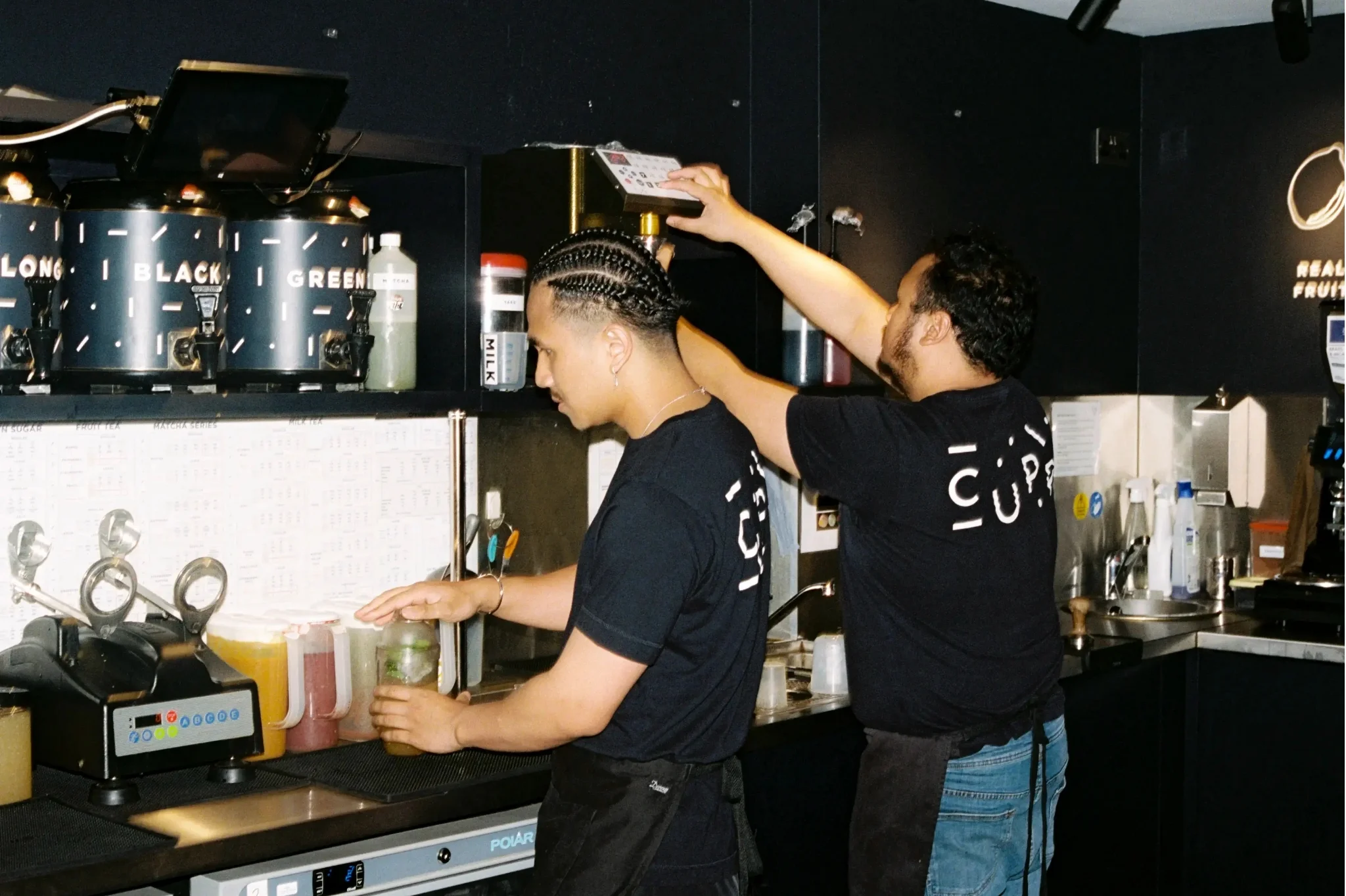
Take CUPP, for example, a fast-growing bubble tea brand operating across multiple locations.
As the company scaled, aligning inventory between their central production unit (CPU) and individual stores became increasingly difficult. Orders weren’t always synced, stock levels varied from site to site, and small gaps in communication led to unnecessary food waste.
After introducing Nory for inventory management, things started to shift.
With real-time visibility across both their central kitchen and individual locations, CUPP could track exactly how inventory was being used at every level of the business.
That meant they could quickly spot inconsistencies, whether it was one location over-ordering or another generating more waste than expected, and take action before damaging margins.
The impact was significant: improved stock accuracy, smoother ordering processes, and a 60% reduction in food waste across the business.
Without the right systems, multi-location inventory becomes reactive. You’re constantly fixing problems after they happen. But with the right software, it becomes proactive, meaning you can make changes as quickly as possible to protect your bottom line.
The real cost of multi-location inventory chaos in restaurants
Inventory issues rarely show up as one big, obvious problem. Instead, they creep in quietly through small, repeated inefficiencies that add up over time:
- Food waste. The average restaurant wastes between 6-10% of purchased stock. On a single site, that’s already painful. But across 15 or 20 locations, that figure quickly snowballs into tens (or even hundreds) of thousands of pounds lost each year.
- Inventory variance, which is the gap between what your system says you should have and what’s actually on the shelf. In unmanaged (or loosely managed) multi-site operations, variance typically sits between 4-8%. That might not sound like much, but across multiple locations, it’s a constant drain on margins and a sign that something isn’t working operationally.
- Time spent managing inventory. Teams can spend hours each week on manual stock counts. And if you don’t have enough to meet demand? Managers have to scramble to place last-minute orders (and emergency deliveries often aren’t cheap). When key ingredients aren’t available, it impacts the customer experience and you lose sales – not just for that dish, but potentially from customers who don’t come back.
Imagine a 15-location casual dining group. On paper, each site performs reasonably well.
But when you looked closer? Inconsistent stock processes and limited visibility across locations cost the business thousands each year because of over-ordering and food waste.
No single issue stood out. But together, they were eroding profit month after month.
That’s what makes inefficient inventory management so dangerous – it hides in plain sight.
.webp)
In hospitality where average profit margins sit between 3-5%, losses like these directly threaten profitability. What looks like a small percentage on a spreadsheet can be the difference between a site performing well or barely breaking even.
How leading restaurant groups manage inventory across multiple locations
The difference between struggling operators and high-performing restaurant groups usually comes down to systems. Not just having them, but actually using them consistently across every site.
Leading operators treat restaurant inventory management as a connected, data-driven operation powered by the right tools and processes.
Let’s take a closer look at what that actually looks like in practice.
Centralised inventory systems with real-time visibility
Using centralised inventory management software means being able to track stock across all locations in one place, in real time.
Instead of piecing together reports from individual sites, operators get a clear, live view of what’s happening across the entire business. This includes what’s in stock, what’s running low, and what’s being used fastest.
Here’s Nory’s interface as an example:
.webp)
The software shows real-time sales performance, average check size, forecasts, and so on.
And what’s even better: Nory’s cloud-based AI-powered system syncs data instantly across every location.
There’s no need to wait for end-of-day updates or manual uploads. The moment stock moves in one site, it’s reflected everywhere.
When integrated with POS systems, the process becomes even more seamless. Every sale automatically deducts inventory, keeping stock levels accurate without any extra input from staff.
The result is a shift from reactive to real-time control. Operators can spot issues early, make faster decisions, and manage inventory with a level of precision that simply isn’t possible with manual processes.
Standardised ordering processes and PAR levels
Being able to monitor stock levels across every site, in real time is essential for multi-location success. It allows operators to see exactly how inventory is moving – not just what’s been ordered, but what’s actually being used at each location.
That’s where PAR levels come in.
PAR levels (periodic automatic replacement) are the minimum amount of stock each location needs to operate smoothly.
For multi-location groups, these aren’t one-size-fits-all. They’re set based on each site’s sales patterns, supplier lead times, and storage capacity.
.webp)
For example, if two sites sell similar volumes but one is using significantly more of a key ingredient, that’s an immediate signal. It could point to over-portioning, waste, or process issues.
This kind of insight is almost impossible to spot when each location operates in isolation. But with a centralised system, it becomes obvious.
With the right system in place, teams get automatic alerts when stock drops below PAR, triggering smarter, more predictable reordering. This removes guesswork, reduces human error, and ensures every site orders ingredients based on data – not gut feel.
AI-powered demand forecasting
Modern inventory systems don’t just track what’s happening, they predict what’s coming next.
AI-powered forecasting analyses historical sales, seasonality, local events, and even weather patterns to estimate exactly what each location will need.
As a result, you can stay ahead of demand rather than reacting to it.
Consider Nory as an example. Our AI-powered software combines real-time data with predictive analytics to forecast inventory needs days in advance.
.webp)
And the best part? All of this happens at ingredient level (not just menu items) so you can stock your kitchen with the right quantities of everything from fresh produce to dry goods.
Nory in action: Badiani, a fast-growing multi-location gelato brand, used Nory to manage demand across different locations and markets. By using Nory’s AI forecasting and integrating it with their POS, they achieved 96% sales forecast accuracy, giving them far tighter control over production and inventory across sites.
Cross-location stock transfers and central kitchens
Instead of letting surplus stock go to waste in one location while another runs short, leading operators actively manage stock transfers between sites.
For example, a restaurant with 10 locations might have one site that consistently orders more salad greens than it uses, while another regularly runs out mid-week.
Rather than having both sites place separate orders with suppliers (which increases food costs and waste), you transfer stock directly between them.
With accurate, real-time tracking, you know exactly how much to move and when, without disrupting service or inventory accuracy.
Supplier management and centralised purchasing
Centralised purchasing is exactly what it sounds like – bringing all ordering decisions under one coordinated system, rather than leaving each location to manage suppliers independently.
In practice, this means restaurant groups consolidate their buying power. Instead of 10 locations placing 10 separate orders, they negotiate as one business.
As a result, operators are in a much stronger position to secure better pricing, lock in favourable terms, and build more strategic supplier relationships.
.webp)
Centralised purchasing also creates consistency. You get the same ingredients, from the same suppliers, at the same quality, across every site. This is essential for maintaining brand standards, especially as you scale (which can make it harder to deliver consistent brand quality).
Side note: The best operators don’t centralise everything blindly. They strike a balance between centralised procurement and strategic local sourcing.
For core, high-volume ingredients, centralised purchasing drives efficiency and cost savings.
But for certain items (like fresh produce, seasonal specials, or location-specific menu items), local sourcing can offer better quality, flexibility, and even cost advantages.
The key is having the visibility to manage both approaches effectively.
Regular stock counts and variance tracking
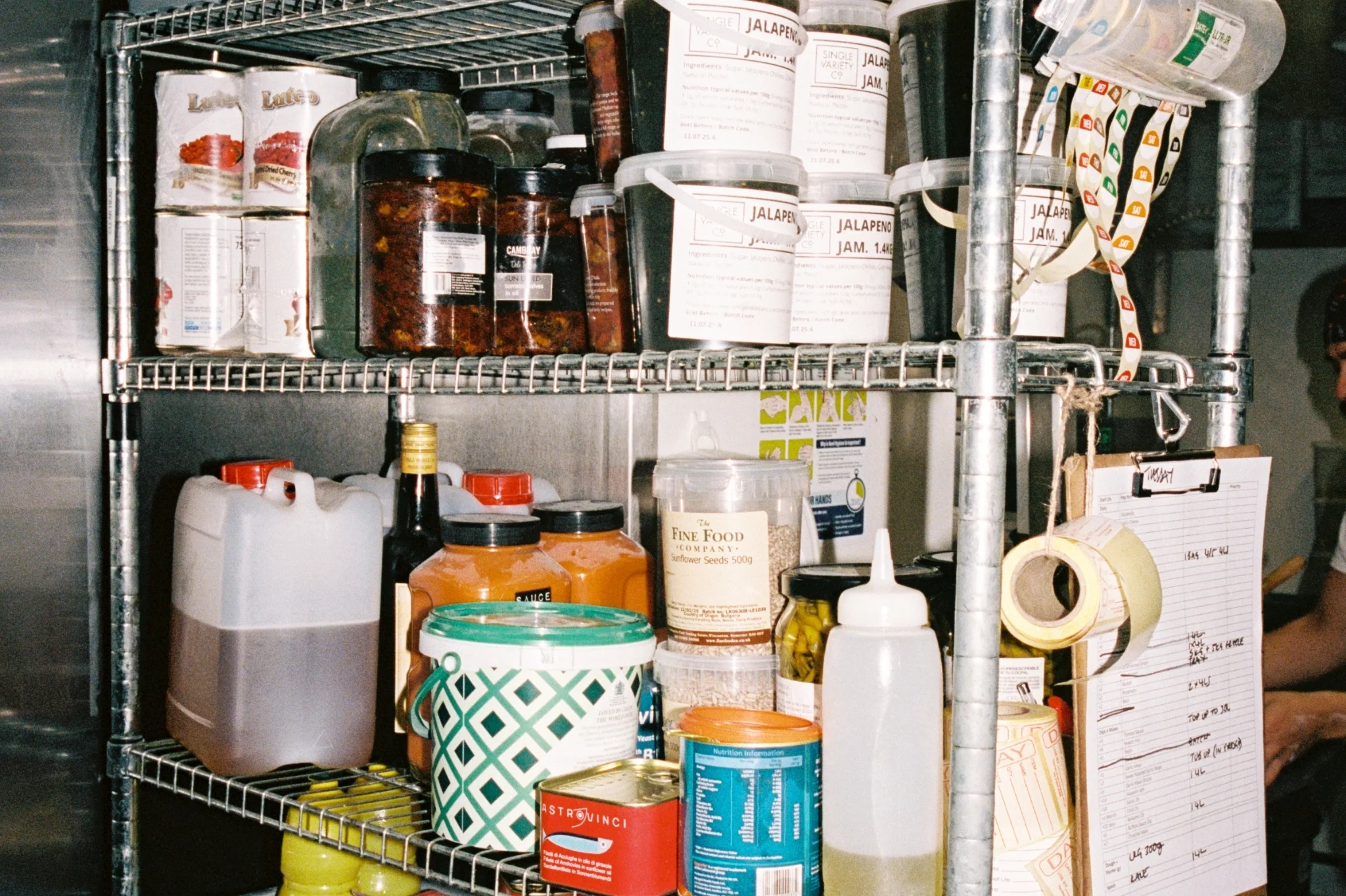
Rather than doing one large, disruptive stocktake each month, leading operators break it into smaller, more frequent stock counts. This keeps data accurate without overwhelming teams, and makes it much easier to catch issues early.
Modern tools make this process far more efficient. Mobile stock counting apps guide teams through counts step by step, reduce manual errors, and sync results instantly back to the system. No spreadsheets, no rekeying data, and no delays.
But the real value isn’t just counting stock – it’s understanding variance.
Variance is the gap between what your system says you should have (theoretical stock) and what’s actually on the shelf. Tracking this by location gives you a clear signal of where things aren’t adding up.
If one site consistently shows higher variance, it’s a red flag. It could point to waste, over-portioning or process issues during prep and service. From here, you can put measures in place to get things back on track.
The key difference with a data-driven approach is that you’re not guessing. You can pinpoint exactly where the problem sits and take action quickly. Over time, this creates tighter control, more consistent operations, and significantly less margin leakage across the business.
How to choose the best inventory management software for your multi-site restaurant
Whether you’re running a few casual dining locations or a growing group of quick-service sites, the right system should simplify stock tracking, reduce waste, and support smarter decision-making.
Here are some key restaurant stock management software features to look for – no matter what type of restaurant you’re running:
- Real-time inventory visibility to track stock across all sites from a single dashboard.
- POS integrations for automatic stock deduction with every sale.
- AI-powered demand forecasting to predict ingredient needs at site and item level.
- Centralised ordering and PAR management to set minimum stock levels and automated reorder alerts.
- Cross-location stock transfer support to easily move surplus stock between sites.
- Central kitchen management to coordinate production and prep based on predicted demand.
- Supplier management and reporting to track orders, invoices, and supplier performance.
- Mobile-friendly stock counting for quick cycle counts and variance tracking for all locations.
By prioritising these features, you can choose a system that scales with your business, keeps your teams aligned, and turns inventory from a hidden cost into a competitive advantage.
.webp)
FAQs about restaurant software for inventory management
What is the difference between a restaurant POS and restaurant management software?
A POS system handles customer transactions by taking orders and processing payments. Restaurant management software goes further, connecting inventory, sales, workforce management, and reporting into one system.
In short:
- POS software tells you what you’ve sold
- Restaurant management software helps you understand and optimise how your business runs
How much does restaurant software cost in the UK?
Costs vary depending on features and scale. Basic systems can start from around £50-£100 per month per site. More advanced, all-in-one platforms for multi-location groups can run into a few hundred pounds monthly.
The key is to focus on the return on investment (ROI). Reducing waste and improving efficiency should help you save money, which counteracts the costs you pay to use the software.
Can I use the same system for online orders and delivery?
Yes, many modern platforms integrate directly with online ordering and delivery channels. This means orders flow straight into your POS and inventory system, keeping stock levels accurate and reducing manual input.
What is the best restaurant software for a small coffee shop or a large restaurant?
It depends on your needs. A small coffee shop might prioritise simplicity and ease of use, while a large or multi-site restaurant needs advanced features like forecasting, centralised reporting, and multi-location control.
The best systems scale with you, so you don’t outgrow them as you expand.
s an all in one system better than using several specialised tools?
For most operators, yes. All-in-one systems reduce complexity, minimise data silos, and ensure everything works together seamlessly.
Using multiple tools can work, but it often leads to duplicated work, inconsistent data, and more room for error – especially across multiple locations.
.webp)
Take control of your restaurant inventory management with Nory
Managing inventory across multiple locations is a direct driver of profitability. Without the right systems in place, small inefficiencies quickly scale into significant losses.
The key is choosing software that doesn’t just track stock, but gives you the clarity to make better decisions across purchasing, operations, and performance. When everything is connected, you’re no longer reacting to problems. You’re staying ahead of them.
If you’re ready to take control of your costs and performance, it’s time to rethink how your operation runs day to day. Take control of your costs and performance today – talk to the Nory team and see how we can support your goals.