
What is the best POS system for hospitality in 2026?

A POS system is at the heart of your restaurant operations, handling customer payments, streamlining the order process, and increasing efficiency.
But with so many POS systems to choose from, how do you know which platform is right for your restaurant?
The best POS system for hospitality depends on the type of operation you’re running. What works well for a multi-site group might not be the ideal choice for a small single-site coffee shop.
In this article, we walk through some of the top POS systems on the market. We break it down by restaurant type and operational needs so you can quickly see which platforms are best suited to your business.
Best hospitality POS solutions for multi-site restaurants
The best POS systems for multi-site operators make it easy to compare performance across locations, standardise operations, and manage everything from a central hub.
Here are two platforms worth considering:
Toast
Toast is a POS system designed specifically for the restaurant industry. It offers features such as order management, payment processing, inventory tracking, and robust reporting.
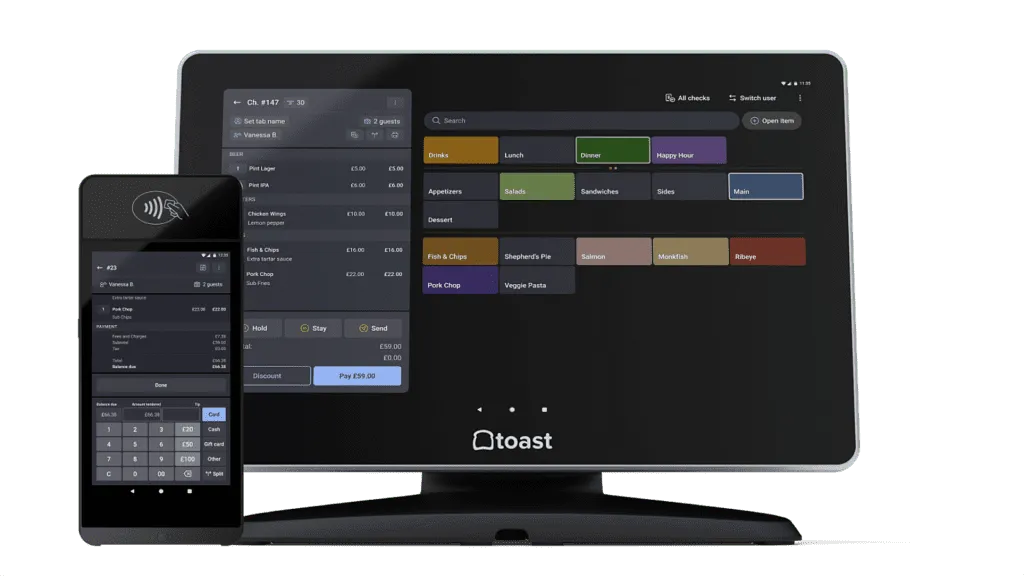
Plus, it provides both software and hardware solutions, such as touch-screen terminals and handheld devices for efficient tableside ordering.
Toast is particularly useful for multi-site operators because of its ability to centralise reporting across locations. Rather than logging into separate systems, operators can view sales performance, menu trends, and operational metrics across the entire estate.
And when integrated with Nory, Toast's sales data becomes even more valuable. Nory's agentic AI uses that data to forecast demand, optimise staffing, and improve inventory decisions across every location.
Side note: Toast is one of the most popular restaurant POS systems on the market, so it’s useful for different types of hospitality businesses. That’s why it’s in this list more than once. The same goes for Lightspeed, Square, and SumUp.
Lightspeed
Lightspeed is a robust POS system with specific functionalities for hospitality businesses.
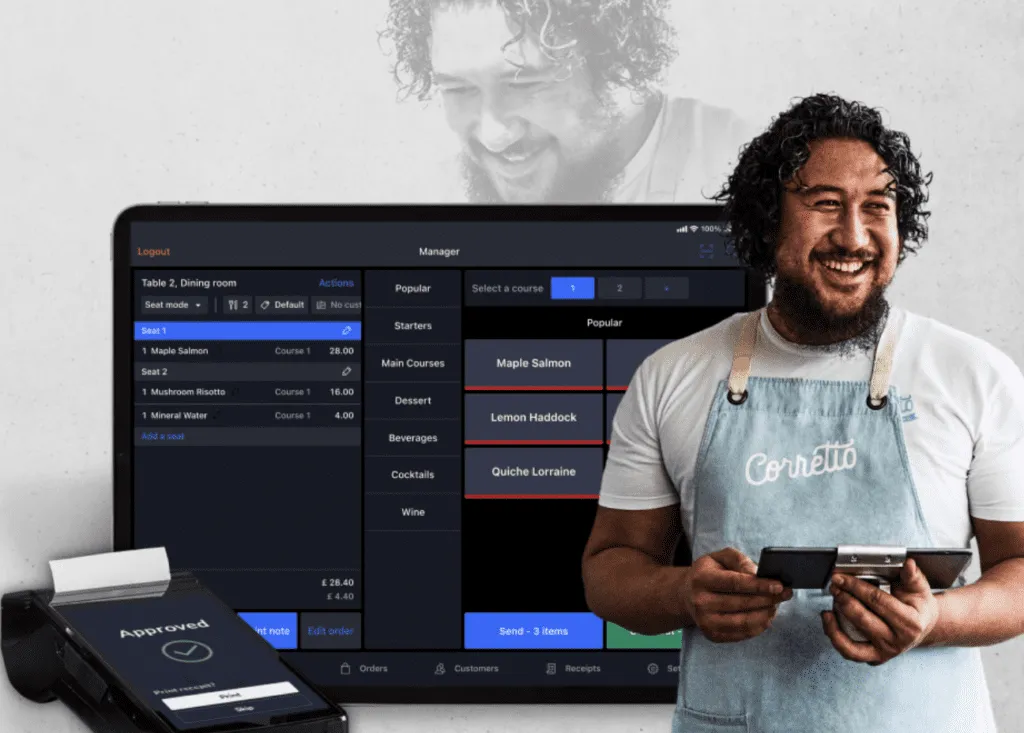
The software is another strong choice for hospitality groups operating across multiple sites, offering advanced reporting, inventory management, and customer insights, making it easier to maintain consistency as your business grows.
Operators can also monitor stock levels across sites, manage suppliers more effectively, and gain a clearer picture of overall business performance.
Nory tip 💡 Your POS system shouldn't operate as a standalone tool. The most successful multi-site operators connect their POS to a restaurant operating system (like Nory) that turns sales data into actionable insights. More on this later!
Best POS system for offee shops
The ordering process is quick in coffee shops and cafes, with multiple customers queuing at once to place their orders. So, other than all the features listed above, a coffee shop POS system also needs to enable fast and efficient order entry.
Here are a couple of our suggestions that fit the bill:
Square
Square is a versatile POS system known for its ease of use and comprehensive features, including payment processing, inventory management, and sales reporting. It also has hardware options, such as contactless card readers, terminals, and stands that connect with tablets and smartphones.

So why has Square made the list for coffee shops?
Because it enables quick and efficient transactions, which is crucial for busy coffee shop environments. It has a user-friendly interface and flexible hardware options, both of which create a smooth and seamless ordering process.
Lightspeed
Lightspeed is ideal for coffee shops looking for an intuitive but sophisticated POS solution. It’s easy to use, but it has an advanced inventory management system that tracks stock levels and manages suppliers, ensuring that popular items are always available.
And if you integrate Lightspeed with Nory? You can use our AI assistants to make sure you’re stocked and ready to meet customer demand. Together, our systems analyse sales trends, peak times, and customer preferences to predict demand and order ingredients accordingly.
Best POS for quick-service restaurants (QSRs)
Much like coffee shops, QSRs need POS systems that are quick and efficient. Customers expect a speedy service. With a slow POS, that isn’t going to happen.
You also need a system that keeps track of inventory in real-time. With orders coming through quickly, it’s hard to keep tabs on inventory and make sure the shelves are stocked to meet customer demand.
But with real-time insights? You can easily see when you need to order more ingredients.
Here are some best POS systems for restaurants that offer these functionalities.
Toast
For QSRs, Toast is an ideal POS solution. Its intuitive interface allows for fast order entry and processing, reducing wait times and improving customer satisfaction.
The system also supports multiple payment methods, which speeds up the checkout process.
And on top of this, Toast’s inventory management features track stock levels in real-time. You can accurately predict demand to ensure your QSR has all the items you need to fulfil customer orders, but without overspending on ingredients.
Combine this with Nory’s agentic AI restaurant management system, and you can turn Toast’s real-time sales and inventory data into smarter operational decisions.
SumUp
SumUp is a flexible POS system with features specifically for QSRs and fast food restaurants. It’s simple, efficient, and comes with a variety of hardware options to suit your operations.
This includes self-service kiosks, point-of-sale solutions, card readers, and kitchen display screens (KDS) that all integrate seamlessly.

The self-serve kiosks even have an upsell feature, making suggestions for add-ons to increase order value. It speeds up the ordering process for customers and helps you boost revenue in the process.
Vita Mojo
Vita Mojo is a restaurant management POS system with features tailored to the needs of QSRs, including menu management, and digital ordering solutions.

The user-friendly interface and intuitive design also make it easy for staff to navigate in the fast-paced environment of a QSR.
Vita Mojo also enables kiosk ordering, where customers can place orders themselves at self-service stations. This streamlines the ordering process, reduces errors, and enhances the overall dining experience for guests.
Plus, Vita Mojo integrates with Nory.
Nory’s operating system uses real-time data from Vita Mojo to forecast demand, optimise labour schedules, automate inventory management, and identify opportunities to reduce food waste.
This helps QSR operators improve efficiency, lower costs, and deliver a consistently great customer experience, even during peak periods.
Best POS for full-service restaurants (FSRs)
Full-service restaurants need a robust POS system. Why? Because they generally have more moving parts than other types of hospitality business. For example, creating complex menu items or managing table reservations.
Here are some of the POS systems that have well-rounded functionality to suit an FSR.
Revel
Revel is a cloud-based POS system that offers features like order management, payment processing, inventory tracking, and customer relationship management.

But why exactly is Revel the ideal POS for a full-service restaurant?
For one, Revel’s table management capabilities let restaurants manage table assignments, track table status, and streamline operations between front-of-house and kitchen staff effectively.
The system also has reporting and analytics, providing insights into sales trends, inventory levels, and customer preferences. You can also track insights from your table management, identifying high-volume and slow-turning tables.
All of this information helps restaurants make informed decisions to improve the bottom line.
Toast
Toast is on our list again as an ideal POS solution for FSRs. The system has features that help you streamline your entire FSR operation, like pacing the dining experience perfectly with course firing controls and order-ready notifications.

You can also simplify table management with Toast’s integrated waitlist and reservation solution, Toast Tables™ and streamline customer payments to keep service moving quickly with Toast Go® 2.
Lightspeed
Lightspeed makes it quick and easy to manage your entire FSR operation, with an intuitive interface that’s simple to navigate. This means you spend less time figuring out how to use the software, and more time running your FSR.

One of the standout features of Lightspeed’s POS is its focus on the customer experience. For example, tracking key customer data, like how often they return to your restaurant, how much they spend, and which menu items they order the most.
In the busy and fast-paced environment of an FSR, these features help you put the customer at the heart of your operation.
Best POS for catering and food trucks
For catering and food trucks, a POS system needs to be flexible and portable that can easily move with you and adapt to different venues.
Here are some of our suggestions.
Square
Square’s hardware includes mobile card readers and terminals that seamlessly integrate with smartphones and tablets, making it flexible to use from any location.
Take a look at the Square app as an example. You can take payments directly from your mobile phone, making it an ideal POS for operating from different locations.

This flexibility makes Square particularly well-suited to QSRs operating across multiple locations or needing to serve customers on the move. Staff can take orders and process payments from anywhere, helping to reduce queues, speed up service, and create a more convenient customer experience.
Tevalis
Tevalis is an EPOS system built specifically for hospitality businesses, with a mobile ordering solution that’s ideal for catering and food truck operations.

Not only does the mobile ordering system increase spending, but it’s also practical. It’s portable and space-saving, making it ideal for travelling operations like caterers and food trucks.
SumUp
SumUp POS is useful for food trucks becuase yuou can take orders on the go, use contactless payments to speed up the order process, and instantly make price changes or menu updates.
And even better? You don’t need to be directly at your food truck to make these changes.

But one of the biggest selling points is SumUp’s offline functionality.
As a food truck business, you’re likely operating from different locations that don’t always provide a solid internet connection. When this happens, SumUp’s Point of Sale Pro has you covered.
The system continues working even without internet access, meaning that your operations run smoothly and that all of your valuable data is safely stored.
Best POS for bars and pubs
For bars and pubs, a POS system needs to be able to create ongoing tabs, allowing customers to continually make orders and settle the bill at the end of the night.
It also needs to be able to track liquor so operators can stay on top of inventory levels and ensure shelves are stocked to meet demand.
Here are a couple of POS systems that we’d suggest.
Lightspeed
Lightspeed makes the list again as an ideal solution for bars and pubs that want a simple but efficient POS system.
In a few taps, bartenders can browse through menus, submit customer orders, open tabs, and accept payments in the same system.

Not to mention, the software allows you to design custom floor plans to accurately represent your bar or pub, and create as many menus as you need for different times of the day.
Shift4
Shift4 is a POS platform that provides a speedy service for the fast-paced environment of a bar or pub. The system streamlines operations with features like online ordering reservation and waitlist management, and access to sales and performance data.

The mobile ordering and pay-at-the-table solution streamlines the order and payment process for customers, and makes it easier for staff, too. Why? Because it’s quick and easy to take orders and payments on a mobile device.
Why integrating your POS system with a real-time restaurant operating system is a non-negotiable
Your POS captures every order, every payment, and every sale. But on its own, it doesn’t really help you run a more profitable restaurant, it just tells you what’s already happened.
This is a huge gap that a lot of operators feel day to day. Sales data exists but it’s sitting in isolation, so teams end up switching between tools, pulling spreadsheets, or waiting for end-of-day reports before they can actually understand what’s going on.
By that point, the moment to act has usually passed and your bottom line has already taken the hit.
This is why integrating your POS with a restaurant operating system has become essential.
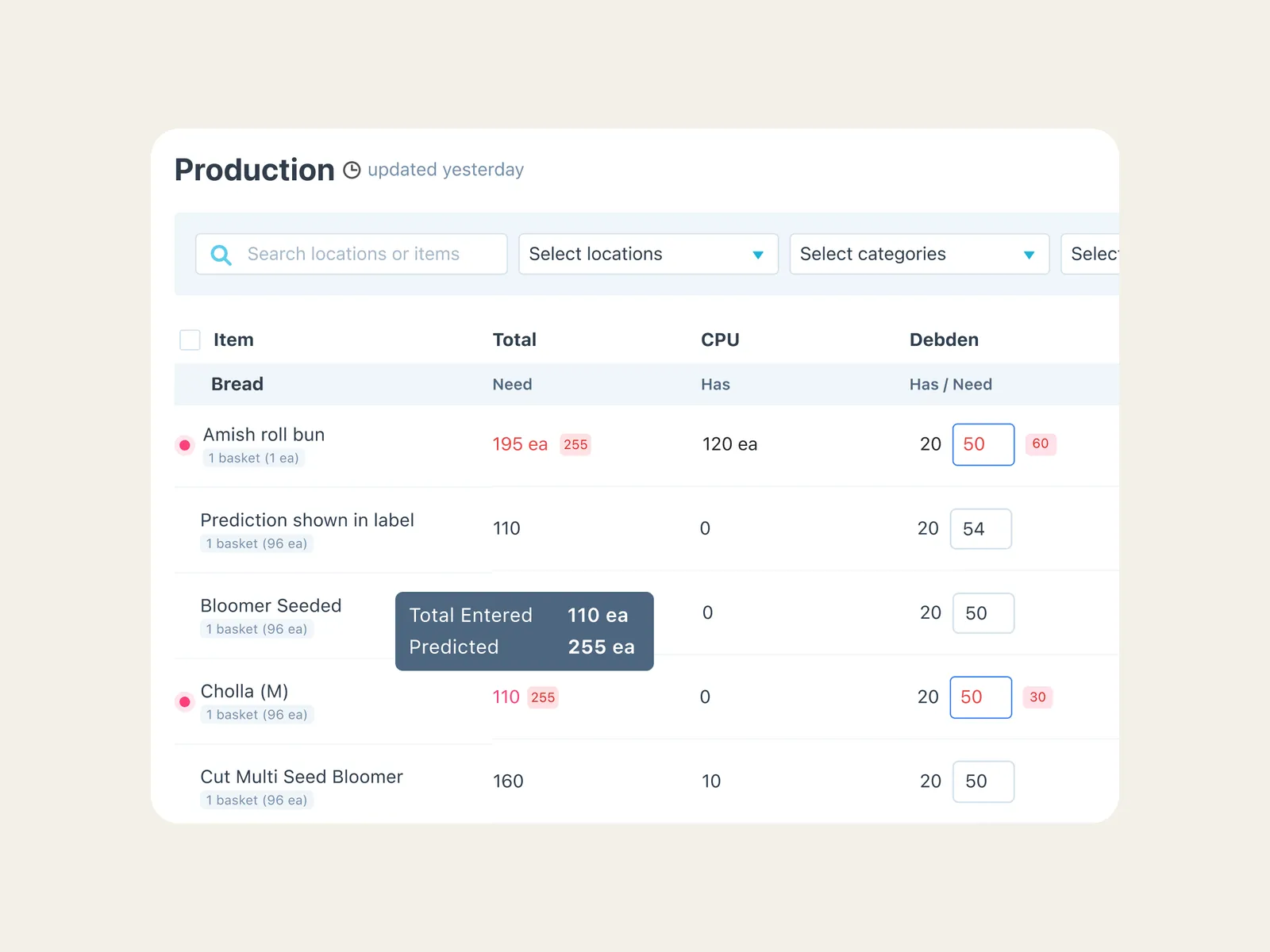
When you connect these two systems, sales data starts driving decisions across the business in real time. Instead of looking at sales in isolation, you can link every order to what matters operationally.
So rather than reacting after service, you can actually respond during it. Or better yet, prepare for it before it happens.
For multi-site operators, this becomes even more important. Without integration, each location essentially makes decisions based on delayed or partial information. With it, every site is working from the same live picture of the business.
Take a look at Nory as an example. Our agentic AI operating system integrates with POS platforms like Toast and Vita Mojo.
As a result, operators have a single connected view of sales, labour, and inventory data across every site so decisions are based on what’s happening in the business right now.
Teams can spot cost issues earlier, understand performance in real time, and take action before small inefficiencies turn into margin leakage.
Nory success story 🥳 Find out how Griolladh used the Toast integration to gain essential visibility and control over their expanding operations. By predicting hourly sales with up to 95% accuracy, Griolladh optimised spending, lowered its costs, and enhanced profit margins.
Nory has been with us every step of the way. It’s been incredibly helpful to the business, and has played pivotal role in the successful franchising of Griolladh.
Jacob Long, Co-founder at Griolladh
Key features to look for in a point of sale (POS) system
A POS system should make day-to-day operations faster, clearer, and easier to manage.
Here’s a breakdown of some of the key features to look for:
- Usability and interface. Keep an eye out for a POS system that’s simple and easy to navigate. With an intuitive system, you spend less time figuring out how the system works and more time using it effectively.
- Reporting and analytics. A POS system should provide real-time sales, inventory, customer, and employee data that informs your decision-making to help you boost profits. For example, if you know that a particular dish is a top seller, you can tailor your menu accordingly.
- Payment processing. Your POS system should support multiple payment options, like credit/debit cards, mobile, and contactless payments. Ideally, it should also have fast transaction speeds and high reliability to ensure payments are quick and efficient.
- Integration capabilities. Integrating a POS with other software is vital for a seamless restaurant operation. It allows you to synchronise data across channels, streamlining your workflow and accessing valuable insights to make data-backed decisions. Take a look at Toast and Nory as an example. By integrating Toast’s ePOS system with our restaurant operating software, you can manage daily revenue, staffing, and supply chains from a central location.
Nory in action: Masa, an authentic Mexican restaurant, integrated Nory with their existing systems (including Toast POS) to bring sales, labour, and inventory into a single operating system. This integration provided clearer visibility across the business and helped them forecast sales within a 3% margin, while controlling labour costs within 1% of plan.
Constantly being able to see what your sales are, what your cost of labour is — and trusting that is really valuable.
Shane Gleeson, Owner and Founder at Masa
FAQs about hospitality POS systems (UK)
How much does a hospitality POS system cost?
The cost of a hospitality POS system varies depending on the provider, hardware requirements, number of locations, and features included. Most systems charge a monthly software subscription, while others also require payment processing fees and hardware purchases.
Before choosing a platform, calculate the total cost of ownership, including terminals, card readers, integrations, training, and ongoing support.
Can I switch POS systems without disrupting restaurant operations?
Yes, but planning is essential. Most POS providers offer onboarding and migration support to help transfer menu data, customer information, inventory records, and reporting history.
To minimise disruption, many restaurants schedule the switch during quieter trading periods and train staff before the new system goes live.
What’s the difference between a POS system and a restaurant operating system?
A POS system records transactions, processes payments, and manages orders, but a restaurant operating system helps you manage all aspects of your restaurant operation, including sales labour, inventory, HR, and more. This gives operators a single view of performance and helps them make faster, data-driven decisions across the business.
Use a fully operational restaurant management system with Nory
Choosing the best restaurant POS system in 2026 is only part of the puzzle. Whether you’re running a coffee shop, QSR, or multi-site group, real performance gains come when your systems actually talk to each other.
The operators who are doing this well are connecting data across labour, inventory, and forecasting to make better decisions while service is still happening, not when it’s too late.
And that’s really the shift: from disconnected tools and end-of-day reporting to a live view of what’s happening across the business.
Nory brings that layer together. Our agentic AI operating system connects your POS, staffing, inventory, and forecasting into one place, so you can see what’s going on in real time and act on it straight away.
If you want to see what that looks like in your own operation, book a chat with the Nory team.