
What breaks first when restaurants scale? And how to avoid

Scaling a restaurant business is often seen as a sign of success. More sites, more revenue, more growth.
But growth comes with a trade-off: any problems you already have don’t disappear, they get magnified. If something isn’t working at one site, the problem will feel a whole lot bigger spread across multiple locations.
So what actually breaks first when a restaurant scales? And how do you avoid these pitfalls when growing your own restaurant business?
Let’s find out.
People feel it first
Culture. Yeah, 100%. … the thing that you forget when you grow is people.
Clive Watkins, Regional Managing Partner at Pizza Pilgrims
What breaks first when restaurants scale? It’s often said that it’s people, but that’s not quite right. People don’t break first, they feel the effects first.
In hospitality, people sit at the intersection of every part of the operation. They’re the ones delivering the product, serving the guest, and holding everything together day to day. So when something isn’t working, it shows up in them.
Gaps in training, disconnected systems, unclear processes, poor scheduling decisions. All of it lands on the team.
At a small scale, those issues are often absorbed. Teams compensate, managers step in, and problems get solved in the moment. But as a restaurant grows, this becomes more visible and more expensive:
- A poorly optimised rota causes labour inefficiency across an entire region.
- Inconsistent training creates variance in guest experience across sites.
- Unclear priorities fragments execution across all your sites.
The pressure that teams feel also has a knock-on effect for customers. When staff are stretched, they have less bandwidth to focus on the details that improve the dining experience, like warmth, timing, attentiveness, and consistency.
Service becomes reactive rather than intentional because they’re operating in an environment that makes it harder to deliver consistently.
Weak foundations don’t stay hidden for long
It really does depend on where your cracks are… if you have a crack in your foundation… those cracks become fissures.
Jonny Bramwell, Regional Head of Ops at Rosa’s Thai
Every restaurant group has operational imperfections. That’s normal. No business scales with perfect systems in place.
The issue is what happens when those imperfections are replicated across multiple sites.
At a smaller scale, they’re often manageable. Teams work around them, leaders step in, and the impact is contained.
But scale removes that safety net.
We see this pattern repeatedly in multi-site groups:
- A “flexible” approach to scheduling becomes uneven labour cost control across regions.
- Informal prep routines evolve into site-to-site variance in food quality.
- Undocumented training habits create different standards of execution for the same brand promise.
What used to be a minor inefficiency becomes a recurring issue. The cracks that were once hidden beneath the surface become impossible to ignore.
.webp)
And once variation becomes embedded across sites, fixing it requires unpicking behaviour. That’s slower, harder, and far more disruptive than building it correctly in the first place.
This is why scaling feels harder than it should for many operators. It’s not the growth itself that causes the problem, it’s the exposure of what wasn’t working in the first place.
Scaling doesn’t create new problems, it simply makes it harder to hide your existing issues.
Fragmented systems become unmanageable
If you don't have all the right systems… that’s going to break. That will then break your team because they're dealing with that rather than the guests.
In early-stage hospitality businesses, systems are often stitched together. Spreadsheets, manual processes, and disconnected tools are enough to get by.
But they’re not built to scale.
As soon as you introduce multiple sites, shared P&L responsibility, or regional oversight, those systems start to fail. Data becomes unreliable and teams spend more time managing operations than actually running them.
When different sites are working from different numbers, even basic decisions become slow:
- Labour decisions are delayed because data isn’t trusted
- Inventory purchasing becomes reactive because forecasting isn’t consistent
- Performance conversations become subjective instead of evidence-based
And once again, the impact lands on people.
Instead of focusing on delivering a great guest experience, teams are forced to navigate inefficiencies and fix problems created elsewhere in the business. Over time, that leads to frustration, burnout, and inconsistency.
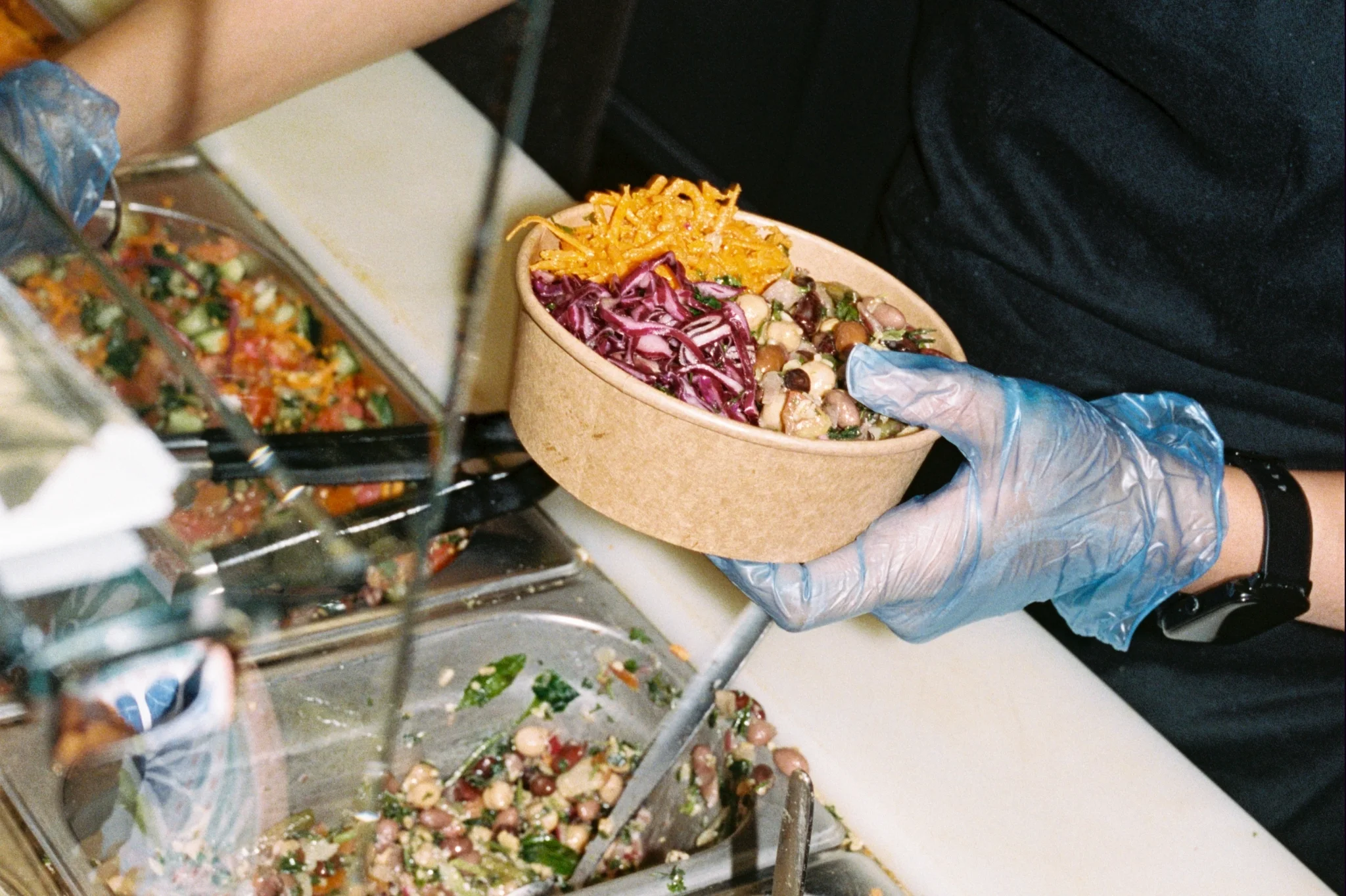
Not to mention, the effect all this has on your bottom line.
When systems don’t talk to each other effectively, decision-making becomes harder, visibility breaks, and leaders lose confidence in what the numbers are telling them. As a result, operations run on guesswork instead of truth.
And what does this mean for your profits? It means margin leakage across every site.
You overspend on labour because schedules aren’t based on reliable forecasts, you have a higher waste percentage from reactive ordering, and you lose revenue opportunities because decisions are made too late or on incomplete data.
This is where Nory can help.
By bringing forecasting, labour, and sales performance data into one system, operators get a single source of truth across every site. Access to this real-time data makes it easier to control costs, improve consistency, and scale without losing operational visibility.
.webp)
Nory in action: Pieminister, a multi-site family-owned pie brand, used Nory to streamline reporting and improve performance visibility across its locations. The business reduced month-end reporting time by around 50%, enabling faster, more consistent decision-making across locations.
If we open a new site, Nory lets us get set up in minutes. Everything’s already there. That level of control is huge for us.
Morgan Evans, Retail Finance Manager at Pieminister
How to scale a restaurant: 3 tips to start on the right foot
Scaling a restaurant brings opportunity, but it also exposes how the business really operates under pressure. Small gaps in structure, systems, and consistency that were manageable at one site quickly become visible across many.
To scale successfully, operators need to get a few core areas right from the start.
Structure growth to avoid burnout
They need a clear vision… they’re going to work extraordinarily long hours… you need to make sure you review performance and celebrate the successes.
Giles Fry, Chief Operating Officer at TGI Friday’s UK
Growth brings opportunity, but it also brings pressure. More locations mean more decisions, more moving parts, and more responsibility across the business.
The challenge is where that pressure ends up.
Without the right structure in place, the pressure builds and people can burnout. Leaders become the default escalation point, managers get stretched across too many priorities, and teams slip into reactive mode just to keep things running.
.webp)
Here are some of the ways to structure growth more effectively to reduce the risk of burnout:
- Start by tightening ownership. Every site and region should have clear accountability for performance, like revenue targets or customer satisfaction scores.
- Make expectations visible. Set a small number of non-negotiable metrics (labour cost percentage, sales per labour hour, and food waste) and ensure every site reviews them regularly (which is easy with Nory’s live insights).
- Introduce simple planning rhythms. For example, locking in weekly forecasting and scheduling reviews creates space to plan ahead, rather than constantly reacting to what’s already happened.
- Sense-check capacity before opening new sites. If your current structure relies on a few high performers holding everything together, adding more locations will increase pressure.
Build a solid foundation to scale from
When you look at businesses that scale well, the same pattern shows up again and again – strong foundations.
People, systems, training, structure. It all comes back to these.
At a smaller scale, you can get away with gaps. Strong individuals step in, teams adapt, and things keep moving. But as the business grows, those gaps multiply.
That’s why effective scaling is about more than opening new sites. It’s about making sure that each new location performs as consistently as the last, without relying on the same people to hold it together.
Here are some tips for building strong foundations before you scale to new locations:
- Identify your non-negotiables. Pinpoint the processes that directly impact performance, like opening routines, prep standards, or labour planning. Document these clearly and make them easy for any new site to adopt.
- Test for consistency. A simple way to do this is to compare two sites. If they’re operating differently but should be achieving the same outcome, there’s a gap in your foundation.
- Evolve staff training as you scale. Instead of relying on experienced managers to pass on knowledge, build structured onboarding that ensures every team starts from the same baseline.
It’s also worth regularly asking: where are we relying on workarounds? If something only works because a specific person is involved, it won’t scale cleanly.
Use technology to access valuable insights
Access to real-time, accurate data is essential to scaling effectively. Operators need to see what’s really happening in the business to make informed decisions about growth.
This is exactly where restaurant technology supports operators.
Nory, for example, combines forecasting, labour, inventory, and revenue into one system. Teams get a clear, real-time view of performance across every site without the need for manual consolidation or guesswork.

That means managers can identify underperforming sites, menu items, and cost drivers early. Then, they scale what’s working while fixing issues before they impact overall site performance.
Nory in action: CUPP, a growing bubble tea brand, used Nory to align forecasting with production and ordering across its locations. The business reduced waste by up to 60% while improving how each site plans and operates day to day.
Here are some of the ways you can use technology like Nory when scaling:
- Use forecasting to plan, not just report. Build rotas and inventory orders for each location around predicted demand, not last week’s numbers.
- Standardise decision-making across sites. Use shared dashboards and KPIs so every location is working from the same benchmarks.
- Act on real-time performance. Review daily performance and make small adjustments quickly (whether that’s labour, prep levels, or purchasing) before issues get worse.
- Use AI-powered insights to spot patterns early. Identify trends in sales, labour efficiency, and waste before they become problems, and adjust operations proactively.
- Check usability. If a system adds steps or complexity for site teams, it won’t get used properly. The best tools fit naturally into daily operations, not sit alongside them.
Turn restaurant operations into scalable profitability with Nory
Scaling a restaurant isn’t just about opening more sites or driving higher revenue. To do it successfully, you need to know that your operation can hold its shape as complexity increases.
In reality, most of what breaks during expansion isn’t visible at first. It shows up gradually, in inconsistent execution across sites, in decisions made without full visibility, and in teams spending more time reacting than improving.
And when that happens, performance becomes harder to control.
That’s where Nory comes in.
Nory helps operators move from fragmented reporting and reactive decision-making to real-time operational control. By connecting forecasting, labour, inventory, and performance data, every site has the same source of truth. As a result, teams can act faster and protect profitability as they grow.
Book a chat with the team to see how we can help you improve performance across every site.