Restaurant ordering runs on habit. Here's what that's actually costing you.

It's Tuesday afternoon. Your manager is on the floor, or should be. Instead, they're on their phone, going through a mental checklist they've built up over years on the job. Tomatoes. How many did we go through last week? Was it a busy week? What's on next week? Better order extra, just in case.
They go supplier by supplier, item by item, with nothing to cross-reference against. They order based on what feels right.
And they get it mostly right, because they've been doing this long enough to have good instincts. But instincts aren't a system, and they don't transfer.
The problem with habit-based ordering
Many restaurants have a version of this. On Sundays we order 30kg of chicken. On Thursdays we top up the dry goods. We always order a bit extra of the things that run out. We've always done it this way.
It works until the week is busier than expected, or quieter, or a new menu item launches, or the experienced manager goes on holiday and someone less confident has to step in and guess.
The moment your ordering relies on institutional memory rather than data, you've built a dependency you can't see. You won't notice it until the wrong person is on shift.
What it actually costs
Over-ordering ties up cash you don't have to spare. Stock sits in the fridge, degrades, gets thrown out. Food waste isn't just a sustainability issue - it's a direct hit to your margin.
Then there’s the dreaded under-ordering, running out of an ingredient mid-service. You disappoint a table. You lose revenue you can't get back.
And here's the version that Ops Directors feel most acutely: the COGS variance across sites you can't explain. Location A and Location B run the same menu, serve a similar volume, have similar staffing. But their food cost percentage is different, sometimes significantly different.
You look at the numbers. You ask the questions. And somewhere in the answer is this: they order differently. One site over-orders systematically. Another under-orders and makes do. Neither is doing it intentionally. They're just doing what feels right.
The bottleneck nobody talks about
In most cases, the people who really know how to order, who understand the nuances, the supplier relationships, what to do when something runs out, are the managers who've been there longest.
Those people can't be in every location at once. They can't be available every time a newer team member needs to place an order. And the moment you're relying on one person to hold that institutional knowledge, you've got a single point of failure.
COGS is a huge cost. You can't manage it on gut feel.
Labour gets all the attention, and rightly so. But COGS sits right alongside it. Together, labour and food cost are 60-70% of your total revenue. That's your prime cost.
And if your ordering is based on habit and instinct rather than what demand data actually says you need, then your prime cost management is as good as a guess. Not because your team isn't capable, but because they're working without the information they need to make the right call.
Ordering that starts with the data, not the habit
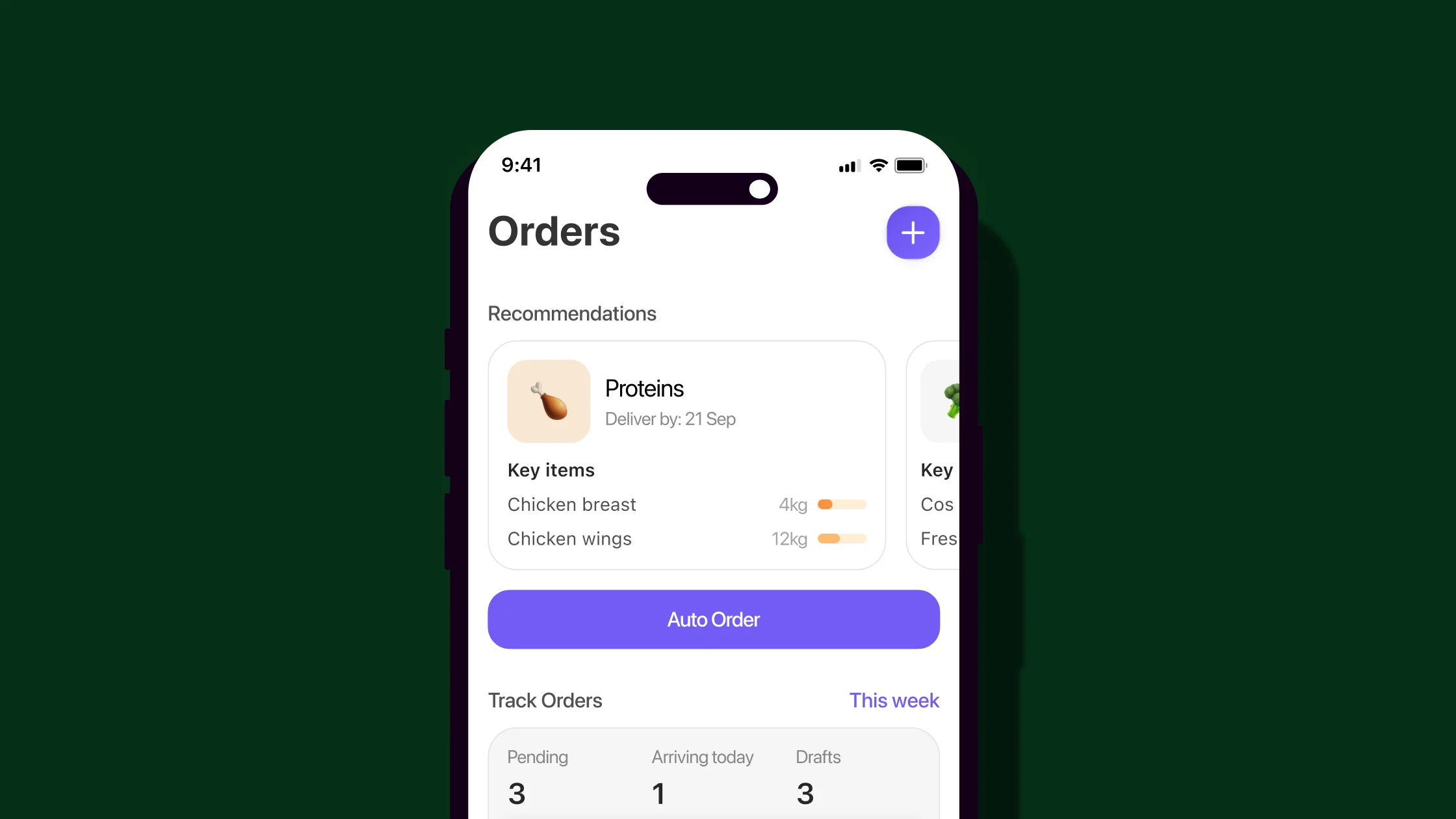
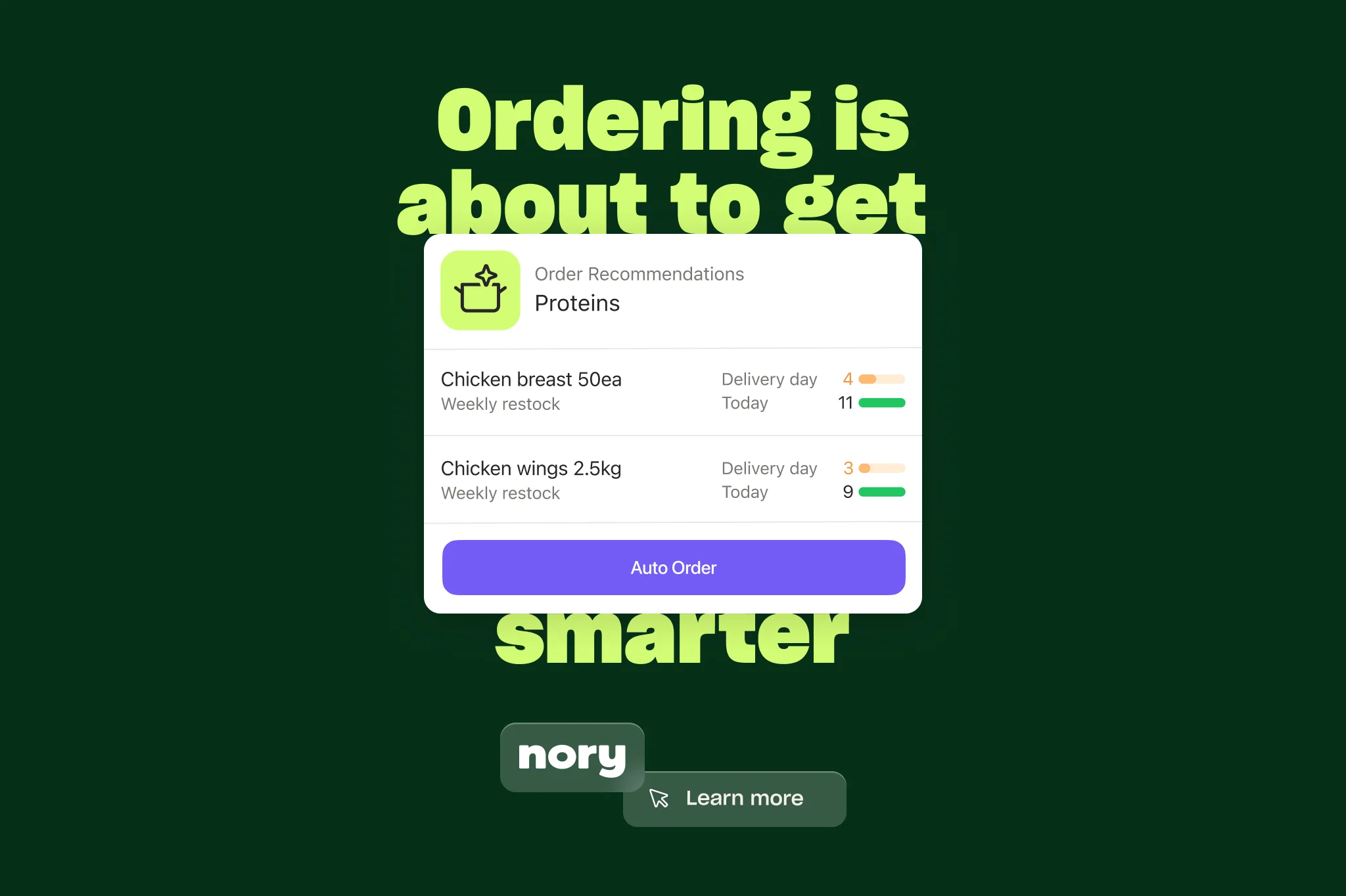
Stop building every supplier order from scratch. Nory's Ordering Assistant drafts your orders based on real demand data, so you can review, adjust, and send in minutes, not hours. Less guesswork. Less waste. More time with your team and your guests.
Nory's Ordering Assistant is coming soon. Learn more.
Frequently asked questions
What is demand-based ordering for restaurants?
Demand-based ordering means building supplier orders from actual sales and consumption data rather than habit or manual estimation. Instead of a manager guessing how much to order based on experience, the order is drafted using what the data shows: how much was sold, what was used, and what's expected based on upcoming demand. This reduces over-ordering, under-ordering, and the COGS variance that tends to go unexplained in multi-site operations.
What causes COGS variance between restaurant locations?
COGS variance between sites usually comes down to inconsistent ordering, portioning, and waste management. When ordering decisions are made independently by different managers using different levels of experience, the amount of stock ordered, used, and wasted will vary. Two sites running the same menu can show meaningfully different food cost percentages purely because of how orders are built. Connecting ordering to demand data is one of the most direct ways to bring those numbers into alignment.
How can restaurants reduce food waste through better ordering?
Most food waste in restaurants starts at the ordering stage, not the kitchen. Over-ordering is the primary driver: buying more than demand requires means more stock goes off before it can be used. Ordering based on actual sales and consumption data, rather than habit, directly reduces the volume of perishable stock that ends up as waste. Better demand forecasting at the ordering stage means buying closer to what's actually needed.
What is prime cost in a restaurant, and why does it matter?
Prime cost is the combined total of food and beverage cost (COGS) and labour cost. Together, they typically represent 60 to 70% of a restaurant's total revenue, making them the two biggest levers for profitability. Controlling prime cost requires accurate data on both sides, and ordering is one of the most direct influences on the food cost half. When ordering is based on guesswork, prime cost management becomes reactive rather than proactive.
How do multi-site restaurant groups manage supplier ordering consistently?
Consistency in ordering across sites is one of the harder operational problems to solve at scale. The most common approaches are central purchasing teams, standardised order guides, and par level systems. Each helps, but all require manual input and are only as accurate as the experience of the person maintaining them. Groups that have moved to demand-driven ordering, where suggested quantities are generated from actual sales data, report more consistent food cost percentages and fewer ordering-related surprises.