.webp)
The brigade system was the first restaurant operating system. Here's the second.

You find out Tuesday lost money on Friday. By then the week's gone, the stock's been ordered, the rota's been worked, and there's nothing left to do but note it and promise yourself next week will be tighter.
That's the job for a lot of operators right now. The POS holds sales, the labour tool holds the rota, stock lives in a third system, the P&L gets stitched together in a spreadsheet after the fact, and none of them talk to each other. So you spend the start of every week reconciling instead of deciding: pulling numbers from four places to work out whether the last one was any good, by which point you're already living the next one. Labour creeps to 40% before anyone catches it. Food cost drifts a point or two and stays there. The work to even see the leak is so manual that it usually happens too late to stop it, and it gets worse with every site you add, because now you're doing it five times over with no more hours in the day.
The brigade was the first answer to this
Restaurants have solved a version of this before. When Escoffier ran kitchens that one cook could no longer run at volume, he didn't ask the cook to work faster. He broke the work into stations, gave each one to a specialist who owned it, and put one head chef over the top running a single system everyone followed. The saucier owns the sauce, the garde manger owns the cold station, the head chef holds the pass and the whole picture. That's the brigade, and it's the reason a kitchen can turn out three hundred covers a night without falling apart.
The brigade was the first restaurant operating system. It's the original answer to the exact problem operators have today: how one person runs more than one person can hold.
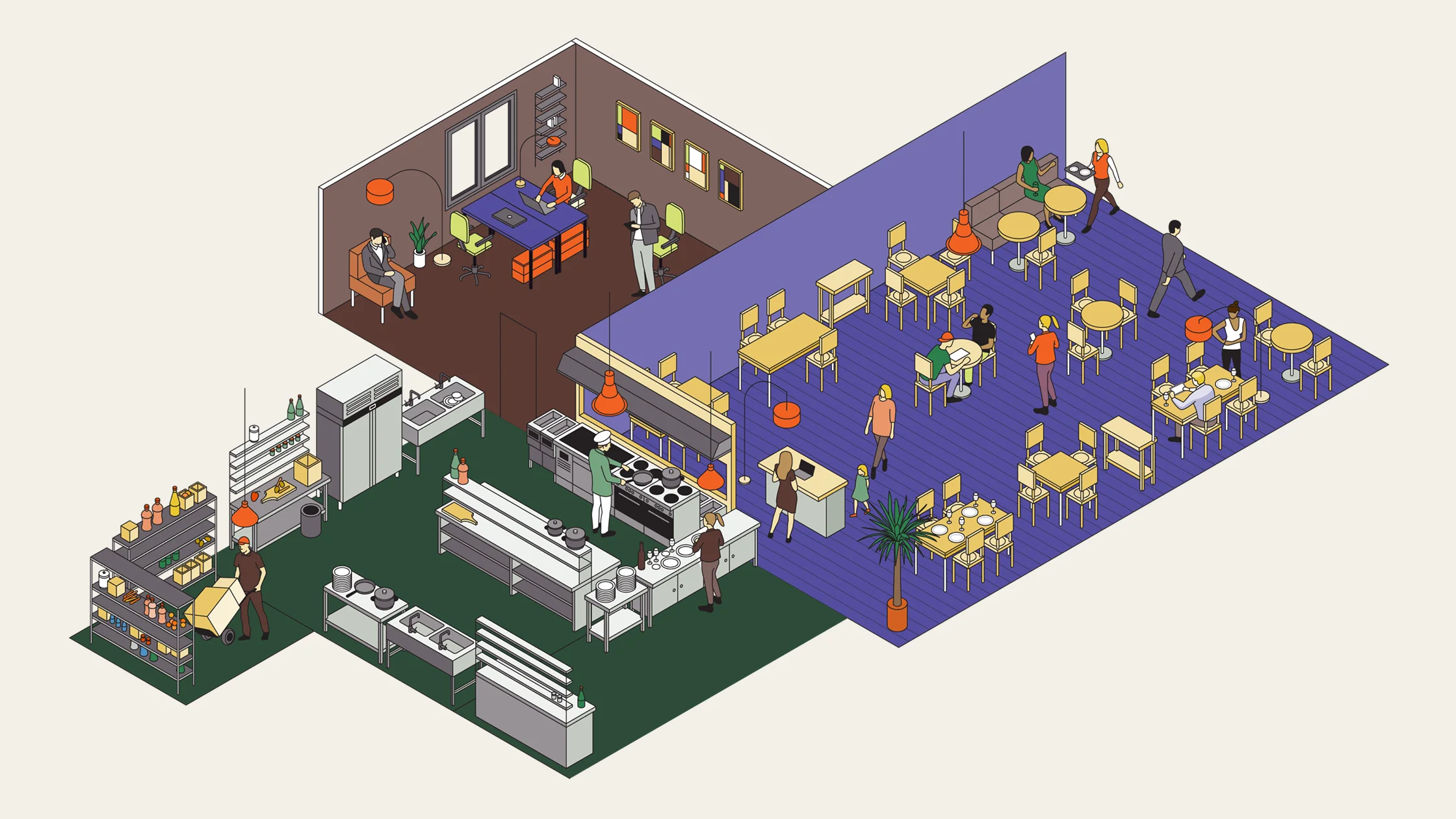
The front of house has run on a brigade for a century. The back office never got its version. The operator running the numbers is still a one-person band, covering forecasting, scheduling, ordering, payroll and compliance alone, on systems that don't talk, finding out what went wrong after it already has
A brigade for the back office
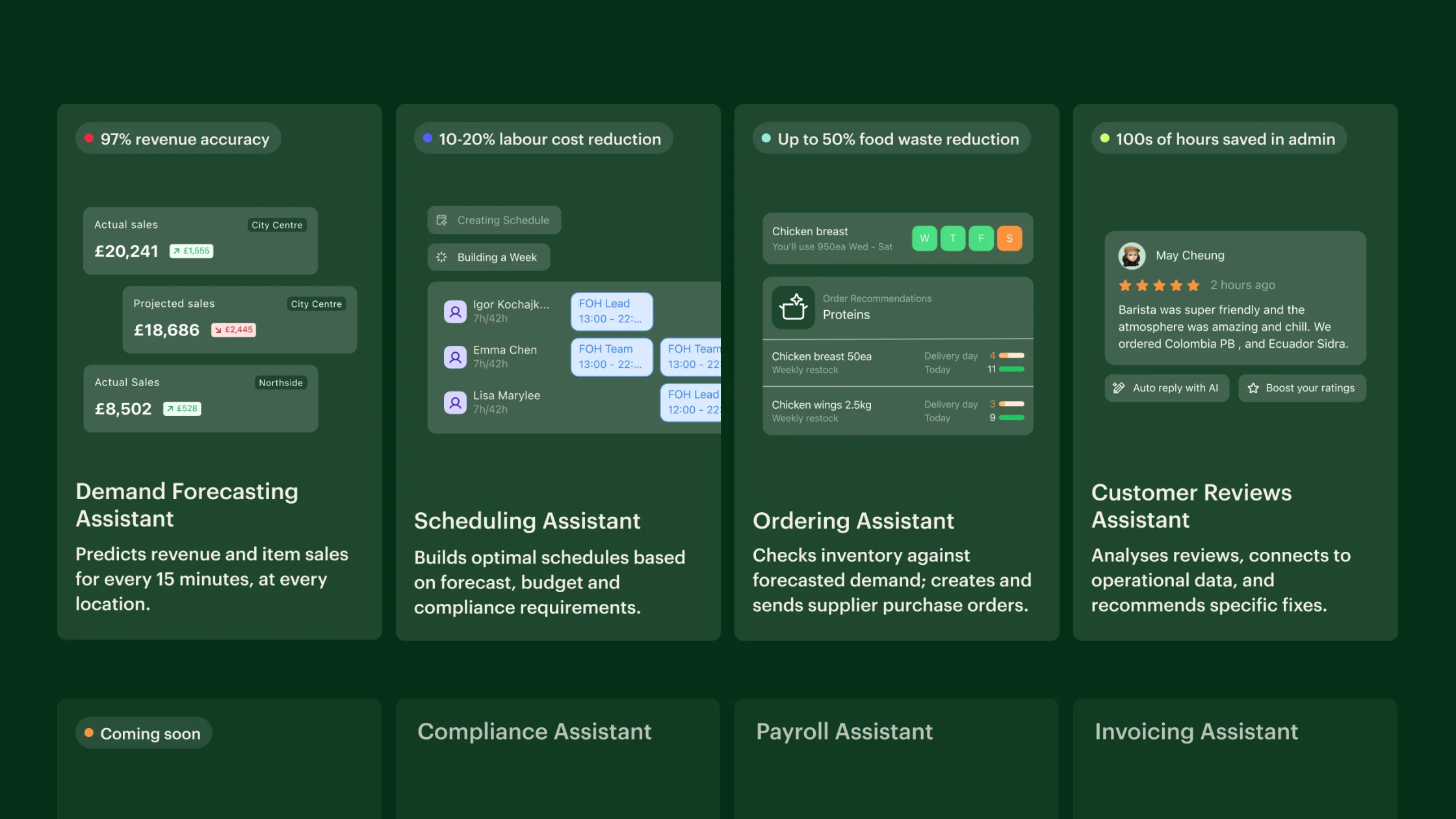
So that's what we've been building at Nory: a brigade for the side of the restaurant that never had one. A team of AI assistants, each owning one station and genuinely good at it.
The Forecasting Assistant gets demand right. The Scheduling Assistant turns that forecast into labour. The Ordering Assistant turns it into stock. The Reviews Assistant owns the guest's voice. Each one is useful on its own, but a brigade isn't a set of cooks who happen to share a kitchen, it's what coordination does to them. The assistants share one context: the same forecast, the same P&L, the same view of the site. They're reachable from one place in the flow of the shift instead of fifteen separate logins. And they're controlled centrally, so the Head of Ops sets one playbook the way a head chef sets the standard, and every site runs it the same way.
A specialist who only sees the rota is half-blind. A coordinated brigade sharing one picture is the thing that turns five sites into one system you can actually run, and it gets sharper every time a new station joins and the shared context gets richer.
You're still the head chef
None of this replaces the operator. It gives them a brigade.
There's a version of "AI for restaurants" that means taking the human out and letting the model run the site.
I get the appeal, and I think we get there eventually, but starting there is a mistake.
Raphael Daverio, Head of Product
A restaurant day doesn't hinge on one overriding decision. It comes down to a thousand small ones, stacking up from open to close: who covers the no-show, whether to push the special, whether to accept the short-delivery with the weekend coming. Plenty aren't data-led, plenty are inconsistent even when the same person makes them twice, and plenty are physical and in-the-moment in a way no model is standing in the room for. Your AI doesn't replace your GM. It gives them superpowers.
The near-term job isn't to take the decision away from the operator, it's to hand it to them ready to make.
Raphael Daverio, Head of Product
What it does is hand the decision over ready to make. The brigade gathers the context, works out the recommendation, and puts the call in front of you teed up, so what you spend your judgement on is the decision itself, not the twenty minutes of digging that used to come before it. A head chef doesn't chop every onion. They run the pass and make the calls that matter.
And the brigade learns which calls it can take on its own. Take reviews. A glowing five-star write-up doesn't need you, the Reviews Assistant thanks them and moves on. The furious one-star about a ruined anniversary might be the one you want to read and answer yourself, so it brings you that one with the context already pulled and a draft already written. That line moves as the system earns trust, station by station, and over enough sites and enough decisions more of the week runs itself, with you handling the calls that genuinely need a head chef.
Built for margin
Any good assistant needs an objective, and this is where I think AI most often loses its way: it's pointed at no objective in particular, or worse, its incentives pull against the one it's meant to serve. A lot of software is built to keep you in the product: more screens, more notifications, more time logged in, and calls that engagement. We're not interested in that.
Our objective is ruthlessly simple: We are building for margin. Everything in the brigade is pointed at one thing: helping you control your costs. And the reason that's the right thing to point at is what it sets off.
Get prime costs under control and you make more room for profit. Profit funds growth, growth opens more sites, more sites bring more revenue, and more revenue builds the margin to reinvest. Control the cost side and the growth side takes care of itself. That's the loop, and margin is the lever that starts it turning.
Raphael Daverio, Head of Product
The masterplan, in two steps
Step one: a brigade that takes control of prime cost.
Give the GM and the Head of Ops a team of AI assistants that keeps labour and cost of goods right on every site, every week, without heroics. Prime cost is where the margin leaks first and most, and the win is that one operator can run ten times the surface area without ten times the headcount.
Step two: grow the brigade into the operating system for the whole restaurant.
Extend it beyond cost control to every role that runs the business (procurement, people, finance, the floor), one station at a time, until the whole operation runs on it. Skilled work, against the clock, never enough hands, every one of them a candidate for the brigade.
The brigade already has Forecasting, Scheduling and Reviews on the team. Payroll, Compliance and Ordering join over the next couple of weeks, and there's a good deal more in the works behind them.
Escoffier gave the kitchen a system that let one chef run a service no single cook could. We're giving the rest of the restaurant the same thing. We'll have plenty more to show you soon.
FAQs
What is a restaurant operating system?
The tools, processes, and people that keep a restaurant running day to day. Most operators are working across a POS, a scheduling tool, a stock system, and a spreadsheet that ties it all together — none of which talk to each other. A modern restaurant operating system connects all of that into one shared context, so decisions are made on complete information rather than last week's numbers.
What is the brigade system in a restaurant kitchen?
A structure developed by Escoffier in the late 19th century that divides kitchen work into specialist stations, each owned by one person, with a head chef holding the pass and the whole picture. It's the reason a busy kitchen can serve three hundred covers a night without falling apart — and the model the back office has never had.
How can AI help restaurant operators control costs?
By connecting data that currently lives in separate systems and acting on it in real time. AI assistants can forecast demand, turn that into optimised schedules, and generate supplier orders based on real data rather than habit — so operators stop making cost decisions on gut feel and start making them on numbers, every week.
What is prime cost in restaurants and how do you manage it?
Prime cost is cost of goods sold plus cost of labour — typically the largest controllable expense in a restaurant, and where margin leaks first. Managing it means keeping both sides accurate and current, and catching variances before they compound. Most operators do it manually, which means finding out too late.
What's the difference between front of house and back office restaurant management?
Front of house covers everything the guest sees: the floor, service, reservations, reviews. Back office covers everything that makes the operation financially viable: scheduling, payroll, ordering, compliance, cost control. The kitchen has had the brigade for over a century. The back office is still waiting for its version.