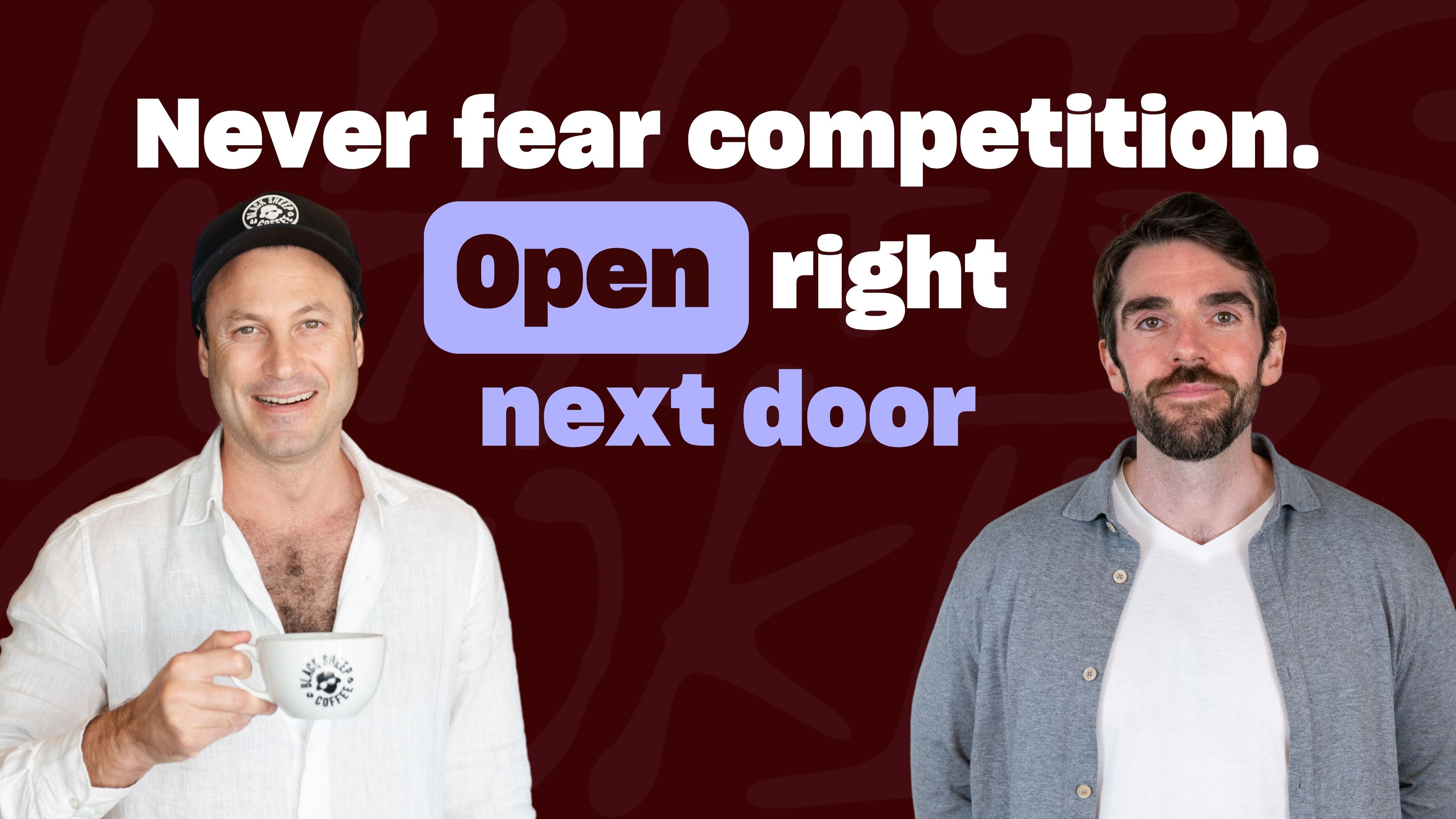
00:00:00
Conor Sheridan
I'm Connor Sheridan, founder and CEO of Nory, and welcome to What's Cooking. Staff turnover remains one of the biggest challenges in hospitality, but a growing number of operators are flipping the script, treating culture and training not as cost centres but as core levers for growth and profitability. In this climate of high attrition and high hiring costs, operators who invest in leadership pipelines, values driven operations, and purpose led teams are not only retaining staff at a higher rate.
But they're performing better across all guest experience and P<unk>L metrics. Today's guest is Maria McCann, Director of Operations for Black Block. Maria gives us some incredible insights into how to not only retain your team, but to drive culture into your day-to-day operations and create it as a competitive advantage. Now let's get into it.
00:00:52
Conor Sheridan
Maria, welcome to What's Cooking. Great to have you here. Thanks for having me. Excited for the conversation. Excited to speak to you. Heard some good stories outside. So hopefully they'll they'll translate into into this chat. Before we jump in, would you be happy to give us a brief intro about yourself, a bit on your background and how you came to be the ops director of Black Locke?
00:01:10
Maria McCann
accent aside, I think people will know. I originally grew up in Ireland, spent some time in Edinburgh where I fell in love for hospitality, and then came down to London to work for a tiny little company called Shake Shack, people might have known. spent eight years of my career with the fabulous team at Shake Shack, and along the way met Gordon, the founder of Blacklock, and then very serendipically ended up working.
For Blacklock and I am ops director, so about seventeen years in hospitality so far.
00:01:41
Conor Sheridan
Black Lock is renowned for its people first culture. I think you're I was looking up the different rankings. Number eight of the top ten hospitality businesses in the UK, number top close to fifty of the top businesses in the UK in general for best places to work. Which is quite rare for a hospitality business. Yeah. There's a inherent cost versus culture tension that we see in the industry. How have you been able to get away from that and build and scale a really successful business?
While being renowned for being such a people first culture.
00:02:13
Maria McCann
Yeah, I think people it might sound really cheesy, but our ethos is everybody leaves happy, including you. the background of the star of the company, Gordon was a lawyer and just really didn't enjoy it. The one thing he did know is that he wanted to work for a business that you could get up, want to go to work every day and want to make a difference. We firmly believe that if you're passionate about something, you'll be good at it. And, you know, that's the basis of all of it.
When you look at culture, it's such a difficult word to try and talk about and explain. But when you put people first, and apologies to any CFOs out there that are listening, but you look after your people, people look after their guests and their suppliers, the rest take care of itself. and if you're good to your people, businesses will be profitable and businesses hopefully will be busy, and then the rest takes care of itself. As long as you can have that energy and passion.
and drive your team to care and that they're passionate about what they do, our minds is the business will be successful. And thankfully, the likes of best companies and the surveys that that we've now done, we always knew or we thought we knew that we were a great place to be. we just wanted to solidify that by doing a couple of surveys to to get the proof back. And and it has come back that our team are really happy with what they do.
00:03:35
Conor Sheridan
So I take it in terms of operational metrics that you look at, retention, employee MPS, that'd be pretty high on the list.
00:03:42
Maria McCann
Yeah, so we look at guests first, and as well as people. So the two key metrics, if you look at what is bonusable or what is our scorecards, or what people will be looking at, we look at people, we look at guests, we look at financials, and then we look at compliance and we do it in that order. So we do people first and we look at team turnover and then their best company scores. And then second to that, we then look at our guest scores because we truly believe that with great
turnover scores and great best company or, you know, NPS for team guess metrics will follow suit because the team are happy with what they do.
00:04:20
Conor Sheridan
It's one of the first times I've had someone who's leading operations not mention the P L and and how they manage the team. So it's guests, people, P and L will look after itself. Was that kind of the mindset?
00:04:31
Maria McCann
Yeah, so and that's why why we have that everybody leaves happy including you. So that's if you look at old school retail or even old school hospitality, it was this terminology of customer. And I joke about the customer being the C word that I never want to hear. and they're guests in your home or they're guests in your restaurant for a reason. So if your team are looked after and they take care of your guests, and those are the two metrics that matter. You want to continue to be in coverage growth, you want more guests in through your door and and they're guests.
And it's your people that do that and then your product. You can have the best product in the world. And if you have really rubbish service or team that don't want to be there, you're not going to go back as a guest. If you go in and have a great product and get served by somebody who really passionately loves what they do and love their job, you're gonna keep coming back time and time again. And you know, we walked in earlier and some of the team here were saying, I've been looking forward to this. It's the one we go to with the boys every Christmas. That's because
We look after our team and our guests as our key metric and then the financials flow through. Touch wood.
00:05:33
Conor Sheridan
Well, obviously they have, right? You've grown to six venues. You've just opened a venue outside of London in Manchester, which is going great. Yeah. how have you scaled a culture while maintaining that operational rigour because I know things will look after themselves, but there has to be some intentionality around making sure that they they end up there. Could you talk to us a bit about how you've done that?
00:05:56
Maria McCann
A lot of it was that people train and investment in people. We were very lucky that we had a crack in Chairmarkin in London who's originally from Manchester. And her end goal was she always wanted to move back up, be close to her family. And before we'd even had a site, she said to me, When you open Manchester, I'm open in it. And so that was great. She she helped us with our property strategy. But being able to move somebody internally at a high
such a senior part of the business. We had the head chef and the GM both want to relocate cities. So that was the first starting point. So it is looking internally, being really upfront and honest with your team. Who else wants to grow with you, no matter whether it is London or not? I think some businesses forget that people might want to move. They might want to relocate their lives for the right business. And we were lucky enough that or engineered enough that because we've taken care of them,
That 12 people wanted to relocate. So that's a lot of our team said we want to stay with Blacklock. We'll wait for Black Lock to open and we look relocate with you. And it was a really fair mixture of front of house and back of house. But then outside of that, I think the most challenging part of trying to maintain the culture is because we are so people focused, particularly from an ops point of view, I'm so hands-on and people focused with face to face. Once you add in different like that.
distance, it becomes more difficult to just pop in and have a conversation or ask them, is everything okay? And all of a sudden you risk that remoteness becoming a loss in communication. So a lot of what we've worked on is how do we do and maintain culture remotely? And, you know, I still go up twice a week, but I'm closer to our GM now than when she lived in London because I speak to her so much to make sure that
It might just be a how you doing, what were you up to, where are you going tonight? I'm up next week, what restaurant should I go to? But maintaining that closeness of team and culture. The difficulty was travel and remoteness. So now we've got into more of a steady flow of how do we keep close contact with the management team up there without physically having to be present.
00:08:13
Conor Sheridan
It's interesting because it in my experience I've seen there be a reluctance to jump on Zoom calls or Google Meets. Yeah. So do you structure a bookend a week or like some syncs like that?
00:08:23
Maria McCann
I don't personally. I will do a phone call. Some of the other central team will do Zoom calls or whatever, sort of digital calls. I prefer not to do them in the essence that I find them I know this seems silly, but I find them a little impersonal. and, you know, interviewing or speaking to people are trying to get there's a nervousness around video for some people and an uncomfortableness. There's a lot more kind of
Comfort in a telephone call or in an in-person. Yes, if needs must then I need to share a screen or show things, of course we will do it. But we do begin in beginning and end of the week phone calls rather than video calls.
00:09:05
Conor Sheridan
Rolling back to Manchester a bit, twelve people is absolutely huge to be able to seed a new venue in a new region. That obviously gives you great confidence in it gonna be able to take off and execute well and then foundational roles like a GM and a head chef are gonna be so difficult to recruit. does that give you good confidence that you're gonna be able to build and retain the black lock culture outside of London because you had that? Or how did you think about growing a new culture in a new region?
00:09:30
Maria McCann
I think a bit of both. Manchester alone, growing the team culture, I was really confident with because we had 12 people moving internally. And I knew that then we could also send a few people up to support for a few months. They would live in Manchester to help everyone get embedded into the culture and learn some of the task skill outside of the behavioural people skills. But the other big bit for us was not just the people culture of our team, but the people culture of the local community.
And the one thing that we were really passionate about doing and definitely something we will take with us for future growth is get into the local community as early as you can and embed yourself in long before the site is even an opening, long before the hoarding goes up, so that you can get to know the local bars, the restaurants, the cafes, the whatever is in that local town, city, village, whatever it is, embed and into that community.
And becoming a familiar face to them means you become really welcome. And well, the last thing we wanted to do is be that restaurant from London coming into the city and just another new London open and come into the north. And we were so welcomed because we did it that way around. You know, I did bribe some people with some alcohol. We did lots of old fashioned drops and went round all the bars and gifted them old fashioned. But who doesn't love a free bottle of booze given to them? Yeah, sure. But now, you know.
some of our closest friends and what I learnt about Manchester, I wouldn't have got from reading any other research paper, you know, being on the ground and meeting the local bars and restaurants. They were able to tell me who goes where on a Monday and who doesn't. And that really like helped us with our local knowledge and that building a community for before you open.
00:11:19
Conor Sheridan
So tactically you did alcohol drops, whether it's the bars which are it's good for sweetening up the the locals.
00:11:24
Maria McCann
I've just stereotyped the Irish, haven't I?
00:11:28
Conor Sheridan
bit. You have to you have to work with what you have, right? As so operationally did that. Did you obviously you're an institution in London, like a decade. Everybody knows Blacklock. Everybody knows the product and everybody knows the brand. Did you need to educate people in Manchester pre and post opening or did you feel like people knew who you were?
00:11:47
Maria McCann
I think we with the work of our local PR agency did some really fun stuff on what chops are. we we are a British chop house. The easy mistake is that it's steakhouse and what are chops. And you know, the British public, the chop house was the place to go and then it disappeared and it it's it's now very much making a comeback. But we had to do a little bit of education around chops for sure. but
through marketing, through PR and through social media, that landed really well. So much so that because our Instagram handle is at Blacklock Chops, anytime we had anybody in video in for any form of social content, they thought the name of the restaurant was Blacklock Chops. So it clearly worked because what we put into that love of understanding what the chops were. that that was the education piece we probably had to do. Outside of that
Not at all. We wanted to we wanted to keep our core brand. We considered adding local stuff or different menu items that weren't so London and then we thought, look, during COVID we did Black Lock at home boxes and we shipped them all over the country. And one of the locations that bought a load of them was Manchester. So we knew that somewhere in there the people already loved the product that were local and were ordering it to Manchester. So
We can educate when people come in and we can help share what we do, but don't change what you do to try and completely to fit a city. Just get to know people and then continue to do what you know well because that's what the cities want. They don't want you to change for them. They want just more range. And that's what's worked for us. Apart from they love gravy. So g there's a lot of gravy and there's a lot of custard, which didn't happen as much in London.
00:13:39
Conor Sheridan
Okay, interesting. That's interesting approach, right? Like you already had product market fit as you might call it in the tech world. A little bit. You knew that people liked it and it was a good signal. You mentioned that so the GM, the head chef, vis helped seeded the the restaurant. Mm-hmm. He talked a bit about like they were it was almost a form of a retention strategy because they were waiting for regional growth to move up and in the business. How do you look look to identify future leaders in the business?
Today for your next openings? Is it like a internal conversation that everyone has to go with thinking around this or?
00:14:14
Maria McCann
So I'm not sure if this is happens everywhere in every industry, but definitely for us, we look at company wide succession planning. So some restaurants and some other hotels or cafes or whatever it might be will look at succession planning in their own individual site only. We look at it as company wide. So each month we get all of our GMs together and quarterly we add the head chefs into that mix.
There is a people session or a succession planning session in each of those meetings that's set aside for an hour where all of the GMs will openly discuss the succession of their internal restaurant, but as a company view. So there might be an AGM that has a certain skill set, but there might not be a vacancy there. So it's about sharing what managers we have and then their personalities, their work ethic, what they're good at, their skill set, their task, their behaviors.
And then looking at if there is a vacancy in Covent Garden, but that person's usually in city, that's fine because we'll then move them. But the GMs being able to have that conversation together, they know what gap they have in their restaurant or that might be coming up. And vice versa. With me in the room, with my ops manager in the room, and with our head of people in the room, we also know what future openings are coming and what we might want or need and what they will know what that person is great at delivering.
So we can then do company wide succession planning. And it really opens the book for what future talent we have without hindering I working just one restaurant, that restaurant manager's never gonna leave. I need to find another job because there's nothing for me, because they're sharing openly the progression of their team.
00:15:59
Conor Sheridan
I really like that. It's very transparent, right? So I think people can see you think about you have a pipeline of future leaders. Is that how you start to orientate your development plans, your training plans to say, look, they have this skill set, potentially we need to help them here? Or what does that look like?
00:16:15
Maria McCann
of both. So we have I mean we have a core set of behaviors that we look for and we have our core values. Every person is individual and different. So we have a basis of our development and our leadership plans that we put people through. But we also use things like our best company survey and our you know surveys within the team to see what they think is missing. You you can only tell so much from an individual and a person
But your team are the ones that will be able to tell you, I want to learn more of this, or I'm missing this, or I would really like to learn a course on this. We really take the mindset of you know a 50-50 split of task-based learning and what will be physically on the job learning, and then what will enhance them outside of work. So if you're able to provide a training plan or a course or anything that also is transferable to other parts of their lives.
we will then look to make sure that we have have that, whether it's training on neurodiversity or mental health, or, you know, having to have tough conversations and radical candor. There's so many other different courses that at the minute we're putting all of our chefs through a radical candor course. And they've you know it and that's not normal in hospitality to have chefs go through that sort of type of learning. And we find that that is the bit that then helps them progress even further and stay with us.
because they've learnt different lifestyle skills that they might not have ever done because they would have just been taught how to butcher a cow. And again, not so easy, but that would have been the kind of task training that they would have done.
00:17:51
Conor Sheridan
That's amazing. How did that land when you asked the chefs or brought that forward to the kitchen teams around radical candor? Was there any friction? Were people excited by it?
00:17:59
Maria McCann
Absolutely. The first time we had no sign ups. It was no, I don't want to sign up for that. then it was this course is going on, you should, you know, please, please put your chef's word, please come and do it yourself. And then we stepped back and went, right, you know what? Let's get all the head chefs and you know, the group chef to go on it first so they can learn and see what their Sioux chefs are going to have to do. And they all came out of that room saying, I have to say, I thought I was being forced to do this.
Now I've done it. I want all of my chefs to go on this. And having chefs that have been in the industry for fifteen, twenty years that, you know, that have really known stuff and are usually quite against getting out of the kitchen and against that kind of mindset and style, saying, That's the best training course I've ever done. They then can't wait to put their chefs on it. And now we're running another one next week. And the signups were completely done. So
Everyone had signed up, they wanted to do it, and we've got a waiting list for the next course so that people can go on it. It's unbelievable. So there was definite a reluctance to start. But once they've done it, they've seen it and they trust the process, they now all want to do
00:19:11
Conor Sheridan
It's incredible training tough for people, right? I think in all walks of life to be able to give constructive feedback and be transparent and it's not something that comes natural to probably European people or versus maybe our American counterparts. It's not something you learn in school, right?
00:19:26
Maria McCann
And it's also that ability to do it in a caring nature and way. You know, there's there's an ability in some American cultures to to give it and it's very blunt. And it also can come across sometimes as quite false or fake. But if you're able to do it in a very structured way with a level of care and concern and and then future growth plan for that person, that's what really makes people engaged and also makes the team show genuine care for them.
You'd probably see it in quite lot of GMs or even AGMs would get that level of training. But it helps break down that stigma of what hospitality and chefs and that culture used to be in the throwing plates against the kitchen and everyone screaming at each other. And I'm sure most people have watched the bear early early seasons and got put off hot kitchens for life. But being able to help, you know, do that level of training with our chefs just also shows
The culture and the people that are in our kitage.
00:20:23
Conor Sheridan
breaking down barriers as well, right? It up opens up shows them the skills they'll need if they want to progress into management, ops, anywhere. Yeah. So that's that's really nice. so you've talked about a cultural win there. That's huge to go from no sign ups to oversubscribed is is massive and to be really helping those people and your team. Any missteps or any things that didn't land culturally that you thought, okay, this is gonna this is gonna be great for the business and the team, but maybe it didn't land as well as you would have thought.
00:20:51
Maria McCann
I think the big learning was to step away from off the shelf training. I think because we have a brand that is so people focused and is so guest focused and its own nuances in culture and its own nuances in its language. And every brand has it. You know, with Shake Shack the same. We had our own little Shack language and we had certain terminologies and every restaurant has their own key phrases and things they know.
As soon as you buy off the shelf training, you lose that heart and culture. And I I know they're fit for a purpose and they're great for small businesses. And it requires a lot more investment to help build a program or work with a training provider that can build a program for you that really fits your brand, but the long term investment is really worth it. we did a program called HOP, and he's actually based out of Manchester, but we do it across London.
And he used to be an actor. while he was in the theatres in London, he was working for Oaxaca. And he has now built a business over hospitality training that has paid actors come in and reenact scenes for you. So it really, really pushes buttons. I remember when we did the first one and I had to get up and be their waiter and
There was stuff out of stock, and I had a really irrit actor that couldn't believe that I didn't have this this product in stock. And my team were watching me as the ops director deal with this guest, being really unhappy. It puts people really out of their comfort zone. But you then learn how to handle it and you're amongst other people and it is live role play. That was game changing for us. We now do that, you know, two or three times a year with all of our teams. If you're trying to then buy an off-the-shelf training product,
That teaches you how to deal with difficult situations. You spend a lot of money and you spend a lot of time, but you don't get anything out of it because it's a it's a carbon training. So I think the learning for me was to stop buying off the shelf training products that are just built to cover every single hospitality venue because hospitality and leisure is a huge section, and each restaurant is totally different.
00:23:10
Conor Sheridan
Yeah, everyone's got their own interaction points, their own values, as you said, and the way you respond to things. Yeah. If you do off the shelf, it's gonna be a a neutral reaction, which is not realistic to what's actually gonna happen. Yeah. When you think around so training's one obviously huge piece of the business and it feeds directly into the people first culture you have and the development of your teams. Unfortunately, when you speak to lots of ops directors in the industry, training is usually the next line down on the PL.
beside labour that adds a cost to to the percentage. Yeah. So you'll have training, you have your obviously your taxes and holidays and and whatnot. And you don't seem as a business to look at it like that at all. Are you able to really neatly tie a line to your investments in your team, to the growth of the business, to profitability, to guest sentiment?
00:23:57
Maria McCann
Think if you look at the average cost of a new recruit, and I'm talking hourly paid, not management level, you're talking anything from two to two and a half grand per new recruit to get them hired into the business and a short induction period. If you look at management, you're looking at you
Maybe seven grand, seven and a half grand by the time you then get them onto all of their courses, making sure if they don't have their certifications that they get it. And that could potentially be conservative. if you're looking at the training of a management, it's probably about seven to seven and a half grand. Wow. If you were looking at the average turnover rate within the industry at the minute, it's about seventy to eighty percent, is roughly where it floats around. If you look at QSR and yeah, that can be upwards of a hundred.
If you're looking at team, anything from team to management turnover, you're looking at anything from 250,000, 300,000 up to five and a half a mil on annually on just team turnover. If you then invest in training and you cut your team turnover down sub 50%, sub 40%, you're looking at 100, 150K. You're maybe even less. So that pays itself back. And that's just upfront costs.
That's let alone the confidence that team member has then at the table, the second drink sales, the confidence in the product, the natural sales techniques rather than upsell in our forceful, genuine hospitality, the skill set in the kitchen, so they now know how to butcher effectively, so the wastage changes. Everything from different levels of the PL are usually, with the exception of you know, potentially some uncontrollable costs.
Are all impacted by team turnover. How many napkins you go through, whatever it might be, it is all due to the number of people and potentially the unskilled ability of that person. And the more you train and the more you invest in team turnover, then the better all of those outputs will be. So for us, it it returns itself back rather than it being an upfront cost. We've got really low turnover. And therefore the rest of our metrics really speak for themselves.
00:26:17
Conor Sheridan
Very objective, right? It's very fa it was run financially in one way, which is great, right? To be able to tie the impact to the business, but then what matters is the people, right? That's that's really nice.
00:26:26
Maria McCann
But we do make sure that, you know, from a a GM point of view and they're looking at their PL rather than the company. And we do, you know, we strip some of it out, we strip the majority of it out, and we take it centrally and we put it on our welfare line. We we know that it's a cost of a business. We are looking after people and the training that goes into our people. And then the restaurants take care of the rest of their PL. So it doesn't hit their labor lines in restaurant because we don't want to skew it for them. We want them to know what truly they are running operationally.
versus what we are investing into the business as a whole.
00:26:57
Conor Sheridan
You think a little bit on onboarding, right? you mentioned twelve people obviously moved to Manchester. I think that's not insignificant. There's not too many companies that people want to uproot themselves. There's obviously a lot of love internally, a lot of purpose driven team members. You've talked on like really specific training, being transparent with growth opportunities across the teams. These are all like tenants of your culture, it seems like. How have you been able? What else do or do you do
To really embed a a values driven culture from the start, because it sounds like it's really important the right people get in and you can give them that great experience early on.
00:27:37
Maria McCann
Yeah, I think a lot of it is just that time. and I will talk a lot in our inductions about if you can give anybody anything, it is your time and everyone's time is precious. So if you look at, you know, how we look after our guests and how we look after our people, you could hire someone and give them two days worth of training, chuck them on the floor, chuck them in the kitchen and they're really overwhelmed. But if you can give them two, three weeks to settle in.
And feel at home and feel at ease, they will naturally be better at what they do. Our key values that we talk about is people being true to themselves. we don't have uniforms. We don't force people to be uncomfortable. We have what we say as sort of a set of principles rather than rules, so that they've got principles and guidance to follow, but they can add their own spin to it. So be that service standards, be that their uniform, be that
culture, how they talk to the guests, marketing, whatever it might be. And then with that, our our values were truly born. I think the bit I love most about when you talk about values is the values we have as a business were only put and solidified onto paper three and a half years ago, almost four years ago. And we talked a lot about what our culture was and what it meant to us. But rather than creating it in a boardroom or around a management table,
We got all our team to do a workshop where they wrote down all the words and had stories and they had to bring an item of something that was sentimental to them about BlackLock. and we did that with over a hundred team members. And then from that, our core five values were created because it was all recurring themes of words or phrases or stories that our team said. And then from that, we've then developed training plans and continued to grow with those.
One is being true to yourself. And the team loved the fact that they can add their own spin and they can be their genuine selves. So everything they do, it's within BlackLock, but they can still be themselves. One of the other big ones is we talk about power of one percent. So how each day or each week or each month or each year can we be that one percent better than we were before? So rather than trying to change the world and completely revolutionizing it.
00:29:57
Maria McCann
Let's just do one tiny little thing either each day or each week or each month and we focus on that more than anything. So if you can power off one percent it, just think how much you could do in a year.
00:30:10
Conor Sheridan
different than a lot of other brands in a great way, right? Yeah. I think it is to go so bottom up and actually bring everyone together to create a core set of values is pretty unique at that scale. Yeah. Because it can be challenging to to get everyone aligned. But I imagine it gets everyone purpose.
00:30:24
Maria McCann
Driven, right? But I think that's it. If you if you want to run a business, if you want to create a culture, and if you want to grow with a culture, it needs to be within the business. You can't create a culture by telling people what the culture is. It needs to be homegrown. It needs to be within, and then you can grow it and you can continue to develop it. But if it's not there in the first place, then you you can't really force it.
you can underst you can see when companies have tried to force a culture on people. and, you know, Danny talks about it a lot in Setting the Table of how it is, you know, when we're talking about 51, 49 and how hospitality is is what, you know, how you make people feel and service is the things that you do do to people. We didn't want our culture to be service. It's not something we do to people. Our culture is how we make people.
00:31:18
Conor Sheridan
That's really nice. I think he has a line in the book, hospitality is making people feel like you're on their side. Yeah. So if you're the guest or the team member, and it's rare, I think in an industry where turnover rates can be quite high, people have a fear to maybe go bottom up because people might not be around and there's a bit of a an overfocus on systemization, I think, and that's almost like the antithesis to that, right?
00:31:40
Maria McCann
Yeah, and you get caught in that culture. Once you start it, you can't get out of that cycle. You know, once you've then stopped it internally, you it's very difficult to bring it back in. so it is something that we are consciously making sure that we don't open too quickly and we don't grow too quickly. But in the same essence that we don't grow too slowly, because we now have thankfully this fountain of people that are loving blacklock. But if we don't open more
Do we lose them because there isn't progression for them? So it is a fine balance and it's something we're still working on on what is the right balance of just right versus too slow, too quickly.
00:32:17
Conor Sheridan
So you've worked with Shake Shack, one of the biggest brands in hospitality, one of the most famous ones. You mentioned Danny Meyer. Anyone listening to this will be likely from the hospitality industry. It's probably red setting the table. It's probably like a yeah, it's had a big impact on you. Yeah. and you worked there. So you've seen what great looks like at scale. And now you you're building what great looks like at your own level of scale. Is there any tips that you could give people listening to?
00:32:29
Maria McCann
I hope so.
00:32:45
Conor Sheridan
what to watch out for to to scale culture well or any watch outs for that you've seen that maybe where people triple.
00:32:52
Maria McCann
I think listening to your team. I think the biggest and your guests. I think the biggest learning from anyone is the people that do it all day, every day, hours of their of their time, whether that be a tiny piece of equipment that can make a difference, or it be changing the menu slightly and you might not have to. But really listening to your people and your guests will be my biggest piece of advice if
If your team are telling you that, you know, that water station's in the wrong place and they have to walk so much out of the way and back and out of the way and back, you move it and you don't build it there again because chances are that's that one person that's had the confidence to speak up. And it's actually 40 other people redoing the same thing in one restaurant and then 40 in another. And then next thing you know, you've got over 300 restaurants and every single person is feeling that pain. So you listen and
And not always there what they say is does impact everyone. But if you don't give them the opportunity to speak and if you don't take the time to listen, you'll never know. So I think that would be my biggest piece of advice is speak to your team, speak to your guests, and truly listen to what they have to say.
00:34:03
Conor Sheridan
I think everyone in any industry can take a lot from that. So before we r finish up, like a final question on on or finish up this this piece on Black Loc. So you've got a bunch of restaurants in London, institutional at this point. You've got Manchester, nine months in. Any other growth plans or anything you can tell us about for the business?
00:34:22
Maria McCann
Yeah, so we announced earlier that this year that we'll be open in Birmingham. So we'll be doing our second opening outside of London and taking our chops to Birmingham. So I'm hoping that the city loves loves chops and chips as much as Manchester has. It's definitely been a a different market to recruit in for sure. and a lot of different learnings so far. And we're early into Birmingham, but we will be opening there. I think we have got to the stage where
think the team are quite happy and comfy to do one a year. And now is that how do we make it that we do have opportunities for our team? How do we get to the stage where we can open two a year? I'm, you know, not one of those people who wants to be doing seven, eight, nine, ten a year. I just don't think that's that's us. There's brands out there that can do it great. but it's it's not us. And if we can do two a year, I think we're in a really good place.
00:35:19
Conor Sheridan
We're gonna move on to our quick fire round. So we have a couple of quick fire questions to to wrap up. So the first one, what's one process that you would automate tomorrow if you could?
00:35:29
Maria McCann
Stock takes from start to finish. Not just ordering, but fully scan this product. This is much you have in the business done.
00:35:37
Conor Sheridan
Time consuming for the business? Yeah. Yeah. I can imagine. A lot of meat.
00:35:38
Maria McCann
Stuff.
A lot of meat, a lot of drinks. Yeah.
00:35:43
Conor Sheridan
For sure. What's one red flag in a store or restaurant's operational metrics that you'd look at?
00:35:49
Maria McCann
This won't be a surprise to you given everything we've just discussed. Team turnover. Team turn. As soon as Team Turnover goes into an amber, that's the big red flag for me.
00:35:57
Conor Sheridan
if acceptable thresholds and like you balance that qualitatively or
00:36:00
Maria McCann
We wanna be under fifty percent.
00:36:02
Conor Sheridan
Okay, okay, well it was half the half the score of the industry. That's that's nice. What's one tooler system that you couldn't live without an operation, states Leo.
00:36:12
Maria McCann
I think book and management system, because we put a lot of guest notes into that, everything else is a nice to have, but you can run on a spreadsheet. For me, the knowledge we have on what you dined and what you ate at the last time you're in is key for a true hospital.
00:36:29
Conor Sheridan
And you use that as your interact in your interaction points?
00:36:32
Maria McCann
Yeah, so what we will do is if I say you had an old fashioned and then you come back in, the team might put in loves an old fashioned or is allergic to this or had this the last time and then there's little moments that we can go, you had an old fashioned last time, are you having that again?
00:36:49
Conor Sheridan
Very cool. What is the most underrated skill for hospitality leadership?
00:36:54
Maria McCann
Today. Versatility. I think name me another industry that you would have managers running millions of pounds having to deal with mental health, government legislation, you know, any ask Angela the amount of things that they're thrown at a manager. If they're not versatile, they won't succeed.
00:37:15
Conor Sheridan
I always use this example internally in Norream. The teams are like, What's more challenging, a tech company or or a restaurant business? It's like building this business here in front of a live audience every day who want things super
00:37:27
Maria McCann
quickly. And no deserve the same. So how do you how do you learn that? You just you know you have to get on with it and you have to figure what what to do on the job and having that skill set of being able to just calm and throw yourself into every different aspect of the business. That's unheard of apart from in our industry, I think.
00:37:47
Conor Sheridan
Hundred percent. What's a a team behavior insight that made you rethink your operations recently? Or a customer insight?
00:37:57
Maria McCann
I think for me team wise it's it's the benefits that they actually use. Mm. We're very used to in as an industry putting on standard benefits. As soon as we asked them what they really wanted, it completely changed our benefits programme. So we now have things like paternity. So you might not want to have you might not want to have a baby. You might want to just have a furry friend to start with. And you get paid time off to be able to have that pet because that's a huge part of people's lives. So listening to our team on benefits was a huge change for us.
00:38:26
Conor Sheridan
Big uptake and paternity. Nice, nice. I think I saw some where you had the gym memberships as well. Yeah. A bunch of things.
00:38:28
Maria McCann
Actually. Yeah.
00:38:33
Maria McCann
Pretty cool. the one that's used the most is cost price chops and wine. So you can get you can get some chops at the same price we buy from the butchers. So that's used a lot.
00:38:42
Conor Sheridan
That's great. Building more advocates, right? Serve it and then you eat it all day.
00:38:46
Maria McCann
Yeah, exactly. Th then their knowledge is great as well. It's a win win.
00:38:50
Conor Sheridan
Yeah, you got NPD being done at home every day. Really cool. complete this sentence. Scaling smart means.
00:38:57
Maria McCann
Taking time to listen to your people.
00:39:00
Conor Sheridan
I like that. Ties back to the last point as well. Really cool. Last one. If you could embed one cultural habit into every new opening, what would it be?
00:39:09
Maria McCann
I think it's not to take yourself too seriously and have a bit of fun. At the end of the day, I know I just jokingly say chops and chips. We are in the hospitality industry because we love food and beverage. We love people sometimes. But it is fun. You know, people come out to have a good time or to celebrate, or maybe because they haven't had a good time and they use hospitality as an escape. So if I can have the team really enjoy what they do and have fun.
And I could do that in every opening and continue to do it in every opening, then I think we're on to a winner.
00:39:41
Conor Sheridan
That's great. It goes back to your first core value as well, right? Be yourself, be unique. Nice. Well, Maria, thanks so much for joining us today on What's Cooking. That was a great conversation. Hopefully people learn a lot from it. I know I did. Thank you. What a fantastic episode of Maria. The key takeaways I can take from that are people, people, people. Whether it's your guests or whether it's your internal teams, that is everything to a hospitality business. If you put all of your core focus on making sure your guests have a delightful experience.
00:39:53
Maria McCann
Thank you.
00:40:10
Conor Sheridan
memorable experience and that your team really feel valued, listened to, engaged, have opportunities to develop and grow, everything else will work out. Maria laid a clear blueprint for how to invest in your teams, how to build mission-driven culture, and how to make sure that you're building the next generation of leaders for your hospitality business. That episode was an absolute banger of knowledge. I hope you got a lot of value from it and thank you for listening. See you next time.
.png)
.png)
.png)