00:00:00
Jose Gaytan de Atolya
We've had a front row view of how powerful tech can be and how disruptive can it be to the status quo in this sector. Fundraising is super tough and it's a very sales process. There's very limited scope for being very transparent. It gives me a lot of confidence when I look at a team and I see top tier talent. Those people are actually operating and living a struggle to build it every single day. We want to be the first call whenever they have good enough.
nor is the best place solution to serve the customers because the founder has built the solution for himself. So when you pair that huge market with insider knowledge, that starts to look like a great investment for us.
00:00:47
Conor Sheridan
Okay.
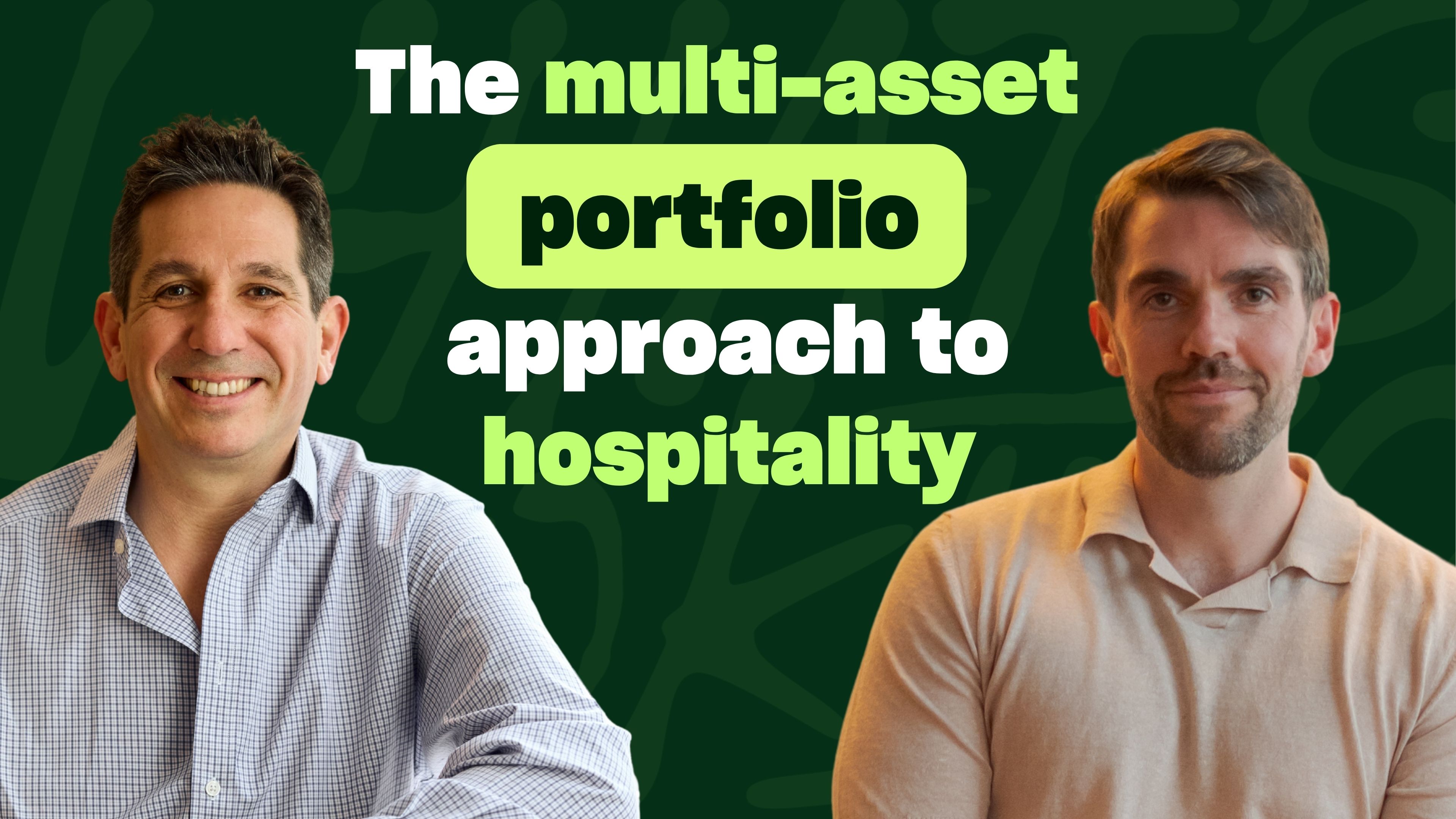
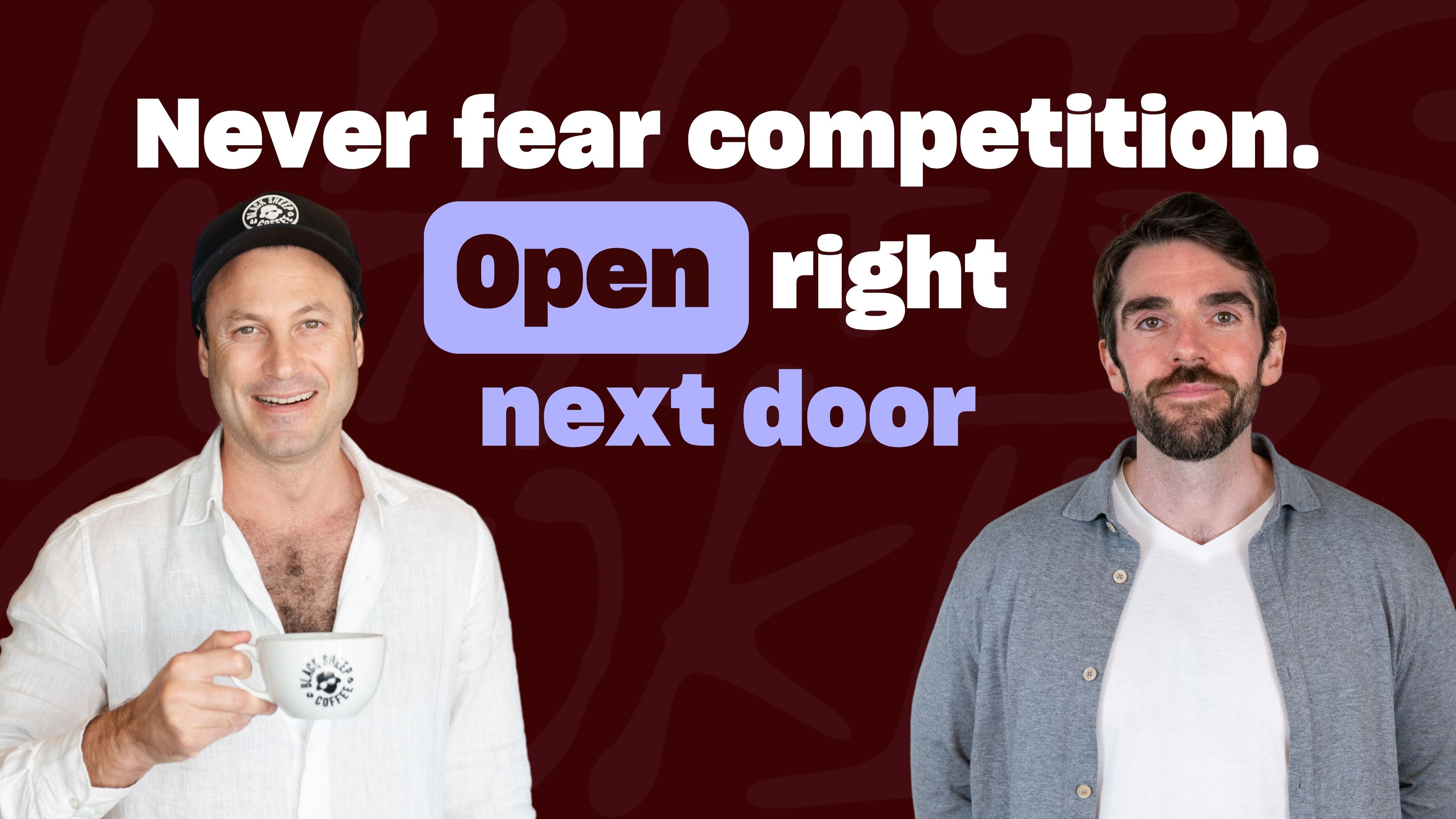
Welcome back to What's Cooking, the show where we pull back the curtain on what it really takes to run, scale and systemize a modern hospitality business. Today's episode is a little bit different. Nori has just closed our $37 million Series B funding round, led by Shinovik, a European growth investor with a track record of backing some of the world's most transformative companies, such as Zolando and Plio, and most recently Spring Health, TravelPerk, and Muse.
Joining me is Jose Gaytan de Atolya, a growth and venture investor at Shinivik. We talk about why Shinivik focuses on investing in companies that disrupt outdated industries and what it takes for a scale-up like Nori to convince a world-class VC firm that it's ready for the next stage. So let's get into it.
00:01:41
Conor Sheridan
Jose, welcome to What's Cooking. Special episode we have today, a little bit different than the normal episodes, but pumped to have you here. And before we get started, it'd be awesome if you'd give us a brief introduction into yourself, kind of your career today at high level and how you came to be at your role in Hinivik.
00:01:56
Jose Gaytan de Atolya
Absolutely. so my name is Jose. I'm an investment manager at Shinevik. I've been here for a bit over two years now. I lead our software investments in in Europe. I have a widely unexciting background, if you ask me. I'm the most traditional plain vanilla investor you'll find. So I'm an engineer by trade. I started my career in in investment banking.
Back in two thousand sixteen at a bank that no longer exists, called Credit Suisse. I was there for about four years before moving on into early stage investing. I then went over to the US, did my MBA at MIT, and I arrived back in London to work at Chinvik, where I've been for the past two years. At Chinevik I've been very lucky to partner with some of
the most exciting software companies in in Europe. we've done a number of investments in the last few years that sort of led us to Nori and that's the background to to why we're having this conversation, right?
00:03:07
Conor Sheridan
Go. Yeah, we'll get a bit deeper into that as we go. for those who are the uninitiated, what is Shinovik?
00:03:15
Jose Gaytan de Atolya
Shinevik is unlike most of the investors you typically meet. We are not structured as a fund. We are a permanent capital vehicle. But to all extents and purposes, we primarily work as a growth equity fund. So what that means, we invest in software businesses, typically Series B onwards. we tend to invest twenty five to a hundred million tickets on on an entry.
And we invest around three main thematics. so bio and health is one of the three, then software, which is the one the one I spend my time on. And then finally climate tech, which is our our newest strategy. I think it's important to mention again that permanent capital structure, because I think it typically goes unnoticed if you're outside of the financial world, see how much it affects our
sourcing our investment and then how we manage our our companies. I think the fact that we're structured like that allows us to have a very long-term view of of our investments. I think our average holding period is around double or triple the the the period of any other investment investor out there. And at the same time, it'll give us a lot of flexibility into how we come into a company, right?
And what that means for the companies that we invest in is one, a long term partner that is there for the long term and that can support you with sometimes non-obvious investments in the short term that might not pay off until very very much later in in your investment life. so we're usually the voice around the b the board and the on the room that is pushing you to make that investment that has, you know, a narrow eye that it's
probably only going to be realized in a couple of years. Nice. And at the same time, we run a pretty concentrated portfolio. So today we have an asset base of around four or five billion dollars, about a billion on that is cash. And that's only distributed within twenty to thirty companies, right? So that's a lot of dollars behind the companies in and it allows us to take that extremely concentrated
00:05:37
Jose Gaytan de Atolya
approach that we think is the only way to really make money and venture. Yeah.
00:05:42
Conor Sheridan
Super interesting. For those who aren't familiar, a lot of the venture venture investors have a seven to ten year kind investment window or or a paradigm how they think about when they enter to when they need to exit. And what you're saying around permanent capital is you can think even long more long term than
00:05:59
Jose Gaytan de Atolya
So the the way it usually works is funds are funds fundraise as well as as companies do. And what LPs are looking for is an investment period and then divestment period. That's called the life of a fund. Since we don't have LP, traditional LPs in that sense, we can actually hold companies for longer. And there's very good reason for this, which is
Many of the funds lose on the best years of a company because they need to divest it too early.
00:06:33
Conor Sheridan
So you mentioned the different thematics that you have and software being your your kind of modus operanda. Even within that, you've had a focus on maybe some legacy industries that can be disrupted, specifically hospitality where Nori plays and travel. what's interesting about those spaces to you?
00:06:52
Jose Gaytan de Atolya
The reason why we arrived to this hospitality and and tech thesis is for Europe, the hospitality sector is a huge one. I think for many countries is actually, if not the largest, the second largest industry, particularly when when you look into some of the more Mediterranean countries. And it's wild to think that at the same time being such a key strategic sector for Europe, it's widely underdigitized. It always blows my mind when
when you know we're looking at at companies and we're doing our due diligence and we are thinking about well you know let's see how this process is is managed right now at at this company and it keeps unsurprising that most of of the customers are still using Excel and pen and paper to to carry out their workloads. Yeah. And and you know I would say that we've had a front review of
00:07:43
Conor Sheridan
Crazy analog.
00:07:52
Jose Gaytan de Atolya
how powerful tech can be and how disruptive can it be to the status quo in this in this sector. particularly when we look at what Muse and Travelperk have been able to achieve in their respective sectors into bringing that sort of 21st century grade experience to the users. It's it's it almost forces us to rethink, okay, what are the
next big sector that is gonna have that breakout company to bring that same experience under the hood in in the in that subsector, right? Which is again what we saw in Nori that really attracted us.
00:08:32
Conor Sheridan
Yeah, really interesting. those companies you mentioned as well were serious breakouts. so should we expect to see more in the travel hospitality space? At least one more. At least one more. Okay, cool. suppose moving into the process, so as an investor, you mention your ticker range, usually you're a bit later stage, growth stage as as you might call it. what do you look for in the founders of companies to to decide whether it's interesting or not?
00:09:00
Jose Gaytan de Atolya
Hmm. it's a very good question. I think there's three things that that we obsess about when when examining a founder at Genevik. The first one is we look for founders that have an unfair advantage in their sector. I think this is super key, particularly when you're thinking about vertical software companies. We really
We really like to see a founder that deeply understands the industry that they're trying to build into. that that unfair advantage is is one of the main things that we focus on when when looking at a new company. Secondly, and this is a bit more for for personal preference, but I think fundraising is super tough and it's a very salesy process where you know there's
sort of very limited scope for being very transparent. So I particularly like when a founder is, of course, incredibly bullish on what they're trying to build, but there's also very, they're also very self-aware of what are the pitfalls. And and they're confident enough that they can point them out to you as an investor, right? I think there's many things that we investors come in outside in when we perform our due diligence on companies.
It's very refreshing to see a founder that is willing to be transparent enough to say, like, hey, these are the three things that I think might not work on this industry. This is how we're trying to address them. We still don't know if that, but we have a pretty good conviction that we'll be able to to overcome them. And then I think finally the one the one thing we clearly overindex on is the quality of the team. I think unfortunately for us as investors.
00:10:40
Conor Sheridan
we'll be successful with that.
00:10:56
Jose Gaytan de Atolya
Whenever we're due diligencing a company, we only get a limited number of hours with the management team. Right. We have to make the most out of them. But it gives me a lot of confidence when I look at around the team and I see top-tier talent. And, you know, those people are actually operating and living, you know, a a struggle. you know.
00:11:22
Conor Sheridan
To build this, right?
00:11:24
Jose Gaytan de Atolya
To to to build it every single day. And you know, that founder has been able to one attract that talent and then retain it. So there's there's clearly something there that gives me a lot of confidence when I look at the team and it's top.
00:11:37
Conor Sheridan
Interesting when you mentioned around kind of founders carrying out a pre mortem or a pre parade. So they can almost say this was what will kill us. And here's that will systematically try to remove it. It's very refreshing, right? Yeah, for sure. It's something that usually only kept within the management. Not even not even to the brother company. The opposite then, what are like red flags that you might see from a founder point of view or from you see in the process in general that you think
00:11:52
Jose Gaytan de Atolya
Mm.
00:12:05
Conor Sheridan
Should be improved. Mm-hmm.
00:12:07
Jose Gaytan de Atolya
I think one of the things I wish more founders did is the industry sometimes loses perspective that fundraising is a two-way process. we are obviously the ones providing the capital, but good companies have plenty of options and there's a lot of
lack of due diligence on the investors that I think goes on. And I wish more founders spend more time, you know, thinking who are you bringing on the table? And that person is going to be at least with you for the next seven years. So there should be a good amount of due diligence that goes into speaking in with other people in the ecosystem and due diligencing first the fund and then who is the the person that's leading that investment and do they do they have the the the right fit.
for what you're trying to build as a founder. And I think that's something that maybe sometimes because the fundraising processes, they happen so fast that it's difficult for founders to take a step back and sort of ask themselves that question. and I wish more more did it.
00:13:23
Conor Sheridan
Yeah, I like that. Sometimes it can feel like the the finish line a little bit and you don't think to go that that step further. It's interesting. The companies that I spoke to who Shinovik work with had been obviously very complimentary and very positive and bullish on the impact that you have beyond capital. but they mentioned like they all mentioned that you're very hands on. So in a board setting that you like to get involved in the operational details if you can add value. What does that mean to you or or or to the fund?
Yeah.
00:13:54
Jose Gaytan de Atolya
I think we truly mean it when we say that we wanna be the first person the founder calls whenever they have good and bad news. And we truly mean it because again, going back to the way we're set up as a fund, we particularly well positioned to sort of not panic for a short term hiccup and rather have that long term view that you know, this is a hurdle, we'll get over it, let's work together and we can be that sense of
sort of anchor around the board to work towards that long term plan, right? And what that means is operationally, it can mean a million things. It can go from being, I just came out of a recruiting effort for a for an executive and an and another portfolio company. It can be helping your team strategize around their go to market strategy, geographic expansion, as we've discussed
a few times is also something that we are highly involved. But at the same time, we try to to let the founder let us know where we can be helpful. and that's where we try to deploy ourselves. We we don't we try not to be very opinionated about everything. I I think the beautiful thing about venture is that there's not there's not one playbook that works.
There's been great companies that have been created with very different strategies, very different cultures, very different approaches to solving the same problem. And all of them can be successful at the same time. And it's not my job to be very opinionated and into which one works and which one doesn't, right? So yeah, i it we really try to adapt to whatever the founder and the company needs us for in that moment, right?
00:15:45
Conor Sheridan
Yeah, it's very cool. I can echo that. I think during my experience, engaging with the team, even pre investment, it was how can we help you with open roles that are really pivotal to the company, and like what pipeline that you might have to introduce us. even as far as your people leader offering like org design sessions and things like that, which we were in discussion about how best to structure orientate the company to the next stage. And that was before you even made a decision and
Whether you're gonna invest or not, right? So I think like to actually put that much time and effort up front says a lot about the mindset of the team and the fund.
00:16:21
Jose Gaytan de Atolya
Imagine how much we're gonna bother you now that we're on the inside.
00:16:24
Conor Sheridan
Yeah, I can imagine. So like to the broader kind of founders out there, it's obviously people out of fundraising at the moment. What piece of advice would you give to to them?
00:16:35
Jose Gaytan de Atolya
This might sound a bit trendy at the moment, but there's a lot of interest around AI in the investor community. I think maybe a bit too much interest, if you ask me in some cases. But what I would say, and I would encourage every founder out there to be very ready to answer what's their AI strategy and how can AI be embedded into their offering.
How to serve their customers better thing. We are seeing this lot in vertical software companies that are truly being able to unlock new products that were just unthinkable a couple of years ago, thanks to embedding some of that that AI offering. What I would suggest for founders who are thinking about, you know, adding that AI narrative is you need to be
very crisp and very clear with your potential investors about what's the ROI of that AI product. So you need to be almost hand-holding the investor into understanding why AI is solving a very clear pain point for your customers and what's the expected value of that of that resolution. and I expect I expect that to be, you know, hopefully more present in in
In the companies that we look for in the future.
00:18:05
Conor Sheridan
Yeah, it's good advice. So it's how AI solves a problem, not it's not the whole solution that you're orientating and trying to find a problem with. It's just here's the problem and this is why it's the best way to solve it. Here's the ROI.
00:18:17
Jose Gaytan de Atolya
I think particularly for companies that are like yourself building a vertical solution for a very particular sector, there's so many things that AI unlocks for your customers that it's almost, you know, you need to have a very clear parameter on what's the right ROI before making the investment to deploy, you know, R and D resources into that AI product, right?
00:18:45
Conor Sheridan
Yeah. Yeah, it's so broad. It could go so many directions. See me she stay focused. Maybe transitioning a bit or or narrowing a bit to be more focused on on Nori. And obviously we're we're we're partners now and you've recently led our Series B investment. What led you to do that? Like what did you see in Nori? First
00:19:02
Jose Gaytan de Atolya
First of all, we saw an incredibly high, sorry, huge addressable market in the restaurant sector, particularly in the multi-location restaurants that is severely and systemically underserved by the current solutions. it's mind-blowing when you get deep into the sector to see what the tech stack of many of these hundreds of millions of revenue
chains actually looks like. And when discussing that with the owners of these restaurants and chains, that actually that's actually how we came into Nori. the, you know, they were mentioning that it was solving a problem for them that, you know, was increasing their operational leverage so much that that was the first point that we had.
I think the second thing that really made a difference for us is having a founder that was an insider to the market. I think it's yeah. And and I think it it just it's so obvious when you think about it that Nor is the best placed solution to serve the customers because the founder has built the solution for himself in a way with Mat Egg, right? Yeah. And understands that.
00:20:10
Conor Sheridan
Feels the pen.
00:20:28
Jose Gaytan de Atolya
industry so deeply and coming on to to the third thing that really caught us attention is when you speak with companies, you almost try to very clearly like you try to see what their North Star metric is. So for some of them will be Air growth and for some of them will be number of logos in their platform. And for some of them might be, you know,
number of instances that their clients use them on. And when we were talking to you, it was almost you only focused in profitability for your customer, which is exactly what we want to see in a vertical company. You were upset like your North Star metric, I don't know if you remember, but w one of our earlier peaches, earlier conversations, we had this moment where you were walking us through the Proadmap.
And we were, okay, how much ACV is this going to buy it? And how much are we gonna be able to charge for this? And you were like, sorry, this is gonna make five percent margin for my for my for my client, this is gonna make three percent more margin, this is gonna make ten percent more margin. In five years we're gonna be able to do this and that's gonna be another five percent more margin that we're gonna give back to the restaurant owners. And I think it's very very important and and it was hugely
overstated in a in our IC how how you deeply cared about the profitability of your customers. And that was like your sort of like North Symmetric. So when you pair that, you know, huge market with insider knowledge of that market and an obsession to increase the profitability of a market that is having quite a hard time currently, you know, that's that starts to look like a great investment for us.
00:22:22
Conor Sheridan
A recipe for success. Yeah, as you might say. Nice. It just seems so natural for an industry that's so pained to obsess over increasing the margins. If you can make them successful, then we can be successful by default, right? So it's just focused there. So if we get into the process of actually you t touched on things like the IC and considering the investment and you touched on the market size is important, the understanding of the industry. And is it earlier stage than most of the other investments in the portfolio?
You mentioned Muse, Travel Perk, there's Plio, Spring Health. All of these are multi billion dollar companies. or or earlier. We're not there yet, right? So how did you have to to approach this? Was it different than how you would approach a growth stage investment or how you would assess a company?
00:23:10
Jose Gaytan de Atolya
I think the fact that we have the flexibility to look at companies that are in the hundreds of millions of AR and then look at a company like Nori, which is perhaps on the earlier stage of that journey, is very valuable to us as investors. We don't tend to think on about investments on a
series A, B, C type of mentality where we are constrained ourselves to a particular letter in the alphabet. Rather we look for product maturity, team maturity, and commercial maturity, right? And when we spoke with many of your customers even prior to our first meeting, it was very surprising like they didn't see this as a working progress type of product. They saw
is as a solution that that was already the sort of the backbone to to their operations, right? And we typically don't see that in companies that are so early in their journey and we were instantly attracted to it's because we recognize many of the feedback that we get from some of our investments. So I don't think we we would do our jobs as investors if we only thought about an artificial
the stages, but rather think about is this company already being relevant enough for their customers? And that's what what what we're trying to solve with our investment here.
00:24:51
Conor Sheridan
think it's a byproduct of building for the hospitality industry and building for restaurants that they're under so much pressure. And if you're gonna be the kind of core operating system, it needs to be robust enough from the outset to be able to be that backbone or else you'll you'll be your phone lines will be taken down with abuse with abuse, right? And rightfully so, right? You need to be able to stand up and and run the business on it. So you don't have much of a choice. During that session that you touched on, I do remember pretty vividly for a few reasons. When you you may walk through like
Walked through the roadmap and where we saw the vision of the impact we can bring to the industry and our partners in terms of profitability increases. But there's a few other things that stood out. you'd done a huge amount of like pre-work before we even met in terms of speaking to people who were using the product, people in the industry in the UK, Europe and the US, doing diligence on our customers, our team, the team members as well, myself. So you had a really you had a lot of work done, a lot of depth there.
is that like the status quo? Like how do you approach or analyze companies? Do you try to do that that depth of a work up front?
00:25:59
Jose Gaytan de Atolya
Yeah. again I would go back to the type of investor that we are, right? Because we run a pretty concentrated portfolio of extraordinary businesses. We need to think very hard about what is the N plus one business that we add to add portfolio, right? So if you've come around Chinavik in processes, we tend to be
more proactive than reactive. we like to think outside in on our investments, and not be constrained by a current round that needs to close in a couple of weeks and we need to move fast. We obviously can do that. But the reality is we much more enjoy having the time to get to know the team, get to know get to know your customers, speak with them.
speak several times with them to see how their thinking has evolved over over you know sometimes couple of quarters. we do a lot of diligence in the team. I think we probably spoke with at least direct supervisors of twenty percent of your team back when he d were doing diligence and this really helps us form still outside in, but we try to be
as accurate as possible. We try to form a view of who are we trying to invest behind and what are we actually investing behind without being constrained by, you know, an artificial deadline that somebody else is is putting on us. So yeah, I w I I personally take a lot of pride in in to having having the patience to investigate enough into a sector and a company and be able to move when the time is right.
00:27:55
Conor Sheridan
Yeah, it was huge green flag for
00:27:57
Jose Gaytan de Atolya
That also means that we cannot look at that many companies that we would like to because
00:28:03
Conor Sheridan
And people it was a huge green flag for me as well, right? To see the the understanding of the company, the space, the team, the depth of the work done. I give a lot of confidence. So moving to to kind of post investments, what do you think is most important for Nori to to prove out in the next milestone?
00:28:22
Jose Gaytan de Atolya
There are a couple things that that I think are very key for for Nori in the future. One is when you look at the product offering, it's super solid and already winning, as you know, against competitors that are tenx your size. I think we need to really double down on the AI capabilities. I don't think the restaurant sector has seen anything like what Nori has to offer yet. But we need to really double down on, you know.
putting out that AA capability that will give back time to that restaurant owner, right? Yeah. And so I think that development will be particularly interesting. I also think the initial traction in the US is very promising. Mm-hmm. And I know we have very ambitious plans for that and we're very excited to support you in that journey. So I think I would highlight both those both both those two things as sort of that
the you know, short term horizon goals that that we have.
00:29:29
Conor Sheridan
Glad we're aligned. I didn't know I didn't know what your answer was going to be. That was a risky question, but I'm glad it lines up to to what I've answered. Nice. I think we're gonna flip it over. I think you might have a couple of questions for me.
00:29:39
Jose Gaytan de Atolya
Finally, this is where I feel more comfortable. Yeah, yeah. I think to to sort of we've been talking about like how we came to Nori and what what prompted that interest from us, but it'd be interesting for for you to tell the other side of a story. Like how do you feel that that interest? How why do you end up choosing us? It was pretty competitive process.
00:29:42
Conor Sheridan
The interrogation.
00:30:00
Conor Sheridan
From my perspective.
00:30:08
Jose Gaytan de Atolya
when we didn't think it would get so competitive. So it's a testament of to the quality of Nori, but it'd be very useful to hear your side.
00:30:17
Conor Sheridan
Yeah, I think you you mentioned a number of inputs into what makes a quality founder or company. And it's similar for for me and for us when we look at a a long term investment partner. So there's probably four things. one is like alignment on on the long term vision, just track record and thematics. there's depth of work and knowledge in the space, and then there's the quality of the team. So I think if you go through each one with respect to Shinovik.
Like I I was so surprised with our alignment in those early meetings. I think you'd done like some desk research, but outside in for the very first meeting and touched on what this could be if we execute it correctly and the impact you might be able to have and the markets you could go to and gave me a really strong sense of alignment that the long term goal and vision is really tightly coupled and aligned. Obviously, short term you're flexible on how you get there and I think you have to be, but that's super important, right? So that
That gives us a really good confidence as the right partner. then you go to like track record or thematics. So obviously very concentrated portfolio. It means you're really considered investors, you really think deeply about who you want to partner with, and you need to make sure that they're winners, right? You don't have a lot of space for people not to to reach the potential, which is a good level of stress to have. but no, when you looked at like mentioned them earlier, the likes of Spring Health, Pleo, Muse, Travel Perk, you don't get to be
lead investors and world class companies by accident, right? You have to kind of prove your value to the company and you have to be able to show up and add value beyond capital. And any of the conversations that I had with the founders of those companies or people who work there echoed that as well. Right. So I think that that gives us good confidence. teamatics as well, you've shown that you would really good understanding of the playbooks and the challenges of hospitality and travel specifically.
I think then if you move into depth of work, I won't go too much into detail like what we take from this conversation. There's a lot of work done, the profiling of the team, myself, like customers, a lot of conversations over multi quarters to understand if we were improving, not improving the the market. So it gave me a lot of confidence that he could be an operational aspiring partner, so we could sit there and actually solve problems. He had a really good understanding of not just the market, but Nori's challenges and who was involved. And then lastly, quality of the people. So
00:32:44
Conor Sheridan
Every single interaction with you and the team showed that you're like super quality team, really high integrity, really high conviction, but also really great long term te thinkers and great strategists. So that gave me a lot of confidence and gave us confidence that it was the right partner.
00:32:59
Jose Gaytan de Atolya
Such an exciting time for for you and the the Nori team. You know, Series B race, quite a large amount of capital now. You know, it'd be good to hear are your plans in in the roadmap for for the next sort of like twelve, eighteen months on on how to deploy that and where to grow.
00:33:22
Conor Sheridan
Yeah, really question. so I think similar to what you had mentioned earlier, like locally the back to that line. That's good. Automated for an awkward board meeting. but no, that was good. I think like we really want to double down on our product strategy and our international expansion. And then I think more specifically when we look at our our product, we've proven that consolidating all the core operations and workflows of a restaurant into one platform and then deeply embedding them with
traditional AI and machine learning models has really proven to drive a lot of efficiencies and pretty significant bottom line profitability gains for our partners already. I think what we want to do to with the capital up to is to enrich our products with the Nexel capabilities. So we've started shipping autonomous AI assistance into the products. And what we want to do with those is provide
restaurants but a 247 workforce of sorts that can help them run their business more efficiently, help them scale out and more effectively. I think to give like a really even practical example, we've shipped two recently that we we can touch on, one being guest experience assistance. So we think about helping restaurants in two ways. One is how do you drive traffic, guest traffic, and two is how do you control the cost and the PL to make sure they're profitable. So you always want to loop back what you're building to those two areas as you mentioned back to the impact.
And with the guest experience assistant, you're able to analyze all the platforms, review platforms, understand sentiment, offer out operational recommendations to teams in the ground, but you're actually owning the conversing with the guest end to end. So automating that that process. So one, you're conversing and doing that in your brand tone of voice, doing it in a in a in a way that is like SEO laden. So you're actually doing all these like micro additives that are helping the business drive traffic, drive guest sentiment.
reducing the time you need to to spend actually doing the the exercise. And then another one we're shipping at the moment is an operations assistant. So that acts as like a AI operations manager for restaurant managers to actually converse with through voice or text to ask them questions about how to run their their business and the AI then analyzes the restaurant operations to give them advice on what they should do. And not only that, it becomes a a kind of a point of contact for frontline workers.
00:35:43
Conor Sheridan
in terms of asking questions about the business. So I think it goes back to our our theme there of how do you focus on guest experience, driving the PNL profitability, but saving time and just giving people back the hours for like a lot of this repetitive work that they would have had to do previously. So that's a big focus for us going forward.
00:36:01
Jose Gaytan de Atolya
I think one of the most interesting things that is happening at Nori is we're seeing AI come like evolve from this reactive dashboard that was great for managers to sort of have a comprehensive view of what was going on with with each location or or region to actually you know, these agents providing recommendations actively to back to the manager, right? So things like
stocking recommendations or workforce proactive workforce management actions. And that is something that I don't think the industry has seen yet. I think the AI piece has been somewhat restricted to that reactive view of what was going on in in the restaurant. And for the first time they're able to, you know, actually have somebody reaching out to them saying these are
three things that you could do and this would be the impact in in your net profit margin.
00:37:04
Conor Sheridan
Yeah, it's crazy exciting. Like we think it's gonna be the next eighteen months is gonna be a game changer if you think about it in two ways. We talked about big chains earlier, hundreds of millions of pounds or or dollars, and you're having a proactive capability to analyze the business to help them run it better. And then on the other end of the spectrum, you've got businesses who don't even have that skill set. Yeah. So you're actually creating a skill set and that doesn't exist to help them run their business in ways they could never even imagine previously. So
Super exciting and it goes all across the the business like H or supply chain workforce the guest side. So think there's no
00:37:41
Jose Gaytan de Atolya
Basically you're like you're democratize criticizing democratizing access to revenue operation managers for smaller restaurant chains, right? Which you know you used to be able to be at a size where you could hire team of like two, three, four, five people to solely focus on that profitability profitability increases, right? And now you're basically given that in a box.
for smaller clients, which I think it's it's it's very relevant. We've hinted a bit into what is next, in the next twelve to eighteen months. But it'd be good to hear directly from you on what do you think is next for Nori.
00:38:27
Conor Sheridan
But in terms of milestones, next 12 to 18 months, we touched on some of some of the product milestones. We've got significant investments there in terms of our capabilities. significant we look at customer impact and we have that sliced into layers of impact we want to deliver, and that is effectively products we want to bring to market. So we have a number we want to bring to market over the next eighteen months. On the flip side, we've also got growth targets. So we've been growing at a good rate and we want to continue that. We've set some really ambitious targets.
So I think at the end of this year, if we talk about core markets first, we're going to finish with approximately 10% of the multi-location market in restaurant market in the UKI. We want to 3X that over that period of time to really become the leader in this market. We touched on the US, which is incredibly exciting. It's the biggest hospitality market in the world. It's the biggest market for our ICPs. We want to be a backbone of serving that market for years to come. And you've got some really ambitious targets in the next 18 months about entering into that market and disrupting it.
00:39:28
Jose Gaytan de Atolya
It's surprising that the word operating system hasn't come up yet in the conversation, right? Because I think the first sentence in our investment memo was Nori is the operating system for multi-location chains. how do you think that that definition of Nori will change in the future? Like, how do you think
the view of what Norris today will be once you achieve the objectives in the next twelve to eighteen months.
00:40:04
Conor Sheridan
When we look at an operating system today, or we look at where we're at today, we think about a few things. We think about like what areas of operations do we handle, do we manage? And that means what workflows do you manage and then what accounts or what individuals or personas do you deal with? So from finance to HOR to restaurant managers. So for us over the next twelve to eighteen months, we have a really clear view over what parts of the restaurant we want to be housed within the platform or our operating system on the front line.
Or we're starting to build further and further into the infrastructure of of these restaurant businesses so that when you think about things like payroll, HOR, Finance, supply chain, they're deeply embedded at an infrastructural layer within the platform, as well as ensuring that each restaurant is really profitable. So that if you think about it, then when you zoom out, you're covering the entire business, everything from C suite to senior management to area management to operation management to restaurants to servers.
to chefs, to new employees, new joiners, everybody's operating on the platform every single day. And you become the system of record for each of those people. I think that we have steps towards that in the next 18 months that we're super excited about because it makes you it gives you a the makes you so mission critical to the business and it gives you such a big responsibility to make sure you're serving all of those personas properly and making sure their lives are are okay and their their jobs are more efficient.
But you can become a real system of action across each of those areas where you can start to then plug in those AI capabilities and build out some serious moats as a business, data wise. So it's super exciting for us.
00:41:40
Jose Gaytan de Atolya
I think that that is also another item that came out very strongly when we spoke with with restaurant owners in that that are using Nori, which I'm you know, we would go to the frontline workers at the counter and say, Have you heard about this Nori thing? And they're like, Of course I've heard it. I have the app on my phone and this is how I get the notifications of when I need to get to work. This is how I get my payroll paid. So it was you know, pretty they were
having daily interactions with with Nori. And then, you know, we would interview the restaurant manager at the same location. And they would had a they would have a completely different view of what Nori was for them. And it was even funnier when we met like the regional or country manager. And for them, you know, they almost didn't know that use those use cases existed for the frontline workers because they were using Nori in a completely different way themselves. And you know that being that
both a system record on the one side, but more importantly like system of action for many of those workers that were using Nori very actively every day. that gave us a huge, huge amount of confidence in in how deeply embedded within the operations Nori was.
00:42:57
Conor Sheridan
Yeah. You talk about it internally like a Russian doll that you keep pulling one at you another use space or persona or person you need to serve. So it's the whole business stacked up. I like that. Yeah. Okay, Jose. So now we're gonna move into the quick turn, which is a rapid fire round we do at the end of the podcast where we go through a couple of quick questions. Can be longer than one sentence, but try try keeping short. Yeah, for sure. So first one, what is one bold prediction that you have for hospitality?
00:43:01
Jose Gaytan de Atolya
Yeah.
00:43:27
Conor Sheridan
In the next few years.
00:43:28
Jose Gaytan de Atolya
I believe AI is going to have an unprecedented impact in the unseen workflows in the restaurant industry. I think most of the use cases today are constrained to customer-facing workflows. Where I see AI having a real impact is actually on the workflows that the customer does not see that are happening today at the restaurant.
00:43:57
Conor Sheridan
I swear though. What's the most underrated and the most overrated metric in venture?
00:44:04
Jose Gaytan de Atolya
That's a that's a tough one. I think the most overrated is AR growth without context, which I think it's very prevalent today. And the most underrated is your churn rate.
00:44:21
Conor Sheridan
Okay, nice. Is that vibe error as they as they call it? Okay. And then finally, what's one piece of advice you give to founders out there raising around the capital?
00:44:25
Jose Gaytan de Atolya
I'll refrain from asking.
00:44:35
Jose Gaytan de Atolya
I mentioned it earlier on the on the longer interview, but my piece of advice for founders who are currently raising is do your diligence on what type of investor you want and what type of investor you're letting invest in your company and consequently giving a piece of it. so just, you know take your time and make sure that you choose the right partner.
00:45:01
Conor Sheridan
Yeah, it's great advice. It's a marriage, right? I'll flip it over to you.
00:45:03
Jose Gaytan de Atolya
Exactly. So again, mirroring your question, but what are some of the most underrated KPIs and overrated KPIs in the in the restaurant industry?
00:45:14
Conor Sheridan
Yeah, I know we touch a big thing at the moment is l labour productivity or workforce productivity. due to obviously rising operational costs and inflationary costs, particularly here in the UK, but globally overrated, we'd say labor cost percentage, because it can be gained and it doesn't tell the whole story. Operators really obsess over don't go above thirty percent, best in class is twenty X percent. It doesn't that ignores all of the inputs around price, cost, shifting dynamics.
Demand changes if you hit the budget, miss the budget, all the all the factors that you just that go into that number. So and it it should be the output of going bottom up around productivity. So I think that's the most overrated, but most obsessed about in the industry. They probably looked at 20 times a day. underrated, conversely, would be orders per labour hour, which is something we obsess about internally, which is effectively like a stripped away productivity metric. So it strips away the bias.
That you get from price or that you get from cost fluctuations and gives you like a uniform productivity metric. So for example, how many orders could a chef manage per hour in a kitchen or a front of house server manage across your different sites and you can see one uniform metric without the bias and really track productivity across the different parts of your business and then set goals. And I think that that's much more that's a really underrated metric that's not used, used enough.
00:46:37
Jose Gaytan de Atolya
As a restaurant owner yourself, what is the hardest thing operationally about running a restaurant business?
00:46:45
Conor Sheridan
Takes out the scroll and opens it up to go through it. Just roll rolls at the back of the studio, take a list. Yeah, exactly. Santa's list. I think c the cost versus culture attention that you have, it's the only industry that I've worked in that is under the mo as much pressure as it is from a margin point of view, that every conversation you have, whether it's in the boardroom, out for a coffee or in a restaurant floor, ends up being around control and cost. What happened with the costs?
operators fixate fixate on it and for good measure, right? If you don't control it, you won't have a business. But the flip side of that is team members can often feel like there's not a lot of empathy in from an operator point of view or from the business that they're thinking about them numerically. And it's not the case. It's just the nature of of the business. And I think that's why I'm so passionate about what Nori's building is that if we can remove that pressure and actually realize our mission to double profitability for these businesses.
You don't just make the business much better to operate, you make the culture, you revolutionize the culture because you're not talking about cost all the time. You're talking about like growth, the guests, development. And that's really exciting as well. It's definitely really challenging.
00:47:57
Jose Gaytan de Atolya
Similar question, but what's the hardest thing about running a venture backed business, which is obviously very different from running a restaurant business?
00:48:03
Conor Sheridan
Yeah. Yeah, it's very different. it takes out a second second scrolls. I'd say it's running at dual speeds mentally and then just operationally. So if you're gonna grow a 3X and above every single year, raim to that means you need to run the business at two speeds. You need to be moving fast enough to hit the plan.
Right in front of you, but you need to be feeding the beast behind it to make sure that you have the infrastructure, the people, the process, everything laid out to make sure you can hit the next stage. that's just the nature of trying to move quickly to win a market and that's quite challenging. I'd say that's probably is your every six months you're fundamentally ripping apart the the playbook and and stretching the business and the people and myself. I enjoy it a lot. It's a huge learning curve and that's one of the best parts about it, but it's also one of the the most challenging parts.
00:48:57
Jose Gaytan de Atolya
I'd imagine dealing with us investors is also on that list.
00:49:01
Conor Sheridan
No, no, I don't think so. yes. Not really true yet. Well, Jose, it was great to have you on. Appreciate the time and I'm looking forward to working with you. That's it for this week's episode of What's Cooking. What an awesome conversation with Jose. We are pumped to be working with him and Shinovik during this next stage of Nori's journey. And while the series B is a huge milestone for us and the team is incredibly excited, our mission and our vision has not changed since day one. Our mission is to double profitability in the hospitality industry.
00:49:04
Jose Gaytan de Atolya
Ha ha.
00:49:09
Jose Gaytan de Atolya
Pleasure, of course.
00:49:30
Conor Sheridan
We want to tilt the scales in the favor of all our restaurant partners and the operators around the world who are facing incredible margin pressure. And our vision on the back of this is to build the largest restaurant technology company in the world. By making our restaurant partners successful, we will be successful. So here's to see Nori in a restaurant near you soon. Until next time.
.jpg)
.jpg)
.jpg)
.png)