00:00:00
Conor Sheridan
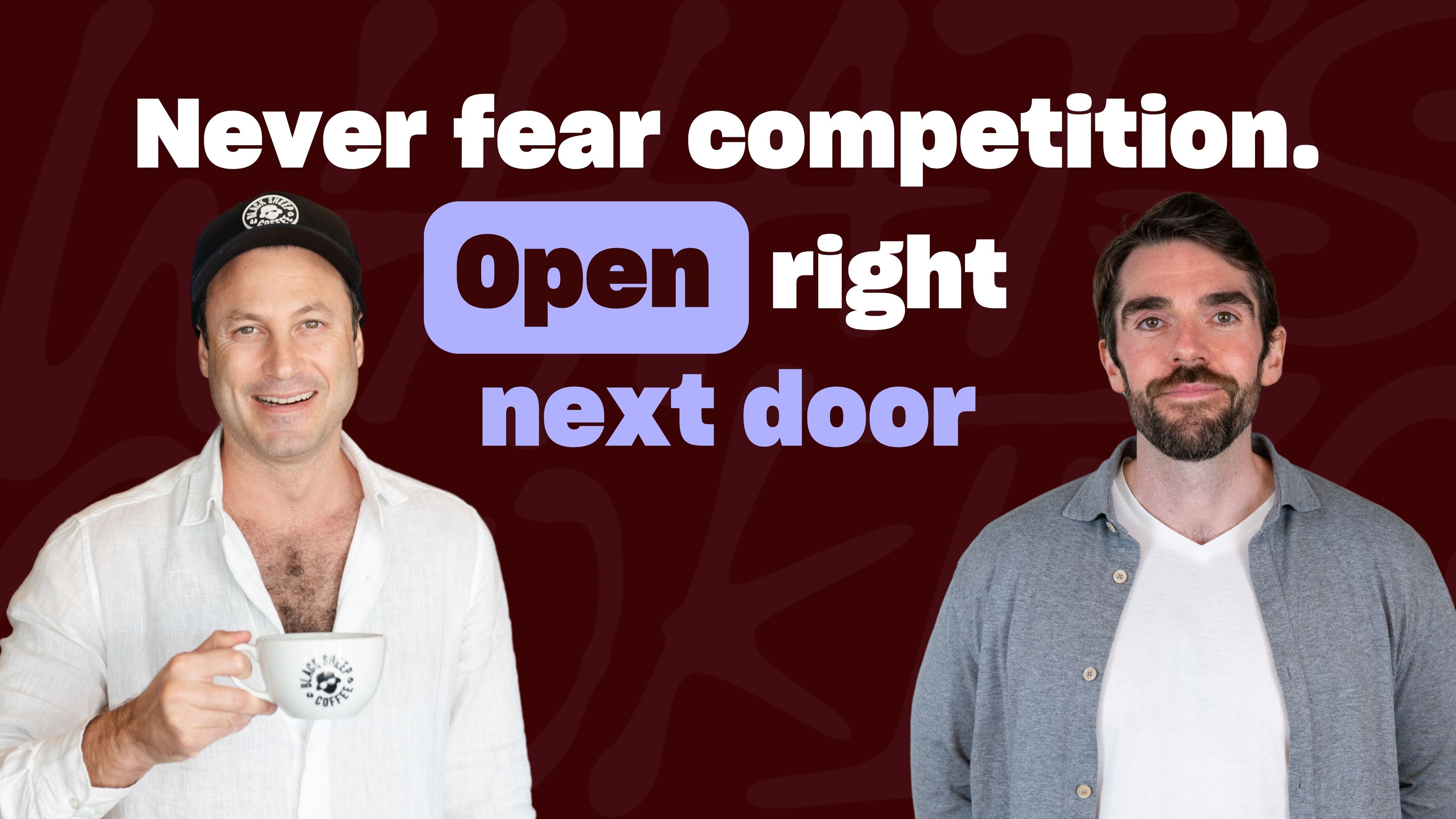
I'm Connor Sheridan, founder and CEO of Nory and welcome to What's Cooking. Today on What's Cooking, we're joined by a man who's helped shape some of the most iconic hospitality brands in the UK from Pret to Yo Sushi to Prezzo, now Prezzo Italian. Mark McCulloch isn't just a marketeer, he's a brand operator. He believes that brands shouldn't just sit on the sidelines, it should drive the playbook. And he's here to tell us why brand isn't a campaign, it's an operating system.
In today's episode, we'll unpack the friction between marketing, ambition and operational reality on the ground and explore how Prezzo Italian navigated a full scale brand refresh across a national estate and dig into where AI, culture and commercial pressure all collide. So let's get into it.
00:00:51
Conor Sheridan
Mark, welcome to What's Cooking. Great to have you here. Thanks for h-
00:00:55
Mark McCollough
me along. First day back from holidays so this is a nice way to ease back in.
00:01:00
Conor Sheridan
I'll go easy on you. Keep the questions light. No, super pumped to speak to you. You've led marketing and brand. It's one of most iconic hospitality brands in the UK. Pret, Yo Sushi, now Prezo, amongst others. You're the first marketeer we've had on the podcast. So really excited to get your perspective on how to run a successful hospitality business. Before we jump in, would you be happy to give us a brief intro into yourself and how you got to doing what you're doing today?
00:01:28
Mark McCollough
Yep. So born on a Tuesday. Next day, So basically, yeah, just been in marketing most of my life, really. Started out mechanical engineering and failed miserably. So went across to marketing much easier. And then my first job really was music magazines, all really exciting in the 90s. So loaded, RME, rock and roll, all that stuff. Come back of Britpop this summer, which was great. And then a few agencies, learned about digital, all that.
00:01:52
Conor Sheridan
Just showing myself.
00:01:58
Mark McCollough
My first big job really was lastminute.com. So went in there and loved every second of it. Then for my sins, I went to Berklee Card, which I didn't love. I was a credit card sort of loan shark type guy, I suppose, doing the branding market in there. Big rebrand there actually, so I learned a lot there. And then went to Yo Sushi, so that's where I get into hospitality. So Yo Sushi marketing then, I had a little dalliance with a music website, which was Peter Gabriel's music website.
and then across to Pratt for a year. And then started up on my own and sort of stayed in hospitality ever since.
00:02:35
Conor Sheridan
Nice. We'll touch on a few of those different journeys today during the conversation. Definitely unique set of experience, I think one of the most unique we've had on the podcast from Barclaycard to Last Minute to the leading brands. You talked on the rebrand on Barclaycard. You've also done a rebrand and a reposition on Prezzo. Prezzo Italian. Prezzo Italian. Stuck in my brain. Apologies for that. And a couple of other brands.
Where do you even start with something like that? Like a initiative like that? It feels like you could start anywhere.
00:03:05
Mark McCollough
Well, the thing to do is not go in sort of arms flailing or like a kid running with scissors to go, this must be a rebrand. know, a lot of the time it's about being like a GP, you know? So you go in and you see what the patient needs first. So it may not be a brand problem at all, right? So it might be something to do with the people, it might be something to do with locations, it be something to do with the product, it be something to do with the price, it might be something to do with, you know, just the perception that's out there.
It's not always a brand or branding issue. So that's the first cab off the rank really. So I would definitely say a rebranding is one of the last things you should look at. And also a renaming and a redesign is definitely one of the last things you should look at too. But once you've got the evidence and you say, right, this is definitely what we need to do, I'm really lucky in that when I was at lastminute.com, I met a guy called Robert Bean and Robert was my brand consultant and just father figure, mentor.
everything to me. And he taught me the difference between brand and marketing. So really, in terms of brand and how you describe that is that it's a promise delivered. That's what the whole thing is about. So once you understand that, and brand is different from branding, then you've got a set of principles and a set of tools and a process that you go through that touch wood, what is that wood? That's metal, hasn't failed yet. You know, I've done it over a hundred times now.
and it's bulletproof, not waterproof, it's bulletproof. So basically you look at an organization as a whole and you say, right, what are the three parts of this organization? So the culture, one, the products and services are usually together, and then also the reputation. So the problem with most brands out there is that they are all flying separately from each other. So imagine the three circles flying through the air.
terribly aerodynamic. So you're losing pound, shillings and pens between those circles. What you want to do in every great brand out there is about alignment. Right? So the brands that you love, you love them for a reason. You get what you expect from them. So think of, don't know, what's some of your favorite brands that pop into your Apart from that.
00:05:24
Conor Sheridan
Prezos, Halyam.
Around the corner from here, go to Farmer Jay for lunch quite often.
00:05:33
Mark McCollough
Exactly. know, Farmer J, for example, the culture, you could pretty much imagine what it's like to work there and be there and what they're feeding their people metaphorically. The products and services are exactly what you expect. know, they're not doing big, greasy things and, you know, things that aren't good for you, not from the land and processed chicken and all the rest of it. And then the reputation they've got is for this amazing, fresh, delicious alternative, you know, lunch or meal during the day, breakfast, I'm sure, as well.
So that's a great new example, but the big ones, your Nikes, your Googles, your Innocence, all the rest of it, all of those are overlapping. So the culture, the products and services and the reputation are all overlapping, zipping through the air as fast as you would like. And that's because they've got an all-star, they've got a brand DNA of something. I don't know them all, but of something that everyone believes in. So when they're hiring people or they're celebrating,
you know, success or things are going wrong or whatever it is, then basically that culture is aligned to the Protestant services that you're serving and then what people think of you, you know? So it can be bad as well, right? Think about your Ryan ears of the world and all the rest of it. You know, the reputation that they have is, look, they'll get me closer than here to the city I want to go to, but it might not be that close. But you know, for all the bad stuff, you know, there's a value proposition there as well. And there's some good juice in there.
So what you're wanting to do is just make that all aligned. So if you're aligned, you'll be efficient, you'll be profitable. So the great thing is with this model is you go into any board meeting, you go into any investor, you go into any CFO, finance director, and you show them that equation and they buy it. Because so many brand people and marketing people are just fluff. Well, it'll be good because it'll freshen it up, it'll look cool, and it'll win awards. Great. That doesn't really help the balance sheet.
Because I've got that in my locker and thanks to Robert over the years, then you always just feel pretty confident. You know, it's kind of like being a good golfer. You know how to stand at the ball and what your swing is going to be and what bit of the ball you're going to hit to get that certain shot. So, you know, it's just a fairly straightforward thing to do. And usually it takes about a day or a day and a half, so it doesn't even need to take that long. The underwhelming thing is at the end of it, you get a presentation that's got some words on.
00:07:59
Mark McCollough
you know, and that's kind of it. Whereas a lot of people are very visual and they want the whole thing, but that's the start of it. So you get the constituent parts of your brand, so you get your brand story. You get your, you know, why you're better than your competitors. So why you would walk over broken glass for that. You get your customers out of it. You get the motivations that they have to use you. You know, why would you walk over broken glass to go to Caffe Nero rather than...
you know, Starbucks, whatever. And then you start to build your personality, your values, positioning statement, and then out of it, you should get two to four words that give you your brand DNA. And then once you've got that, you make sure everyone's on board with it. And the most important thing is then that you build that A into culture and values and behaviors and reward and recognition and PDPs and you know, that's the engine room. And then from there, you also take it into brand development.
So if your brand is all about, know, Prezzo Italian is a good example. If your brand is all about better Italian for everyone and the positioning is the home of the Italian classics, then you sort of need to look and act a certain way. And also if you're putting that promise out there, you have to make sure your Italian classics are really good, right? Because it's about that promise and that value exchange. So there's a lot of bits to it, but it's about you nailing that and then using
everyone in the organization to then help with that alignment. You cannot do it alone. You cannot do it in silo as a marketing department. It just won't work.
00:09:36
Conor Sheridan
I really like that. think too often hospitality marketing has looked at it as a line on a PNL and usually it's like a minimized percentage of revenue and everything else is much more operationally focused, which is super naive. And the way you frame that is it's the entire ethos of the business, your brand, your value prop, everything we're here to stand for and deliver is your brand. I that makes it like incredibly eternal to everyone in the business. So for Prezzo Italian.
00:10:01
Mark McCollough
Yeah.
00:10:04
Conor Sheridan
I go back to second time around. The rebrand has been awesome online to see some of the stats. JB, the CEO, posted recently about some stores up 60 % like for likes, really high MPS, great reaction. So you can imagine you're giving yourself a big slap in the back so far.
00:10:22
Mark McCollough
No, no, not at all. So the whole thing here is this is great now. But something that Jamie and I have spoken about plenty of times is Sir Alex Ferguson. And what he talked about when I went to see him speak was never, ever was he worried about this Saturday's game. He was only ever worried about two or three years time. And that's the mentality. This is all great right now.
and we're pleased, don't get me wrong, we're gassed up the whole thing. But for us to be high fiving, confetti cannons, all that, let's see when we're at the finish line. Let's see how it's going. Because I guess, again, a football analogy is a new manager bounce, right? So we've all kind of came in, the great team that was already there have been part of this too. And everything's all new and shiny and exciting and we're in the news.
let's see how it's going in February, or March or next summer. And again, we're gonna be up against great like for likes that we've, so we've made a road for our own back now. So I think you have to be glad and celebrate and all that stuff, but don't get cocky, don't get carried away because you're only as good as the last goal you've scored for sure. So we're keeping a lid on it a little bit and there's so much great news that more news that we could be sharing.
And actually JB is really good at saying to us, look, let's just hang back a little bit because if we go, everyone's amazing. And then by summer it's all, you know, in the bin. Then yeah, that's not going to help anyone. So it's definitely marathon sprint mentality, I think.
00:12:06
Conor Sheridan
It's a nice paradigm, right? To know the leaders of the business are thinking in the order of years and not months. It gives confidence that the decision is being made for the long term. Which is what you need. When you look at the repositioning exercise itself, obviously many months culminating in those early wins, which is great. Did you have any kind of friction points or operational constraints that you had to navigate around? Obviously everything, everything hospitality is done to a P &L, done to a set of margins. Things are tight in every business in this environment.
How did you manage to navigate that process or that initiative considering the environment that we're operating in?
00:12:43
Mark McCollough
Yeah, I think the hardest thing, and this is with my brand Puritan Wings on and my Santa still exists and all that sort of fairytale stuff, my wish, I have two wishes for the perfect brand project. One is that every work stream, so culture, products and services, reputation, is all happening at the same time. Life ain't like that, unfortunately. And also, I would love to have just been able to go write 96 restaurants rebranded like that.
The food is where we want it to be, the service is where we want it to be, the culture's magically just growing organically fast. And it just doesn't work like that. So I'd say that's one of the biggest challenges and frustrations that we all have is that if you're eating in the bright and present Italian right now, you probably wouldn't know. mean, definitely food and the service, because there's been programs put in place to everything's a bit better, so tomatoes better.
But if you're looking at the fascia and the frontage and the branding, you're not gonna notice that anything's changed. So the guys are doing it rapidly and Matt and Dan and the whole property team are, God, they're not getting any sleep at all, sort of romping through as many as they can. But then it's obviously a cashflow situation and you've got to be sensible about that. So that's a frustration. I think in terms of anything else, I think operationally,
The guys have been really open and I think that's been A, through GB's leadership. But a lot of us are kind of new anyway. So we've come in with this new brief. So the ops director's brand new. You know, the people directors been in the business for years, but really been hungry to, you know, embrace change. And then you've got CFO is, you know, just one of the best in the world. He's phenomenal dean and he knows the business of old, but he's also, you know, really embracing the new as well and seeing how it's working.
And then, know, Nadia's leading the market and yeah, so, and then you've got the property team and stuff. So it feels like you've had this almost Avengers assemble thing. And the star of the show really is Chad that's been brought in. So he's, you know, trained amazing chef and he's really got the bit between his teeth about this being, you know, the best food it possibly can be. And, know, his communications that go out, he's got a website for chefs where, him, you know, last night I got something about.
00:15:10
Mark McCollough
how to make the best crispy squid ever and all the rest of it. And it's not only useful for work, but it's just useful for home life as well, you know? And he's a bit of a lone striker actually. So he just kind of goes off and does his thing and comes back and it's amazing. And we're blown away every day. And the cool thing is our new head office was the restaurant in Islington. So we've still got a working kitchen in there. So you see it happening live. And sometimes you get the leftovers and things like that. So that's quite cool.
Yeah, I'm so impressed.
00:15:41
Conor Sheridan
Nice. Maybe you talk to us a little bit about like how you landed on better Italian for everyone, preso Italian, how you landed on your value prop versus anything more or less kind of aggressive, for example.
00:15:54
Mark McCollough
I mean, the whole thing from a brand perspective is fairly underwhelming, right? It's not, you know, the Jaguar thing that happened where everyone lost their minds. I mean, we started the name and when JB and I were coming to the business, we were open to maybe changing it completely. But the more and more we learned about the business and being out in the business and meeting the people and, you know, talking to customers and seeing customer research, you were like, this is a 25 year old.
brand that really defined casual dining back in the day, it was one of the early ones. And it was set up as being like a sort of more stylish, sort of pizza express almost, it was sort of in that area. The problem with style though is that it goes out of fashion. unless you keep up with style, then you're gonna go out of fashion. So I think over the years,
it was just starting to look a bit dated, the interiors and things like that. Food was always solid. One of the biggest comments we always got was, God, I used to love going to prison. I used to go with my family on a Friday night. Why did you stop? What happened? then we began to kind of understand that because new things came into the market. The environments themselves maybe weren't looking as special as they could be. One of the strongest things we found though was the staff, the teams.
people have been there for like 20 years plus, know, like lots of them, you know, I'm not talking to handfuls. So there's got to be something good in that. So we looked at them and we're like, right, Prezo isn't changing or Pretzo, as you should say, think, but Prezo isn't changing. So what can we do? So looking at some name and stuff. So there's a lot of prefixes you could use. So we're looking at, is it Cafe, is it Casa? it, you know, we looked at all these things. Then the suffixes as well, know, Italiana, Italiano.
you know, blah, blah, blah. So we went through, you know, as many as you can think of and chat GBD can think of. So we looked at all that and then we started thinking, well, what if we dislocated it slightly and we kept core ones and then we maybe turned other ones into kind of our neighborhood ones and changed the name to something a little bit more independent. But actually you start from scratch there, then you're handling two brands and you know, and then something I talk about a lot, right, is
00:18:15
Mark McCollough
It's when was a kid, I was in a band, right? And we were playing our very first gig and I was like 15, I think, 16. We in a pub and I went for a pee right before I went on stage. And at the urinals, this bit of graffiti said, it stuck with me forever, eat shit, a billion flies can't be wrong, right? So I think about that a lot, right? I think we tried too hard to invent something new or, know, and it's just like, look, the marketplace has done well, you know, by adding Italian.
or Italia onto the end. Do you know what? Sometimes the best solution is just staring you in the face. And I was slightly worried because we had this big build up to, oh, new name for Preso. And then it's like Preso Italian. was like, right. But actually a lot of people sort of applauded it and just were like, look, it was almost so obvious it would have been a crime not to do it. And that's what really worked because when we looked at the research, we could see that a lot of people weren't familiar with Preso as people were getting older.
the younger troops coming through didn't know. And also it just wasn't clear to a lot of people what Prezo did, you know? Just with that name, it could fall under a few things. And there was very little outside saying what it was, very little calm saying what it was. So it was kind of like, if you know, know, and if you don't, you don't. So you can't grow then, you know? So it was just a bit like, do you know what? We just need to say what we are front and center. So that was kind of the first bit. was like, right, Prezo, Italian tech. Then we were like, right, we've got to own a color.
So we looked at the marketplace and, you know, kind of the ones that were really in competition were not really small ones or anything. you know, really our market, our competition is Ask Italian, ZZ, Bella, Italia. And that's about it. Pizza Express is way up there and it's a national treasure. So we'll get to that, you know, but right now when you look at any comparisons, our consideration is pretty much the same as those guys.
our familiarity is pretty much the same, et cetera. So our biggest problem is differentiation. And I get it myself, right, even on a Saturday night, sometimes I got a text going, Mark, could you get us a discount? easy. And I'm going, could try, but I don't work there. So even my nearest and dearest are confused, right? And when they are, you're thinking, was the nation like, you So I guess where we were at is that
00:20:39
Mark McCollough
you see the Italian, you're one of the Italians and you go, that'll do. And you don't want that reaction. You want, my God, I want to drop everything because I'm craving there, whatever, know, whatever it is. So that was the kind of the next phase was right. Well, how do we stand out? So in terms of the color, we tried a few. I was really into this terracotta color actually, but the first restaurant we were going to do was Kensington and it was on a terracotta building. So it just disappeared. So I lost the argument.
There's a lot of greens, obviously, in the marketplace and there's a lot of kind of Italian-er looking stuff and we don't want to be the Del Meal man or Super Mario or anything pretty shade like that. So JB was going on about blue quite a lot and I was like, blue is not usually a good colour for food. Some things that kind of use, you know, it's for danger. But then we looked at her and like, well, there's a Zuri blue, there's what the Italian team wear. You know, it's really in fashion at the moment, it's really strong. And we thought, you know what, that be great. And then once we saw it in like the awnings and...
the bonkettes and the market and stuff like that. was like, well, actually that's quite tasty. Yeah, definitely. So we're really pleased with that. So that was kind of the next bit. Then during the brand day, two of the big outputs really were home of the Italian classics. Now that came out from one of the guys that used to work on the team. Actually he was there on the day, but he's left now. Got a really cool job with Whole Foods.
And he just mentioned that he goes, was this freeze? And this is what happens in the brand days. The more you just talking, know, and you're there to be the detective, right? And catch the diamonds if you like. And this whole many Italian classics come out. thought, that's quite good. Cause I'd been banging on about what do we sell the most of? Can we not just be good at that? You know, obviously be good at everything you can, but just be brilliant. Be the best lasagna in the marketplace for that price point. So that was like,
but it didn't feel like a DNA to me. So, you know, as in a rallying cry. And just through that whole day, just better kept coming out, you know, and when we looked at who would be welcome into Presbyterian, everyone, before everyone, I mean, are billionaires going to April? Probably not, but you know, we want to have that open arms, a warmth and welcome. So we thought that was good. And then it helped be the linchpin of all the areas, right? So you've got better culture.
00:22:58
Mark McCollough
know, better food, better service, better products in general, better fit outs and environments, better locations when you're, you know, better accounting, you know, better menu. The other thing was we went through the menus and we were trying to be too fancy. And this was a cultural thing as well, where people who were into the kind of older days were seeing it as really stylized and it was very, you know, lots of Italian words. And when we started to ask the teams, were like,
do people get confused about what Trey Gusty is and all that? And just call it the meaty pizza, like just get on with it, do you know what I mean? So we really sort of simplified it to make sure that people didn't feel embarrassed or they knew what they were getting. Because I think when you're in this London bubble and you're in a middle-class job and all these things, you forget about the real people that are in the UK that are actually using your brand, right?
And when we looked at the customer study, we found out that, and this is something I'm really clinging on to, is they are middle, middle in terms of demographic of the majority of the UK. So it's reading the Sun and Daily Mail. Then in terms of food, if you went to Nando's, you'd probably not be getting the spicy art sausage. You're gonna be lemon herb. They're gonna be cost that all day long. They're gonna be ITV one. It's just that, it's just the mainstream.
And sometimes the difficulty with marketing teams, especially in London and all the rest of it is they do it for themselves, not the customer. So they don't know someone that is making a choice between eating with us or buying their kid football boots.
00:24:32
Conor Sheridan
This is going to be one of the questions I was going to follow up with to go like around success metrics. How do you know? Like, have you been able to get a feedback loop to know this has resonated with that majority? The change in, know it's only in a few of the sites now and it's rolling out, but early signs showing that this is hitting home with the people that the target demographic.
00:24:53
Mark McCollough
Yeah, in terms of the customers that resonate with them and the outside stuff and the full rebrand, you know, we've only got a handful at the moment. So we're still checking on that. However, people will have experienced the rebrand through the marketing, you know, the emails coming through the menu on there, the changes in some of the recipes, even changes like going from Pepsi to Coca-Cola and things like that. We've got a constant feedback going on. I'm so much so that I slightly wanted to...
turn it off in a way that we've got daily mystery shopper things coming through. We're obsessed about Google reviews and what's happening. We haven't specifically done focus groups, you know, to set and go, does this resonate with you and all the rest of it. I think that's a good thing to do, but sometimes, you know, your gut does tell you this, you know, this is the right thing because if Kensington hadn't worked, then we would have known something was wrong anyway.
But in terms of the busyness, I mean, its location isn't front and center, it's a park in a side street. And I was there day and night for a couple of weeks really, seeing it finishing the build and then seeing guests coming in. And it was a joy to see how impressed people were. So people going from, I've lived here for 20 years and I would never have set foot in this place to one of the nights I went in and there was a...
group of 12 had booked and I was like, this is unheld off for that little site. And then a coach party of German students came in, you know, teens and they were like thinking it was super cool and all the rest of it and there was Oldies sitting in the corner. But I mean, I was like 20 of them so you couldn't move in there. So I think we would know something was wrong. But I guess if you look at it and you go right, you've got a mainstream audience. They want the classics. They want it, you know, served incredibly well in a nice environment.
for a really good price. And what I guess the metric I'm always thinking about is value for quality. Is it the cheapest Italian you could get out there? No. Yeah, there's some discounting going on and all the rest of it. We'd love to just kind of move that metric across to sort of value for quality and also add in value. So that was a big part of the app as well. So yeah, we're constantly checking, but the biggest things that we're worried about constantly is food and service.
00:27:18
Mark McCollough
Not that we're worried about it, but we just want to make sure we get it right. Because it is one of these things, as I'm saying, this could be someone's monthly quarterly night out. It's almost like you can't get that wrong.
00:27:34
Conor Sheridan
consistency is everything. Talked a little bit before and attribution. I know being an operator on a smaller scale myself struggle sometimes around attribution of brand campaigns or marketing campaigns. And I even then you can redistribute the op ex into something else that's I don't know if more impulsive maybe if it's the wrong word for it. But sometimes you can feel it. How do you manage that? How do you manage out of the scale that you're at? I can imagine.
He touched on the CFOs, FDs, boards, investors. Must be a challenging environment. How do navigate though?
00:28:10
Mark McCollough
Well, I think there's a few things. One, it does certainly drive me insane that most hospitality operators give an arbitrary percentage and then they go post change about what they want back for it. That doesn't really work. know, that's like going, right, I've got 500 grand for a house and then, you know, depending on the market, I might be able to afford that, I might not. Oh, I could have two extra bedrooms, but I still want to pay 500.
So the problem in most hospitality businesses, they don't start with a brand strategy. So if you sit down with a brand strategy and you say, right, what are the three to five big things we're gonna do this year? And then underneath that, you then look at the high level initiatives of that. And then from there, what's the tactics for the initiatives? You can cost that up and then you can say, right, and this is where the marketing director puts their neck on the line or the CMO and they say, I'm gonna bring you back this. So the business needs this.
actually I think I can maybe improve on that if we do all these things. And by the way, here's the things we're not gonna do. So, or if we do fine, but I need more resource, I need more, know, then you can sit and go, right, this is the best bank in the world. You give me three million, two million, 500 grand, whatever it is, and I'll bring you back 20 X that let's see, right? But it doesn't work like that. know, basically there's a real pride from CEOs that I've seen and CFOs to go,
How small a percentage can I give my marketing team and how much can I get back? I'm not saying everyone's like that, they're not. So that doesn't really work. So the first thing you're really looking at then is how do I not lose my job as a marketing director? So you sit there and you go, what's a sure fire thing? Okay, sure fire things are eat CRM, I need a website, I need to keep that running. I'm gonna need some kind of creative during the year.
and I'm going to need AdWords and some social spend. That's about it. Pretty much when you've done those five things, that budget's gone and more, you know? So that's the difficult part because actually what is not being tested is how can we optimize that spend? know, how can we push it so far that a penny spent on, you know, AdWords, for example, or digital advertising?
00:30:35
Mark McCollough
would end up costing us, know, how have we really put the throttle down? And we can never get to that. The problem as well as, know, Gary Vee talks about this a lot lately, Google AdWords is basically the yellow pages now. Right, already. So from that perspective, it's just gonna be diminishing returns. So we can't keep doing what we've always done. And, you know, one of the things that drives me crazy really and marketing teams and this is across the board.
is it really seems to be, we've sent an email, we've done an Instagram post, we've done a TikTok post, which is basically what we did on Instagram, but we'll be all right, I suppose. And then we've got some AdWords going on and we're sending out an email over that, and that's it. And you're like, right, there's a whole market mix out there. But the pressures these guys are under is huge. The resource kind of isn't there.
everyone puts in an order amount of effort into social when I don't think you should. The return coming back from social is very low. So I really question why people are doing it. But back to your question, I think the main things are having this two-speed mentality, right? So attribution one way is on brand. So you want to do big brand building things. There are literally a handful of brands in hospitality.
that actually do brand building. So Wagamama does, McDonald's does, et cetera, et cetera. And then what everyone will go is, but they're big brands. Well, do humans still do it at a kind of lower budget? So again, from that point of view, I think people are just short-termists. They rule market and they rule a restaurant group from a spreadsheet. Doesn't really work like that. So attribution to brand is do your brand stuff, have brand tracking in place, but also constantly tracking the funnel.
So then you're seeing what effect you're having and where you're having it. However, look at your funnel to see, for Preso Italian, we don't have an awareness problem, really. It's pretty good for the size of organization we are. There's no point in doing awareness activity in brand building. We need to do consideration. Why would you come along to Preso Italian more than anyone else? And then,
00:32:57
Mark McCollough
The other side of things then is the market side of things. So, you know, absolutely you need to go to the business and the business says, right, we need to make this amount to make this amount of profit. Did it? Fine. Cover that with all your marketing stuff. And that should be almost infinitely attributable really, because you're probably not in market all the time, you know, doing offline things or anything. So if you do, you'll be able to see the spike. If you do a local residents business campaign or whatever it is, you know.
you should be able to pick that up fairly simply. And the best way to do it is pick some of your worst performing restaurants and do it with them. And then once you see the uplift they are, you can get a little model together and then you can show what's going on. And then digital's infinitely trackable, so you should be able to do that. So yeah, that's your Monday morning meeting, I suppose, is going, we did this, we got this back. This worked because this, this didn't work because this.
and then you sort of keep doing the good stuff and sort of lose the bad for a bit, you know?
00:33:58
Conor Sheridan
start iterating on it, see what works. Why do you think that so many operators have that short term mindset? it because of margin pressure or that the environment and it's hard to get, the wood between the trees?
00:34:09
Mark McCollough
Yeah, mean, it's a little bit like the football thing again. You've got to win your first few games. No one's going to afford you, this will be fine in two years time when we've built the brand. It's only brands that are rare like the Schum, Hawksmoor, et cetera, that do that. So it's just constant, it's this week. mean, even when I was in Yoast Sushi, I mean, we used to get reports through, it was like the last 15 minutes of sales.
So yeah, terms of sales, it's just that huge pressure that that's the first thing you've got to cover. But if you only have that transactional relationship with your customers, you're not building anything for future, you know? So if you've got a bunch of customers that basically become, you know, discount hungry, you know, because they'll know, they're like DFS, they're always on sale. I'll go there and it'll do it, it's fine.
it's just really transactional. You've got to have a little bit more than that, you know? So it's got to be a lot more, a more rounded than that. You've got to build that emotional connection and the only way to do that is through your brand.
00:35:16
Conor Sheridan
You've touched on a few different like tools and technologies and things that you use. So you touched on like CRM, social media, UGC, email campaigns, offline leaflet drops, like obviously your marketing mix. You briefly touched on chat GPT earlier. AI is everywhere now in the news and online. Do you see it embedded in your workflows? Do you see it in how you operate or do you see it's more buzzed than actual kind of
And value that you're seeing in your workflows today.
00:35:49
Mark McCollough
It's not as it should be. So I think what companies I'm working with at the moment, there is one that's using it really well, but she'll talk about it in a sec. But in terms of hospitality, it's kind of how can chat GPT help me with my homework a little bit. So it's being used of, oh, I need some ideas for, it's kind of in that area.
So I think from that perspective, that's one of a million tools that are out there. So, you know, don't just get hooked on that. Also, if you're smart, train it, you know, train it with, you know, what your brand's all about so that you don't have to keep doing that. Train it about yourself, train it about how you would talk, you know, AI it as well. So get it to come back with the way you would speak, the way you would write, get the hyphens out, stop with all the emojis. You know, there's just all this kind of
set up before you start using it. So I think, you know, how it could be used though, is, I'm not very good at this right now, but a lot more in the planning and the process side and, know, and rollouts and, you know, just get to the heavy lifting. But actually I'd love to see a lot more in creative, you know, in terms of AB testing and, you know, hospitality just doesn't have the time, money or bandwidth to be doing a lot of AB testing and trialing this and what if and...
it really has gone to your head stuff. It's like, Christ, we're a bit late on sales for Saturday, what are we gonna do? why don't we do this deal right, get it out? know, that's kind of... Whereas I'd much rather we're able, we'd be sitting planning Mother's Day for next year now. And actually what could it be, what could work, what couldn't work, you know. Also with our adverts, is it a beer that's got, you know, this sort of...
00:37:27
Conor Sheridan
It's the reality on the ground,
00:37:44
Mark McCollough
droplets of water going down the side that performs better than a group of people enjoying pizza or an overhead shot or a bubbling something or a, know. So I'd love to see it a lot more in that CRM you could be using it for. could be writing all your CRM and you could be having it personalized and all the rest of it. So as far as I've seen, no, there's people just playing at it, which is fine, I understand. But it's more sort of backend and front end and I just think it's so much more capable.
I would say to anyone listening, get yourself on one or two of the best courses that are out there. I think even HubSpot's got a free one, do you know what mean? And there's very low cost ones, some of the London Business School. So really for you to understand how it works. And now we've got ChatGPT 5. You've not missed much if you start now. And what they were comparing it to was ChatGPT 4 was like having a high school student as your
for your friend or whatever. Calling it a friend, that's so sad. But then now it's like having a PhD student. And then what Sam Alton was saying on a podcast the other day was the CEO there, Chuck GPT-7 will basically be able to be the president of the US. It'll be able to run the country. So it's here, whether you like it or not. I think it's to be embraced. mean, there's a lot of people scared about it. I'm not scared of one, but I love it. Like I'm so...
I was lucky that I saw the start of the internet as well. I was starting to work around 98 and thought it was the best thing ever. And then I saw social and now I'm seeing this and it just feel incredibly lucky to be honest.
00:39:22
Conor Sheridan
You're also the founder of Hospitali Guru. You're putting together a course for the next generation of marketeers entering into this sector. you were to give, maybe you can talk a little bit about the course, but first, if you were to give any kind of nuggets of advice or pattern recognition that you'd seen, where would you encourage these people to focus their time and their efforts, considering there's a lot of noise out there, right?
00:39:47
Mark McCollough
Yeah, yeah, so Hospitality Marketing Guru. So thanks for the plug. So you can sign up now actually, hospitalitymarketingguru.com. So there's gonna be 10 modules and basically it's 25 years of my complete knowledge and one course that should hopefully help people. So there's some amazing courses out there that people should go on. So definitely do the Mark Ritzen to many MBAs, amazing.
Rory Sutherland's mad masters and definitely do that as well. So some great ones. But what I was thinking was there isn't one specifically for hospitality and it is quite a different way to market. So yeah, that's going to launch in January 26th. So I'm really excited about that. So in terms of, you know, the nuggets and what it is and all the rest of it, I mean, basically it's going through everything, which is, you know, from
What is hospitality? What's hospitality marketing? Why is it different? Differences between brand and marketing and all that. And then starting to get into your guest and research and segmentation and all these things. All the way through then to how to do your brand DNA. So I'm giving away my brand DNA process for a couple hundred quid for what that module is in the round. Local marketing, national campaigns, activation.
leadership, financial acumen, all these different things. So it should really be this kind of end to end masterclass because what I feel with a lot of hospitality marketing is someone's maybe worked in a bar or restaurant, of that, they've maybe put on an event or they're seen really good as social, whatever it is. And then they kind of get flung into a marketing assistant role. And then basically it's just the same as it goes around.
There's no training, there's no background, there's no rigor. And it really is a trade, you it's a profession. So you should know what you're doing, you know, from that. So you can learn on the job, you pick up a load of bad habits. And then as I say, this thing that I'm seeing most from marketing teams at the moment is, you know, I put it on Instagram, I sent an email, I've got my Google AdWords going, what else do you want? And it's like, well, a lot more actually. So it's to be able to teach people how to do that and how to...
00:42:11
Mark McCollough
progress their career really quickly as well, know, and stand out from the people that haven't done this course because they'll leave them behind. that's the hope that we can teach. And also you see next generation, there'll be a lot of this generation as well that, you know, just haven't had that, haven't had that training, you know, they've just been flung on the job, bullied by ops.
00:42:31
Conor Sheridan
Cause he said gun to head trying to get us to work.
00:42:33
Mark McCollough
And it's just like, you know, we need it now and sure they're doing a good job, they're doing the best they can, but I really want people to feel confident, know, you know, as being a marketer and actually give them credibility, you know, and the boardroom where they can push back and go, no, that's not right because of this and actually, you know, give a better result. So no quicker way to the boardroom than that really.
00:42:58
Conor Sheridan
Fair play. We'll link that in the show notes. Thanks. marketing guru. can sign up now for January intake. January 26th. Nice. We're going to move on to the quick turn, which is our final segment. So it's a couple of quick fire questions just to get your take. Quick fire.
00:43:14
Mark McCollough
and or dick, is it not? Yeah. Okay.
00:43:16
Conor Sheridan
Pretty much, right? Okay, so what's one operational headache that you think marketing could solve if Ops let them?
00:43:24
Mark McCollough
I think probably two things. return visits. think marketing could get a lot more involved in that. I think what a lot of operators are like, now we've got it at hand, once we've got them in, we'll get them back and da da. I always think of going to the hairdressers, or if they only go, right, when can I book you next, when you're coming back? And I don't think we do enough. think operations let a lot of things slide. And I think everyone should be trained with their energy, life to see, you
Do you want fries with that or are you coming back? Then I think upselling as well. And I was just working together and if ops could come to market and say, do you know what, I've got a real problem with selling coffees or I've got a real problem, let's work through this together. And I think it's about understanding each other's roles and how you can help each other. I would say that's ones that are front of mind anyway. I don't know if it's the ones, but yeah.
00:44:20
Conor Sheridan
OK, nice. What's the most overhyped marketing trend in hospitality right now?
00:44:25
Mark McCollough
still think it's social. I think we're bent out of shape with an inordinate amount of time and effort into literally zero returns of just noise. You know, I've seen it in a video a little while ago where, you know, no one's waking up to go, I wonder what so-and-so's pizza specialist today. Like, I think in a lot of cases, we've kind of, and TikTok's exposing us, I think we've got social wrong. You know, here's my product, here's my product, here's my product. And, you know, I think...
But then the scary bit is you're committing to being, you know, almost like entertainment and content rich and that comes with money and time and all these things. But if you go and check out something like the Nitro Bar on TikTok, which is, you know, a little three or four coffee shops in Rhode Island that's knocking it out of the park, you know, watch their content and see why, you know, because there's a thing. Yeah, I think we've got it really wrong.
and we're doing what we did five years ago and it's just boring.
00:45:27
Conor Sheridan
I tell you benchmark yourself to write people reference Ryan airs social media being reactive, but they pub dev team of maybe 15 or 20 social media marketeers who are the full time job is to scour the algorithms, scour content, make sure they can be in. It's good, but they might have 500 misses and one hit. Yeah. And you don't have that budget or that.
00:45:50
Mark McCollough
You could have that budget if you decided to do it. If you look at Wingstop do a great job on social. And also some of the things I'm seeing, which I'm really loving is on TikTok, Tortilla actually are doing a really good job and the money will be coming back out of that. And for example, they've ripped their brand rule book and thrown it out the window and they're even like swearing on posts and using like soundtracks that are like swearing on and...
because they know their audience. And that's a big part of it is scary on TikTok, which is you need to look and act like and talk like people do on TikTok. And that's really scary for brands to kind of dislodge that. And I think also what's coming as well as real subliminal marketing. So the Trojan horse of this podcast, but actually you'd have, know, Preso Italian there, or you know, you'd have a pizza sitting that's got the branded box.
00:46:46
Conor Sheridan
Okay, what's one tool system or process that you couldn't live without in Prezzo Italian in your day to day?
00:46:53
Mark McCollough
I was thinking about this, I was reading this earlier on, having a coffee. I mean, I think probably chat GPT at the moment is my everything. It's my therapist and my girl, no it's not. But I think that has been super helpful and the more that I'm working with it. But the important thing is not just to cut and paste it, right? It's a view and it might save you some donkey work, but you've got to apply your brain to it.
But it's just boring. It's boring, my answer, which is just like my MacBook and my phone. It's everything, know? It's just, it's my lifeline to the world. I'm never off it. But yeah, and my phone probably more than my MacBook.
00:47:31
Conor Sheridan
If you could wave a wand and fix one broken thing across hospitality, what would it be and why?
00:47:37
Mark McCollough
couple of things actually. One is just cost of everything for hospitality operators because we've got to then pass that on to the guest and it sucks and none of us wants to be doing that. mean, example, right, just after some, I was buying some butter knives last night for the house, these kind of bone handle ones and I bought two five years ago. They've went up by almost double, like just that alone. So when you think about,
your cutlery and all these things. Because we would pass it on to the customer, we don't want to rip anyone off. And it's going to top out, right? You're not going to pay 30 quid for your fish and chips. You're just not. So where does it end? And it ain't going to get any cheaper. Second thing is perception of the industry. So we're for a lot of shouty chefs and bullying and bad stories and all the rest of it.
And it kind of makes me quite sad. I started a thing a couple of years ago called Hospitality Rising during COVID to try and get 300,000 applications coming into hospitality. But moreover than that was to shift the perception over many years. Unfortunately, the industry had other priorities and money was tight, so they didn't invest in it for a year, of two, three really, which was a shame. But we raised over a million quid and then we got a million quids worth of help from...
you know, the people who do Army Be The Best and Rory Sutherland, The Great Thinker and VCCP and all different people. So we were really thankful for that. It's one of the best campaigns I've ever worked on. We not as a bit of awards, but we won a shitload. And also it was against, we beat like Adidas and Paramount Plus and all these things. So it showed that what was capable, what was possible. So what I would love is, and Magic won five years time, 10 years time.
that when little Johnny or whoever's thinking about what they're gonna do next, and they've got the choice of college, uni, working, working in an agency, working in a bank, whatever it is, the hospitality would be somewhere in that conversation. Cause two things that came out really was you won't go further faster in terms of your career. You can go super fast to the top in hostility if you just show some willing and the rest of it.
00:49:55
Mark McCollough
And I love this phrase of start here, go anywhere. Like, you you could start in something and you could end up in, you know, China doing something, you know, it's quite exciting from that point of view. And the pay isn't that bad when you look at it. You know, it really isn't bad at all considering my tips and all the rest of it's not too shabby at all.
00:50:14
Conor Sheridan
I sorry like that. What's one or one of the most unexpected place places you found inspiration for a brand activation or a brand activity?
00:50:23
Mark McCollough
This is a good one. I was really struggling with this. Well, the place I find most inspiration is in the shower, part one, which is, and actually someone told me why that is. So it's really good if you're a marketer, like go and have a shower, you'll have some good thoughts. But it's around isolation, blood flow, know, with the water and all the rest of it. And that's ASMR sort of noise.
So that's just the best place I've ever to go. wait a minute.
00:50:53
Conor Sheridan
Nice. I like that. It's a good one to finish on. think for any marketeers, take a shower. look, Mark, you're a gent. Thanks so much for coming on. It's great to have you. Thank you. Thanks. What an episode. It was awesome to have Mark on and awesome to have our first marketeer on the podcast. It's really, really insightful to see a different perspective of running a hospitality business at national scale. Oftentimes we're speaking to heads of people, operations and finance and
Today, Mark shares some really unique and really compelling insights about what it takes to position a brand for a short term, but also long term success. What I really liked from this episode was how Mark talked about alignment. The only way a brand refresh, a rebrand, a reposition or just a brand strategy in general is going to work as if everybody is aligned. He talks real tactically around culture, product services and brand and people all being one interconnected organism that needs to be aligned.
in order to have a true strategic direction. It was a fantastic episode. I'm hoping that you took something from Mark's story. And if you did, please share it with a fellow operator. And if you're not following us already, now is the time. Until next time.
.png)