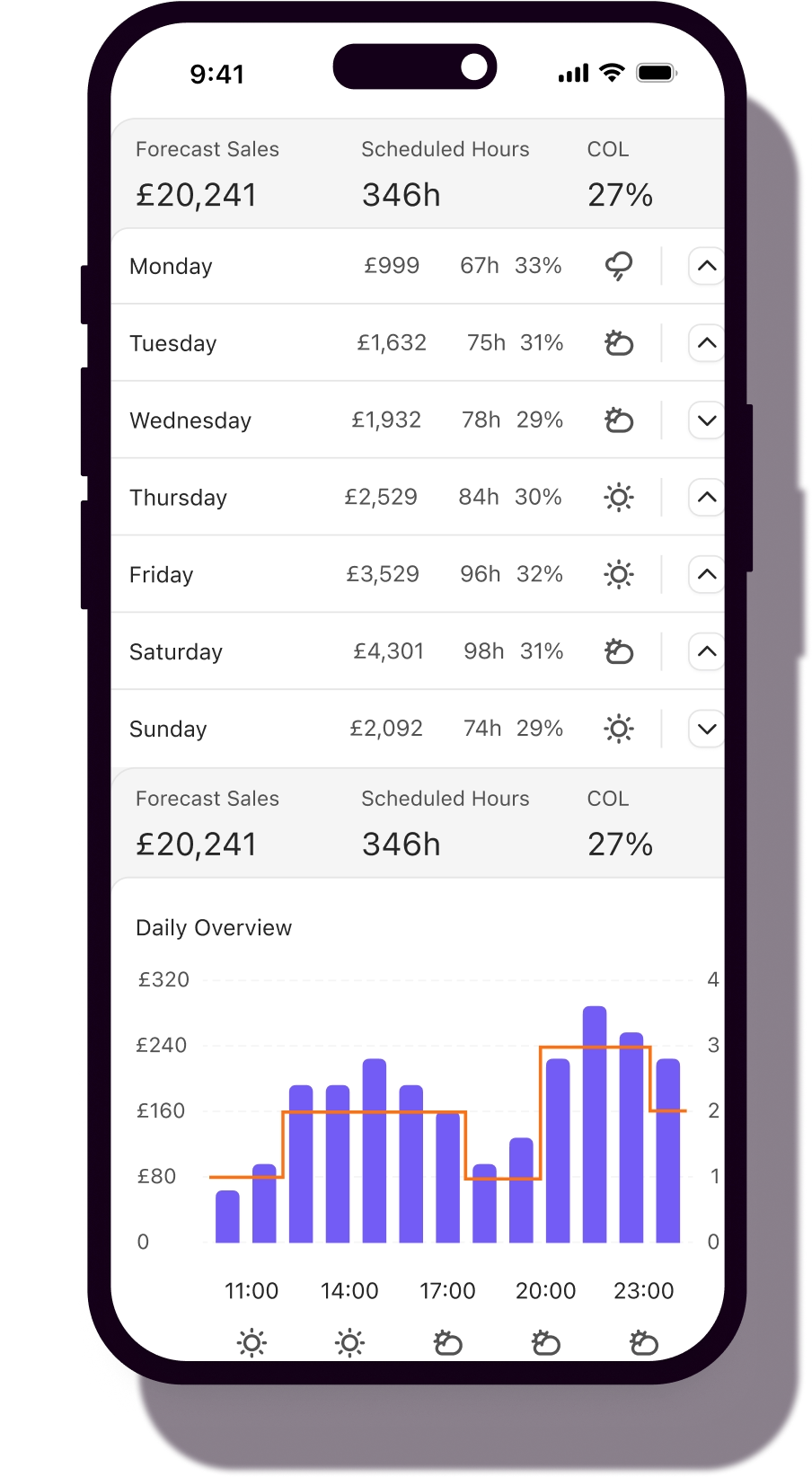
Know what’s coming. Run a tighter operation.
Most forecasting tools tell you it's going to be a busy on Wednesday. Nory tells you it's going to be busy at 12pm, quiet by 3pm, and slammed again from 6pm. It’s the difference between a plan and a guess.
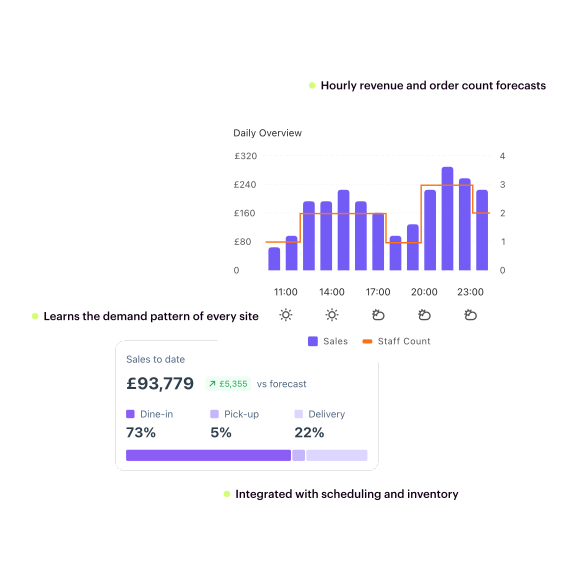
The restaurant industry measures forecasting by the wrong unit.
Most tools forecast by the week or the day. But nobody runs a restaurant by the day.
A strong day total can hide a slow lunch, a dead mid-afternoon, and a rush you can't keep up with in the evening.
Nory forecasts every hour of every day at every location, up to five weeks out.
That's the unit that drives consistent scheduling, ordering and service decisions.
How it works
It starts from your data.
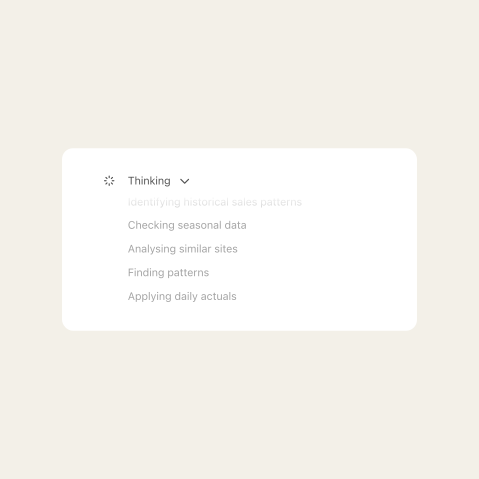
We learn your historical sales patterns: how each site trades by day of week, how it moves through the seasons, how it responds to bank holidays and key trading dates.
Then we go wider, learning across sites with a similar cuisine, format and service style — so your forecast draws on patterns your own history hasn't seen yet.
The forecast refreshes daily against actuals, so it stays current as trading patterns shift. When a GM overrides a forecast and tells us why (e.g. a private hire, a road closure) we look at it. That context shapes how we tune the model.
What changes
Staff the shift, not the guess.
Nory forecasts revenue and covers hour by hour, refreshed daily.
It lives in the same place your schedules get built, so your GMs see the change before they commit the hours.
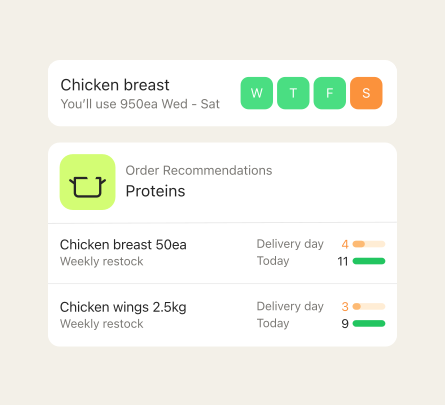
Order what you’ll use.
Nory feeds predicted demand directly into your ordering, adjusted for events and seasonality. Your purchasing team stops guessing and starts planning.
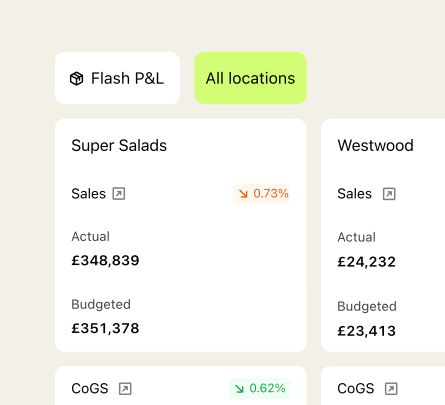
Catch underperformance before it's a post-mortem.
With multi-site forecasting built in, area managers get visibility across the estate — site by site, shift by shift. A location underperforming gets flagged early, not when it's too late to act.
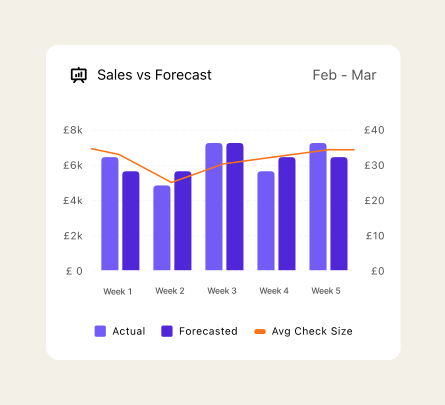
Plan for peak. Don’t just survive it.
Christmas, Valentine's Day, a summer terrace opening — Nory gives you a five-week forward view so you can get ahead of your biggest trading periods, not scramble into them.
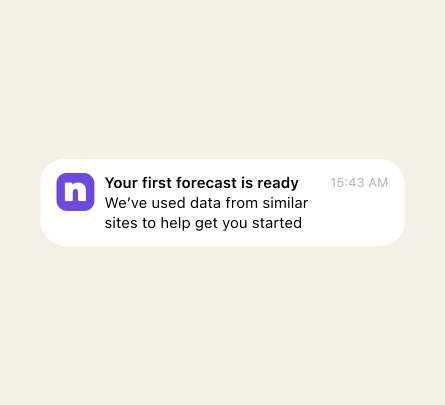
No track record? No problem
When you open a site, change format, or hit a period you've never traded through, patterns from comparable venues fill the gap.
What this means in practice
We beat the specialists.
At one customer, our forecast was benchmarked against their own team of forecasting specialists. Ours performed better — because it weighs more factors than anyone can hold in their head, and it does it for every site, every hour, every week, without fail.
A better forecast on the days that cost the most.
Another customer came to us with a forecast built once a year from week-and-weekday patterns. No special dates, no school holidays, no hourly view. With Nory, overall forecast error fell from 15.1% to 12.7%. On special dates (where a miss costs you most) it fell by 8.2 percentage points, more than three times the improvement.
Built for the moments that matter most
Busy weekend planning.
Know by Wednesday what Saturday is going to look like. Forecast revenue and covers by hour so your FOH and BOH are staffed to the shift, not to a rough idea.
Seasonal trading.
Christmas, Valentine's Day, Mother's Day, summer — Nory builds these into your forecast automatically, weighted to what's actually driven demand at your sites historically.
Plan staffing and stock weeks in advance.
Holiday and bank holiday forecasting.
Bank Holidays behave differently across sites.
Nory learns how each of your locations responds to national holidays and adjusts predictions accordingly.
Local events.
A stadium fixture, a street market, a concert nearby; local events shift demand in ways that national calendars don't capture. Nory monitors what's happening around your sites and factors it in.
Inventory and purchasing.
Turn your revenue forecast into a demand plan for your purchasing team. Order to what you'll actually sell, not to what moved last week.
Underperformance diagnosis.
When a site is consistently missing forecast, Nory surfaces the pattern. You get visibility into variance — by site, by day part — so you can diagnose root cause rather than just report the number.
Common questions about Nory Forecasting
What data does Nory use to build a forecast?
Nory learns from your historical sales patterns and order counts — how each site trades by day of week, how it moves through the seasons, and how it responds to holidays and special dates. In the UK and Ireland we also factor in school term times. Nory classifies every venue by cuisine, format and service category, so each site benefits from demand patterns across comparable restaurants.
How far ahead does Nory forecast?
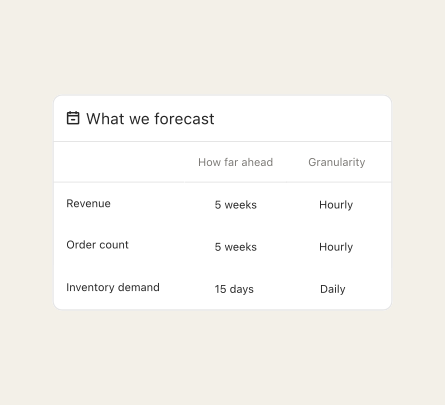
Nory provides hourly revenue and order count forecasts up to five weeks ahead. Inventory demand is forecast daily, 15 days ahead.
Does Nory's forecast update automatically?
Yes. The forecast refreshes daily, taking in actuals from recent trading so it stays current as demand patterns shift.
Can my managers adjust the forecast?
Yes. GMs can override forecast figures and add context explaining why — a private hire, a closed road, an unexpected rush. That context is captured and reviewed, and informs how we improve the model for your sites.
How does forecasting connect to scheduling in Nory?
The forecast sits in the same platform your managers build schedules in, refreshed daily — so whoever's writing the rota is working from current demand rather than carrying a number across from another system.
Does Nory work for multi-site groups?
Yes. Nory forecasts every site individually, hour by hour, up to five weeks out — not as a group average. Area managers and ops teams get cross-estate visibility alongside site-level forecasts.
How does Nory handle one-off events near my sites?
Nory factors known local and cultural events into its forecasts. GMs can also flag demand-affecting factors directly — a nearby closure, a private hire, local disruption.
What types of hospitality business does Nory support?
Nory works across full-service and quick-service restaurants, fast-casual, and coffee shops — including sites where the demand pattern is commuter-driven rather than mealtime-driven.
Is Nory forecasting software specific to restaurants?
Yes. Nory is built exclusively for the hospitality industry. The forecasting model is trained on restaurant demand patterns — not retail, not logistics. Every signal we incorporate is chosen for its relevance to food and beverage operations.
Why does Nory forecast by the hour when most tools forecast by the day or week?
Because that's where restaurant operations actually happen. A day-level forecast tells you Saturday will be busy. An hourly forecast tells you lunch will be steady, the 5pm lull is real, and you'll need full cover from 7. That's the difference between a rota that works and one that costs you. Weekly and daily metrics are easy to report — they're just not useful enough to act on. Hourly granularity is harder to get right, which is why most tools don't offer it. It's also why it's where the margin is won or lost.
Stop reacting and start planning.
Give your team a forecast they can plan around, from scheduling to ordering.