How to reduce restaurant labour costs without cutting hours

You can cut labour costs by 10-20% without cutting hours.
How?
By getting your forecast right.
When you know how demand actually looks for the week or month ahead, you can schedule rotas more precisely around real trading patterns. That means no more overstaffing during quiet shifts and under-resourced busy shifts, so you protect margin without touching total hours.
In this article, we look at how better forecasting turns into tighter rotas, less waste, and more consistent margins without reducing a single hour of service.
Why most labour-cost advice plateaus at 5-7%
Most advice on how to lower restaurant labour costs caps at 5-7%, and tends to suggest things like cutting restaurant overtime control, cross-training staff so they can cover more ground, or simply using a scheduling tool.
This advice isn’t wrong. In fact, it’s all true – those actions probably will reduce your labour costs over time.
But there are limits to be aware of
- Cutting overtime risks understaffing during peak service and delivering a bad dining experience, damaging your brand reputation and leading to employee burnout
- Cross-training caps at the natural limit of how many roles one person can credibly do in the time they’re working (and can also lead to burnout)
- Using a basic scheduling tool is only effective depending on its functionality (does it take real-time sales and performance into account to help you schedule based on demand?)
Most of that advice is downstream optimisation. You’re trying to improve labour and scheduling decisions that have already been made.
For instance, adjusting rotas after they’re built or trimming overtime once the week has already gone live. You’re reacting to the plan rather than shaping it.
The real change comes from improving the decisions before building the rota.
To sum it up: If you want to improve restaurant labour cost optimisation (but don’t want to cut hours, cause more work for employees, or negatively impact the guest experience), effective sales forecasting is the way to go.
Why restaurant sales forecast accuracy is key to optimal labour costs (without cutting hours)
Accurate forecasts let you match staffing to real demand, which reduces overscheduling and improves margins without needing to cut hours.
Let’s break this down.
Most labour decisions start with a forecast. You look at Saturday lunch and assume 230 covers. The rota gets built on that number, with 8 people on the floor and 3 in the kitchen. Everything feels aligned because it’s all built on the same assumption.
Now what happens if the forecast is wrong by 15%?
Imagine that you only do 195 covers when you thought you’d do 230. In this scenario, you’ve overstaffed the shift and driven up your labour costs.
On the flipside, say that you do 265. You’re now short-staffed and forced into scrambling to get more staff in at the last minute, turning people away, or delivering a weaker service and damaging your brand.
Either way, margins take the hit.
And these errors feel even more drastic across mutli-site operators. Restaurants with 20 sites running at 15% forecast error are absorbing the same compounding hit at every site, every shift.
But the good news is that closing the forecast accuracy gap from 80% to 95% typically delivers 10-20% labour cost reduction in the first 8 weeks. We’ll go through how to do this in more detail later.
Recommended reading: 4 simple strategies for maximising labour productivity in restaurants
How to reduce labour costs in a restaurant: Three labour-cost wedges, ranked by leverage
Forecast accuracy is the highest-leverage driver in reducing labour costs, followed by real-time visibility and conventional time management.
Most operators work the wedges in the wrong order, not prioritising forecasting until it’s too late.
Here's the right order:
Applied in order, a multi-site operator running at 38% labour can realistically move toward 30–32% labour cost savings within 8–12 weeks.
If you start at the bottom (cutting overtime and tightening scheduling discipline) and never fix the forecast, performance typically stalls around ~35%.
Take a look at how to tackle each of these activities.
Wedge 1: Get your forecast right (10–20% savings)
Getting your sales forecast right leads to the biggest cost savings, directly driving how rotas are built.
Here are the two things that matter most when it comes to accurate forecasting at a multi-site level:
1. Site-level forecasting
Forecasts need to reflect how each site actually trades, not an averaged group number split evenly across locations.
Every site behaves differently (daypart mix, weather sensitivity, local events, customer patterns). When you use a blended group forecast, accuracy drops. In practice, site-level forecasting outperforms it by around 5–10%.
The solution: For multi-site operators managing this manually, a tool becomes necessary.
At scale (10+ sites), you need a system that continuously builds and updates forecasts at site level, and corrects itself against actual performance. For example, Nory’s Forecasting Assistant runs at ~97% accuracy with customers like Masa, compared to an industry norm of roughly 80–85%.
Constantly being able to see what your sales are, what your cost of labour is – and trusting that is really valuable.
Shane Gleeson, Owner and Founder at Masa
2. Demand-driven scheduling
Once the forecast is reliable, it should directly shape the rota. Instead of building schedules from last week’s pattern and reviewing performance afterwards, you start from expected demand and build the rota to match it – targeting a labour % at each daypart.
The solution: Use Nory's Scheduling Assistant to build accurate rotas.
The Scheduling Assistant uses forecasted demand, labour budget, and compliance rules to build your rota. You can then review and adjust the output rather than starting from scratch and creating schedules based on guesswork.
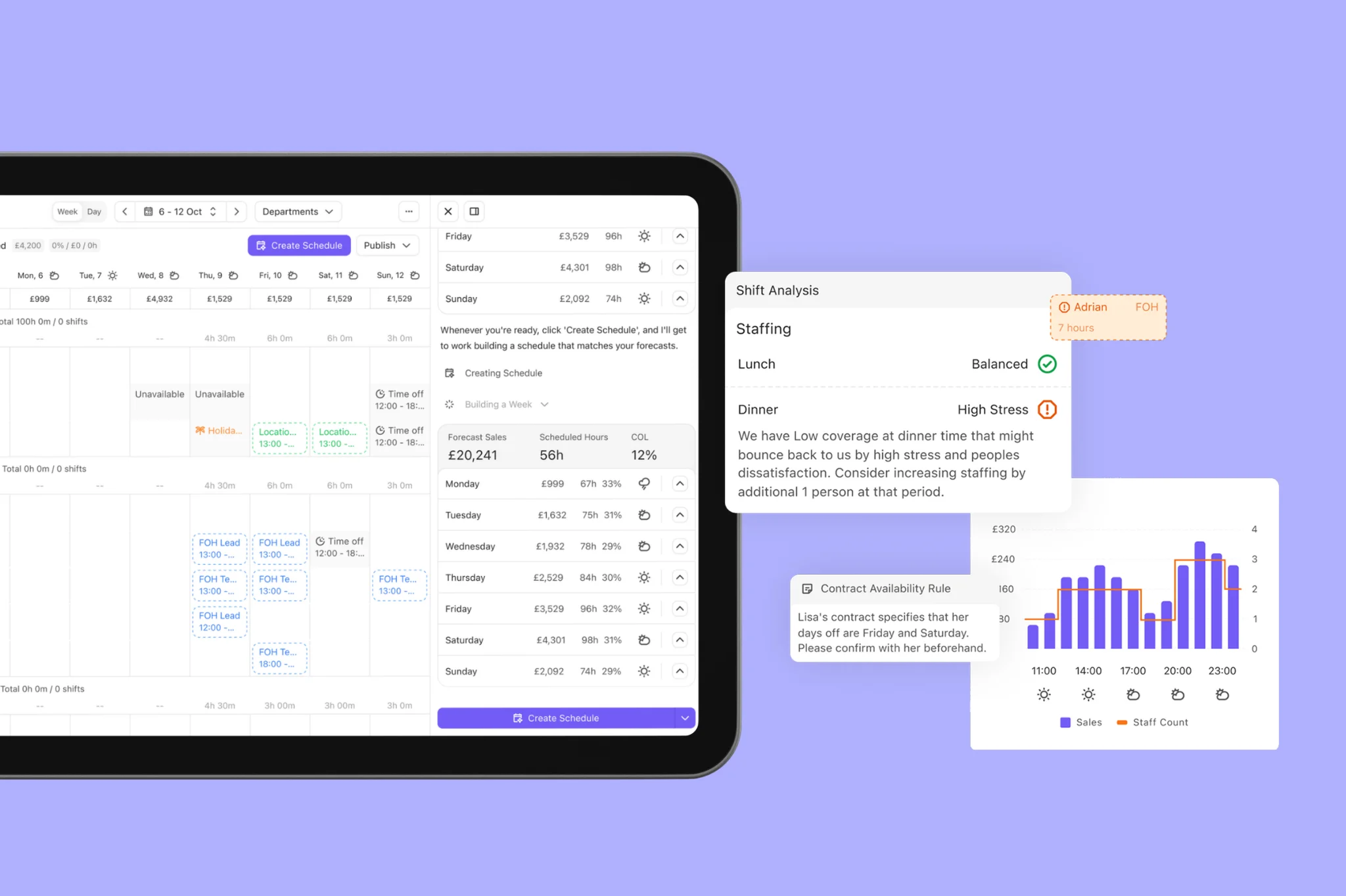
Take a look at Passyunk Avenue as an example. The mulit-site London-based restaurant used Nory for scheduling this and saw a 26% reduction in cost of labour across locations.
Side note: If you're not ready to commit to an operating system, the manual path is: measure your forecast accuracy weekly, identify your worst-forecasted site or daypart, and apply focused effort there. The improvement will be less (around 3-5%), but still worth doing.
Wedge 2: Real-time visibility during the shift (3–7%)
Seeing labour cost in real time during service lets managers correct over or under-staffing while it’s happening, instead of discovering it after the shift has already cost you money.
Most rotas are fixed once service begins. Outside of call-outs or emergencies, restaurant staffing stays the same, and labour cost only becomes visible after the fact (usually the next day or in a weekly report).
Real-time visibility changes that.
If your team can see labour % live against sales as service unfolds, they can make small, immediate adjustments. If trading is slower than expected, someone can be sent home earlier. If it’s busier, cover can be pulled in before pressure builds in the queue.
It’s about having the option to act while it still matters.

The impact here is smaller than forecasting, but still meaningful: typically 3–7% in labour savings, mainly from avoiding avoidable overstaffing during service.
The key requirement is making sure you’re using genuinely real-time data, not a dashboard that updates overnight or in batches. If the data lags, decisions lag with it. By the time you’re looking at the numbers, the shift (and the cost) is already locked in.
This is where real-time systems like Nory matter.
Because workforce management, sales, and scheduling all sit in one platform, the data updates as the shift happens. That means managers aren’t interpreting yesterday’s performance, they’re adjusting today’s service while it’s still in play, using the same live view of labour % vs demand.
Recommended reading: Real-time P&L for restaurants: Why weekly reports aren't enough
Wedge 3: Discipline on overtime, breaks and headcount (3–7%)
Tight control of overtime, breaks, and labour mix delivers incremental savings, but it only has real impact when forecasting and scheduling are already working properly.
Most discipline problems are actually planning problems. If your forecast is off, you’re constantly compensating in real time by:
- Stretching shifts because it’s busier than expected
- Holding people longer “just in case”
- Cutting breaks and reshuffling labour because the original staffing plan didn’t match reality
When forecasting is accurate, that noise disappears.
The rota already reflects when you actually need people, so overtime becomes the exception rather than the patch. Breaks are taken as scheduled because staffing levels are right in the first place, and headcount mix can be set deliberately rather than to absorb mistakes in coverage.
In practice, it comes down to tightening execution in a few key areas:
- Overtime control. Shifts that push into overtime should be flagged automatically. Rota systems should actively prevent accidental overtime unless it’s explicitly approved, rather than relying on managers to catch it manually.
- Cross-training with purpose. Cross-training works when it solves a real operational gap, like FOH staff covering the bar during quiet periods or kitchen staff shifting into prep when service drops. Done poorly, it just creates confusion. The key is to pilot, measure impact, and scale what actually improves coverage.
- Labour mix. The balance between full-time, part-time, contract, and agency staff has knock-on effects beyond hourly cost (including overtime exposure, training load, and turnover). Many operators set this once and rarely revisit it, but you should review it regularly as trading patterns change.
- Operational discipline. Late clock-ins, missed bread, and unapproved overtime all quietly inflate cost (and lead to compliance risks). Tightening enforcement here often delivers immediate, visible savings.
None of this requires new infrastructure, but it does require attention and consistency in how you use your existing systems. A labour audit typically uncovers 2–4% in immediate savings, simply by fixing what’s already visible but unenforced.
A 4-week plan to reduce labour costs without cutting hours, starting Monday
In 4 weeks*, you can start shifting from reactive planning to demand-driven schedules by using accurate forecasting to build rotas around real demand.
Here are the steps to follow:
- Week 1: Audit your current forecast accuracy. Pull the last 8 weeks of forecast vs actual sales by site and calculate mean absolute error (MAE), which is the average percentage gap between forecast and actuals. Most multi-site operators sit around 15–20%. Look for where the errors are and use these as your starting point. For example, you might find that Saturday lunch at high-volume sites is consistently under-forecast by 18%, while weekday evenings are broadly accurate.
- Week 2: Identify your worst-forecasted day or shift type. Then, dig into why it’s wrong: events, weather sensitivity, menu changes, or simply site-specific trading behaviour that isn’t being captured. Don’t try to fix everything – isolate one pattern and correct it properly.
- Week 3: Pilot a demand-driven rota for one site. Pick one site and rebuild the rota from the forecast. Size staffing to a target labour percentage at each daypart, then compare performance against the previous 4 weeks of trading. If labour cost improves without harming service, you’ve validated the approach. If it doesn’t, refine the inputs before expanding.
- Week 4: Roll out and measure performance. Apply the demand-driven approach across more sites. Set up a weekly forecast-accuracy review to create a sustainable operating rhythm – forecast, compare, and adjust.
By the end of week 4, the process is in place. By week 12, you’ll have enough data to see whether the shift is material. By month 6, the impact will show clearly at a group level.
*This isn’t a full transformation programme, but it is a practical way to start using accurate forecasts that actually reduce labour costs.
Nory success stories: Real restaurants that use forecasting for better results
The biggest labour cost improvements don't come from cutting hours. They come from forecasting demand, scheduling against that demand, and giving managers real-time visibility to stay on target during service.
That’s exactly what these operators did using Nory, an agentic AI operating system for multi-site hospitality businesses.
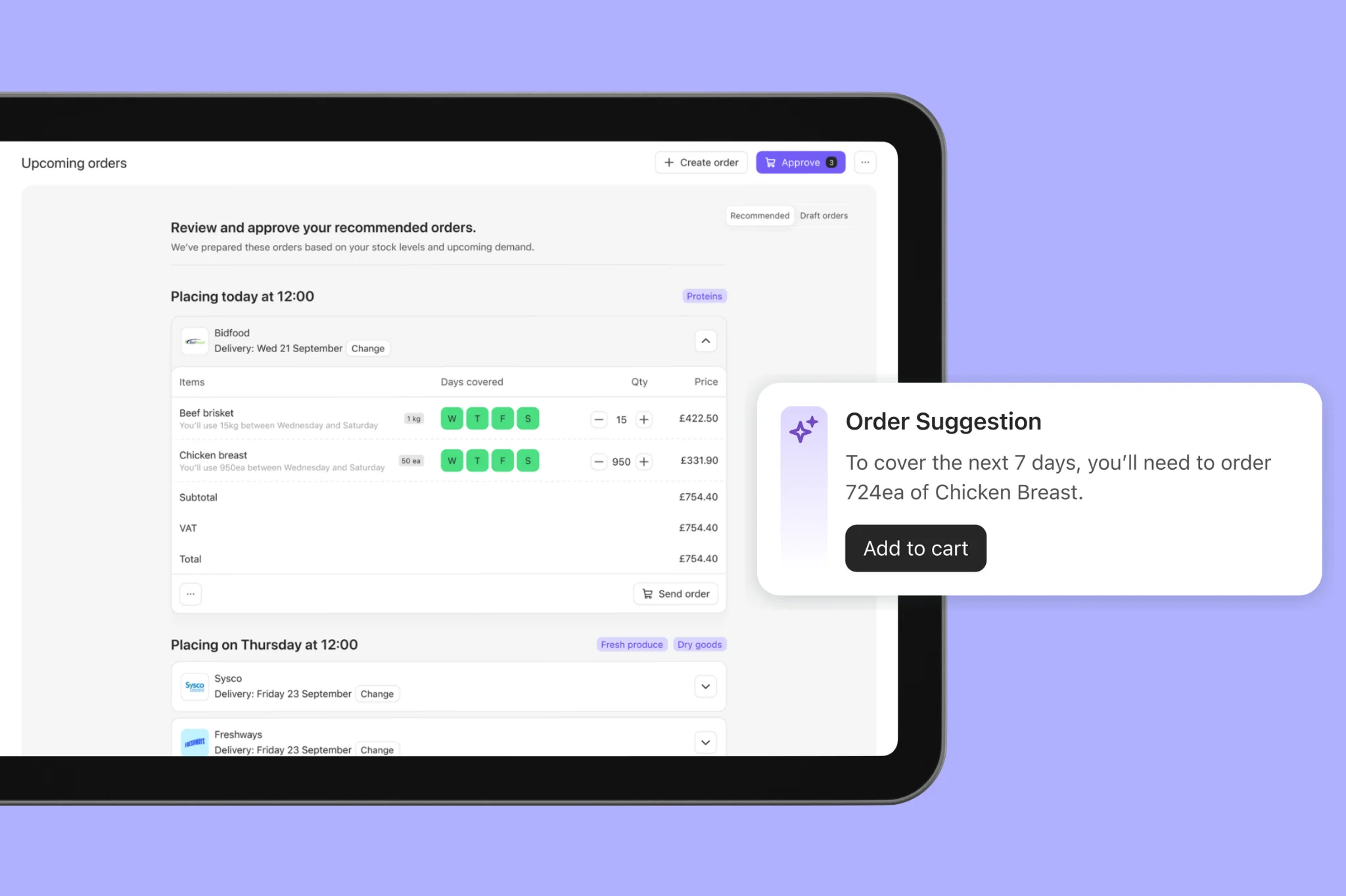
Keep reading to see how these operators used Nory’s forecast-led scheduling and real-time visibility to solve specific operational problems – and saw measurable improvements in labour performance as a result.
Digbeth Dining Club: Labour within 0.38% of target
As Digbeth Dining Club expanded across venues and large-scale events, labour planning became increasingly complex. Managers were balancing multiple trading environments, fluctuating demand, and event-driven spikes in footfall.
We had nothing that talked to each other. Labour was guesswork. Stock was manual. Reporting wasn’t consistent. It just wasn’t sustainable.
Nicol Dwyer, Operations Director at Digbeth Dining Club
Nory's AI forecasting and scheduling functionality gave teams a more accurate view of expected demand, allowing labour plans to be built around real trading patterns rather than assumptions. Real-time operational reporting also gave managers visibility into performance as events unfolded.
The results: Labour consistently landed within 0.38% of target, while maintaining labour costs in the 15–22% range and gross profit around 70–71%.
Tasty African Food: 98.5% forecast accuracy and 75% less waste
As Tasty African Food began expanding across locations, the company found that maintaining control over margins became harder. Forecasting, ordering, and staffing decisions were becoming more difficult to standardise across sites.
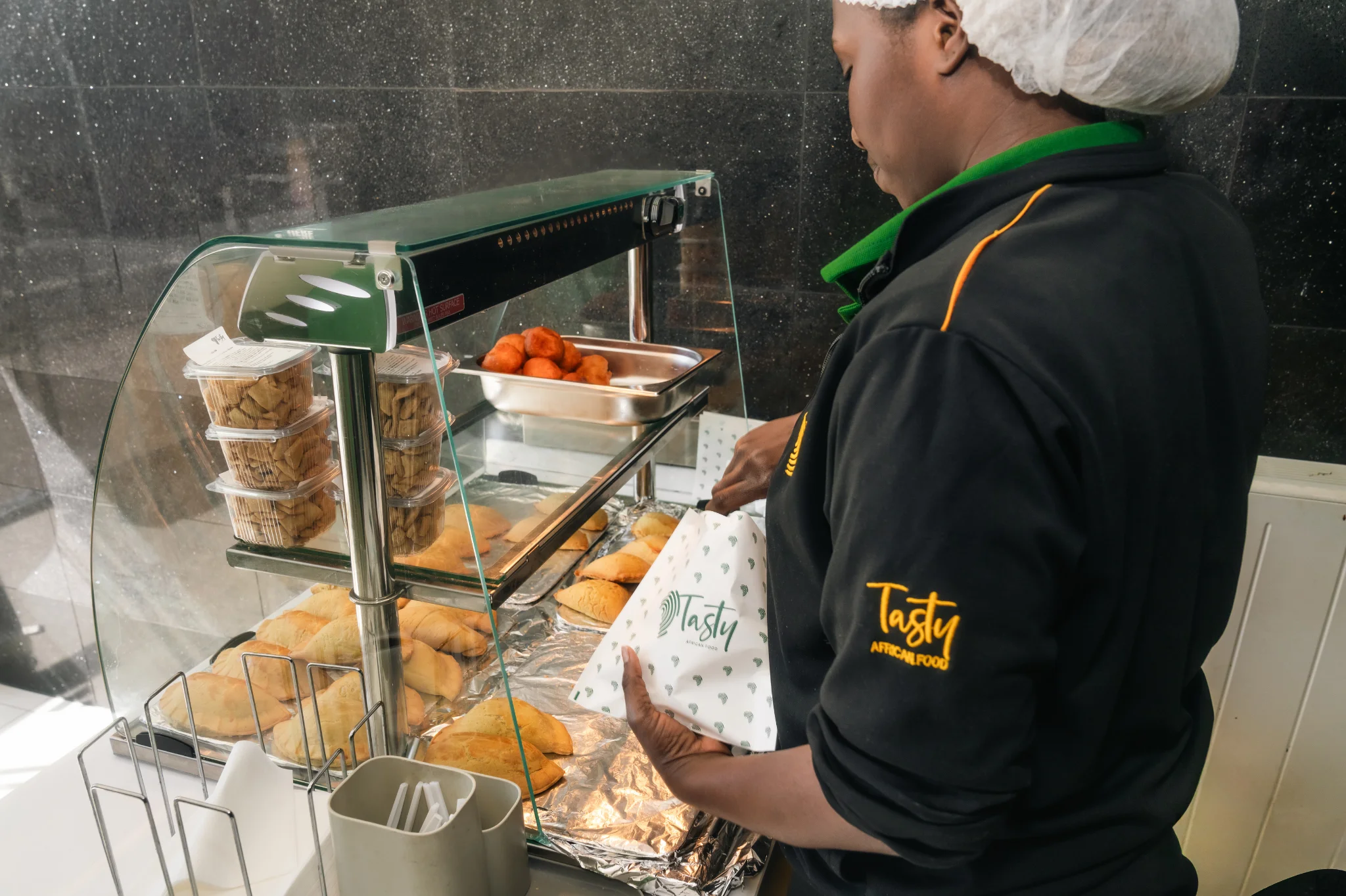
Nory's forecasting tools helped the team build projections from actual sales patterns rather than manual estimates. Combined with operational visibility across locations, managers could make more informed decisions about labour, stock, and overall prime cost.
The results: Forecast accuracy reached 98.5%, while food waste fell by 75%.
Before Nory, adding a new location meant building everything from scratch. Now, they inherit the controls immediately. That's how we can grow from 22 to 29 in two years and still plan for 100 in five.
Stephen Oladimeji, Head of IT Systems, Tasty African Food
Pizzarova: 10% reduction in labour costs
As Pizzarova grew, maintaining consistent labour performance across sites became more difficult. Scheduling decisions were taking time and becoming harder to scale.
Nory's forecasting and workforce management tools allowed the team to build labour schedules around expected demand, giving managers a more consistent framework for staffing decisions across locations.

The results: A 10% reduction in labour costs by improving how staffing levels aligned with demand across its sites.
The key drivers for profitable performance are sales, labour, and stock. With Nory, everyone can see them live, so managers act faster and decisions are better.
Jack Lander, Pizzarova's co-founder
Frequently asked questions about how to reduce restaurant labour costs
What is a good restaurant labour cost percentage?
A healthy labour cost percentage depends on your restaurant type.
As a general restaurant labour cost benchmark:
- Full-service multi-site restaurants – 28-32%
- Casual dining – 30-34%
- Quick-service restaurants – 24-28%
- Bars and pubs – 20-26%
These benchmarks are only part of the story. What's often more important is the variance between sites in your group. If one site is consistently running 5+ percentage points above the others, the issue is usually forecasting, scheduling, or labour management rather than the market itself.
How can I control restaurant labour costs without cutting staff hours?
The most effective way to reduce labour costs without cutting hours is to improve forecast accuracy.
When demand forecasts are more accurate, staffing levels become more accurate too. That means fewer overstaffed shifts, fewer last-minute scheduling decisions, and less labour waste, all without reducing employee hours or service levels.
Many operators see labour cost reductions of 10–20% from forecast-led scheduling alone. When combined with real-time labour visibility and tighter control of overtime, breaks, and staffing mix, 15–25% savings are achievable.
How does forecasting affect restaurant labour costs?
Forecasting influences every staffing decision you make.
Your forecast determines how many people to schedule on a shift, when to schedule them, and how to distribute labour across the week. If the forecast is wrong, the rota is built on the wrong assumptions.
For example, if demand is overestimated, shifts become overstaffed and labour costs rise. If demand is underestimated, managers often rely on overtime or last-minute cover to keep service running smoothly.
This is why forecasting is so important for your margins. Improving forecast accuracy improves every labour decision that follows.
What's the biggest single lever for reducing restaurant labour costs?
For multi-site restaurant labour costs, it's demand-driven scheduling based on accurate forecasting.
Traditional labour-saving tactics (such as reducing overtime, cross-training employees, or adjusting headcount mix) can all help, but they typically deliver incremental improvements.
Forecast-led scheduling addresses the root cause to ensure that staffing levels match expected demand before you build the rota.
How long does it take to see labour cost savings from a new scheduling system?
Most operators begin seeing measurable improvements within the first 6–8 weeks.
The initial gains typically come from better staffing alignment and fewer scheduling inefficiencies. Over time, as forecast accuracy improves and managers become more confident using the system, those savings often add up.
How do multi-site restaurants control labour costs across sites?
Successful multi-site operators focus on three things:
- Accurate forecasting at site level, rather than using a single group forecast across all locations
- Demand-driven scheduling that reflects how each site actually trades
- Consistent benchmarking so underperforming sites are identified quickly
Without these controls, labour issues can remain hidden inside the wider group P&L report. With them, operators can spot problems early, share best practices across locations, and maintain a more consistent labour cost percentage across the business.
Ready to improve your forecast accuracy? Let Nory help
Labour cost savings come from better forecasting, not from cutting staff hours. Start by improving forecast accuracy at site level, then use it to shape scheduling decisions before service begins (not when it’s too late).
Platforms like Nory bring forecasting, scheduling, and real-time visibility into one system. Operators can align labour to demand in advance and adjust in real time when conditions change.
Book a call with the team to see how you can build more accurate forecasts that reduce labour costs.
Disclosure and methodology
This guide is published by Nory, an agentic AI operating system for multi-site restaurants. The Forecasting + Scheduling Assistants are the levers the piece is arguing for. We’ve taken an unbiased approach, but we'd argue that operators need this functionality regardless of who you bought the operating system from.