

Employer National Insurance contributions for UK restaurants: A simple guide
Employer National Insurance contributions for UK restaurants changed in April 2025, with a higher rate and a lower earnings threshold increasing payroll costs for many UK restaurants.
If you’re still working out what the changes mean for your labour costs, or you haven’t checked your budgets against the new rates, this guide covers what you need to know.
What is employer National Insurance?
Employer National Insurance is a payroll cost that restaurants pay on top of their employees’ wages.
Employers pay Class 1 National Insurance contributions (NICs) on earnings above the secondary threshold. For 2026/27, the secondary threshold is £5,000 a year, or £96.15 a week and £416.67 a month, depending on how often you pay your employees. Employers currently pay NICs at 15% on earnings above this threshold.
The government uses National Insurance to help fund benefits, the NHS, and other public services.
Side note: Most hospitality employees fall under standard Class 1, so their employers pay the relevant employer NICs on their earnings above the threshold. Employers can also have other National Insurance obligations, including Class 1A and Class 1B NICs on certain employee benefits and expenses, such as company cars or taxable benefits provided through a PAYE Settlement Agreement.
You can find out more about the different NIC classes and employer NI thresholds in the UK on the HMRC website.
What are the current employer National Insurance rates?
As mentioned, the employer NI rate for 2026 is 15% on employee earnings above the £5,000 annual secondary threshold, or £96.15 per week.
The 15% rate took effect in April 2025 and remains in place for 2026/27. The government has also frozen the £5,000 secondary threshold until 2030/31.
That means restaurants can use the current 15% rate and £5,000 threshold when planning labour costs for the next four years.
What changed to NICs in April 2025?
April 2025 brought two changes that increased employer National Insurance costs:
- The rate rose from 13.8% to 15%
- The secondary threshold fell from £9,100 to £5,000 a year
The lower threshold means employers now start paying NI at a much lower level of earnings than before.
That change particularly affects hospitality, where many employees work part-time or earn lower annual wages.
An example of before and after the NIC change: Before the change, an employer wouldn't have to pay NI for an employee earning £7,500 a year. Under the current rules, the employer pays 15% on the £2,500 earned above the £5,000 threshold.
Find out more about the changes to NICs in April 2025 on the HMRC website.

An example of NICs in action
Take an employee earning £800 a month, or roughly £9,600 a year. Under the old rules, with a £9,100 secondary threshold:
- £9,600 − £9,100 = £500 subject to employer NI
- 13.8% × £500 = £69 a year
Under the current rules, with a £5,000 secondary threshold:
- £9,600 − £5,000 = £4,600 subject to employer NI
- 15% × £4,600 = £690 a year
That takes the employer NI cost for one part-time employee from £69 to £690 a year, a tenfold increase.
For a restaurant with 20 part-time employees earning around the same amount, the additional cost quickly adds up. Looking at the impact per employee can give operators a clearer picture of what the changes mean for their total labour costs.
What is Employment Allowance in hospitality?
Employment Allowance can reduce an eligible employer’s National Insurance bill by up to £10,500 each tax year.
The allowance applies to employers (both in and out of the hospitality industry) who meet the eligibility rules. One key condition is that your employer National Insurance liability was below £100,000 in the previous tax year.
For smaller restaurants and independent operators, the allowance can make a significant difference to annual payroll costs. Some businesses don’t claim it because they don’t know about it or assume they won’t qualify.
Common mistakes employers make when handling NICs
Restaurants can avoid unnecessary payroll costs and inaccurate labour forecasts by getting a few key areas of employer National Insurance right.
- Not claiming Employment Allowance. Eligible employers can reduce their employer National Insurance bill through Employment Allowance. If your business qualifies, make sure you claim it rather than paying more NI than necessary.
- Miscalculating the threshold for part-time workers. The secondary threshold is £5,000 a year, but payroll systems apply it according to the pay period. That works out at £96.15 a week or £416.67 a month. Using the wrong threshold for your payroll frequency can lead to incorrect NI calculations across your workforce.
- Using old NI rates in labour cost models. If your P&L still uses the pre-April 2025 rate and threshold, your labour cost projections won’t reflect what you actually pay. The change from 13.8% on earnings above £9,100 to 15% above £5,000 affects your labour budget, so your scheduling and cost models need to account for the current figures.
- Leaving NI out of your true labour cost. Employer NI forms part of the cost of employing someone, so you need to include it when you assess the cost of new hires, additional shifts, and extra hours. If your scheduling or cost-per-cover models leave employer NI out, they’ll understate your actual labour costs.
How Nory can help manage employer National Insurance costs
Nory is an agentic AI restaurant management system that helps operators track employer NI as part of their wider labour costs. The current rate and threshold give you fixed numbers to plan against until 2030/2031, so you can build them into your labour budgets and scheduling decisions.
Nory brings those calculations into the wider labour management process:
The Payroll Assistant uses schedules, timecards, and employee records already in Nory to build each pay run. The agent then flags discrepancies, unusual payments, missing information, and other exceptions before the pay run closes.
As a result, managers can review and correct issues before payday to ensure restaurant payroll compliance.
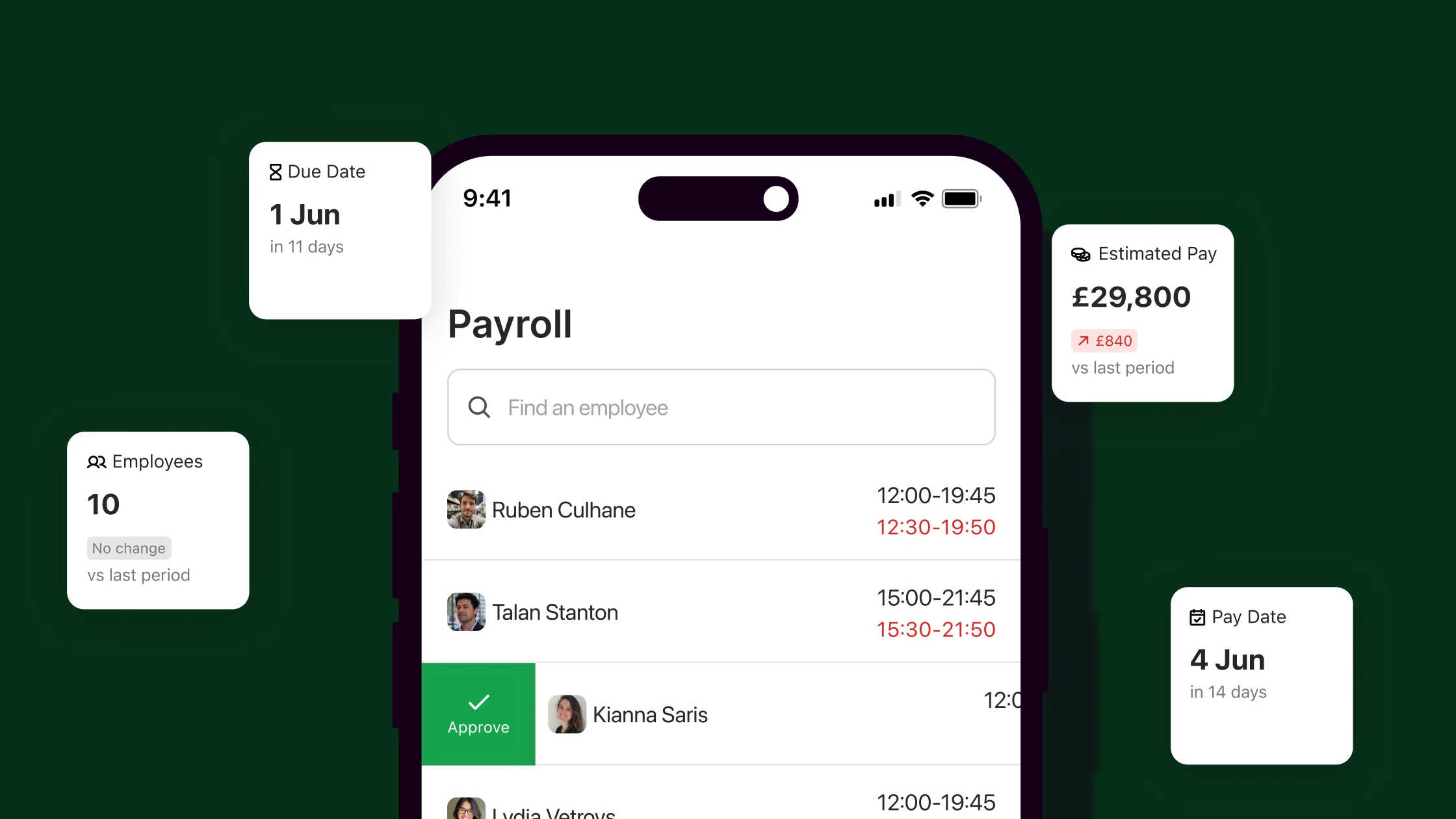
That connection also gives operators a clearer view of what their workforce actually costs.
Rather than calculating payroll separately from scheduling, Nory brings the underlying workforce data together. Labour costs reflect the hours people actually work and the rules that apply to them.
Nory’s Compliance Assistant adds another layer of control. The agent applies the relevant workforce rules for each location, including minimum wage, overtime, and employer contributions, and updates those rules when regulations change.
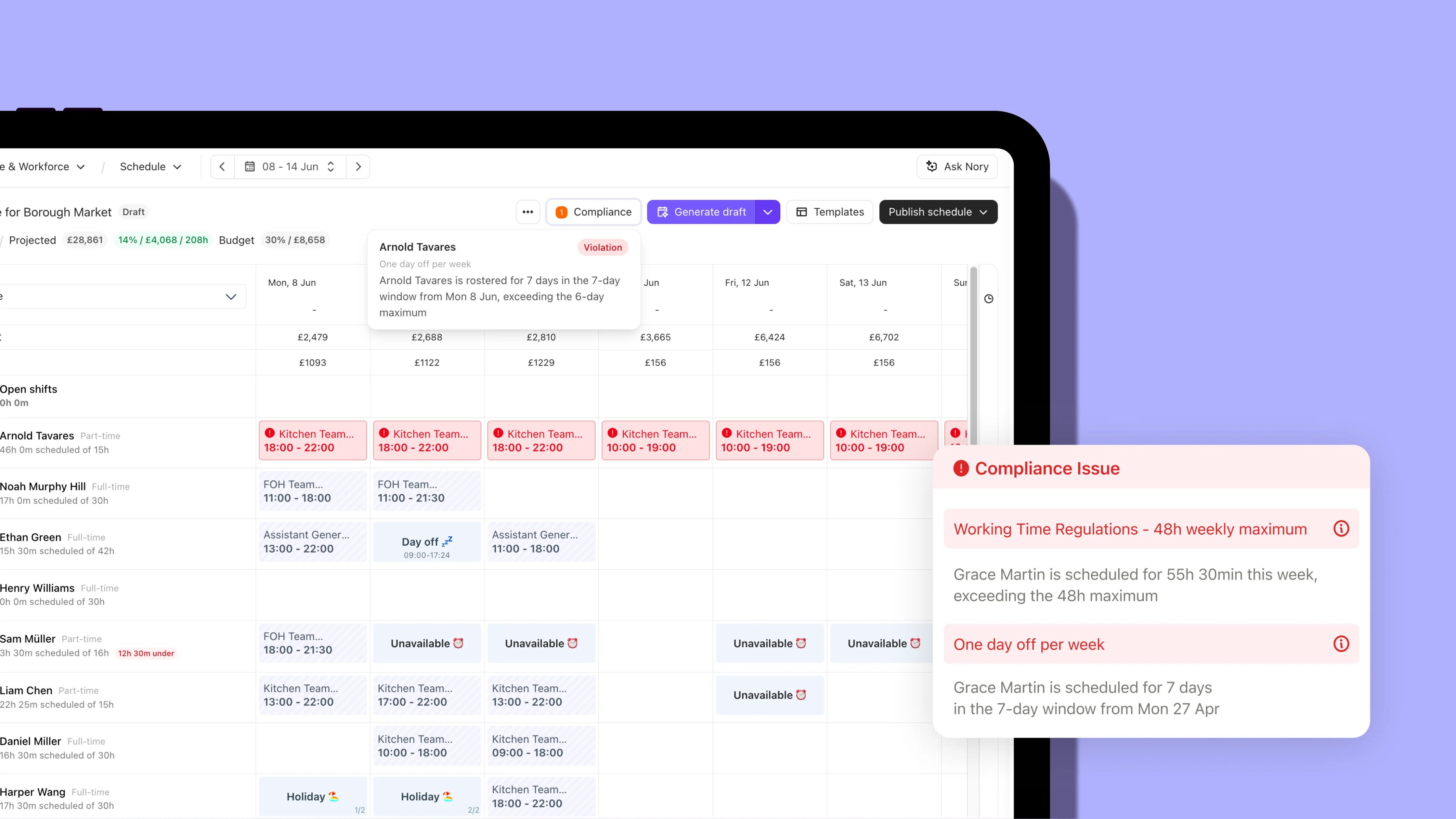
It also feeds accurate labour costs into scheduling. Managers can then see the cost implications while they build rotas, rather than finding unexpected costs after the fact.
For restaurant operators, using Nory means that employer NI becomes part of the wider labour cost picture rather than a separate payroll calculation. With the current NI rate and threshold fixed for several years, operators can use that information alongside their scheduling and payroll data to track labour spend, manage their budgets, and protect their bottom line.
Want to get a clearer view of your labour costs? Get in touch with Nory to see how connected scheduling, payroll, and compliance can help you manage labour spend and protect your bottom line.