Fine dining restaurant challenges: What to fix first

A busy dining room doesn’t always mean a healthy margin. You can fill every table, earn great reviews, and still finish the week with labor and food costs higher than planned.
And fine dining has some particular cost pressures that make that gap harder to close. Higher staffing levels, skilled kitchen teams, premium ingredients, and more complex service are a few examples.
The key is knowing which pressure is costing you most, then tackling it in the right order.
In this article, we look at how challenges in fine dining restaurants can affect our bottom line. Find out how to spot the problems facing fine dining restaurants and what you can do each week to keep prime cost under control.
Why fine dining leaves less room for cost overruns
Fine dining carries a heavy cost base, so a quiet service can put more pressure on margins. Premium ingredients, skilled kitchen and front-of-house teams, and a slower service pace mean that costs are higher than the average full-service restaurant.
Here are the fine dining restaurant costs that can seriously impact margins when demand drops:
- Labor: A fine dining kitchen needs the right people in the right stations to deliver the menu. You can’t simply remove a chef because Tuesday’s bookings came in light without changing the service you promise guests.
- Inventory: The food itself forms a large part of the experience, so cheaper substitutions can quickly undermine the menu and the reputation behind it.
- Capacity: A fine dining space has a fixed number of seats, and usually turns those tables more slowly than a casual or quick-service operation. When covers fall short, you have fewer opportunities to make up the difference later.
This means that when you compare fine dining vs casual dining economics, planning errors are often more expensive for the former.
If you overstaff a quiet service or over-order ingredients for a slow week, you can’t recover or absorb those costs quite as easily as a restaurant with lower outgoing costs.
Why labor is harder to adjust in a fine dining restaurant
Fine dining labor costs are tricky to adjust when demand drops because service depends on specific skills and roles being in place. A brigade kitchen can’t simply lose a person from the schedule in the same way a more flexible operation can.

Garde manger, saucier, pastry, and the pass each require different skills. Removing one role can affect the whole service, and the same applies in the dining room.
Servers, sommeliers, and other specialist roles all contribute to the experience guests expect, which limits how far you can reduce staffing without affecting service.
The bigger cost saving comes from scheduling accurately in the first place.
If you know how many covers you’re likely to serve, you can build the right team around that demand rather than paying for a full brigade during a quiet service.
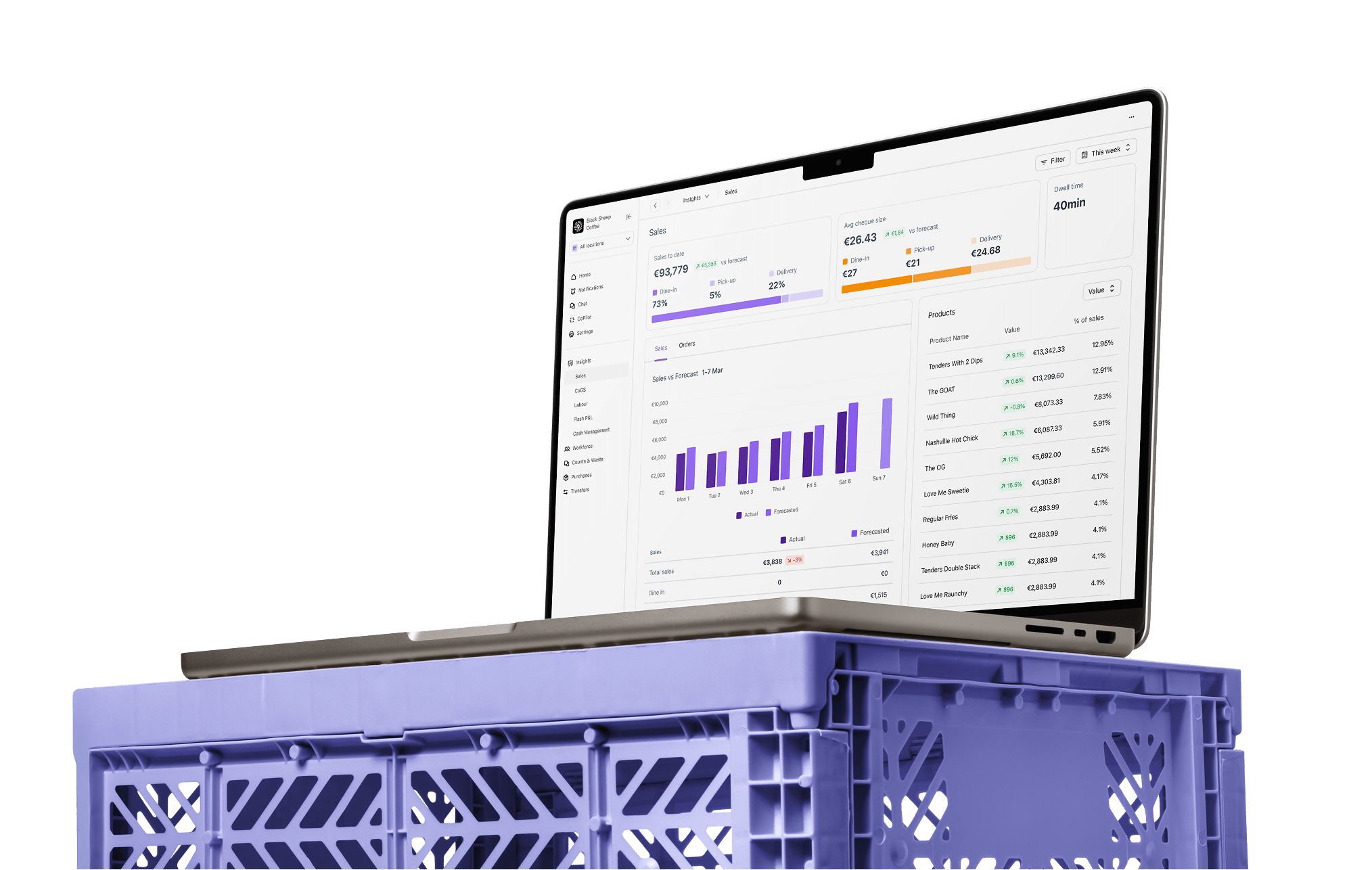
This is where a restaurant operating system like Nory can help.
Our AI Forecasting Assistant, for example, analyzes past sales, trading patterns, and external factors (like weather and local events) to predict demand by location and time of day.
The Scheduling Assistant then uses that forecast to build a schedule around expected demand, so managers can see where they need more or fewer people before the service starts. As a result, you reduce unnecessary labor without simply removing the specialist roles your service depends on.
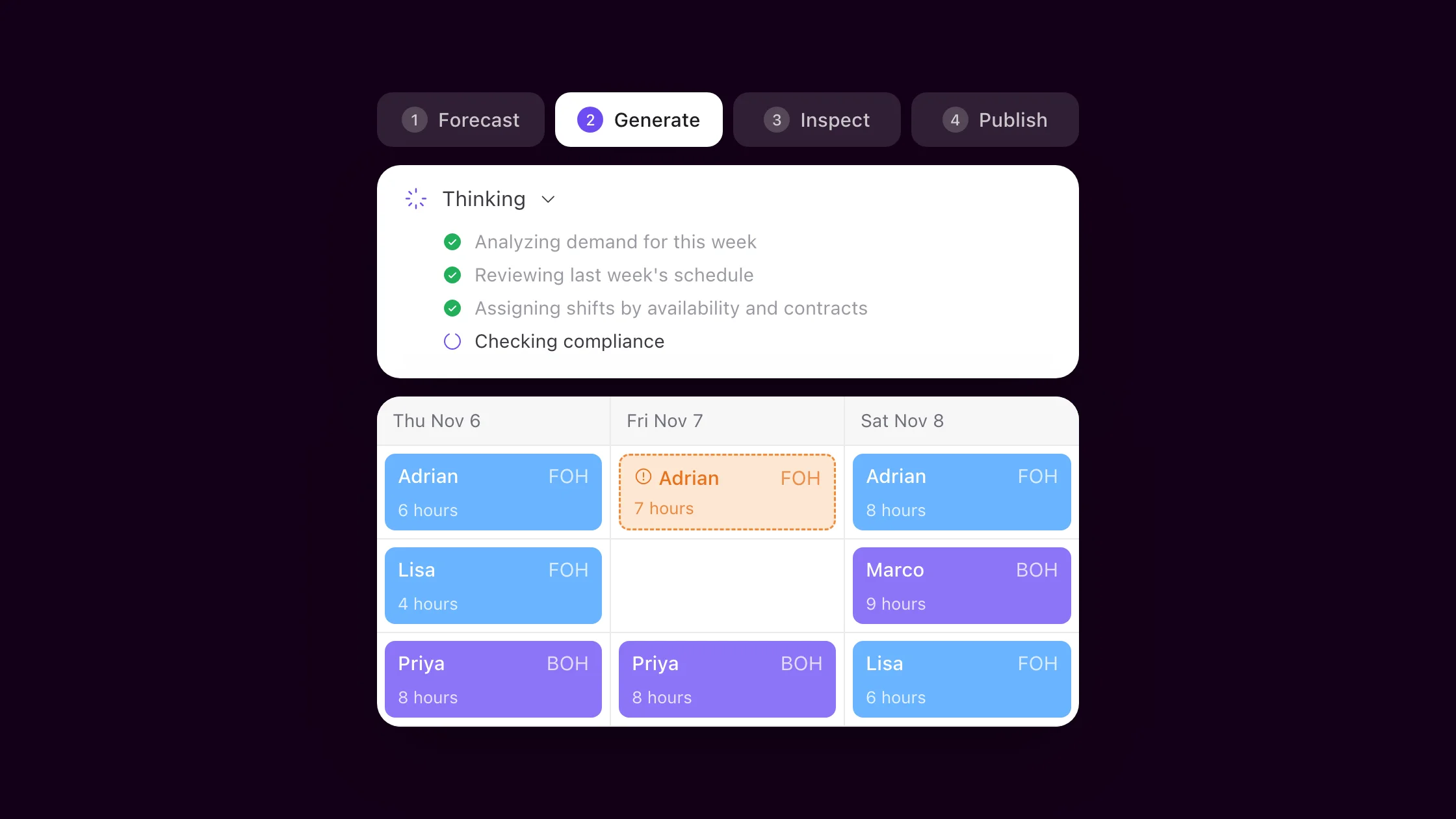
Did you know? Customers typically see a 10–20% reduction in labor costs within the first eight weeks of using Nory’s demand-based scheduling?
Premium ingredients leave little room to absorb price changes
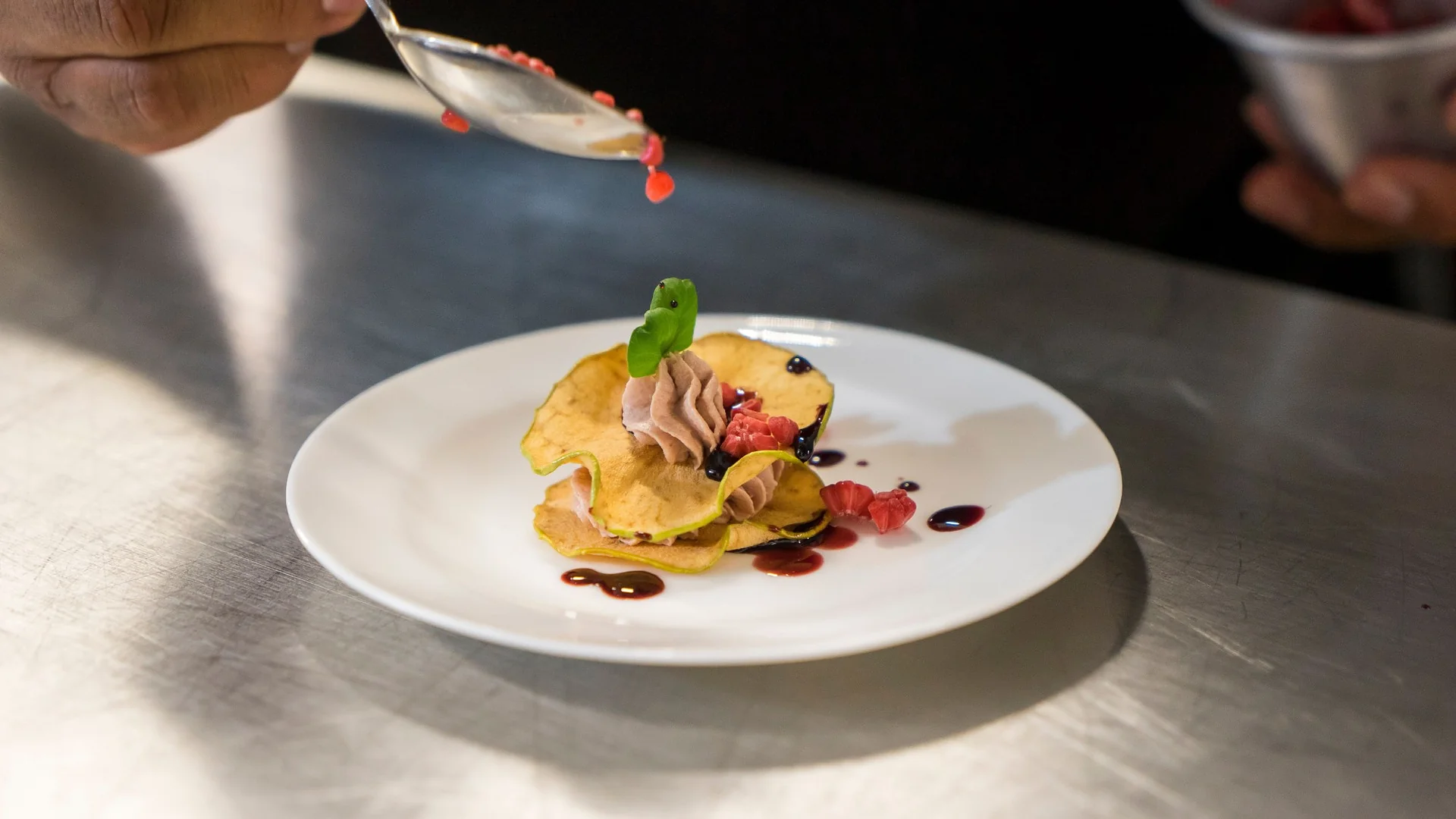
Fine dining restaurants have less flexibility when stock prices rise because ingredients often form a core part of the dish and the guest experience. You can’t always swap an expensive ingredient for a cheaper alternative without changing the dish, so a supplier price increase can quickly push up food costs.
That restriction leaves you with a few options:
- Absorb the higher cost
- Raise the menu price
- Change the dish
- Take the ingredient off the menu
None of those decisions works as a quick fix, particularly when menus, prep, and purchasing have already been planned.
Yield gives you another way to protect margin without changing the dish. Small amounts of food waste can add up quickly when you’re working with expensive ingredients.
Say that a whole fish costs $28 per pound. A 12-pound order costs $336. At a 62% usable yield, you get 7.4 pounds of product for plating. With these prices, your effective cost is $45.41 per usable pound.
Improve that yield by five percentage points and you get another 0.6 pounds of usable product from the same order. At the same purchase price, that puts more food on the plate without increasing what you spend.
This is why tracking actual usage and waste matters is important for fine dining restaurants. A small improvement in yield can protect margin without changing the menu or the guest experience.
Recommended reading: Restaurant menu engineering: The art and science of boosting profits
How US wage and scheduling rules impact fine dining labor schedules
Fine dining operators need to build their schedules around local wage and scheduling rules. The same schedule can carry different labor costs in different states and cities.
Federal law* (and the FSLA) allows eligible employers to take a tip credit towards the minimum wage, subject to specific conditions. Some states don’t allow employers to take that credit at all.
These regulations can make staff costs very different from one location to another.
Some cities and states also have predictive scheduling laws. These rules require employers to give staff advance notice of their schedules or pay employees when they make certain last-minute changes.
Where those rules apply, you can’t treat the schedule as something you can freely change once it’s published. Or if you do, you risk getting fines and penalties from the government, and potentially losing staff.
The practical answer is to build compliance into your scheduling process from the start. Forecast demand early enough to publish the schedule within any required notice period, then treat late changes as exceptions with a clear labor cost attached.
*This is general operating guidance, not legal advice. Rules vary by state and locality, so be sure to confirm the requirements that apply to your business before changing your scheduling practices.
Why spend per guest matters more for fine dining restaurants
A fine dining restaurant can’t easily increase revenue by serving more guests, so increasing spend per guest becomes more important. The room has a fixed number of seats, while tasting menus and longer service times limit how many turns you can achieve in a sitting.
You can’t simply add another table turn to a three-hour tasting menu without changing the experience you’re selling.
Instead, look at what each guest spends. A higher average check can come from additional courses, supplements, premium ingredients, or upgrades.
Drinks offer another opportunity, particularly wine pairings and by-the-glass options. Private dining and full-room buyouts can also generate more revenue from a fixed space on a specific date.
You also need to look at spend alongside occupancy.
A Tuesday running at 40% occupancy still carries many of the same fixed costs as a Saturday at 100%. Understanding which services generate enough revenue to cover those costs can help you make better decisions about pricing, promotions, and staffing.
The good news is that research shows customers are often willing to pay a premium for the experience and prestige of dining at a Michelin-starred restaurant.
However, the same research found that low profitability among Michelin-starred restaurants (alongside losses reported by many other fine dining restaurants) highlights the need for tighter cost management.
Fine dining staff turnover rate: Why hiring costs more when expertise takes time to replace
Losing an experienced chef or sommelier costs more than a typical staff turnover because a replacement needs time to learn how your restaurant operates.
Fine dining relies on detailed processes, specialist skills, and close coordination. A new hire rarely reaches full productivity on day one, meaning you have to spend time and money to train them effectively.
A new saucier, for example, needs to learn your recipes, prep standards, timings, plating, and how the kitchen works together during service. Until they do, the restaurant may need more senior supervision, deal with slower tickets, or absorb more waste.
The same applies in the dining room. Experienced staff already know the menu, wine list, service style, and expectations of regular guests, but new hires won’t.
Those costs rarely appear as a single line on the P&L statement. You see the recruitment fee and the new employee’s wages, but the time spent training them, supervising them, and correcting mistakes gets spread across other labor and operating costs.
For fine dining operators, retention is worth looking at as a cost-control measure, not just a people initiative. Keeping experienced staff means keeping the knowledge and productivity you’ve already invested in.
Recommended reading: Create a killer onboarding process to boost retention and cut staff turnover
How to decide which fine dining challenge to fix first
Start with the problem that has the biggest impact on your P&L and the clearest route to improvement. Don’t try to tackle every cost at once. Pick one problem, measure it properly, and give the changes time to show up in the numbers.
Labor is often the most accessible place to start because scheduling changes can affect the next service rather than waiting for a menu cycle, supplier renegotiation, or recruitment round. If your numbers point elsewhere, start there instead.
Here’s a breakdown of which challenges to prioritize:
Use the ROI calculator to estimate the potential impact, and see our restaurant P&L guide for a closer look at the numbers behind your operation.
The weekly operating rhythm for controlling prime cost as a fine dining restaurant
Fine dining operators can keep prime cost under control by linking the weekly forecast to every labor and purchasing decision that follows.
Instead of forecasting covers, building a schedule, and placing orders as separate tasks, use the same demand forecast to drive each one.
Here’s how this process looks:
This process might work with a spreadsheet at one location, but complexity grows quickly across multiple sites.
Once you’re managing two or more restaurants, one forecast needs to reach multiple schedules and order books. Retyping the same information across systems creates more work and more opportunities for the plan to drift from the data behind it.
A centralized system gives every team access to the same data and lets one forecast flow into the tasks that depend on it.
Managers can build schedules from expected covers, purchasing teams can order against the same demand forecast, and operators can compare actual labor and food costs with the original plan without pulling numbers from multiple systems.
One system means less manual work, and it’s easier to spot a variance while there’s still time to act.
FAQs about fine dining restaurant challenges
What is the average profit margin for a fine dining restaurant?
Fine dining restaurant profit margins are typically around 5-15%. That leaves little room for cost overruns, particularly when premium ingredients and specialist labor make the cost base harder to flex.
What is a good labor cost percentage for a fine dining restaurant?
There’s no single fine dining labor cost percentage that works for every restaurant because staffing needs vary by concept, service style, location, and menu. Your variance against plan matters more than a generic benchmark: a restaurant that hits an industry target but runs four points over plan every week still has a problem.
Customers typically see a 10-20% reduction in labor costs within their first eight weeks of using demand-matched scheduling.
Why are fine dining restaurants closing?
Fine dining restaurants face a combination of high labor costs, expensive ingredients, and limited opportunities to increase covers. Specialist staff still need to be in place when bookings fall, premium ingredients leave less room to absorb price increases, and a dining room can only serve a fixed number of guests.
When margins are already narrow, small planning errors can quickly wipe out the profit from a service.
How do fine dining restaurants handle tipped wages in the US?
Under federal law, eligible employers can take a tip credit, allowing them to count a limited amount of an employee’s tips toward their minimum wage obligation. State and local rules vary, and some jurisdictions don’t allow the tip credit at all.
Scheduling laws can also affect the cost of making last-minute changes, so check the rules that apply to each location before changing your scheduling practices.
How do fine dining restaurants control food cost when ingredients cannot be substituted?
Start with purchasing, yield, and waste. Order against expected demand rather than automatically ordering to par, track yield on high-value proteins and other expensive ingredients, and monitor price changes on your biggest spend items.
Customers using Nory typically see around 50% less food waste, while the Ordering Assistant connects purchasing decisions to forecast demand.
How many covers does a fine dining restaurant need to break even?
There’s no standard number of covers. Breaking even depends on your fixed costs, average check, food and labor costs, location, rent, and service model. A restaurant in a high-rent city with a large kitchen team will need more covers than a smaller operation with lower overheads.
To work it out for your restaurant, calculate how much each cover contributes toward fixed costs after variable costs such as food and hourly labor. Then divide your total fixed costs by that contribution per cover. Your break-even point is the number of covers you need to generate enough contribution to cover those fixed costs.
How Nory helps multi-site fine dining groups hold prime cost
Nory’s agentic AI software gives multi-site fine dining groups a central operating layer to monitor performance and solve problems before they hit your bottom line.
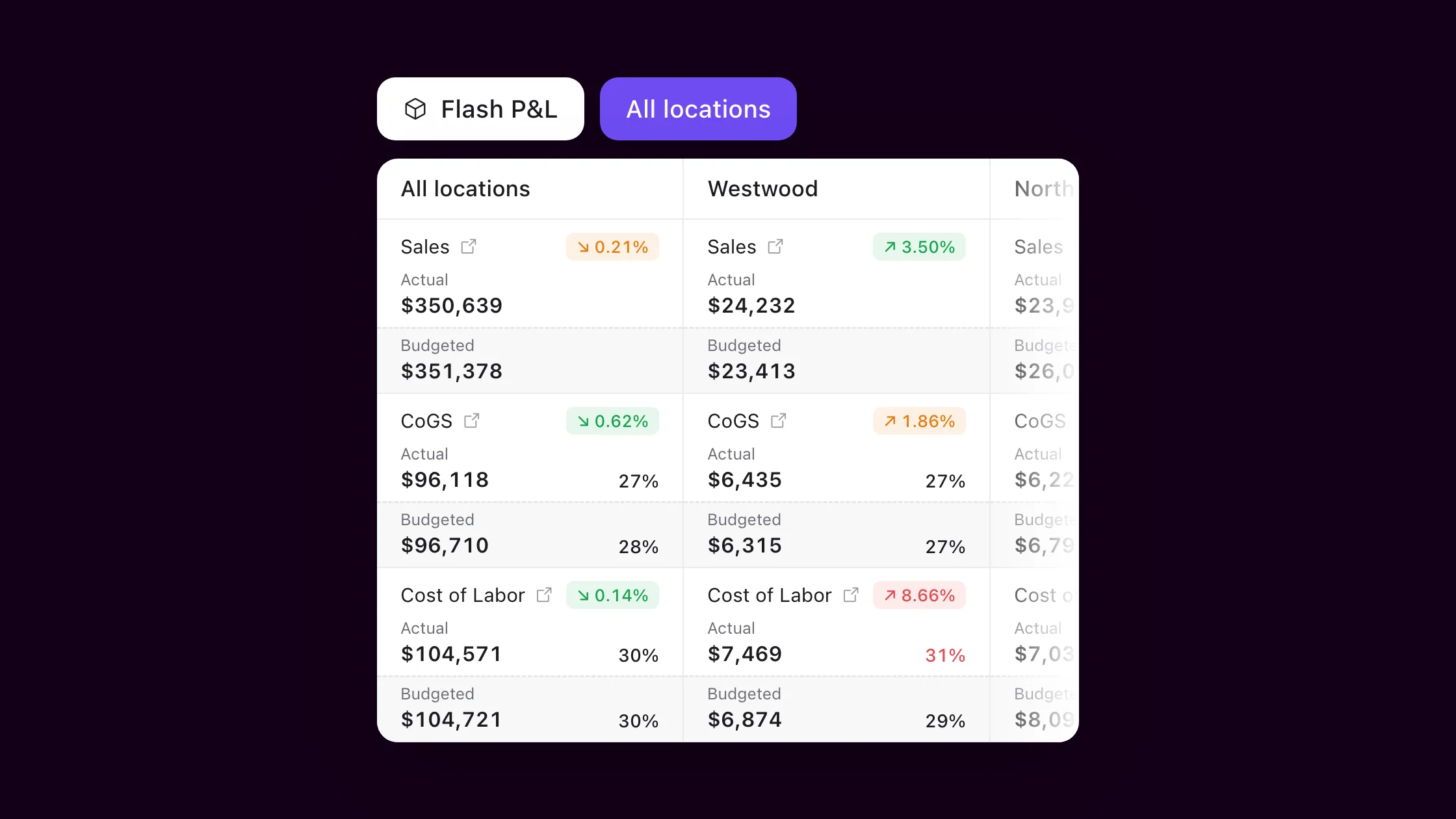
Instead of asking GMs and operations teams to constantly pull reports, compare numbers, and work out what needs attention, Nory’s AI agents work 24/7 across the operation, flagging issues, making recommendations, and streamlining decisions and actions.
That continuous oversight suits fine dining particularly well. A restaurant can’t always solve a cost problem by simply cutting staff, swapping ingredients, or adding covers. Managers need to protect the experience while making precise decisions about labor, purchasing, waste, and revenue.
Nory gives them a live view across locations, so they can see where performance is moving away from plan and focus their attention where it can have the biggest impact.
When to use Nory: Nory makes the most sense when the complexity of running multiple locations starts to outweigh the simplicity of a spreadsheet. For a fine dining group managing several locations, connecting forecasting, scheduling, inventory, and performance data in one system gives you more control without asking each GM to recreate the same process every week.
Nory in action: Passyunk Avenue used Nory to centralize workforce and inventory management across its five locations, replacing hours of manual Excel work and separate scheduling tools. The group reduced its cost of labor by 26% across its locations, while giving managers real-time visibility into labor costs and making staff scheduling much easier.
Want to see what this could look like across your restaurants? Get in touch with Nory to see how we can help your fine dining team take control of prime cost.
Disclosure, sources, and methodology
Nory is an agentic AI restaurant operating system for multi-site restaurants. In this article, we’ve said where Nory fits rather than presenting the product as the answer to every fine dining challenge.
We’ve named Nory’s own customer results and separated those figures from wider industry benchmarks. We’ve dated benchmarks where possible and left out restaurant statistics that we couldn’t trace to a reliable source or publication year.
The wage and scheduling section provides general operating guidance, not legal advice. Rules vary by state and locality, so check the requirements that apply to your restaurants before making changes.