Restaurant data management: Why timing matters as much as the data

Restaurants have more data than ever. Sales by the minute, labour by shift, inventory levels, forecasts, dashboards, and reports – the list goes on.
Yet many operators still manage operations reactively instead of using the data to make informed decisions ahead of time.
So what’s the disconnect here? Why aren’t operators using data to be proactive instead of reactive?
Because a lot of operators don’t have the right data.
At the moment, most operators are still relying on data that tells them what has already happened. You need the right information, in context, early enough to act on it. Data that only tells you what happened last week can explain the result, but it can’t change the outcome.
So let’s take a deeper look at why restaurant data arrives too late to drive better decisions, and what operators can do to make their restaurant data management more useful.
Why retrospective data gives operators the illusion of control
Retrospective data gives you a clear view of past performance. That visibility can feel like control even when you can no longer change the outcome.
Operators review weekly labour percentages and monthly financial reports, discuss what went wrong, and decide what they’ll do differently in the future. Then the next week starts, and the same reports arrive in the same format, after the same delay.
This restaurant reporting cycle gives leaders plenty to review, but not necessarily the information they need to intervene at the right time.
Teams feel pressure to improve results without enough visibility to prevent the same problems from happening again, and management conversations focus on explaining past performance rather than changing future results.
The problem becomes clearer when you look at how the different parts of an operation connect:
- Demand creates workload
- Workload determines how much labour a restaurant needs
- Labour affects the final result
When operators can’t see those relationships while they still have time to act, they end up managing symptoms rather than causes.
Labour percentages show that something went wrong, but they don’t necessarily show why it happened or give operators enough warning to fix it. The numbers change, but the underlying problem remains.
Recommended reading: Hospitality operators are using real-time restaurant BI: Here’s why.
Why revenue alone doesn’t tell the full story
Revenue can tell operators how much they sold, but it doesn’t tell them what drove demand or how much labour that demand required.
Think about it like this: a 25% increase in sales can mean very different things operationally. More covers could drive the increase, creating more work and a greater need for labour. Catering or a shift in sales mix could push up average spend without creating the same workload.
A restaurant serving 200 covers at £20 average spend needs a different staffing model from one serving 100 covers at £40.
Operators need to separate demand drivers from workload drivers to understand staffing performance properly. Strong revenue can make an operation look healthy when the restaurant has actually taken on more work than its labour plan accounts for.
A flat revenue week can also lead operators to cut staffing when changes in demand have created a different workload.
Revenue alone can’t show those differences. Operators need connected, usable data that puts sales, demand, workload, and labour into context. Without that context, more data won’t necessarily lead to better decisions.
Recommended reading: How to create a demand based schedule.
Why fragmented data slows down restaurant decision making
When sales, labour, inventory, and forecasting data sit in separate systems, operators have to piece together the information before they can see what’s really happening.
Most operators use different systems to track different parts of the business: one for sales, one for labour, and one for inventory. Each system shows part of the picture, but none shows how those parts connect.
Managers then bridge the gaps themselves through spreadsheets, Monday morning meetings, and conversations with colleagues who may be working from different sets of data.
By the time managers pull everything together, the opportunity to act and make a difference to the bottom line is long gone. Teams spend time working out what happened instead of using the information to change what happens next.
Morgan Evans, Retail Finance Manager at Pieminister, describes the problem simply:
We had lots of data, but not enough clarity.
Once the business combined its performance data in a single view with Nory (an agentic AI restaurant management system), teams could move from reviewing performance after the fact to shaping it during the week. The data itself didn’t change, but the timing and context did.
Black Sheep Coffee also saw the same value in connecting its data with Nory.
Urszula Spires, Head of Operations, explained:
As we scale, having forecasting, labour and inventory connected in one place means every new site launches into an already established operating model. Growth stops creating additional operational complexity. The controls are already there from day one.
For multi-site operations, every new location adds more manual work, more reconciliation, and more opportunities for teams to work from different information.
Connected data reduces that complexity by giving teams a shared view of performance while they still have time to act, rather than after the results have already landed.
Why real-time restaurant data management changes what operators can do
Data only becomes useful for decision-making when operators receive it early enough to act on it.
A team that reviews labour performance on Friday, after the week has closed, can explain what happened. But a team that reviews live productivity signals on Tuesday morning? They can adjust shifts before payroll closes.
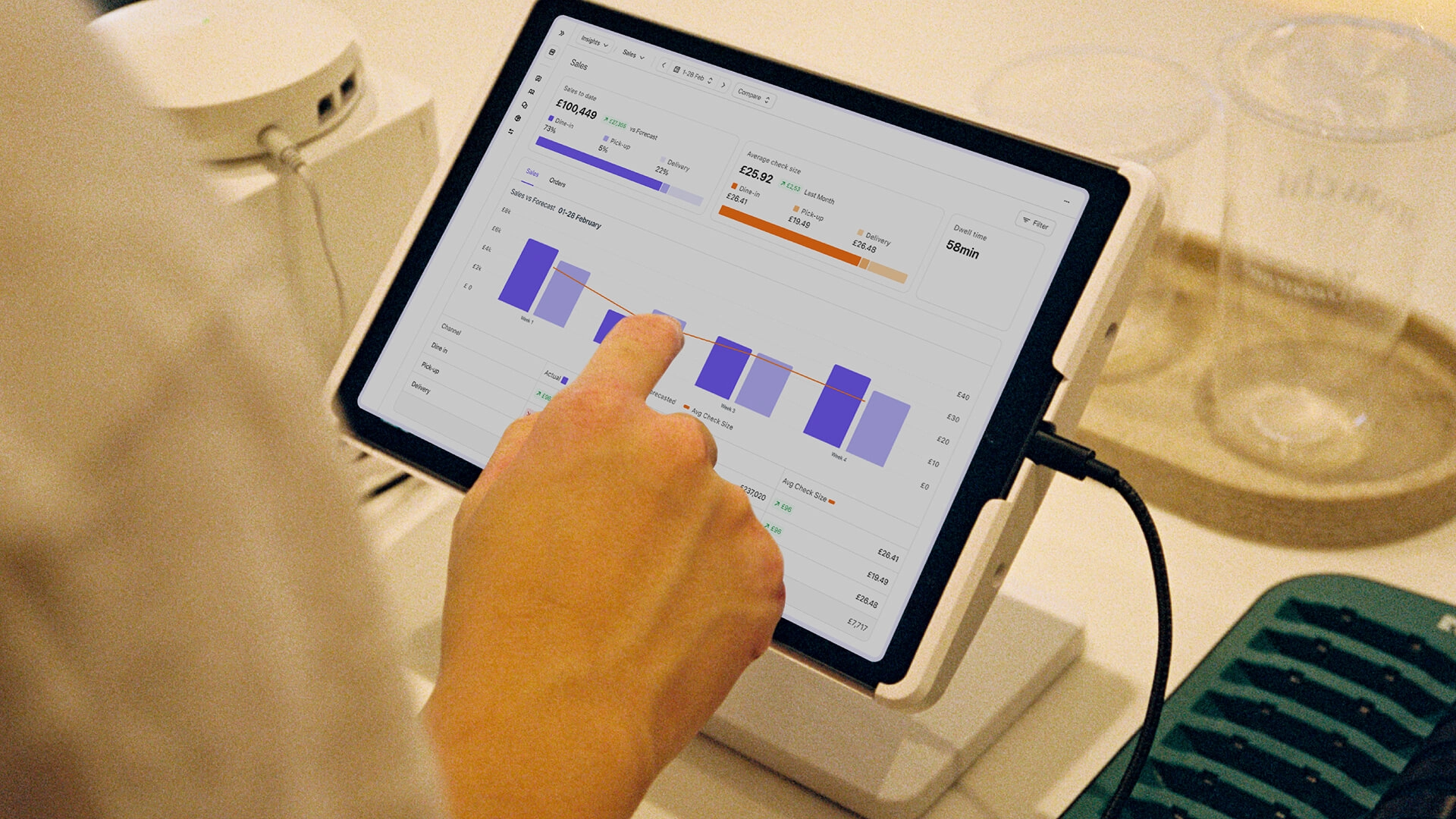
Look at Nory as an example. The restaurant management software gives operators a live view of sales, labour, and inventory. So instead of waiting for the weekly report to show that labour ran over plan, you can see what’s happening during the week and make adjustments before the final numbers land.
The answer isn’t simply to collect more data. Operators need real-time hospitality data, in context, in a single platform, while they still have time to change the outcome.
Moving from reviewing results after the week ends to adjusting operations during the week gives teams more opportunities to protect margin.
This article draws on research and operator perspectives featured in The Definitive Guide to Restaurant Success in 2026, produced in partnership between Benchmark Sixty and Nory. Download the full guide here.