Hospitality operators are using real-time restaurant BI: Here’s why

The Future of Restaurant Tech series is a field guide for multi-site operators rebuilding for the next decade. Each article looks at what changes when the traditional restaurant tech stack is replaced by an agentic AI operating system.
We break down what each tool in the old stack did, what’s changing, and what the replacement looks like. We also cover migrations, including trade-offs, timelines, and what to keep versus what to replace. By the end, you’ll have a clear view of where restaurant tech is heading and how to think about rebuilding your stack over the next 5–10 years.
1. How agentic AI is upgrading your 2026 restaurant tech stack
2. The reinvention of workforce planning with restaurant scheduling AI
3. Fixing inventory management with agentic AI restaurant ordering
4. Why restaurants are moving toward agentic AI systems to manage payroll
5. Hospitality operators are using real-time restaurant BI: Here’s why
6. The future of restaurant compliance: From manual checks to AI assistants
7. How to migrate from your old restaurant tech stack to an agentic AI operating system
Agentic AI systems are providing operators with real-time insights
Restaurant BI tools all solve the same core problem. They aggregate data from across POS, payroll, labour, and ordering systems into a single view. For years, that was the best option operators had.
But operators are now running into a structural limitation: aggregation isn’t the same as real-time truth.
A dashboard that reports on yesterday can't change what happens today.
Agentic AI systems are the solution, providing operators with real-time insights directly from the same system that runs the business. It doesn't just show you the numbers but acts on them, making changes and suggestions to improve your operations and boost profits.
But what does this mean for your daily operations? How does it work? And is a real-time operating system really any better than a basic BI tool?
Keep reading to find out.
The hidden trade-off in using traditional BI dashboards
Most BI tools in hospitality are built as data aggregators, pulling information from multiple systems:
- POS systems for sales
- Scheduling tools for labour
- Payroll systems for wages
- Ordering platforms for COGS
Then they unify it into dashboards and reports that you use to make decisions about your bottom line.
But the problem lies in how accurate and up-to-date all that information is.
Every BI system inherits the freshness, accuracy, and limitations of its weakest upstream source.
Think of it like this:
- If your payroll syncs overnight, your “real-time” labour data is delayed
- If your POS updates hourly, sales lag behind reality
- If integrations fail or batch late, “real-time” becomes “whatever last synced successfully”
So when a dashboard says “live”, it usually means as recent as the slowest system in your stack.
That delay has a big impact on your bottom line. Operators need to adjust staffing, pricing, ordering, and promotions mid-service in order to remain as profitable as possible (because we all know how thin margins are as is).
The shift from aggregation to native, real-time data
Instead of pulling information from multiple disconnected systems, an operating system uses a unified data model. This means that every operational action and sales activity sits in the same system
Forecasting, scheduling, ordering, payroll, and POS activity are all part of one platform.
So when something changes in service (like a surge in diners, a staffing adjustment, or a spike in supplier prices), the BI layer doesn’t wait for syncs. It reflects it immediately because the data never left the system in the first place.
What changes operationally for restaurant operators
For operators, this shift towards native, live data changes how you make decisions inside your restaurant.
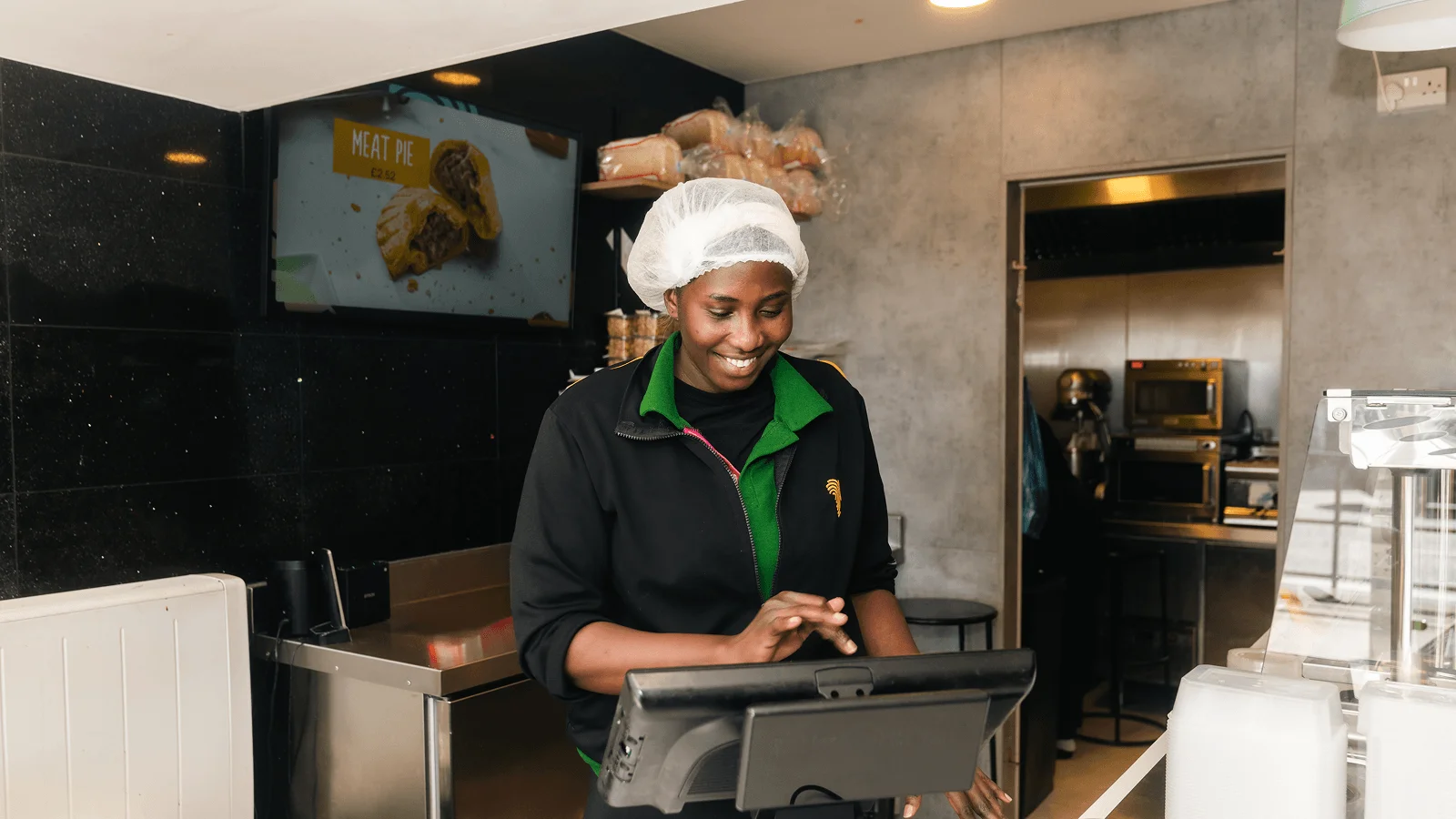
Instead of waiting until next week to understand performance, you can see prime cost (labour + COGS) as it accrues during service. That means you can make decisions while they still matter:
- Adjust staffing mid-shift
- Tweak prep levels during service
- Respond to demand spikes before they erode margins
Forecasting is another area that informs your decisions.
In traditional BI, comparing forecasts to actual performance means pulling data from multiple systems and reconciling time periods. In an operating-system, you generate numbers from the same environment.
This means that your comparison is immediate and always aligned.
To sum it up: Instead of asking “what happened last week?”, you can ask, “are we on track right now?”
How does generative data impact multi-site restaurants?
Generative data creates a single source of truth, giving operators instant access to consistent, live performance data across every location.
As restaurant groups grow, visibility becomes harder. The more sites you operate, the more difficult it is to understand what's happening across the business in real time. But with a single, generative operating system, you can see everything you need in one system.
Look at Nory as an example. Our real-time business insights show a live P&L across every site, meaning you can make fast and informed decisions about how to keep profits healthy.
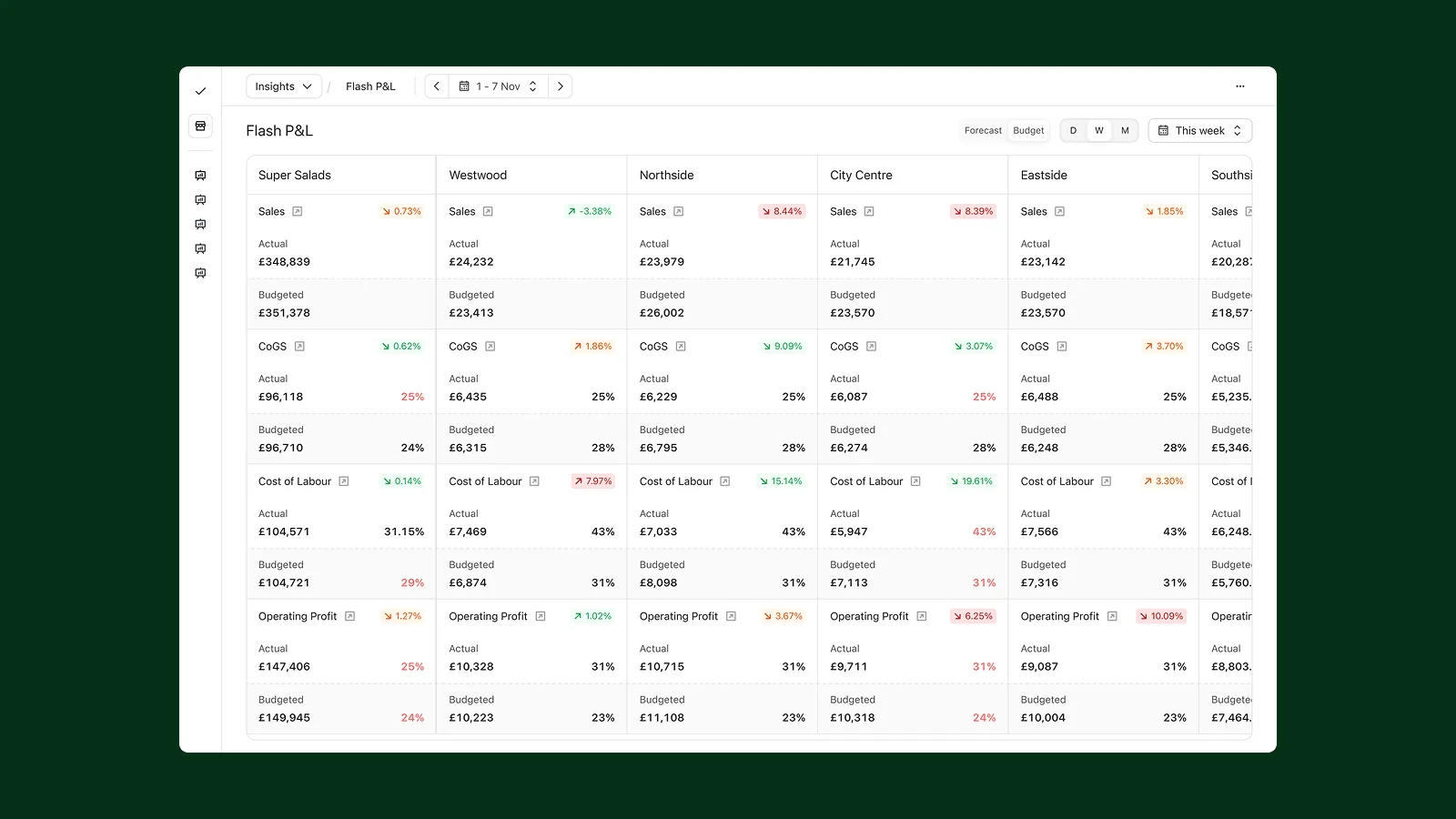
Multi-site operators can also struggle with inconsistent reporting structures. One site might label costs differently, another might lag in updates. Regional consolidation becomes a manual exercise.
In a unified system, all site data sits in the same location. You can see performance in real time, compare it side-by-side, and make smarter decisions that actually impact profitability.
For example, if one location is consistently achieving lower labour costs while maintaining strong sales, operators can quickly identify what's working and apply those practices across other sites.
Instead of waiting for monthly reports, you can benchmark performance continuously and respond while opportunities still exist.
Recommended reading: How to choose restaurant business intelligence software in 2026: A buyer's guide.
Why this shift to native data is happening now
Restaurants have invested heavily in technology over the last decade. Most operators already use digital schedules, POS systems, inventory platforms, payroll software, and forecasting tools.
The problem isn't a lack of data, it’s that the data lives in different places.
For years, BI platforms helped bridge that gap by bringing information together after the fact. That worked when decisions were made weekly or monthly.
Today, restaurant operations move faster. As a result, waiting for systems to sync or reports to update simply isn’t working.
Operators increasingly need insights at the same moment they're making decisions. This is exactly why the industry is moving away from aggregated reporting and toward systems where operational data is generated, analysed, and acted on in one place.
What stays the same: Finance ownership and accountability
None of this changes the role of finance professionals. CFOs still own the numbers, finance teams still manage monthly close, and auditors still need accurate records and clear reporting.
What changes is the amount of manual work required to get there.
When operational data is generated from a single system, teams spend less time reconciling conflicting reports and more time analysing performance. Instead of questioning the data, they can focus on what it's telling them and use it to make better decisions.
Where real operators are already seeing impact
Operators are using real-time visibility to make better decisions across labour, forecasting, and multi-site performance.
Look at Badiani as an example. Using Nory's restaurant operating system, the business was able to maintain quality while expanding into new locations. How? By giving teams real-time visibility into inventory, sales, and demand across every site.
With live data and sales forecasts reaching 96% accuracy, Badiani optimised production, managed inventory more effectively, and delivered the same high-quality customer experience in every location.
Use Nory to bring operations and intelligence together
Restaurant operators need faster answers and clearer visibility into what's driving performance.
That's why the industry is moving beyond traditional BI dashboards and toward systems that generate and act on data in real time. Instead of navigating dashboards and filtering reports, they're looking for instant answers to questions like:
- Why was labour higher than expected on Saturday?
- Which sites are outperforming forecasts this week?
- Where are food costs increasing fastest?
Nory's Business Intelligence brings forecasting, labour, ordering, payroll, and sales data into one place, giving operators a complete view of performance as it unfolds.
Book a chat with the team to see how you can spend less time analysing the past and more time improving what's happening right now.
Read the next blog in our Future of Restaurant Tech series: The future of restaurant compliance: From manual checks to AI assistants.