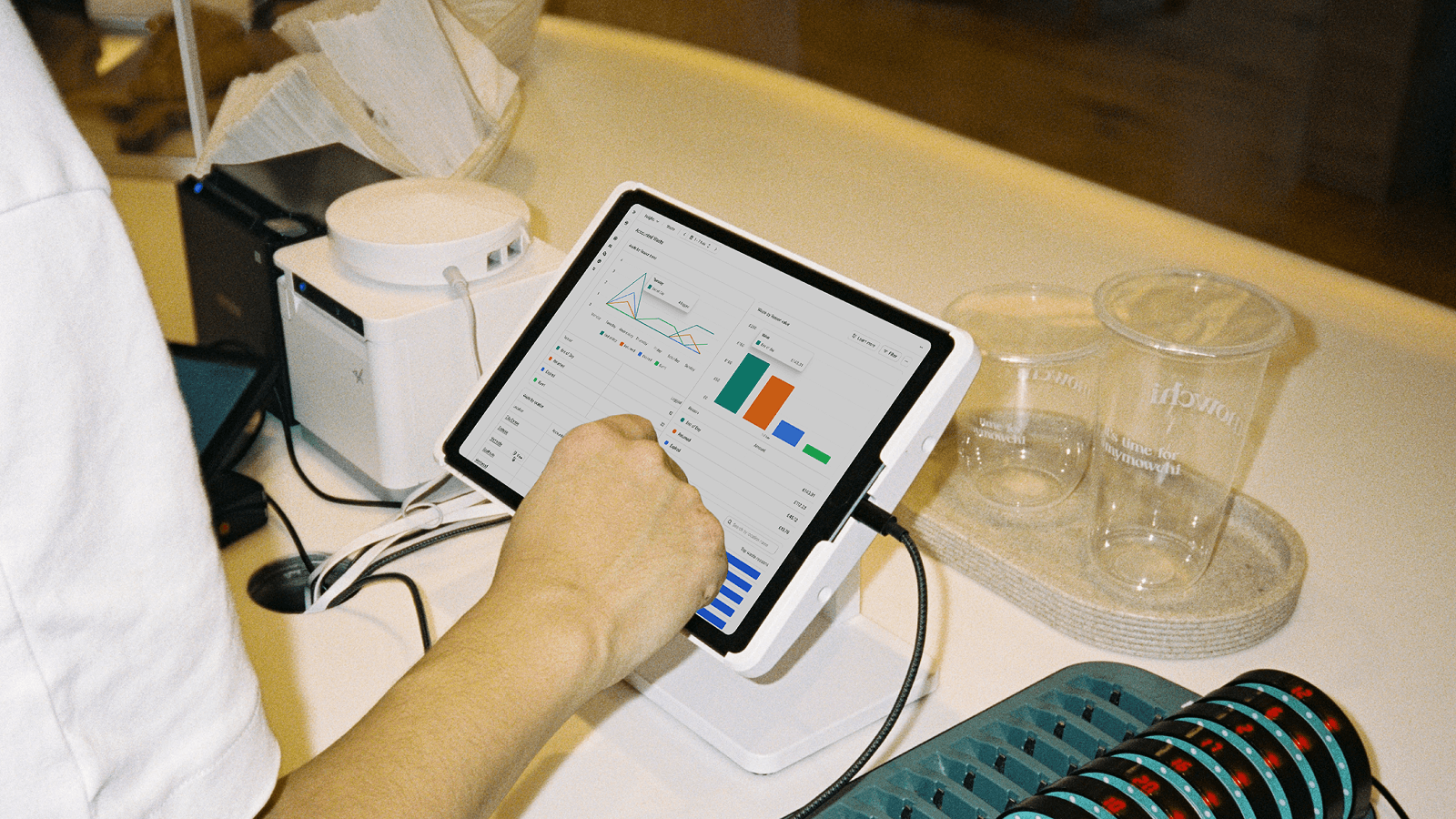
How agentic AI is upgrading your restaurant tech stack in 2026

The Future of Restaurant Tech series is a field guide for multi-site operators rebuilding for the next decade. Each article looks at what changes when the traditional restaurant tech stack is replaced by an agentic AI operating system.
We break down what each tool in the old stack did, what’s changing, and what the replacement looks like. We also cover migrations, including trade-offs, timelines, and what to keep versus what to replace. By the end, you’ll have a clear view of where restaurant tech is heading and how to think about rebuilding your stack over the next 5–10 years.
1. How agentic AI is upgrading your 2026 restaurant tech stack
2. The reinvention of workforce planning with restaurant scheduling AI
3. Fixing inventory management with agentic AI restaurant ordering
4. Why restaurants are moving toward agentic AI systems to manage payroll
5. Hospitality operators are using real-time restaurant BI: Here’s why
6. The future of restaurant compliance: From manual checks to AI assistants
7. How to migrate from your old restaurant tech stack to an agentic AI operating system
The shape of the old stack
Most modern restaurants don’t really run on one system. They run on five, sometimes seven separate tools.
The old restaurant tech stack has a recognisable shape across most multi-site operators:
- The POS. The system that records customer orders and processes payments. It captures every transaction, applies discounts and taxes, and produces the core sales data for each site.
- The scheduling tool. Software used to create staff rotas, assign shifts, and record time and attendance. It logs hours worked and shift patterns across teams and locations.
- The inventory system. Software that tracks stock levels, records deliveries from suppliers, and monitors ingredient usage. It supports stock control, food cost calculation, and supplier ordering.
- Payroll. Systems that calculate employee pay based on hours worked, apply tax and deduction rules, and process payments on a regular cycle.
- BI and reporting tools. Platforms that consolidate data from multiple operational systems and present it in dashboards and reports covering sales, labour, and performance metrics.
- HR systems. Software used to store employee records, manage onboarding, maintain contracts, and handle compliance documentation.
- Accounting platforms. Financial systems that record income and expenses, manage invoices, and produce financial statements such as the profit and loss account.
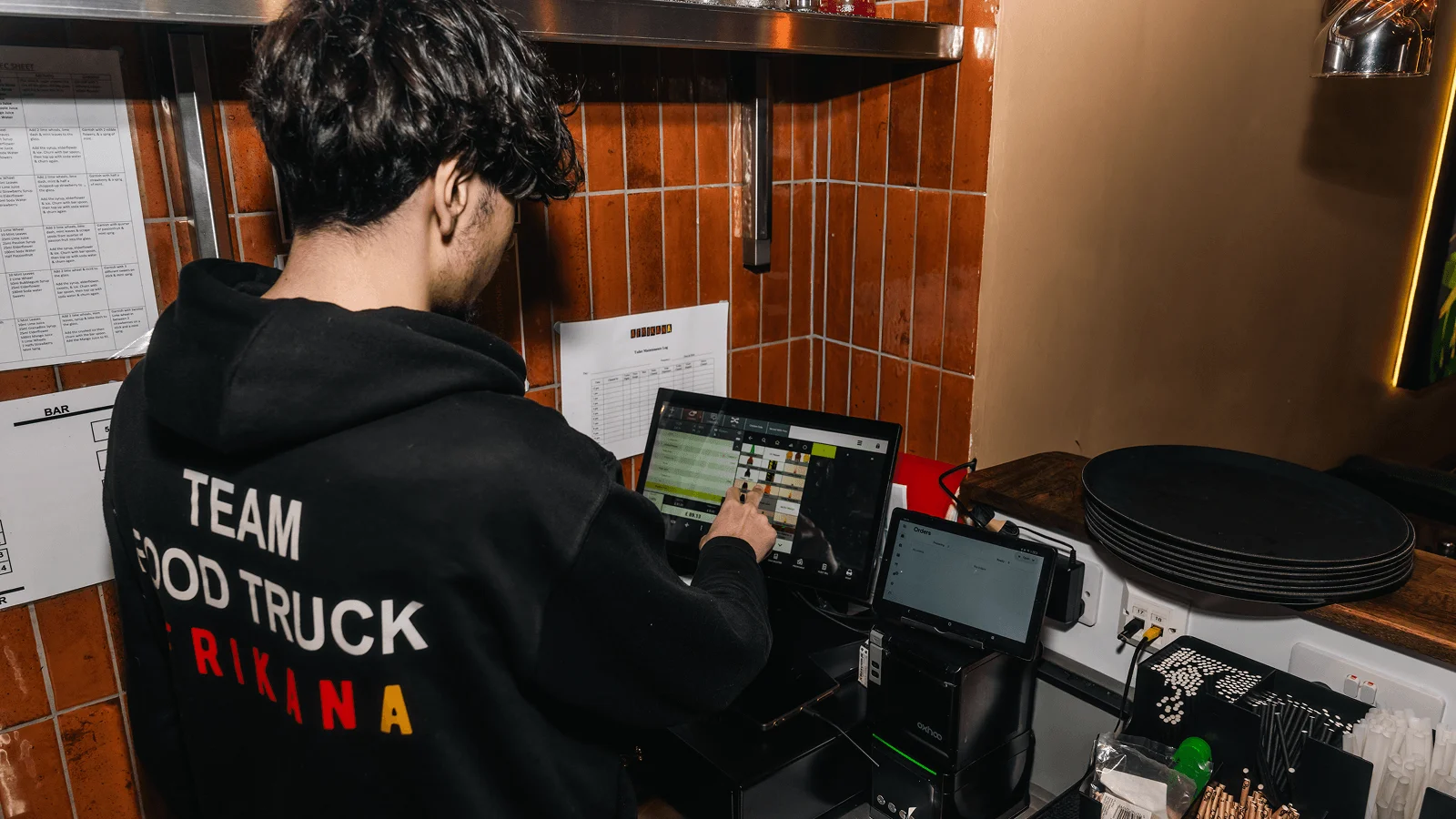
Almost always, there’s a web of integrations holding everything together – although varying in quality.
Most multi-site operators have 10-20 active integrations between these tools, often with no single owner and limited monitoring. When something breaks, the operations team spends hours reconciling rather than running the restaurant.
This shape made sense when:
- Each tool needed to specialise to be credible
- AI wasn't capable of running operational areas autonomously
- Operators valued the optionality of swapping any single tool
In 2026, all three of those assumptions are starting to break down. Tools can be deep and well-integrated when they sit inside the same platform.
Why this restaurant tech stack is a bottleneck for growth
For a long time, this structure made sense. Specialised tools for specific jobs, stitched together into something that worked well enough.
The compromise was accepted as part of the deal: a bit of data lag, the occasional sync failure that put labour or food cost data temporarily out of step, and a weekly P&L that only told you what happened last week – not what’s happening right now.
In 2026, these trade-offs are starting to wear thin. Not because the individual tools are getting worse (if anything, they’re getting better), but because:
- The more tools you add, the harder everything becomes to hold together. Each new system brings more connections to manage, more things that can quietly break, and more small changes from vendors that ripple across the whole stack.
- The delay in your data is also harder to ignore now. In other industries, teams are working almost in real time. In restaurants, it’s still common to be making decisions from reports that are already days old by the time you see them.
- And then there’s AI, which changes the question entirely. If systems can now handle forecasting, scheduling, ordering, and payroll on their own, it stops being about picking the “best” tool for each job. It becomes a simpler question: why are we still pulling all of this together manually at all?
AI is now capable of running whole operational areas in a meaningful way. And optionality matters less when the cost of keeping it (through integrations, maintenance, and complexity) keeps going up.
How AI for restaurants is solving these problems
Instead of each operational area living in a separate system, agentic AI platforms bring those functions into a single operating layer.
Forecasting, scheduling, ordering, payroll – they’re no longer isolated workflows with integrations. Now, they’re now connected processes with AI agents able to move between them, adjust in real time, and act on live data rather than static reports.
That changes a few things at once:
- First, the integration problem starts to disappear. When everything sits in the same system, there’s far less need for constant syncing between vendors, fewer points of failure, and less manual checking to make sure numbers match up.
- Second, decisions move closer to real time. Instead of waiting for weekly reports or end-of-period summaries, operators are working from continuously updated signals. Real-time sales, labour, stock, and demand forecasts are all feeding into the same model.
- And finally, the role of software itself changes. Tools stop being things operators have to configure and reconcile, and start behaving more like systems that can execute work on their behalf.
In the rest of this blog series, we break down how this applies to each part of the traditional tech stack. From scheduling through to inventory, we explore what actually changes when AI restaurant management sits underneath it all so you know how to use the tech to get the best results.
Or to find out more about using an agentic AI operating system, book at chat with the team at Nory.
Read the next blog in our Future of Restaurant Tech series: The reinvention of workforce planning with restaurant scheduling AI.