The future of restaurant compliance: From manual checks to AI assistants

The Future of Restaurant Tech series is a field guide for multi-site operators rebuilding for the next decade. Each article looks at what changes when the traditional restaurant tech stack is replaced by an agentic AI operating system.
We break down what each tool in the old stack did, what’s changing, and what the replacement looks like. We also cover migrations, including trade-offs, timelines, and what to keep versus what to replace. By the end, you’ll have a clear view of where restaurant tech is heading and how to think about rebuilding your stack over the next 5–10 years.
1. How agentic AI is upgrading your 2026 restaurant tech stack
2. The reinvention of workforce planning with restaurant scheduling AI
3. Fixing inventory management with agentic AI restaurant ordering
4. Why restaurants are moving toward agentic AI systems to manage payroll
5. Hospitality operators are using real-time restaurant BI: Here’s why
6. The future of restaurant compliance: From manual checks to AI assistants
7. How to migrate from your old restaurant tech stack to an agentic AI operating system
Why AI is becoming a key pillar of restaurant compliance
Most restaurants don’t really have a “compliance system”, at least not in the way that they do for payroll or bookings. Instead, compliance ends up spread across a bunch of tools and processes.
For a lot of operators, this creates a constant blind spot. They spend time checking schedules, chasing updates from HR, and pulling payroll or training data together just to understand whether everything is compliant.
So what’s the solution here?
To put it bluntly, agentic AI.
In this article, you’ll learn how agentic AI brings live operational data into one place and flagging compliance risks as they form. Keep reading to see how you can use the technology to manage compliance in real time.
How agentic AI systems are changing the way operators manage compliance
Agentic AI systems monitor live operations and flag compliance risks as they form, instead of waiting for reports or audits.
Ultimately, this changes how you manage compliance. By connecting to live operational data and watching for risk in real time, the software can flag issues when patterns start to drift outside compliance rules.
This means less time spent manually keeping on top of compliance and more time focusing on other areas of operations (like increasing margins).
Say that a site starts consistently rostering staff into late finishes that push them close to working time limits. The system flags the pattern early so you don’t have to worry about keeping on top of it.
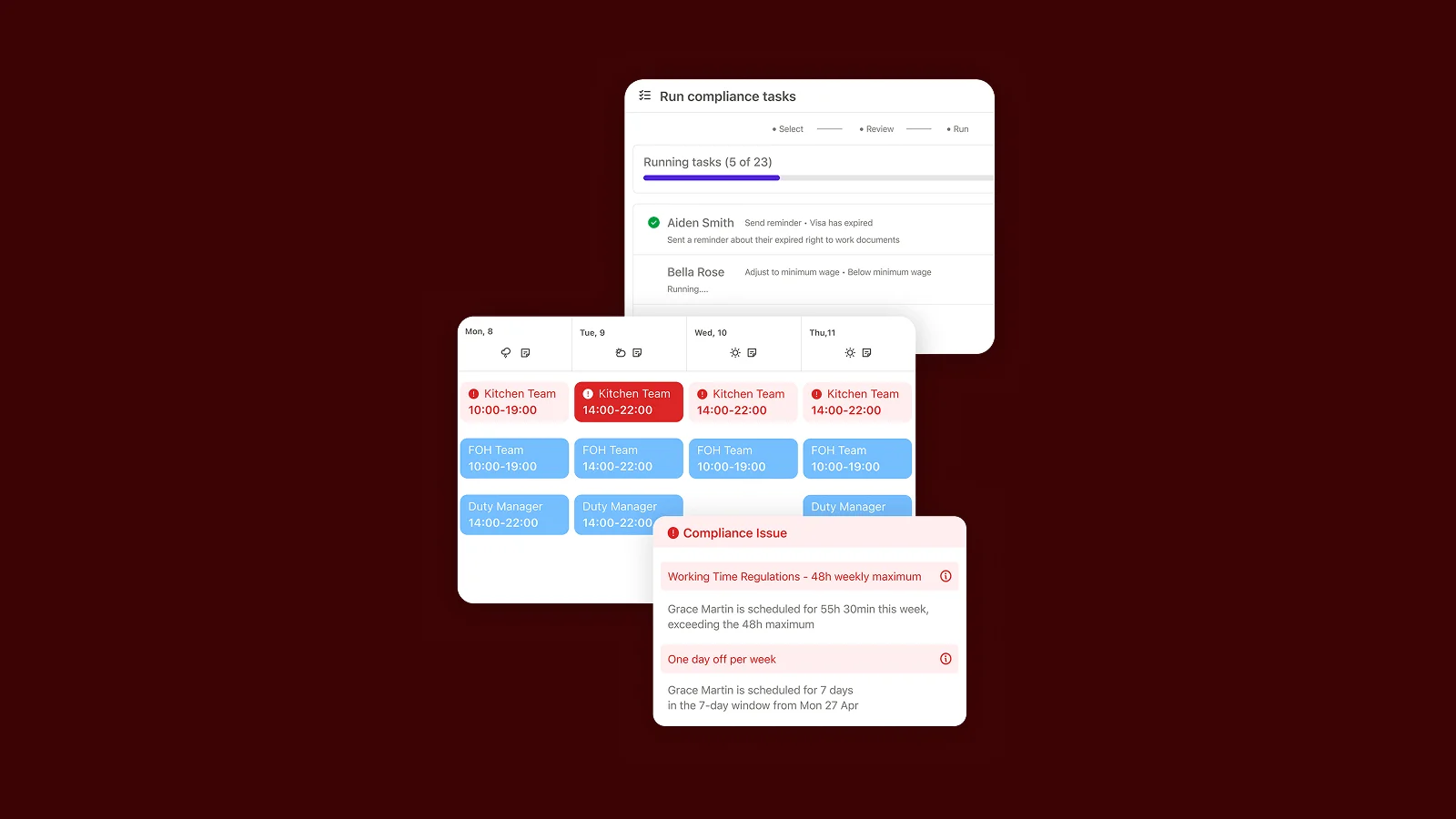
You can then adjust rotas or staffing levels before it becomes a breach or shows up in payroll issues.
In disconnected and non-AI systems, this simply isn’t possible.
You might have a system handling schedules to comply with labour rules, HR systems storing contracts and policies, and food safety monitoring in checklists and training records. The problem with this setup is that nobody is really seeing the full picture at once.
Plus, there’s no proactive compliance management here. It’s on the manager to keep track of all these elements and ensure everything follows the right rules and regulations.
Recommended reading: Find out more about how to reduce restaurant labour costs without cutting hours.
A different approach: Using Nory’s Compliance Assistant to get stay on top of regulations
Nory’s Compliance Assistant tracks live operations and flags risks across labour, payroll, menus, and multi-site activity before issues escalate.
Put simply, the Compliance Assistant tracks what happens across the business in real time. The system connects directly to the day-to-day running of the business (scheduling, time and attendance, payroll, menus, and multi-site activity) and flags compliance risks as they appear.
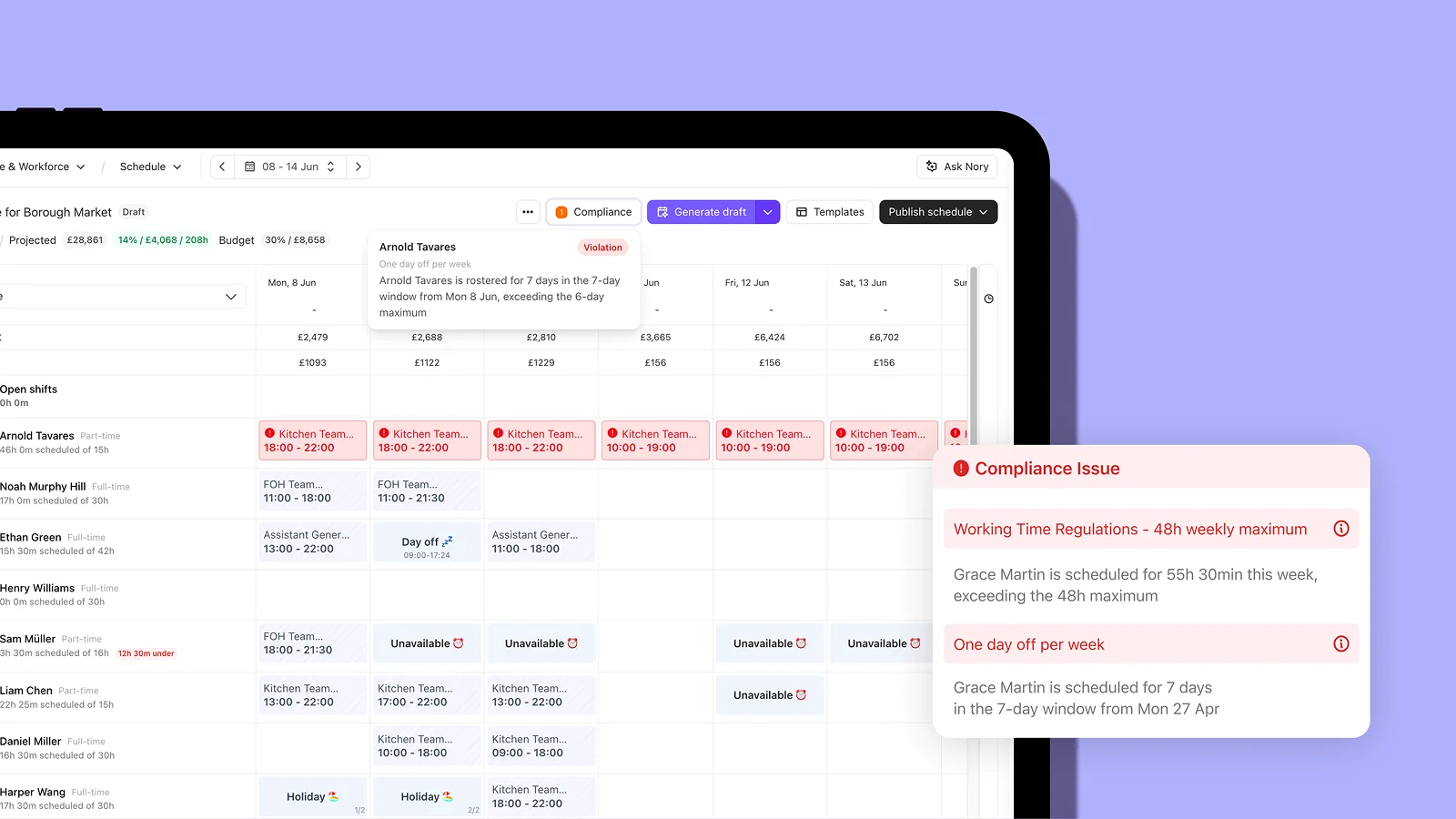
So instead of relying on end-of-week checks or pulling reports across different systems, you can see issues as part of live operations. That gives you a clearer view of risk so you can fix problems earlier and avoid chasing issues after they’ve already happened.
Here’s a quick overview of how it works:
What changes operationally when you use agentic AI for compliance?
The short answer is that operators can spot compliance risks earlier and fix them before they escalate. It changes how you handle day-to-day risk, highlighting issues while they form instead of after they happen.
Let’s take a look at some of the operational benefits in more detail:
Working hours get flagged before they breach limits
The system flags working time risks early so operators can prevent breaches before payroll or fines occur.
Most working time issues build up slowly, like when staff pick up extra shifts or teams swap schedules. Operators usually see the issue after payroll closes or during reporting cycles.
With real-time compliance software, the system spots these risks as they appear. It highlights when staff approach legal limits, miss rest breaks, or accumulate excess overtime so you can step in and make changes before it’s too late.
Allergen compliance stays aligned with menu changes
The system checks allergen data against menus in real time and flags mismatches before anything goes live.
We all know that menus change often, and ingredients change even more, but allergen compliance depends on accuracy across menus, ingredients, and updates. The risk of cross-contamination or poor allergen management becomes even higher if updates don’t sync in real-time.
With an agentic AI system, the technology checks allergen data every time a menu changes. It flags mismatches before teams publish updates, meaning that operators reduce reliance on manual checks and lower the risk of incorrect information reaching customers.
Tipping and tronc follow one consistent rule set
The system applies consistent tronc and tipping rules across all sites and creates clear audit trails for every allocation.
Tipping systems often drift over time. Sites apply different interpretations, payroll adjustments happen manually, and small inconsistencies build up.
An agentic AI system removes that variation, applying the same rules across every site and logs every allocation. Operators keep control, but they remove ambiguity from the process.
Multi-site compliance stays consistent across locations
The system standardises compliance rules across all sites so operators reduce variation and local workarounds.
Multi-site operators often face uneven compliance standards across locations, and these small differences build up in how teams apply rules.
With an agentic AI system, you can apply consistent checks across all sites.
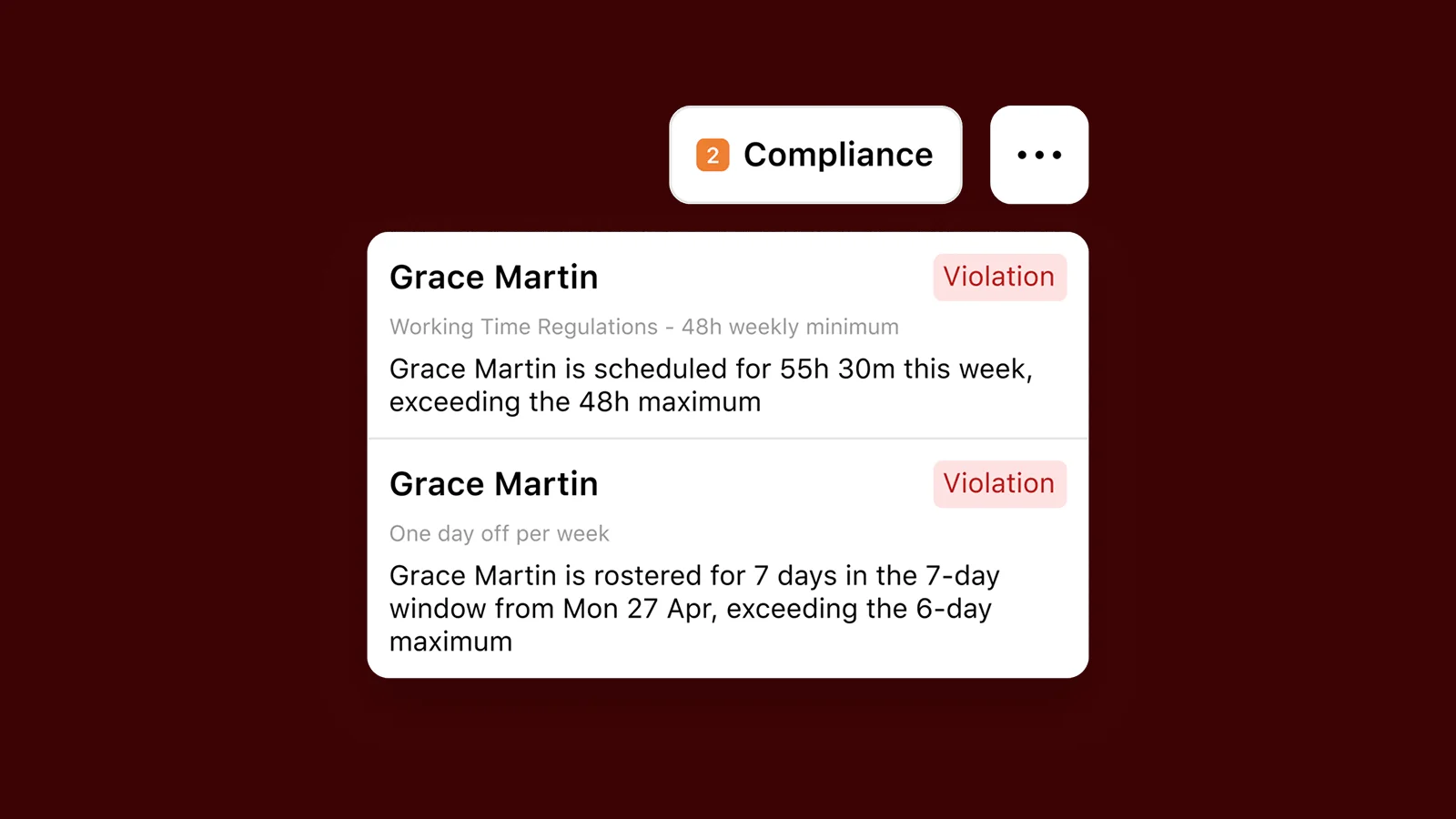
For example, if one site schedules a team member that pushes them over their legal working hours limit, the system flags it immediately in the same way it would flag the same issue in any other location.
Or the system might highlight when menu updates go live in one location but fail to sync allergen data in another.
This means that operators reduce drift between sites and maintain a clearer group-wide standard.
Recommended reading: Find out more about the compliance problem with multi-site restaurants and what it actually looks like for operators.
Where human input is still needed
The Compliance Assistant flags risks early, but operators stay in control of decisions, escalation, and compliance strategy.
Let’s break it down:
The Compliance Assistant helps teams see what’s going on across the business in real time, but it doesn’t take decisions out of operators’ hands. It flags risks, patterns, and inconsistencies as they appear, but operators decide what to do next.
That includes how seriously to take an issue, whether to escalate it, and how to respond based on the context of the business.

For example, the system might flag repeated instances of staff missing rest breaks across a specific site. An operator might choose to adjust schedules immediately to fix the issue. Or, they might look deeper to understand whether it’s a training problem, a staffing issue, or a one-off driven by a busy trading period.
The same applies to compliance strategy decisions.
If a regulator raises a question about working time records or tronc allocations, the system can surface the relevant data quickly and show where risks may exist. But the operator decides how to respond, whether to challenge the interpretation, and how far to go in remediation.
In summary: The Compliance Assistant improves timing and visibility, helping operators act with better information, earlier. However, it doesn’t replace the judgment needed to run a business day to day.
Where agentic AI compliance software is heading in the future
Compliance is moving from manual reporting and reactive checks to continuous monitoring, automated documentation, and real-time regulatory updates built on live operational data.
Compliance data won’t live in spreadsheets, end-of-month reports, or last-minute audit prep for much longer. Instead, it’ll run in the background of day-to-day operations.
The systems will also continue to automate key parts of compliance processes. Filings will pre-fill from real activity, audit packs will assemble themselves, and regulatory changes will get flagged early (with context on what needs to change in practice).
Operators will still make the decisions, but they work from live information rather than delayed reports. This means less reactive work and better compliance alignment with your daily operations.
Streamline restaurant compliance with Nory’s agentic AI
Agentic AI helps restaurant operators remain compliant by analysing live operational data, flagging risks early, and reducing reliance on manual reporting and end-of-week checks.
That shift changes how teams manage day-to-day risk. Instead of pulling reports from different systems after the fact, operators see issues as they start to form and can act before they escalate.
That’s exactly what Nory’s Compliance Assistant is built for. The software brings labour, payroll, menus, and multi-site activity into one live view. As a result, operators can spot risks in real time and fix issues before being non-compliant.
If you want to see how it works in practice, book a chat with the Nory team.
Read the next blog in our Future of Restaurant Tech series: How to migrate from your old restaurant tech stack to an agentic AI operating system.