
How to calculate holiday pay for irregular hours workers (and why most restaurants get it wrong)

Key takeaways
- Calculate holiday accrual at 12.07%: Eligible irregular-hours and part-year workers accrue 12.07% of the hours they work in each pay period, for leave years starting on or after 1 April 2024.
- Separate holiday accrual from holiday pay: The 12.07% rate calculates how much leave a worker earns, while the 52-week reference period generally determines how much they receive when they take it.
- Apply rolled-up holiday pay correctly: Add 12.07% to eligible workers' pay for hours worked and show the holiday pay as a separate item on their payslip.
- Avoid common calculation and record-keeping mistakes: Don't apply 12.07% to all employees, treat part-year workers as regular employees, leave fractional hours unrounded, overlook contractual leave above 5.6 weeks, or rely on outdated contracts and payslips.
Most restaurants are calculating holiday pay wrong. Not because payroll managers aren't paying attention, but because the rules changed in April 2024 and many businesses haven't caught up.
For irregular hours workers (like your zero-hours staff, casual cover, or seasonal hires), the method for calculating holiday entitlement has changed. If you're still running the same calculation you were two years ago, you may be underpaying. And underpayment claims can go back years.
Here's what you need to know to make sure you’re calculating holiday pay correctly for irregular hours workers.
Who counts as an irregular hours worker?
There are two groups of workers who fall into this workforce management category, and the difference comes down to how often they work and when they get paid:
- Workers with irregular hours, whose working hours often change from one pay period to the next. For example, a restaurant employee might work 20 hours one week and 35 the next, depending on how busy the restaurant is.
- Part-year workers, who have at least one week during the leave year when they don’t need to work and don’t receive pay. For example, a seasonal restaurant worker might only work during the summer months, with unpaid time off during the rest of the year.
These two types of roles cover the majority of flexible and casual employees in hospitality: zero-hours kitchen porters, seasonal bar staff, or casual waitstaff for events.
If a worker's hours are set in advance and consistent throughout the entire year, they're not an irregular hours worker for the purposes of these rules. For instance, if they work 20 hours every week with no exceptions, they’re not an irregular worker.
However, part-year workers can have hours set in advance during the periods they agree to work.
Source: GOV.UK: Holiday entitlement
Side note: Nory Payroll works out holiday accrual from the hours each person actually works, so you don't have to calculate it by hand. Find out more about how Nory helps with payroll later in the article.
How did holiday pay for irregular hours workers (UK) change in April 2024?
From April 2024, employers must use a new method to calculate holiday entitlement for irregular hours and part-year workers. Under the new rules, these workers accrue holiday entitlement at 12.07% of the hours they work in each pay period.
For example, if a restaurant employee works 100 hours in a pay period, they accrue 12.07 hours of holiday.

The 12.07% figure comes from the statutory minimum of 5.6 weeks' annual leave, divided by the 46.4 weeks left in the year after deducting holiday entitlement.
The change applies to leave years starting on or after the 1st of April 2024.
Holiday entitlement and holiday pay are two different calculations
The 12.07% holiday pay method tells you how much holiday a worker accrues. It doesn't replace the 52-week reference period used to calculate how much to pay them when they take that holiday.
If you don't use rolled-up holiday pay (more on this later), you generally still need to calculate holiday pay using the worker's average pay over the previous 52 weeks in which they received pay. If you use rolled-up holiday pay, different rules apply.
For a closer look at both methods, see Acas's guide to irregular hours and part-year worker holiday entitlement.
How to calculate holiday pay for irregular hours
Say a casual team member works 30 hours in a pay period. Their accrued holiday entitlement for that period is:
30 × 12.07% = 3.62 hours
If they're paid £12.50/hour, the holiday pay accrued is:
3.62 × £12.50 = £45.25
This accrues each pay period based on actual hours worked, not a fixed entitlement calculated at the start of the holiday year.
Here’s another worked example: A casual team member works 30 hours in a pay period on £12.50 an hour:
Recommended reading: Restaurant compliance for multi-site groups
How to work out holiday pay for days that employees have already taken
The 12.07% method tells you how much holiday an eligible worker accrues, but it doesn’t tell you how much to pay them when they take it. Unless you use rolled-up holiday pay rules (which we talk about in the next section), you generally need to calculate their average pay over the previous 52 paid weeks.
Keep the two calculations separate:
- Holiday accrued. Calculate 12.07% of the hours the worker has worked.
- Holiday they’ve already taken. Use their average pay over the relevant 52-week reference period.
Only count weeks when the worker received pay and exclude weeks without pay, including relevant periods of sick leave or statutory leave. If you can’t find 52 paid weeks, look back to 104 weeks. If the worker still has fewer than 52 paid weeks, use the weeks available.

You also need to account for more than basic pay.
Holiday pay should reflect normal remuneration. This includes payments linked to length of service, seniority or professional qualifications, and overtime the worker regularly received during the reference period.
Some bonuses may also need to count towards holiday pay, depending on what they reward and how they relate to the employee’s work. For example:
- A regular performance bonus linked to targets or work completed may need to count as part of normal remuneration.
- A discretionary, one-off gift may not need to count, depending on the circumstances.
Check the rules for each type of bonus rather than treating them all the same.
Top tip: Use the GOV.UK holiday entitlement calculator to work out how much you owe your employees.
What is rolled-up holiday pay and how does it work?
Rolled-up holiday pay lets you pay eligible irregular-hours and part-year workers their holiday pay alongside their regular wages, rather than when they take annual leave. This means it’s paid at the same time as the work it relates to, rather than when leave is taken.
Workers still have the right to take their full holiday entitlement. They simply receive the holiday pay as they earn it, instead of getting paid when they take time off. The government introduced this option for leave years starting on or after the 1st of April 2024.
To calculate rolled-up holiday pay, add 12.07% to the worker’s pay for the hours they’ve worked in each pay period. You must show the holiday pay as a separate item on their payslip, rather than including it in their hourly rate.
This process can make payroll easier to manage, especially for restaurants with casual staff whose hours change from week to week. You calculate and pay holiday pay each pay period instead of working it out whenever someone takes time off.
However, you’ll need to set up your payroll system to calculate and record holiday pay separately. This is where a restaurant management system like Nory can help.
Nory tracks the hours each employee works and connects that data to your payroll process, giving you a clearer picture of the figures you need to calculate holiday pay. As a result, your team spends less time gathering hours from different systems and more time paying employees correctly.
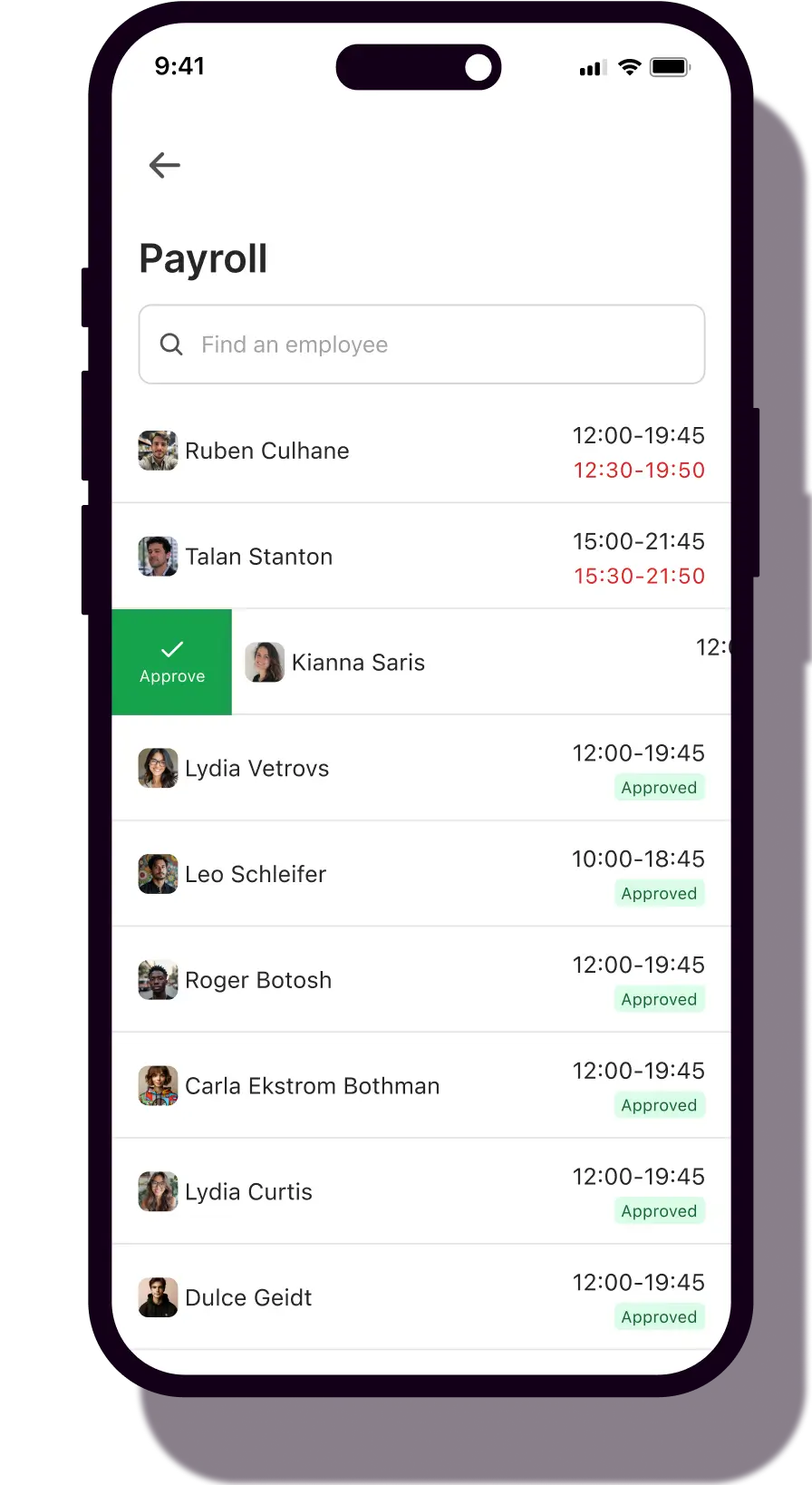
Side note: Read the official guidance on holiday pay and entitlement reforms for more information.
Do the 4 weeks and 1.6 weeks of holiday work differently?
The Working Time Regulations retain two statutory holiday entitlements: four weeks under Regulation 13 and an additional 1.6 weeks under Regulation 13A. However, irregular-hours and part-year workers have specific rules for calculating their holiday pay.
For these workers, you calculate their total statutory holiday entitlement as a single amount, using 12.07% of the hours they work in each pay period. You don't need to calculate separate accrual amounts for the four weeks and additional 1.6 weeks.
When calculating holiday pay, you pay all their statutory leave at a rate based on their total pay. You can do this in two ways:
- Using the 52-week reference period. Calculate holiday pay using the worker's average pay over their previous 52 paid weeks (or however many complete paid weeks are available, up to 52).
- Using rolled-up holiday pay. Add 12.07% of the worker's total pay to each pay packet and show it as a separate item on their payslip.
Both methods apply to leave years starting on or after the 1st of April 2024.
For employees with regular hours: The two portions can include different pay elements. The first four weeks, for example, must reflect normal pay (including payments such as regular overtime and commission), The additional 1.6 weeks can be paid at basic pay, unless a contract or relevant agreement provides otherwise.
Where restaurants get holiday entitlement wrong for irregular hours workers
Most holiday pay mistakes start with classifying workers incorrectly or using the wrong calculations.
Here are seven common errors to check in your restaurant's payroll:
Your paperwork needs to match your payroll, too.
If your employment contracts or payslip templates still describe the pre-April 2024 rules, update them. Outdated documents can contradict the calculations your team actually uses, making it harder to explain your approach if a worker challenges their holiday pay.
The cost of getting restaurant holiday pay calculations wrong
Holiday pay errors can affect every site in your restaurant group, and a single incorrect calculation can leave you facing multiple claims. If your restaurant payroll uses the wrong method, the same mistake could affect every worker covered by it.
The time limit for bringing an employment tribunal claim changed on the 1st of October 2026:
- For most claims arising on or after that date, workers now have six months minus one day to notify Acas.
- For problems that happened before the 1st of October 2026, the usual limit remains three months minus one day.
For pay claims, the time limit generally starts on the date the worker wasn't paid correctly. The clock can be paused during Acas early conciliation if the worker notifies Acas within the time limit.
For multi-site restaurant groups, one calculation error can affect employees across several locations. You need to identify who it affected, reproduce the calculation, and show what you paid and when.

Workers may also be able to claim up to two years of linked underpayments, depending on the circumstances. Read Acas's guidance on employment tribunal time limits for the latest rules.
Side note: Since the 6th of April 2026, employers must keep adequate records of annual leave and holiday pay for at least six years. Make sure your restaurant payroll process records the entitlement accrued, the holiday taken, and the pay issued, so you can explain your calculations if a worker challenges them.
How payroll software reduces holiday pay risk (and where it doesn’t)
Payroll software can reduce manual errors by using recorded working hours to prepare each pay run. For multi-site restaurants, that means less time transferring hours between spreadsheets and payroll systems, and fewer opportunities for discrepancies to creep in.
Nory's Payroll Assistant builds pay runs using the schedules, timecards, and employee records already in the system. The system syncs holiday pay alongside wages, flags discrepancies before payday, and lets your team review each payslip before approving the run.
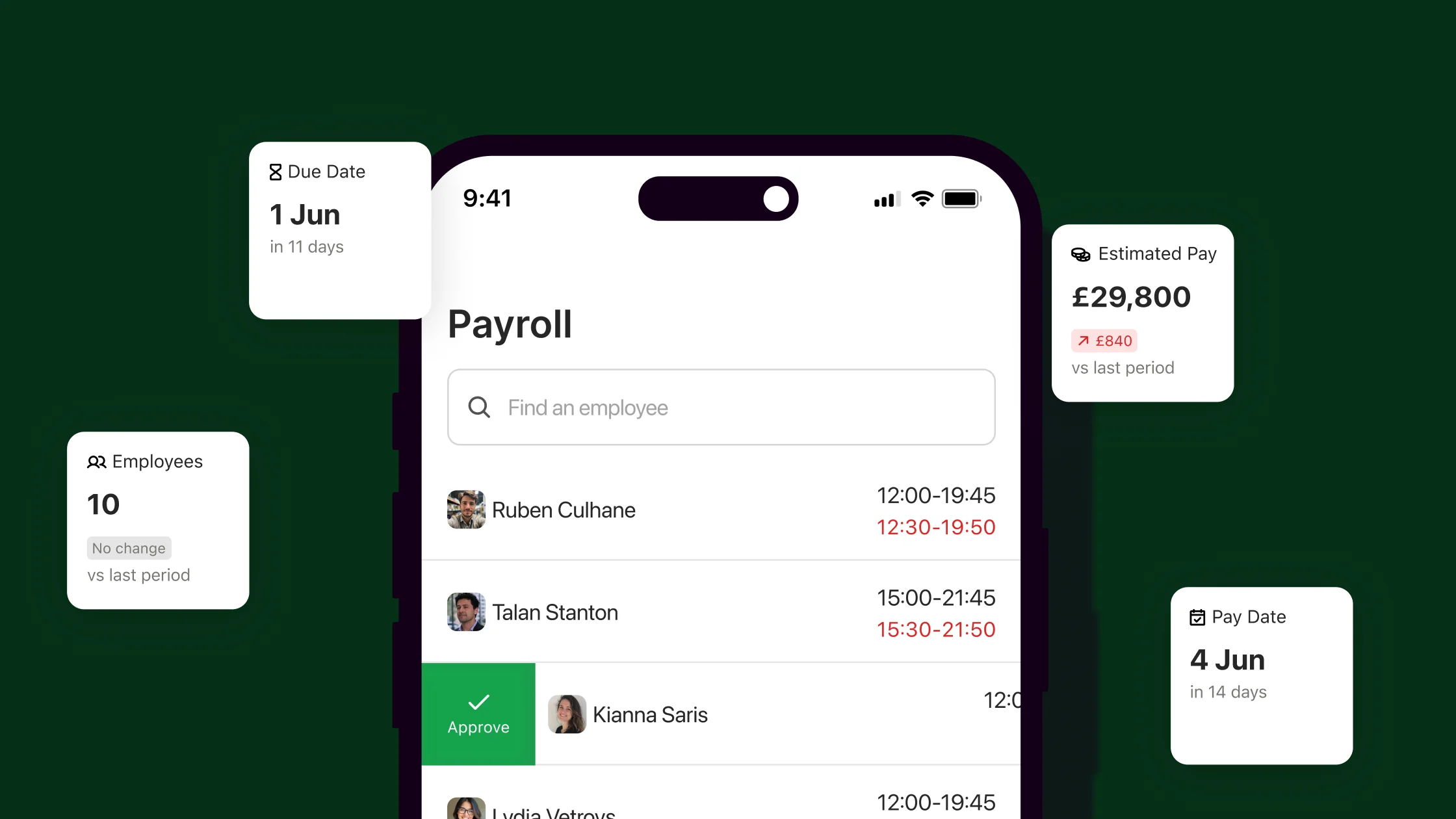
This functionality gives you a more consistent process for handling payroll across sites, with records you can refer back to when checking calculations.
Get the worker classifications and payroll rules right first, then use software to apply them consistently.
Reduce holiday pay errors and manage compliance with Nory
Getting holiday pay right starts with classifying workers correctly, applying the right accrual method, and keeping accurate records.
For irregular-hours and part-year workers, you need to calculate entitlement from hours worked each pay period, pay holiday at the correct rate, and make sure your payslips reflect the method you use.
Nory Payroll automates holiday pay calculations based on hours worked each period, reducing manual work and the risk of calculation errors across your sites. If you're unsure whether your current processes meet the latest requirements, Nory's Compliance Assistant can help you identify potential gaps before they lead to problems.
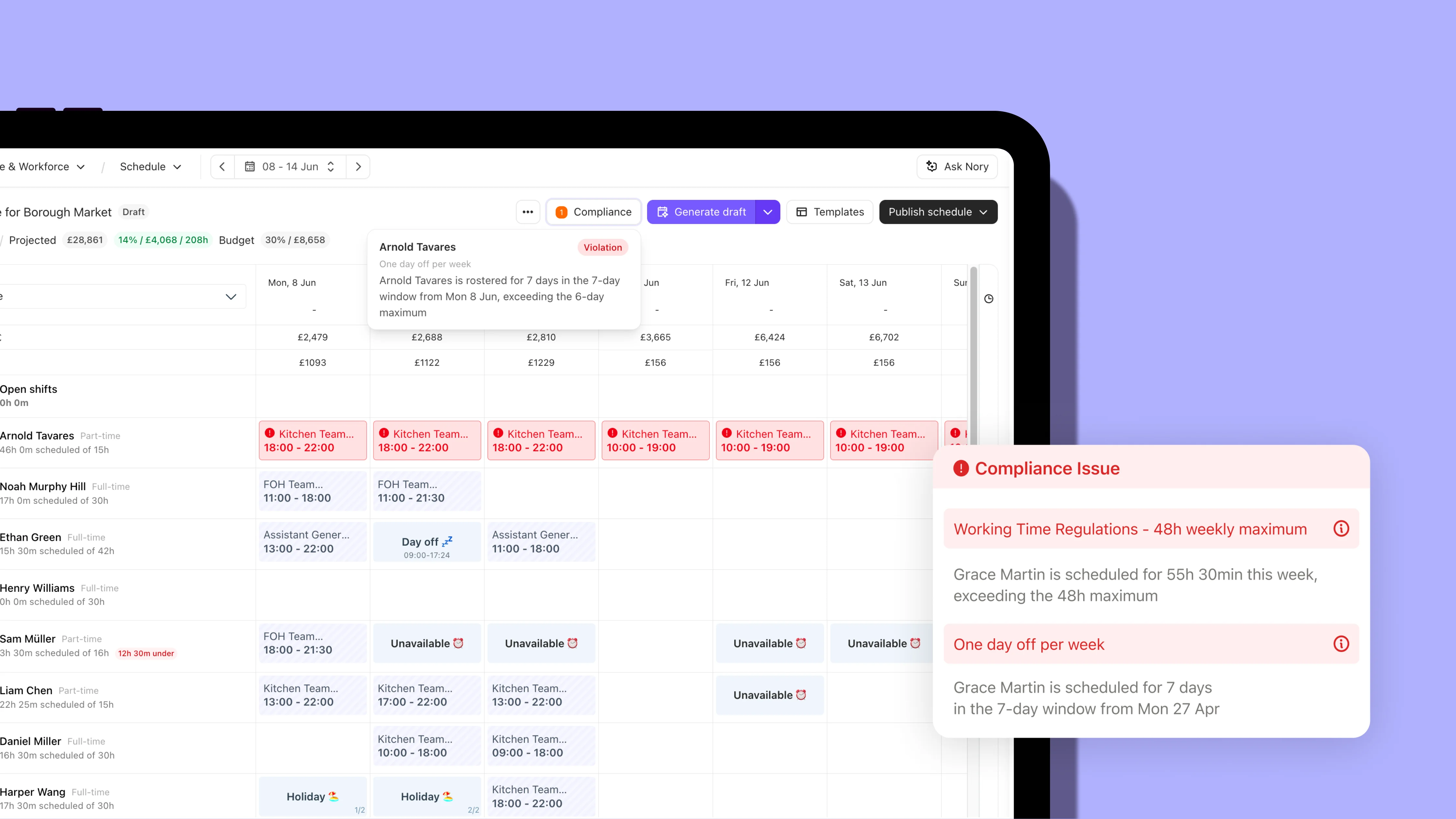
Get in touch with the team to simplify holiday pay calculations and reduce payroll errors across your sites.
FAQs about holiday pay for irregular hours workers in the UK
Do zero-hours workers get paid holiday in the UK?
Yes, zero-hours contracts are entitled to paid holiday in the UK as they qualify as workers under UK employment law.
How much holiday does a zero hours worker accrue?
The amount they accrue depends on their working pattern and contract. Holiday entitlement accrues at 12.07% of the hours they work in each pay period. For example, someone who works 50 hours accrues around six hours of paid holiday.
The exact entitlement depends on their working pattern and contract, so don’t automatically apply the 12.07% method to every zero-hours worker.
Employers must let them take their accrued leave, even if they pay holiday pay through the rolled-up method.
You can find out more about calculating holiday pay for workers without fixed hours or pay on the GOV.UK website.
What happens if a worker's contract offers more than 5.6 weeks of holiday?
You need to account for the extra entitlement in your calculations. The 12.07% rate reflects the statutory minimum of 5.6 weeks, so a higher contractual entitlement may require a higher accrual rate. Check the terms of the contract before applying the standard percentage.
Can you still use rolled-up holiday pay?
Yes. Rolled-up holiday pay can be used for irregular hours and part-year workers for leave years beginning on or after 1 April 2024.
Do part-year workers get the same holiday as full time?
Not necessarily. Part-year workers are entitled to up to 5.6 weeks of statutory paid holiday, like other workers, but the amount they accrue depends on how much they work.
For eligible part-year workers, holiday accrues at 12.07% of hours worked in each pay period. They’re still entitled to take their accrued leave, even during periods when they don’t usually work.
What is the 52 week reference period for holiday pay?
The 52-week reference period is the period employers use to calculate a worker’s average pay when working out holiday pay.
Count back 52 weeks in which the employee received pay, excluding weeks when they didn’t receive any. If you can’t find 52 paid weeks, look back up to 104 weeks and use the paid weeks available.
This calculation helps make sure holiday pay reflects normal earnings (including things like overtime) rather than basic pay alone.
Disclosure, sources, and methodology
Nory is an agentic AI restaurant operating system, which includes restaurant payroll and compliance software. We have a commercial interest in explaining how automation can help with holiday pay, but we’ve been unbiased in our approach to creating this guide. We've highlighted where software has limits as well as where it’s beneficial.
This guide provides general information about UK employment law, not legal or tax advice. The rules may apply differently depending on your circumstances, so check the relevant guidance and seek professional advice before changing how you calculate or pay holiday entitlement.
