.webp)

What is AI inventory management software for restaurants? The future of stock control explained

Balancing your restaurant inventory is harder than ever, with rising food costs, supply chain changes, and the pressure to reduce waste.
One of the best solutions is AI inventory management software. Why? Because the tech helps you track stock in real time, predict demand, automate reordering, and spot issues before they impact profits.
But how does AI really improve your inventory management, and how do you know which technology to use?
In this guide, we clarify how AI inventory systems work, the features to look for, and how they’re shaping the future of restaurant operations.
What is an AI inventory management software? A quick introduction
AI inventory management software uses artificial intelligence to track, analyse, and optimise stock levels. The technology uses data from POS system, sales performance, and external factors (like seasonality or local events) to predict which ingredients you’ll need, when you’ll need them, and in what quantities.
To sum it up: AI inventory management software turns data into actionable insights so you can order smarter, prep efficiently, and minimise waste.
How AI revolutionises traditional inventory management
For a lot of operators, AI changes inventory management by introducing automation, real-time insights, and ways to improve profits sooner rather than later.
Here’s how those improvements show up in day-to-day restaurant operations.
Transitioning from manual to automated restaurant inventory systems
AI automates a lot of traditional inventory management processes. The technology tracks ingredient usage, updates stock levels in real time, and alerts teams to potential issues so you can make quick changes to protect profits.
Traditional inventory management relies heavily on manual tracking: handwritten logs, spreadsheets, and guesswork. This approach is slow, prone to mistakes, and often leaves kitchens overstocked or scrambling when ingredients run out.
This isn’t ideal for your profit margins or the customer experience.
Operators no longer need to spend hours counting or reconciling inventory. Instead, you can focus on what really matters: improving operations, reducing food waste, and keeping customers happy.
Real-time data analysis and decision making
AI inventory systems continuously analyse live sales data, ingredient usage, stock levels, and menu performance to identify risks and opportunities as they happen.
Unlike tools that rely on aggregated or delayed data, agentic AI systems (like Nory) use real-time operational data from the systems running your restaurant to provide accurate insights and take action when it matters.
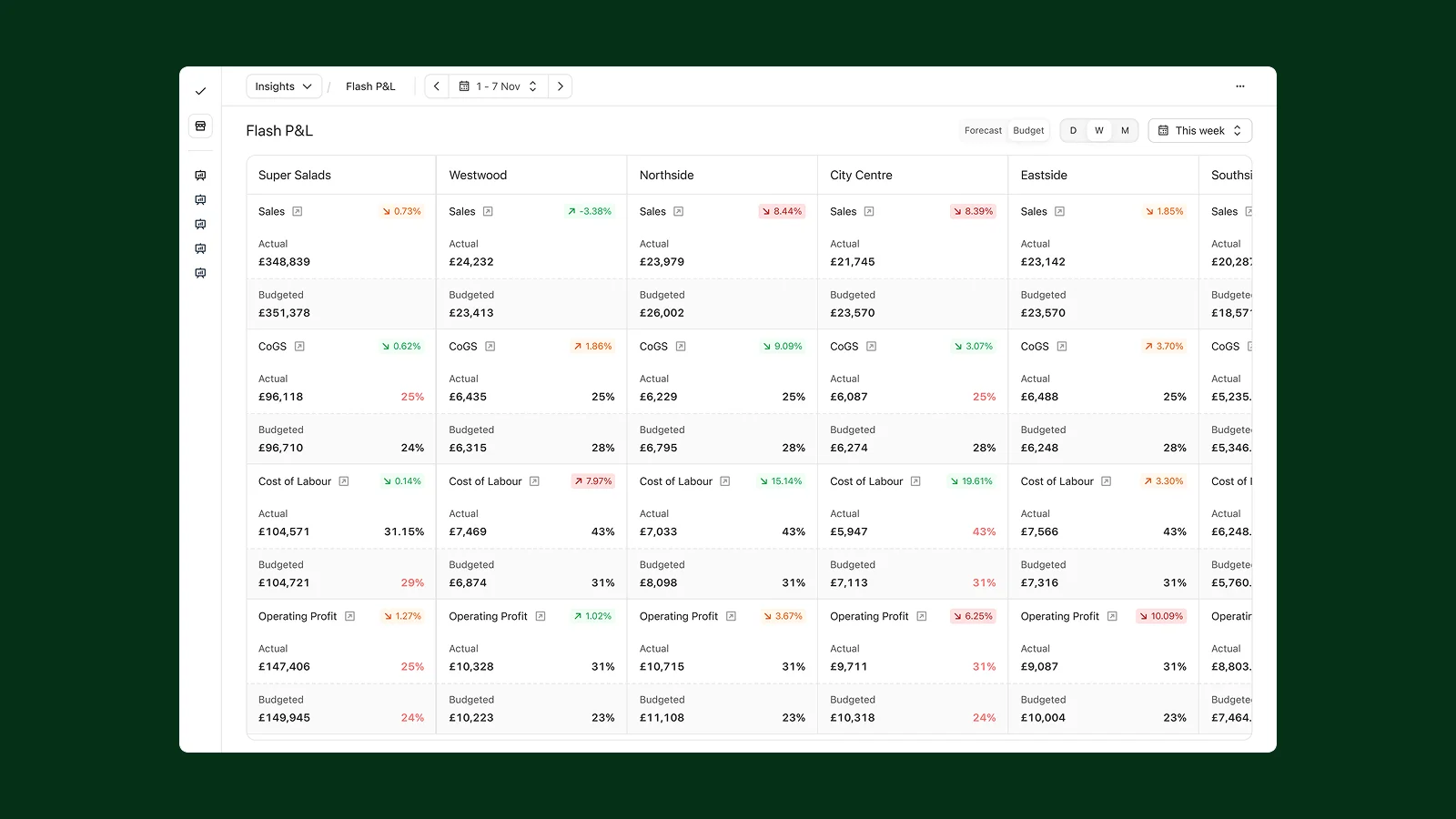
This means kitchens can make faster and informed decisions, from adjusting prep schedules and engineering menus to preventing waste before it happens.
Continuous learning and improvement
AI platforms learn from your restaurant’s data over time. Every sale, ingredient use, and menu change improves the system’s forecasts and recommendations.
In other words, the longer you use AI, the smarter it gets. Consider Nory as an example. The longer we work with operators, the more data we have to analyse.
With more data in the system, our AI assistants make better predictions, create accurate sales forecasts to help you produce demand-based schedules, order the right amount of inventory to keep margins healthy and meet customer demand.
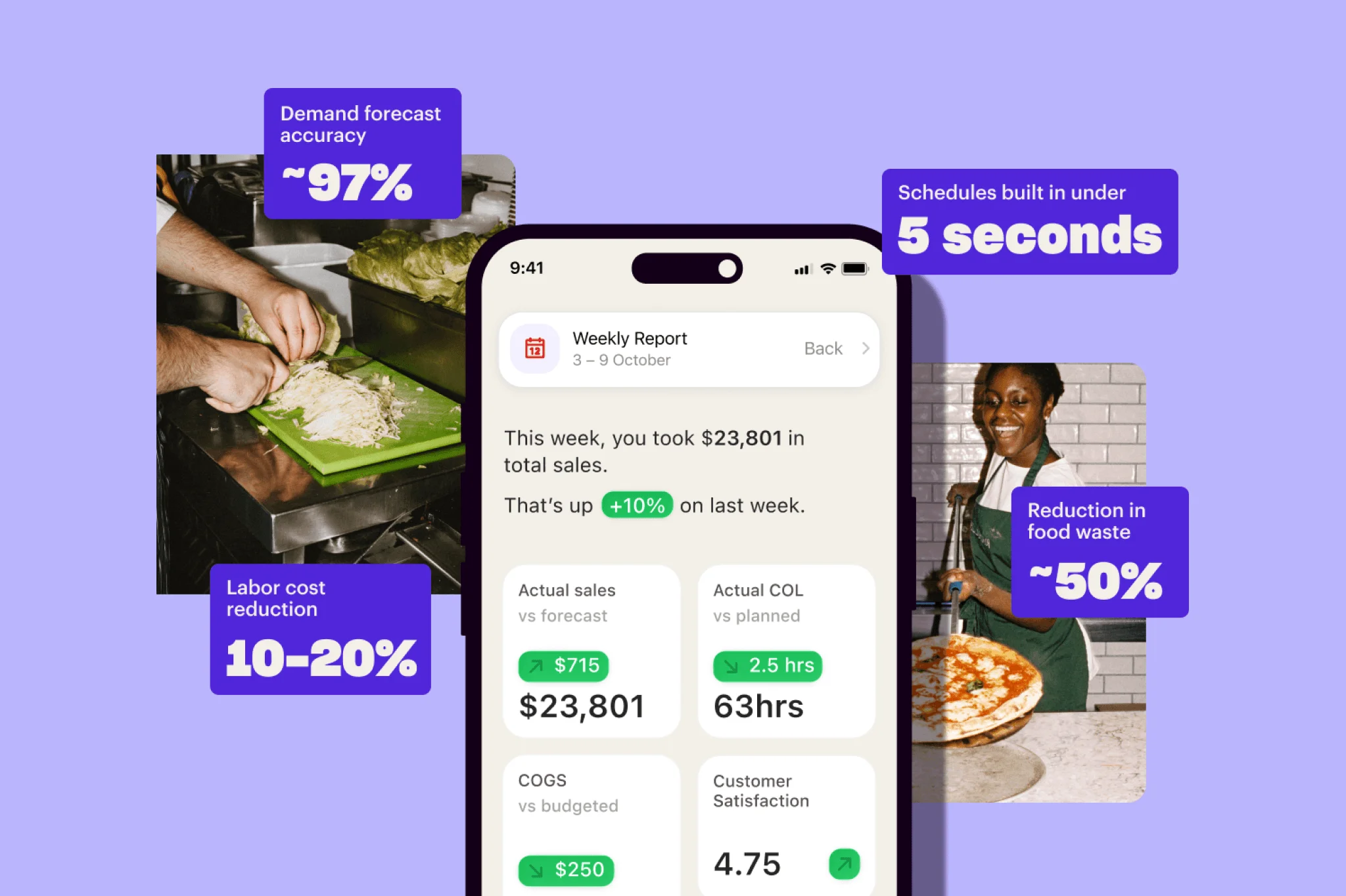
Find out more about our AI Ordering Assistant and Scheduling Assistant!
Nory in action: A great example of this in practice is Badiani, the authentic gelato shop.
By using Nory’s AI forecasting and operational insights, Badiani predicts daily and weekly gelato demand with up to 96% accuracy, helping them plan production and avoid overproduction.
This improved demand forecasting has translated into measurable operational impact. The business has achieved a 3% reduction in operating costs, which Badiani’s Head of Operations describes as a six‑figure annual saving:
Nory has helped us save 3% on our bottom line – that’s a six-figure annual saving. It means we can focus on what we do best: bringing joy to our customers.
Faraj, Head of Operations at Badiani UK
These gains come from tighter inventory control, smarter ordering, and better alignment of stock with actual customer demand, all without compromising their artisan quality standards.
Find out more about how Nory uses AI to enhance restaurant operations.
3 key features to look for in AI restaurant inventory management software
Choosing the right AI inventory platform means finding tools that actually solve your kitchen’s biggest pain points. The right platform can transform your operations, reduce waste, and save money, but only if it includes the features that matter most.
Here are three key features operators should prioritise.
1. Automated inventory tracking
Real-time tracking keeps stock levels accurate and prevents waste before it happens.
What it means: Automated restaurant inventory tracking uses AI to log ingredient usage and stock levels without manual counting. Instead of relying on spreadsheets or handwritten notes, the system updates in real time whenever ingredients are used or received.
Why it matters: Kitchens are dynamic, and mistakes happen when teams are busy. Automated tracking reduces human error, gives operators full visibility into ingredient levels, and ensures that nothing sits forgotten in the fridge until it spoils.
2. Demand forecasting AI
Predicting how much stock you’ll need is key to cutting waste and meeting customer demand.
What it means: AI demand forecasting analyses historical sales, seasonal trends, and external factors like (local events or weather) to predict how much of each ingredient you need.
Why it matters: Accurate forecasts prevent over-purchasing and under-prepping. Popular items remain available, ingredients move efficiently through the kitchen, and food waste drops, all without sacrificing service quality.
3. Inventory visibility
Knowing exactly what’s in stock, where it’s going, and when it expires helps kitchens operate as efficiently as possible.
What it means: Good AI systems go beyond overall inventory levels, showing how each ingredient is used across multiple dishes and which are at risk of spoilage. Operators can see a full picture of ingredient turnover and usage patterns at a glance.
Why it matters: Granular insights allow for smarter prep decisions, menu tweaks, and ordering adjustments. For example, if spinach is consistently left unused at the end of the week, you can adjust prep quantities or highlight it in specials to avoid waste.
Future trends in AI inventory management for restaurants
From predicting demand to guiding day-to-day operations, AI technology is becoming proactive, data-driven, and deeply integrated into overall restaurant strategies.
Let’s take a look at some of the AI trends we expect to see in the future of hospitality.
Emerging technologies and innovations
Inventory management in hospitality is quickly evolving beyond simple stock counts and reorder alerts. The next generation of AI tools is blending predictive forecasting with operational automation, meaning systems won’t just tell you what to order, but when and why.
We’re already seeing innovations like computer vision that automatically read stock levels on shelves or in coolers, cutting out manual counts entirely.
Another area gaining traction is prescriptive analytics: systems that don’t just forecast demand, but suggest specific actions based on your goals.
Want to prioritise profitability over turnover this month? Or reduce waste while keeping your most popular items always in stock? AI will soon tailor recommendations to those kinds of business priorities, not just usage patterns.
The role of big data and analytics
AI inventory systems are only as smart as the data they have to work with, and hospitality businesses generate an enormous amount of it. Every sale, order change, and guest preference adds another layer of insight.
Successful operators are starting to use this data to unlock deeper business intelligence.
For example, correlating weather patterns with menu demand, understanding how local events affect ingredient usage, or even tying supplier delivery times to cost variance (all of which you can do with Nory, by the way).
That means inventory management will become less of a standalone function and more of a strategic driver.
Instead of just preventing stockouts or waste, AI and analytics will help operators optimise pricing, design menus based on demand trends, and plan operations weeks or months ahead.
Recommended reading: How to choose restaurant business intelligence software in 2026.
What are the benefits of AI inventory management software for restaurant operators?
AI inventory management turns data into actionable insights that save time, reduce waste, and improve your bottom line.
Here are these benefits in more detail:
Enhance inventory optimisation
AI continuously analyses ingredient usage and sales trends to suggest the right quantities to order and prep. This prevents overstocking and ensures ingredients move through the kitchen efficiently.
Real example: Black Sheep Coffee uses Nory’s agentic AI forecasting to optimise inventory across its growing estate. The brand now gets demand forecasts in 15-minute intervals across all sites, helping teams make more accurate decisions on ordering and preparation. The result is 98% forecasting accuracy, giving operators greater confidence in stock planning while reducing waste and improving operational efficiency.
As we scale, having forecasting, labour and inventory connected in one place means every new site launches into an already established operating model. The controls are already there from day one.
Ula Spire, Head of Operations
Reduce operational costs
AI reduces unnecessary expenses by minimising waste, preventing emergency purchases, and automating manual inventory tasks, Restaurants can then reinvest these savings into staff training, menu development, or improving customer experiences.
Real example: With Nory’s AI sales forecasting and inventory management, CUPP took control of its stock levels and reduced overproduction. As a result, the business cut food waste by 60%, reducing money lost on unsold stock.
Nory CPU has streamlined how our franchisees and stores order to us and how we get information back to them. If things are out of stock or if we need to update something, it’s quick and easy to do it.
Paul Tanner, Managing Director at CUPP
Improve customer satisfaction
The right stock levels mean menus stay fully available and popular items don’t run out mid-service. Guests get the dishes they expect, while kitchens run more smoothly behind the scenes.
Real example: Roasting Plant Coffee uses Nory to better match staffing, prep and stock with real demand. That means fewer surprises during busy periods, smoother service, and more consistent availability across locations for customers.
It’s been an absolute dream working with Nory. The support we get is incredible, which helps us get the most out of the product.
Kallie Kocourek, Vice President of the UK Market at Roasting Plant Coffee
FAQs about AI inventory management software for restaurants
How does AI improve restaurant supply chains?
AI transforms your entire supply chain by identifying patterns in ingredient usage, suggest smarter ordering schedules, and even flag potential supply issues before they become problems.
For restaurants, this means:
- Fewer surprise shortages. You’ll know what ingredients you need and when, reducing the risk of running out mid-service.
- Better relationships with suppliers. When you can be clear about exactly what and how much you need, suppliers can plan deliveries more accurately and work with you to avoid last-minute rush orders.
- Less food waste. Smarter ordering and ingredient tracking mean you’re buying what you need, when you need it, keeping stock moving and out of the bin.
Will AI replace the need for people to manage inventory?
No. AI is designed to support your team, not replace them. It takes care of the time-consuming work like analysing stock data, spotting patterns, and predicting demand, so operators can spend less time on manual checks and more time making informed decisions.
The best results come from combining AI insights with human expertise. Managers still bring the operational knowledge, context, and judgement needed to make the right calls for their kitchens.
Unlock smarter inventory management for your restaurant with Nory’s AI technology
Running an efficient kitchen means knowing what ingredients have, what ingredients you need to meet demand, and when you need them. Agentic inventory management helps you with all these elements, allowing you to reduce waste, save money, and deliver a consistent service.
Instead of relying on guesswork to make these decisions, you use clear, actionable insights.
If you’re ready to see how AI can transform your kitchen, Nory’s agentic AI operating system makes it simple to get started.
Book a call with the team to see how we can take the stress out of inventory and match supply to real demand.