Autumn Budget 2026 (hospitality): What UK operators should expect (and how to prepare)
You’re building next year’s cost model, but one of the biggest variables is still unknown: what the Chancellor will announce in the Autumn Budget 2026 (hospitality).
That’s the challenge facing UK multi-site hospitality operators. The date isn’t confirmed, the fiscal direction is unclear, but your January budgets still need defensible numbers for labour, food costs, and business rates.
By the end of this article, you’ll know what’s already locked in for the 2026 Autumn Budget, what the sector is asking for, and three Budget scenarios (with the practical steps you can take now to protect your future margins)
When is the Autumn Budget 2026 for hospitality?
The Autumn Budget 2026 will take place on Wednesday 28th of October 2026. This will be Chancellor John Healey’s first Budget since he was appointed on 20 July 2026, shortly after Andy Burnham became Prime Minister.
Before becoming Chancellor, Healey served as a pubs minister earlier in his career. He’s familiar with hospitality, but it doesn’t signal any specific Budget measures or a commitment on VAT.
The only thing operators can plan around is what’s confirmed today and the scenarios that could follow. Several changes affecting your P&L are already confirmed, while others (including the sector’s call for a permanent 10% hospitality VAT rate), are still under discussion.
Recommended reading: Tronc schemes explained: The complete UK operator guide (2026).
What's already locked in for 2026-27: The confirmed baseline
The 2026-27 changes to business rates, wages, employer NICs, and alcohol duty are already feeding into hospitality P&Ls. Any further measures in these areas would add to (or offset) costs you’re already carrying.
Here’s a breakdown of previous changes in the UK Budget that impact the hospitality industry:
The top-line summary is that the previous Autumn budget for restaurants delivers a mixed bag of business rates.
The 5p cut is real and permanent. The government called the hospitality business rates multiplier in 2026 the lowest since 1991. But it came alongside a revaluation, and UKHospitality found that hotels and restaurants saw some of the steepest increases in rateable values.
So, some operators have seen a higher bill despite the lower multiplier.
Wages are also still putting pressure on the P&L. The National Living Wage increased to £12.71 in April, pushing up pay costs for operators, also adding pressure to move the rest of the pay scale up, too.
Recommended reading: How the UK Budget will impact your restaurant’s P&L in 2026.
Are there any changes already announced for the Budget 2026 hospitality?
On 23 July 2026, the Prime Minister's Office and HM Treasury announced a 20% cut to business rates bills for pubs, social clubs and live music venues in England from 2027/28.
The government says it’ll reach nearly 32,000 venues, save the typical pub an estimated £1,100 in the next financial year, and is worth around £100 million a year. This cut sits on top of the 15% relief already applying to 2026/27 bills.
The same announcement said the government will return to commitment to reform the wider business rates system, including Small Business Rates Relief, at the Budget.
Side note: These new rates won’t be available to the very largest live music venues (we’ll know more about what this means when they actually release the budget).
These rates are set to start in April 2027 (rather than 2026), apply only to businesses in England, and are defined by venue type rather than by sector. If you run restaurants rather than pubs, the current wording doesn’t obviously include you.
On a mixed estate, some sites may qualify and others may not. But again, we’ll know more when the budget is live.
Recommended reading: So… what has the budget actually done for hospitality?
What hospitality is asking for: The VAT’s The Problem campaign
The main ask from the hospitality industry going into this Budget is a permanent 10% VAT rate for hospitality, down from the current 20%. The campaign is #VATsTheProblem, launched in early June 2026 and fronted by chef Tom Kerridge, backed by:
- UKHospitality
- The British Beer and Pub Association
- The British Institute of Innkeeping
- Hospitality Ulster
- CODE Hospitality
The petition passed 100,000 signatures within 72 hours and has 333,651 at the time of publishing.
The evidence behind it comes from a joint UKHospitality, BBPA, BII and Hospitality Ulster survey published on the 1st of July 2026:
- 23% of respondents said they were operating at a loss, up from 15% three months earlier.
- 5% said their business was no longer viable.
- 16% said their business was at risk of failure within 12 months.
- 89% backed a VAT cut as the most impactful improvement.
The comparative argument is that the UK has the second highest hospitality VAT rate in Europe at 20%, against a European average of 12.8%. The Republic of Ireland also cut its rate to 9% on the 1st of July 2026, which sparked further debate.
Alongside VAT, the BBPA is calling for a beer duty cut and for permanent rates reform rather than another cycle of temporary reliefs. Its chief executive Emma McClarkin welcomed the announcement on the 23rd of July, saying the association looks forward to working with the government on permanent improvements:
We look forward to the continued reduction of taxation on the sector at the next Budget – the need for a reduced VAT rate for hospitality and business rates reliefs remain as strong as ever.
UKHospitality also said that it’s ready to work with the new government:
We stand ready to work with the new Government to ensure hospitality is recognised, not simply as a contributor to the economy, but as a vital partner in unlocking growth, creating opportunity and supporting every community across the UK.
It’s important to remember that none of this is a definitive forecast.
A petition with over 333,000 signatures is evidence of pressure, not an outcome. A VAT cut on that scale is an expensive commitment for any Treasury.
Three Budget-day scenarios and what each means for your P&L
You need to know how your P&L responds to the most plausible outcomes of the upcoming budget. Model these three scenarios now, so when Budget day arrives, you can adjust the plan instead of starting from scratch.
The good news? The operational response doesn’t change much between scenarios. Whether costs rise, stay flat, or you get some relief, you’ll make better decisions if you know your numbers, match labour to demand, and review prime costs weekly.
Scenario A: Hospitality gets a VAT cut
What it means: A permanent hospitality VAT cut of 10% would give operators immediate margin relief, but you’ll need to decide where that benefit goes.
The solution: The obvious move might be to reduce menu prices, but that isn’t your only option. Decide in advance how you’d split the benefit between gross profit, pricing, and wages. That way, you won’t have to make the call under pressure on Budget day.
Scenario B: It’s business as usual
What it means: If the Budget brings no major changes for hospitality, your existing cost pressures won’t disappear. The April 2026 wage rates, 15% employer NICs rate, and new business rates valuations will continue to shape your P&L.
The solution: Put the focus back on the cost line you can influence every week: labour. The operator move is to improve labour productivity by matching staffing to demand, rather than simply absorbing higher wage costs.
Scenario C: Employer costs rise again
What it means: If the Budget adds further pressure to employer costs, you’ll need to move quickly. That could mean a higher employer NICs rate, a lower secondary threshold, or wage increases above current expectations.
The solution: Model the impact against your current rota shapes now. If costs rise, you’ll already know which sites, shifts, and dayparts need attention.
The move is the same as Scenario B, but with less time to react: match labour to demand and keep prime cost visible every week. Waiting until costs land means you’re more likely to cut hours reactively and risk service levels.
How to prepare your restaurant for the Autumn Budget: Your four-week checklist
Use the four weeks leading up to the budget to get your site-level numbers in order, agree your decision rules, and make sure someone’s ready to act when the Chancellor announces the changes.
Do steps 1 to 3 in the first two weeks, then use weeks three and four to make the decisions. By Budget day, you’ll have the numbers, scenarios, and ownership in place to respond quickly.
- Get your business rates picture clear. Put your 2025/26 and 2026/27 bills side by side for every site. Check the rateable value, flag properties at or above £500,000, and identify areas that qualify for specific relief. If a bill has jumped, start the valuation conversation now rather than waiting until March.
- Model the new wage rates against your actual rotas. Don’t just apply the headline percentage to your total payroll. Look at each site, age band, and pay differential so you can see what the April 2026 changes actually mean for your labour costs. This gives you a solid starting point for Scenario C.
- Get eight weeks of prime cost under control. Calculate labour plus COGS as a percentage of revenue for each site, week by week. If you can’t pull that number together quickly, that’s useful information in itself. You’ll want better visibility before Budget day.
- Decide what you’d do with a VAT cut. If hospitality VAT falls to 10%, where would the benefit go? Decide how much you’d put towards gross profit, pricing, and wages now, while it’s still hypothetical. That way, you won’t be making the decision under pressure on Budget day.
- Make cost review a weekly habit. Keep it simple: one meeting, one page, prime cost against forecast by site. A weekly view means you’ll spot changes early and gives you a much better starting point when the Budget shifts your cost base.
- Give someone ownership of Budget day. Nominate one person to track the announcements and answer three questions within 48 hours: what’s changed for employer costs, business rates, and VAT? Once you know those numbers, you can work through the rest of the detail.
Why an agentic AI operating system helps you prepare for any Budget scenario
An agentic AI operating system connects your forecast, labour, payroll, and prime cost data, so you can see the impact of a change and act on it before it eats into your margin.
Take a look at how an agentic AI system like Nory puts you in a stronger position to adapt to whatever the Budget brings.
Start with a clear view of demand
You can’t schedule profitably if you don’t know what demand is coming. Nory’s Forecasting Assistant predicts demand at site and daypart level, giving you the numbers you need to plan labour and ordering. Customers typically see around 97% forecast accuracy.
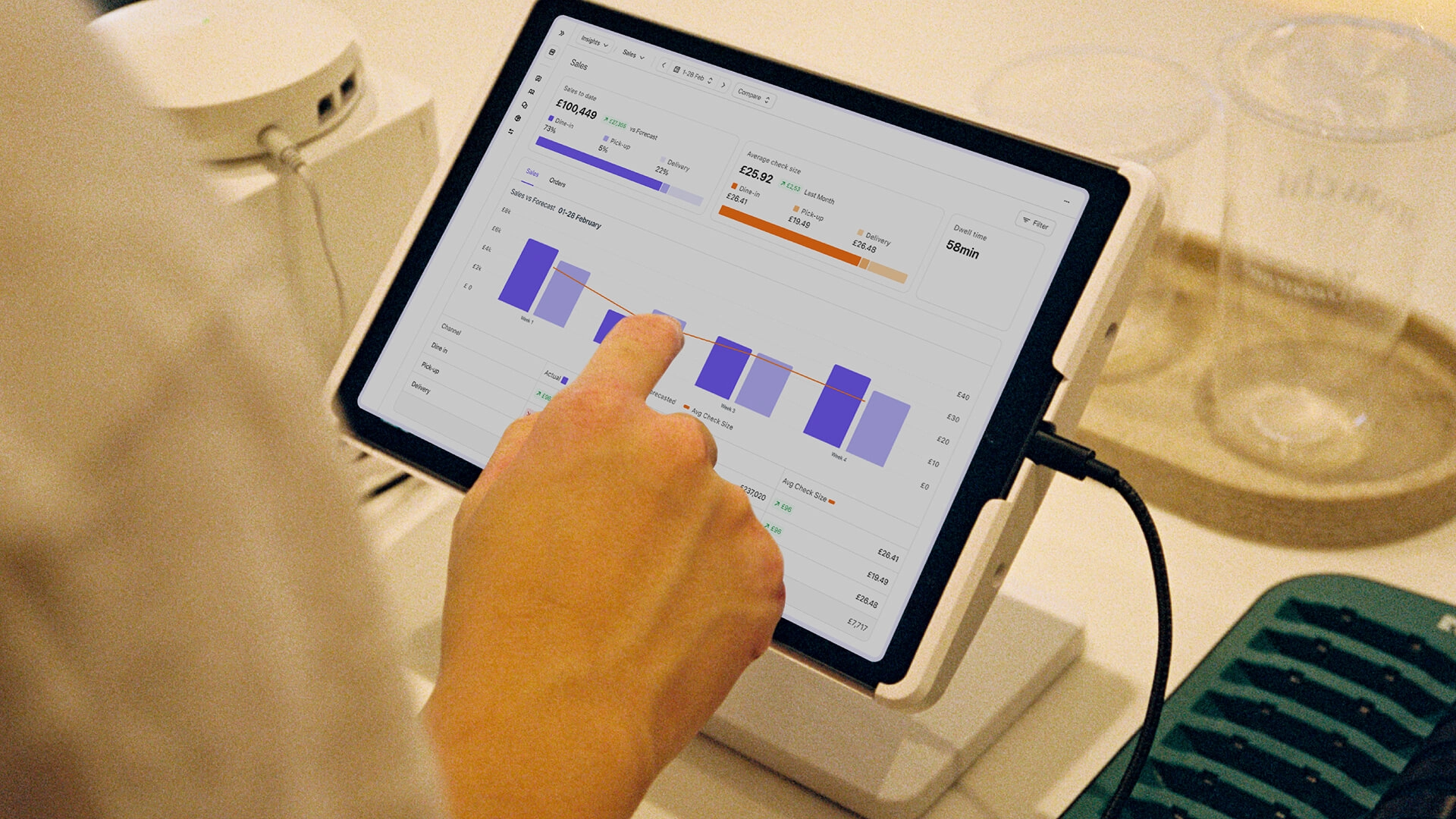
Nory in action: Papa’s Fish & Chips used Nory’s real-time forecasting to predict demand and schedule labour accordingly. Managers now have a data-led way to control costs, reduce last-minute decisions, and maintain consistent standards as they scale.
Turn the forecast into the right rota
Once you know what demand looks like, your rota needs to follow it. Nory’s Scheduling Assistant turns the forecast into a schedule, so you’re not building each week around last week’s rota.
Nory in action: Digbeth Dining Club uses Nory’s demand insights to see when guests arrive, spend, and slow down, then builds rotas around those patterns. As a result, its planned and actual labour costs are within 0.38%, with labour costs ranging from 15% to 22%.
Keep your labour numbers current
You need to know what labour is actually costing you, not what it cost you last month. Nory’s Payroll Assistant helps bring payroll into the same operating picture, so you can spot variances faster, keep labour costs on track, and act before small issues become bigger ones.
Nory in action: Roasting Plant used Nory to reduce its payroll process from two days to one hour and cut labour costs by 18% in the process.
Connect the decisions, not just the data
An agentic AI operating system is different from a collection of separate tools. Nory connects forecasting, scheduling, ordering, payroll, and prime cost management in one platform so each Assistant works from the same operational picture.
You don’t have to move numbers between systems or wait until month end to spot a problem.
When costs change, centralising data becomes even more essential. A Budget measure can affect your labour costs almost immediately. The faster you can see the impact and adjust, the more control you have over your margin.
Nory in action: Black Sheep Coffee uses Nory across 130 sites, centralising key sales and operational data to create accurate forecasts (98%).
Recommended reading: The brigade system was the first restaurant operating system. Here's the second.
FAQs about the Autumn Budget 2026 (hospitality)
When is the Autumn Budget 2026?
The Autumn Budget 2026 will be announced on the 28th of October 2026. It’ll be Chancellor John Healey’s first Budget.
What does the budget mean for hospitality?
It depends on what the Chancellor announces. The Budget could change VAT, business rates, employer costs, or leave the current position broadly unchanged. The key is to model the scenarios now, so you’re ready to respond.
What did the last Budget already change for hospitality from April 2026?
Several changes are already affecting hospitality costs:
- Business rates multipliers for retail, hospitality, and leisure properties fell by 5p.
- The 2026 revaluation took effect.
- The National Living Wage rose to £12.71.
- Alcohol duty increased with RPI from February 2026.
Will hospitality get a VAT cut in Budget 2026?
No one knows yet. UKHospitality and other hospitality bodies are campaigning for a permanent 10% VAT rate, but there’s no government commitment to a cut. Treat it as a scenario to plan for, not an expectation.
How much will a wage increase cost hospitality?
UKHospitality estimates the increases will add £1.4bn to the sector’s costs. Your actual impact will depend on your rotas, pay structure, and age mix, so model the changes against your own workforce rather than relying on the sector-wide figure.
How should a multi-site operator prepare before Budget day?
Get your site-level numbers in order now. Check your business rates exposure, model the new wage rates against your rotas, baseline your weekly prime cost, and decide what you’d do if VAT falls. Our four-week checklist takes you through each step.
Can software actually help with Budget cost increases?
Yes, it can help you respond faster. Nory uses real-time data to help operators plan labour more efficiently (customers typically see a 10% to 20% labour cost reduction in their first eight weeks).
Get ready for whatever the Budget brings, from pubs to restaurants
You can’t control what the Chancellor announces, but you can control how quickly your business responds. By getting your site-level costs, labour plans, and prime cost visibility in order now, you won’t be starting from scratch on Budget day.
Whether the Budget brings VAT relief, leaves the current position unchanged, or adds further employer costs, the operators best placed to protect margins will be the ones who can see the impact quickly and act on it.
Nory helps multi-site hospitality operators connect demand forecasting, scheduling, payroll, and prime cost management in one agentic AI operating system. If your costs change after the Budget, your operation can respond with them.
Book a chat with the team to prepare your operation for the Budget.
Disclosure, methodology, and disclaimer
Nory has a commercial interest in the role of operational visibility, so we’ve kept that distinction clear. The fiscal sections rely on named primary or trade sources, with facts verified on the 19th of August 2026.
We’ve clearly outlined confirmed measures and don’t present any unannounced Budget measure as fact. Trade body positions are reported, not endorsed, and this article takes no political position.
This article is general information for hospitality operators, not legal or tax advice. Confirm figures with your accountant or adviser before acting on them. Rates, thresholds, and reliefs change, and several measures described apply to England only.
Sources:
- Business Rates Multipliers: Qualifying Retail, Hospitality or Leisure - GOV.UK
- Budget 2025: Retail, Hospitality and Leisure Factsheet - GOV.UK
- Pubs and Live Music Venues Relief - GOV.UK
- National Living Wage increases to £12.71 per hour - GOV.UK
- Employer National Insurance contributions (NICs) and Employment Allowance changes: Screening Equality Impact Assessment - GOV.UK
- Alcohol Duty uprating - GOV.UK
- Hospitality business rates reform ‘unravelling', with urgent action needed - UKHospitality