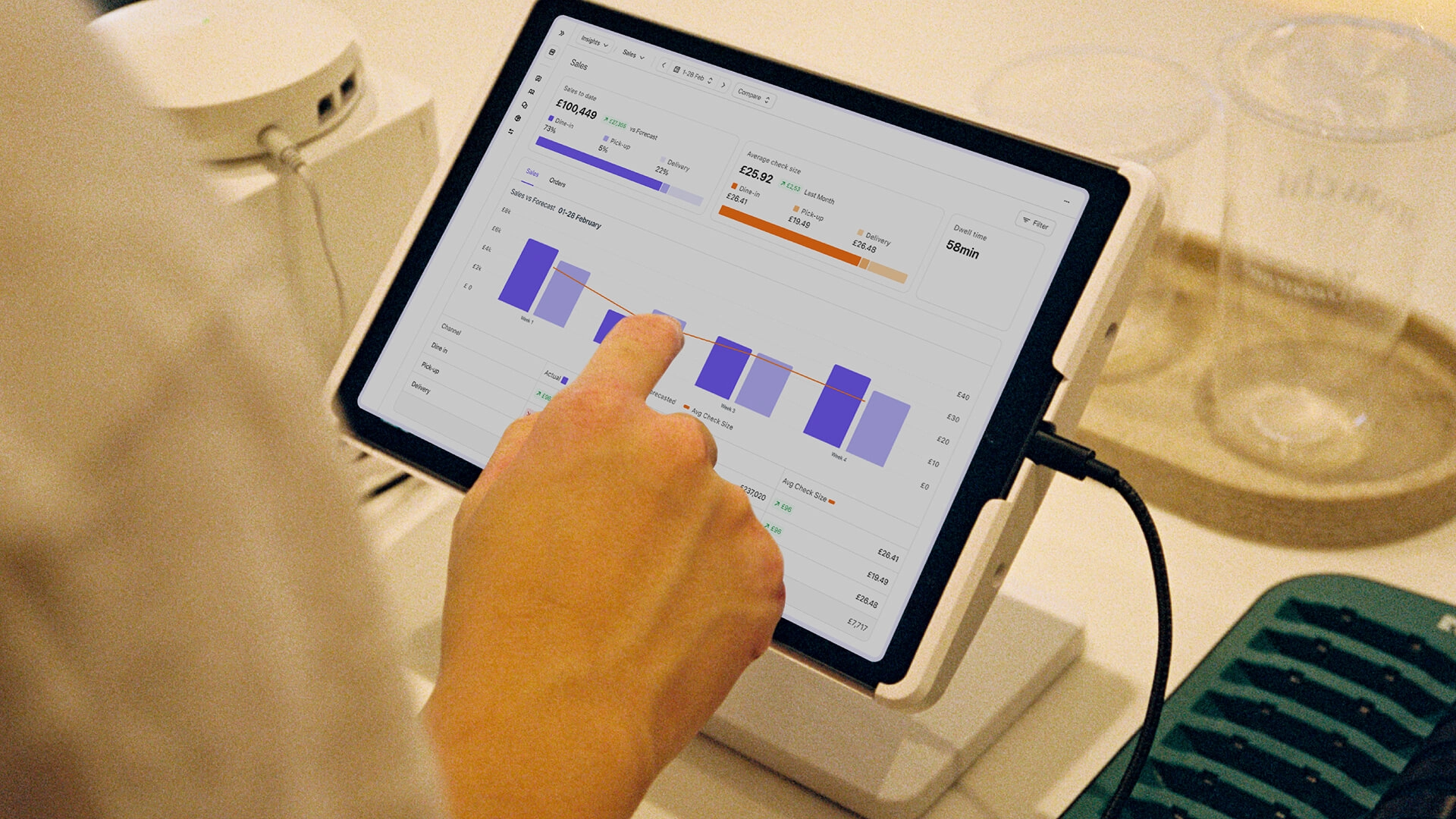

AI for restaurants in 2026: What actually works (and what's still marketing)

More operators are using AI than ever before, but there are still plenty of questions about using AI for restaurant operations.
How does AI work in restaurants? What does AI restaurant technology actually do behind the scenes? Where does a restaurant AI platform create real value? And where does the technology still have room to improve?
This guide breaks down the six areas where AI is making a genuine impact across restaurant operations. Discover where the hype outweighs reality and what operators should look for when choosing an AI operating system.
The state of AI in restaurants: What you need to know in 2026
Artificial intelligence (AI) has moved beyond the experiment phase for restaurants. Most operators want to know where it can genuinely improve day-to-day performance and where the technology still falls short.
The biggest gains are coming using AI as part of your operating model, not just another software feature. Operators are seeing measurable improvements in areas like labour efficiency, waste reduction, and forecasting accuracy because the technology is actively helping run the business.
The challenge is separating AI that actually does the work from AI that simply reports on it.
Many platforms now use “AI” as a selling point, but the real value comes from what happens after the insight. Can the system recommend the right action, or better yet, take it automatically?
Restaurants want systems that can analyse live operational data, make decisions, and take action across areas like labour, forecasting, and inventory.
But the challenge is finding systems that do those things vs the platforms that say they can.
The six areas where AI is actually running restaurants in 2026
AI is helping operators forecast demand, manage inventory and make smarter menu decisions. The best systems connect those insights to action, giving you suggestions to improve spending and automatically make improvements that boost profits.
Here are the six areas where AI has moved beyond pilots and into everyday restaurant operations.
1. Demand forecasting
AI forecasting predicts how much demand each restaurant location will get, when it will happen, and what factors will influence it.
What AI actually does: Instead of relying on historical averages, modern forecasting models combine sales data with variables like weather, local events, holidays, day-of-week patterns, and marketing activity. The result is a more accurate picture of what each site needs.
This forecast becomes the foundation for everything that follows. A better prediction means better staffing decisions, more accurate ordering, less food waste, and tighter margins. The strongest systems can now achieve ~95%+ forecast accuracy on established sites, with accuracy improving as the model learns from more operational data.
What's still marketing speak: Be cautious of AI restaurant management systems that claim perfect forecasts, especially for new locations with limited trading history.
AI learns from data. A new site with only a few months of sales history will naturally have more uncertainty than a mature location with years of operational patterns. Good vendors are transparent about this and explain how their models improve over time.
Who's doing it credibly: Nory’s Forecasting Assistant uses agentic AI to create site-level forecasts. The software connects predictions directly with scheduling and ordering decisions, ensuring operators make the most profitable decisions in all areas of the business.
Nory customers also see incredible forecast accuracy across sites once the model is trained.
Take a look at Masa as an example, who achieved 97% forecast accuracy. As a result, the restaurant gained greater control over financial planning, making it easier to optimise budgets and plan ahead.
Constantly being able to see what your sales are, what your cost of labour is — and trusting that is really valuable.
Shane Gleeson, Owner and Founder, Masa
Digbeth Dining Club also achieved 0.38% labour accuracy, and Barge East cut labour costs by 50% with smarter forecasting.
2. Labour scheduling
AI scheduling takes demand forecasts and turns them into optimised rotas.
What AI actually does: AI scheduling software builds rotas that meet the needs of each shift. This means analysing expected sales, labour targets, employee availability, contracted hours, skills, and compliance requirements to create the most optimal schedule.
This is one of the clearest areas where restaurant AI tools are already delivering measurable results. By moving from fixed schedules to demand-based staffing, operators can reduce unnecessary labour costs while still protecting service levels.
Look at Passyunk Avenue as an example. The restaurant cut labour costs by 26% across sites by moving from spreadsheet-built rotas to demand-led scheduling with Nory.
The best AI for restaurant businesses also monitors changes, flags overtime risks, and adjusts recommendations when demand shifts.
What's still marketing speak: Not every “AI scheduler” is actually using AI. Some tools simply automate the process of filling shifts based on previous patterns. That saves time, but it doesn’t make smarter decisions.
True AI scheduling adapts. It responds to changes in demand, identifies risks, and continuously improves the schedule.
Who's doing it credibly: Nory’s Scheduling Assistant combines forecasting data with labour targets to create schedules designed around profitability, not just availability.
3. Ordering and inventory
AI inventory software helps restaurants move from reactive ordering to predictive purchasing.
What AI actually does: AI for restaurant inventory analyses demand forecasts, sales patterns, and stock data. Then, they calculate what each location needs, generate purchase orders, and adjust stock levels as demand changes.
More advanced stock management systems also track delivery discrepancies, identify waste patterns, and continuously improve ordering recommendations based on what you sell in real time.
What's still marketing speak: Some vendors call basic inventory suggestions “AI ordering”, but there’s really not any AI involved at all. The key question is whether the system can explain how it reaches its recommendation and whether it can take action automatically.
If you still need to manually calculate quantities every week, it’s not an AI system.
For a general primer on how AI changes multi-site inventory specifically, read this article to find out more about multi-site restaurant inventory management.
Who's doing it credibly: Nory’s Ordering Assistant connects forecasting, inventory, and purchasing into one workflow. This means that operators move from manually building orders to reviewing and approving recommendations.
4. Payroll and compliance
Payroll and HR compliance are becoming increasingly connected, with AI helping restaurants move from reactive admin to proactive risk management.
What AI actually does: Restaurant AI companies can automate payroll preparation by combining time and attendance data, pay rates, tips, and employment rules (like the Allocation of Tips Act in the UK or FLSA overtime rules in the US). They can also monitor schedules for potential compliance issues before they become problems.
Side note: For multi-site operators, automatic and proactive compliance management is an incredibly perk. Compliance becomes harder to manage as teams, locations, and regulations grow, so having a system handle the ins and outs of different regulations saves time and prevents any fines or legal repercussions.
What's still marketing speak: A lot of payroll platforms use automation but label it as AI.
The difference comes down to decision-making. A rules-based system can apply existing instructions, but AI analyses patterns, identifies risks, and highlights hidden issues.
Who's doing it credibly: Nory’s AI Payroll Assistant and Compliance Assistant connect payroll, scheduling, and operational data in one system. These assistants can spot patterns, identify potential issues, and make recommendations based on the full operational picture rather than isolated data points.
5. Customer reviews
AI helps restaurants make sense of customer conversations across platforms like Google, delivery apps, and review sites.
What AI actually does: Instead of simply collecting reviews, AI solutions for restaurants analyse sentiment, identify recurring themes, and highlight operational problems that need attention in real time. Rather than discovering a service issue during a monthly review, managers can see patterns as they emerge and respond earlier.
What's still marketing speak: A review dashboard isn’t the same as AI. The value comes from understanding why customers are unhappy and connecting those insights back to operations. For example, repeated complaints about slow service should link back to staffing patterns, not sit in a separate reporting tool.
Who's doing it credibly: Nory’s Customer Reviews Assistant connects customer feedback with operational data, helping you understand how service performance impacts guest experience.
6. Menu engineering and pricing
AI helps operators understand which menu items drive revenue and where there are opportunities to improve profitability.
What AI actually does: AI platforms analyse sales data, ingredient costs, demand patterns, and site-level performance to pinpoint items that may need repricing, repositioning, or removal.
Compared with forecasting and scheduling, menu optimisation is still an earlier-stage AI use case. The reliable pattern in 2026 is AI-assisted (the software identifies opportunities, the operator makes the call). Fully-autonomous menu pricing on live sites is still uncommon.
What's still marketing speak: Many “AI menu optimisation” tools are simply reporting systems with profitability rankings – and these tools don’t take context into account.
A low-margin item might be a problem, or it might be a deliberate loss leader that drives customer visits. AI considers the wider context so you can understand why menu items are selling well or not enough.
Who's doing it credibly: Menu engineering is currently more of a capability within broader restaurant operating systems than a standalone category.
Nory combines operational data across forecasting, ordering, and profitability to highlight menu opportunities..
Where restaurant AI isn’t delivering meaningful ROI
Understanding where AI isn’t delivering helps you avoid using technology that looks impressive in a demo but struggles in the reality of a busy service.
While some areas are already improving labour, forecasting, and profitability, others are still early-stage, expensive, or too limited to make a meaningful impact.
Here are three areas where the hype is currently ahead of the results:
- Voice AI drive-through and phone ordering. Real deployments exist (particularly across larger US quick-service chains), but reliability is still inconsistent. Background noise, complex orders, and different accents can lead to frequent handovers to human staff, which makes the ROI harder to justify. It’s a space worth watching, but it’s not yet a must-have investment for most operators.
- In-kitchen robotics and AI-directed cooking. Robotics can deliver value in specific, repetitive tasks like pizza assembly, fryer operation, and salad preparation. However, high costs, maintenance requirements, and limited flexibility mean the technology is better high-volume concepts with highly standardised menus, rather than most multi-site restaurant groups.
- AI-generated menu creative and social content. AI can help teams create first drafts of marketing copy, menu descriptions, and social posts, but the output still needs human input to feel authentic and on-brand. It’s a useful productivity tool, but it’s not yet delivering the kind of operational impact seen in areas like forecasting, scheduling, or inventory management.
Being clear about these limitations matters. If a vendor claims to solve every restaurant problem with AI, it’s worth looking closer at what the technology is actually doing.
Single-purpose restaurant AI vs agentic AI operating systems: What’s the difference?
Single-purpose AI tools for restaurants improve a specific workflow, while agentic AI operating systems bring different areas of the operation together so AI can make decisions across the business.
Let’s break these down in more detail:
- Single-purpose AI tools use AI to improve one operational area and integrate with the rest of your tech stack. For example, scheduling platforms can optimise rotas, inventory tools can improve ordering, and review platforms can analyse customer feedback. They can solve specific problems well, but operators are still responsible for connecting the information between systems.
- Agentic AI for restaurants connects multiple operational areas through one shared data layer, with AI assistants working together to manage decisions. Forecasting can inform scheduling, scheduling can influence labour costs, and changes can automatically feed into the next decision. Instead of giving operators more information to manage, the system turns these insights into action.
The two approaches also create different operational costs:
- Single-purpose tools often have a lower upfront commitment, but the coordination cost grows over time. Your forecast might sit in one platform, your rota in another, and your labour data somewhere else. When something changes, someone still needs to make sure every system is updated and every team is working from the same information.
- Agentic AI operating systems remove much of that manual coordination. When demand changes, the rota can adjust. When staffing changes, labour forecasts can update. When costs start moving away from target, the system can flag the issue before it becomes a bigger problem.
So when should you use each type of AI system?
For a single-site operator with one specific pain, single-purpose tools usually win on friction. For a multi-site operator (from the second site upward) focused on prime cost, the coordination cost of the multi-tool stack starts to hurt, and operating systems become the better answer.
How to evaluate an AI restaurant tech vendor
Choosing the right AI restaurant platform means understanding what the technology actually does, how it creates value, and whether it can deliver results in a real restaurant environment.
Use these five questions to separate real operational impact from marketing language.
1. Can the AI take action, or does it only make recommendations?
Ask the vendor to show you a workflow where the software changes something in the operation without a manager manually triggering every step.
If every recommendation requires someone to review, approve, and execute the action, you’re looking at an insight tool rather than an agentic system.
Recommendation engines can still be valuable. The important thing is understanding whether you’re buying AI that supports decisions or AI that can help execute them.
2. What results has the AI delivered for real restaurant customers?
Ask for evidence from live customers, ideally with measurable results over a meaningful period. If a vendor can only share pilot results or unnamed case studies, they may still be proving the business case.
Pilot results can look impressive, but they don’t always reflect what happens once technology is deployed across real sites, teams, and day-to-day operations.
3. Does the AI connect to your existing restaurant tech stack?
Ask how the platform connects with your existing POS, payroll, inventory, and accounting systems. Real-time integrations should be the standard, not a future roadmap item.
AI is only as useful as the data it can access. Manual uploads, spreadsheets, or delayed data feeds can limit how quickly AI can respond and reduce the value of automation.
4. How does the vendor use and protect your operational data?
Ask what data the AI uses, how it’s stored, whether your data contributes to wider model improvements, and what happens to your information if you leave the platform.
Make sure everything is clearly explained and included in your agreement. Data ownership and usage should be clear before you invest to ensure your data isn’t used in ways you haven't agreed to.
5. How accurate is the AI in real restaurant environments?
Ask how accuracy is calculated across live locations, different dayparts, and changing demand patterns. Strong vendors will already be tracking these metrics because they use them to improve the product.
A vendor should be able to explain how they measure AI performance, not just claim that their technology is accurate.
Where Nory fits into the picture
Nory is an agentic AI restaurant operating system built for multi-site restaurants. The software uses AI Assistants that work together across your operations, helping you monitor performance and control prime cost from one connected platform.
Here’s a quick overview of the AI assistants:
- Forecasting Assistant. Predicts revenue, guest numbers, and item-level sales for every 15-minute interval at every location. It combines historical sales with live operational signals to create highly accurate forecasts that power better staffing, ordering, and planning decisions.
- Scheduling Assistant. Builds demand-based staff schedules in seconds using forecasted demand, labour budgets, employee availability, and compliance rules. It helps operators reduce labour costs while ensuring every shift is appropriately staffed.
- Ordering Assistant. Translates demand forecasts into accurate inventory orders by calculating dynamic par levels, creating purchase orders, and helping reduce food waste. It automates one of the most time-consuming parts of restaurant operations.
- Customer Reviews Assistant. Analyses customer reviews across channels, identifies recurring themes and operational issues, and recommends actions to improve guest experience. It connects customer feedback with operational data so teams can resolve the root cause of problems, not just respond to reviews.
- Compliance Assistant. Automatically applies location-specific labour rules, including overtime, breaks, minimum wage, and employer contributions, before schedules are published. It helps operators stay compliant across every site while improving labour cost accuracy.
- Payroll Assistant. Builds payroll automatically using schedules, timecards, and employee records already stored in Nory. It flags discrepancies before payday, removes manual exports and reconciliations, and significantly reduces payroll administration.
Instead of giving operators another dashboard to check, Nory turns operational data into actions. Forecasts can inform staffing decisions, inventory recommendations can adjust based on demand, and live performance data highlights where costs are moving away from target.
Where Nory is the right fit: Multi-site restaurants
Nory is ideal for multi-site restaurant operators that want to improve profitability, reduce manual admin, and run more consistent operations across locations.
It’s particularly valuable for operators managing prime cost, where small improvements across labour, waste, and purchasing can have a significant impact on margins. By bringing operational data into one system, teams can spot issues earlier and make decisions based on what’s happening now instead of waiting for end-of-month reporting.
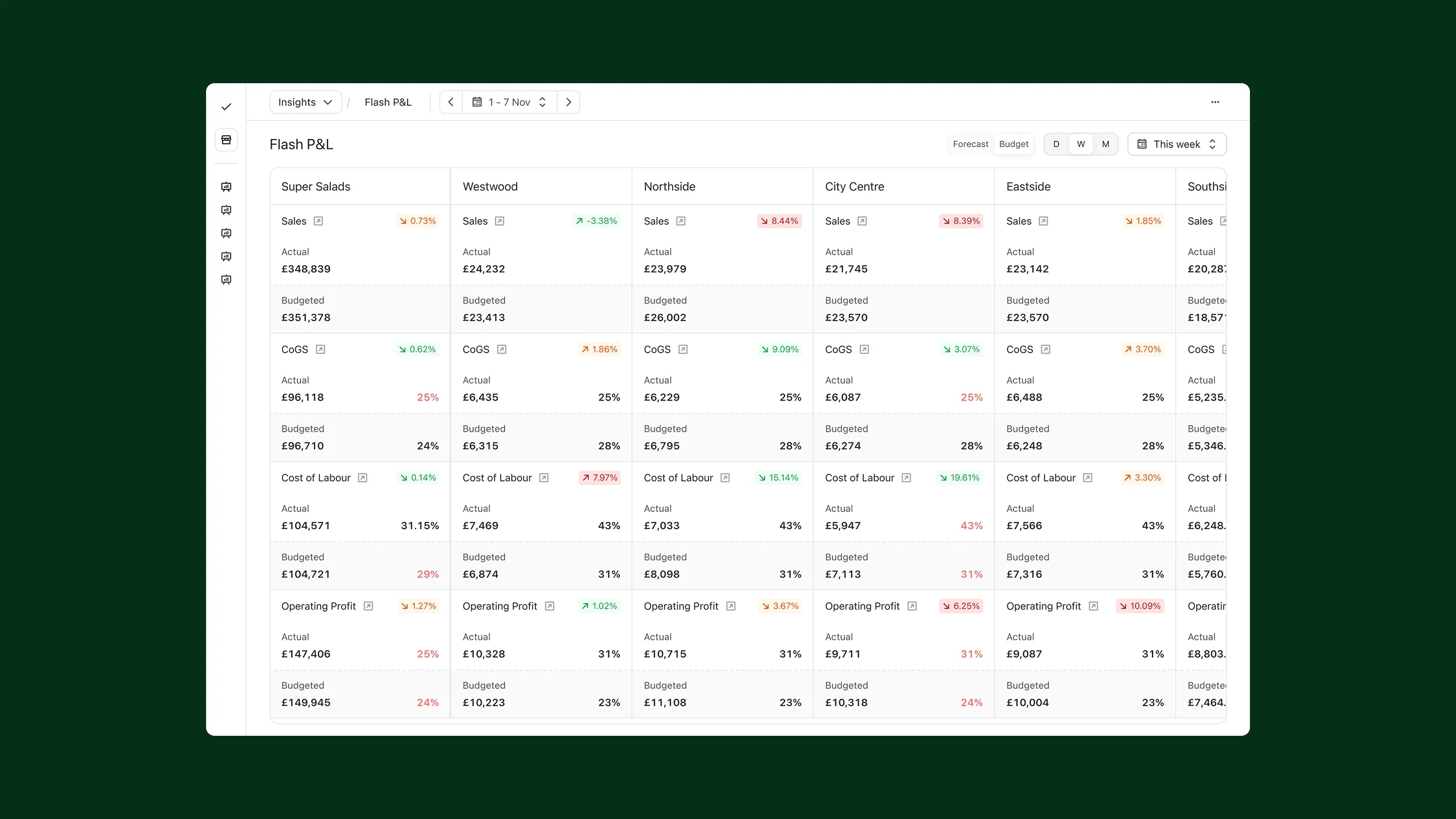
Customers use Nory to improve areas such as labour efficiency, forecasting accuracy, food waste reduction, and operational visibility across multiple sites.
Nory in action: Papa’s Fish & Chips used Nory to bring labour, inventory, and sales data together, giving managers real-time visibility into costs and helping them catch issues before they impact margins.
With Nory, decisions are facts-based, not emotional. It's 'let me check the data,' not 'it looks overstaffed.
George Papadamou, Director, Papa's Fish & Chips
With data-driven forecasting and operational insights, the five-location business schedules more accurately, reduces waste, and achieves consistency as it scales.
Where Nory may not be the right fit: Single site operators
Nory is built for operators looking to connect and optimise their wider operation. If you run a single site with one specific challenge, a specialist tool focused only on that area may be better suited to your needs.
Likewise, businesses looking only for basic reporting or standalone automation may not need a full operating system. The value of an agentic AI platform comes from connecting decisions across the operation, not solving one isolated task.
FAQs about AI for restaurants
What is AI for restaurants in 2026?
AI for restaurants in 2026 is software that helps run parts of the operation, not just report on them. The biggest use cases today are forecasting, scheduling, inventory, payroll, compliance, and customer insights. Other areas (like robotics and voice AI) are still developing.
What's the difference between AI tools and an agentic AI operating system for restaurants?
Single-purpose AI tools solve one specific problem, like scheduling or inventory. Agentic AI operating systems like Nory connect multiple areas of the business so AI can coordinate decisions across the operation. The difference comes down to isolated improvements versus connected automation.
Which AI applications in restaurants deliver the biggest ROI?
The biggest returns are currently coming from demand forecasting, labour scheduling, and inventory optimisation. These areas directly impact prime cost by helping operators reduce overstaffing, minimise waste, and make better purchasing decisions.
What's the best AI for restaurant management?
It depends on your needs. For a single-site restaurant with one specific challenge, a specialist tool may be the best fit. For multi-site operators managing labour, inventory, and profitability across locations, an agentic AI operating system like Nory provides more value by connecting those decisions.
Is AI restaurant technology worth it for single-site operators?
For many single-site operators, specialist AI tools are usually enough. Scheduling and food cost management are two areas where AI can deliver immediate value. A full restaurant operating system becomes more useful as complexity grows across multiple locations.
What is AI for cafés?
AI for cafés uses live operational data to help owners make better day-to-day decisions. It can forecast demand, optimise staffing, manage inventory, and reduce waste. As a result, cafés save time, control costs, and run more efficiently without adding to managers' workloads.
What should I ask an AI restaurant tech vendor before buying?
Ask five key questions:
- Can the AI take action or only make recommendations?
- What results has it delivered for real customers?
- How does it integrate with your existing systems?
- Who owns your data?
- How does the vendor measure AI accuracy?
Choose the right AI platform for your restaurant
The biggest opportunity with AI is using it to improve the decisions that shape profitability every day. Better forecasts, smarter scheduling, and tighter inventory control all add up to a more efficient operation.
For multi-site operators, Nory brings these capabilities together. The agentic AI software for restaurants uses AI Assistants to help teams move from manually managing processes to proactively improving performance across every location.
Book a call with the team to see how Nory can help you reduce costs, improve consistency, and run a more profitable operation.
Disclosure and methodology
This guide is published by Nory, an agentic AI restaurant operating system for multi-site restaurants. We grouped the AI-for-restaurants category into the six operational areas where AI is delivering measurable ROI in 2026, described what's real and what's still marketing in each, named vendors doing credible work (including specialists whose approach differs from ours), and gave operators a vendor-evaluation framework. Where Nory is the clear answer, we said so. Where standalone specialists win, we said that too.